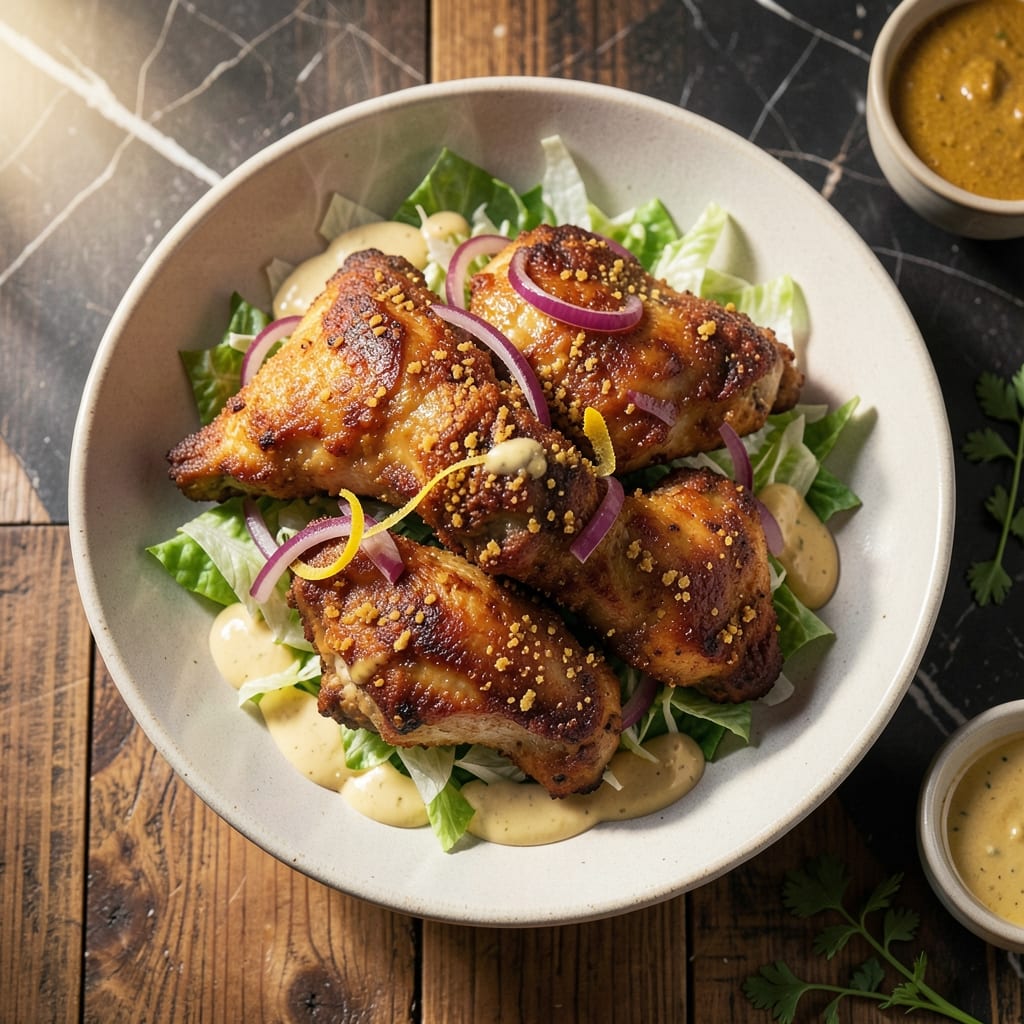
This recipe transforms ordinary fried chicken into something extraordinary with one unexpected ingredient. Mustard doesn’t just add flavor—it creates a golden, crispy crust that stays shatteringly delicate.
I’ve tested this method repeatedly in my small Boston kitchen, always with the same result: juicy meat inside, perfectly seasoned outside. The mustard works in the marinade and batter, adding tangy depth without overpowering the dish.
You’ll achieve restaurant-quality texture at home with a simple, foolproof technique. No special equipment, just precise timing and a little culinary intuition.
Serve hot for maximum crunch. Every bite delivers that ideal balance of savory, spicy, and tangy.
Ingredients for Fried Chicken Recipe Using Mustard
Transform ordinary chicken into extraordinary with these bold, precise ingredients for a restaurant-quality dish.
| Ingredient | Amount | Notes |
|---|---|---|
| Chicken Thighs 🍗 | 2 lb | Boneless, skin-on preferred |
| Dijon Mustard 🟡 | ½ cup | Smooth, not whole grain |
| All-Purpose Flour 🌾 | 2 cups | For crispy coating |
| Cornstarch 🌽 | ½ cup | For extra crunch |
| Large Eggs 🥚 | 2 whole | For binding batter |
| Buttermilk 🥛 | 1 cup | Full-fat for richness |
| Garlic Powder 🧄 | 2 tsp | Freshly ground preferred |
| Onion Powder 🧅 | 2 tsp | Fine grind for even flavor |
| Paprika 🌶️ | 1 tbsp | Sweet or smoked variety |
| Cayenne Pepper 🔥 | ½ tsp | Adjust for heat preference |
| Salt 🧂 | 2 tsp | Diamond Crystal kosher preferred |
| Black Pepper 🌶️ | 1 tsp | Freshly ground for best flavor |
| Vegetable Oil 🫒 | 4 cups | For deep frying, high smoke point |
[recipe_ingredient_scaler]
The chicken selection is critical here. Thighs with skin-on yield the juiciest results and crispiest crust. Whole Foods or Trader Joe’s offer high-quality options, but most supermarkets carry suitable thighs—just ensure they’re fresh, not frozen. The Dijon mustard must be smooth (not whole grain) to properly emulsify with the marinade and batter, creating that signature golden crust.
Out of buttermilk? Whole milk with 1 tbsp vinegar or lemon juice per cup works as a substitute. No cornstarch? All-purpose flour at a 1:1 ratio will suffice, though the crust won’t be quite as crisp. For the oil, peanut oil or canola oil can replace vegetable oil if preferred—just ensure it has a high smoke point suitable for deep frying.
The battered chicken holds well in the fridge for up to 12 hours before frying. Store cooked chicken in an airtight container for 3-4 days in the fridge, or freeze for up to 1 month. Reheat in an oven or air fryer to maintain that coveted crunch.
Why You’ll Love This Recipe
- Minimal Effort: I toss the chicken in Dijon mustard, coat it, and fry—no marinating, no fuss.
- Tangy Crunch: That Dijon in the coating gives it a sharp, savory kick with every crispy bite.
- Feeds a Crowd: I stretch this to six servings with thighs, and it disappears faster than the rolls.
- Leftover Magic: Honestly, it tastes even better cold the next day—just grab a piece straight from the fridge.
Step-by-Step Instructions for Fried Chicken Using Mustard
This method ensures a crispy, flavorful crust with that signature tangy depth from the mustard.
Step 1: Marinate the Chicken in Mustard and Buttermilk
In a large bowl, whisk together the 0.5 cup Dijon Mustard and 1 cup Buttermilk until smooth. The mustard should fully incorporate into the buttermilk, creating a pale yellow liquid with no visible streaks.
Add the 2 lb Chicken Thighs to the mixture, turning to coat completely. I use my hands for this—it ensures every piece is thoroughly covered. Cover the bowl and refrigerate for at least 1 hour, or up to 12 hours for deeper flavor penetration. The buttermilk tenderizes the meat while the mustard adds its distinctive tang.
Step 2: Prepare the Seasoned Breading Mixture
In a large shallow dish, combine the 2 cups All-Purpose Flour, 0.5 cup Cornstarch, 2 tsp Garlic Powder, 2 tsp Onion Powder, 1 tbsp Paprika, 0.5 tsp Cayenne Pepper, 2 tsp Salt, and 1 tsp Black Pepper. Whisk until fully blended and no streaks of spices remain visible.
The cornstarch is essential here—it creates that extra-crispy texture you want in fried chicken. The paprika adds color and a subtle smokiness, while the cayenne provides just enough heat to balance the mustard’s tang. This mixture should look uniformly golden with a fine, even texture.
Step 3: Bread and Rest the Chicken
Remove the chicken from the marinade, letting any excess drip off. In a separate bowl, beat the 2 whole Large Eggs lightly. Dip each piece of chicken first in the egg, then into the breading mixture, pressing firmly to adhere. Place the breaded chicken on a wire rack set over a baking sheet.
Let the breaded chicken rest for 15-20 minutes at room temperature. This crucial step allows the coating to hydrate slightly, which prevents it from falling off during frying and ensures maximum crispiness. The surface should appear dry to the touch when ready.
Step 4: Fry to Golden Perfection
In a large, heavy-bottomed pot or Dutch oven, heat the 4 cups Vegetable Oil to 350°F. Use a deep-fry thermometer to monitor the temperature—maintaining this heat is key to even cooking without burning the coating. The oil should shimmer but not smoke.
Carefully lower 2-3 pieces of chicken into the hot oil at a time, being careful not to overcrowd the pot. Fry for 12-15 minutes, turning occasionally, until the chicken is deep golden brown and the internal temperature reaches 165°F. Transfer to a wire rack or paper towels to drain excess oil. The crust should be audibly crisp when tapped and hold its shape without cracking.
Repeat with the remaining chicken, allowing the oil to return to 350°F between batches. Serve immediately while hot and crispy, or keep warm in a 200°F oven for up to 30 minutes.
Pro Tips For Making Fried Chicken Recipe Using Mustard
- Double-Dredge the Thighs: Dip the chicken in the mustard-egg wash, then flour, then back in the wash and flour again—this builds a shatteringly crisp crust that holds up to the mustard’s tang.
- Pat the Thighs Dry: I learned this the hard way—blot the chicken thighs with paper towels before dredging, or the coating slides right off into the oil.
- Heat the Oil Right: Use a thermometer and keep the oil at 350°F; any lower and the crust absorbs grease, any higher and the mustard in the coating can burn before the meat cooks through.
- Rest Before Frying: Let the dredged thighs rest on a rack for 10 minutes so the flour-cornstarch mix adheres better and fries up lighter, not gummy.
Regional Styles of fried chicken recipe using mustard
Southern Style
In the South, Dijon mustard takes a backseat to yellow mustard in the marinade for a milder tang. I use ½ cup yellow mustard with buttermilk for a classic approach. The coating includes 1 tbsp hot sauce for a subtle kick that’s quintessentially Southern. 🌶️
Nashville Hot
For Nashville’s fiery twist, add 2 tbsp cayenne and 1 tbsp brown sugar to the breading. After frying, drizzle with a hot oil and mustard sauce—¼ cup mustard, 2 tbsp hot sauce, and ¼ cup frying oil heated to 350°F.
Korean Double-Fry
Korean fried chicken uses a double-fry method for extra crispiness. The mustard is swapped for gochujang in the marinade—2 tbsp mixed with buttermilk. The first fry is at 325°F for 8 minutes, then rest before a second fry at 375°F. 🔥
German Schnitzel Style
This version uses whole grain mustard in the breading for texture. Pound chicken thin, coat in flour, egg, and breadcrumbs with 1 tbsp grain mustard. Pan-fry in ½ inch oil at 350°F until golden, about 3-4 minutes per side.
New England Clam Shack
In coastal New England, mustard fried chicken often includes 1 tsp Old Bay seasoning in the breading. I tested this in my Boston kitchen—it pairs perfectly with tartar sauce on the side. The mustard adds depth without overpowering the seafood-inspired spices.
Spicy Honey Mustard
For a sweet-heat combo, swap Dijon for honey mustard in the marinade—½ cup total. Add 1 tbsp sriracha to the buttermilk for extra heat. The result is sticky, crispy, and irresistibly tangy. Perfect for game day in my Irish-Italian family! 💛
Nutrition Facts
Frequently Asked Questions
Can I use yellow mustard instead of Dijon?
Yes, but reduce to ⅓ cup as it’s more potent. Yellow adds milder tang. The crust may be slightly less golden but still crispy and flavorful.
Why does the chicken need to rest after breading?
Resting for 15-20 minutes lets the coating adhere properly. This prevents it from falling off during frying and ensures maximum crispiness.
Can I bake this instead of frying?
Yes, bake at 400°F for 25-30 minutes on a wire rack. It won’t be as crispy but still delivers great flavor. Turn halfway through.
What if my oil temperature drops too low?
Let it return to 350°F between batches. Cooking at too low a temperature makes the chicken greasy, not crispy.

Trained in classic French technique but raised on slow-cooked ribs and spicy rubs, she blends culinary skill with smoke and soul.
- Recipe for Boneless Pork Chops in Cast Iron Skillet: Sear and Baste to Juicy Perfection - October 3, 2026
- Recipe for Boneless Cross Rib Roast: Slow-Roasted Beef with Herb Crust - October 3, 2026
- Hamburgers in Sauce Recipe Crock Pot: Slow-Cooked Savory Delight - October 3, 2026