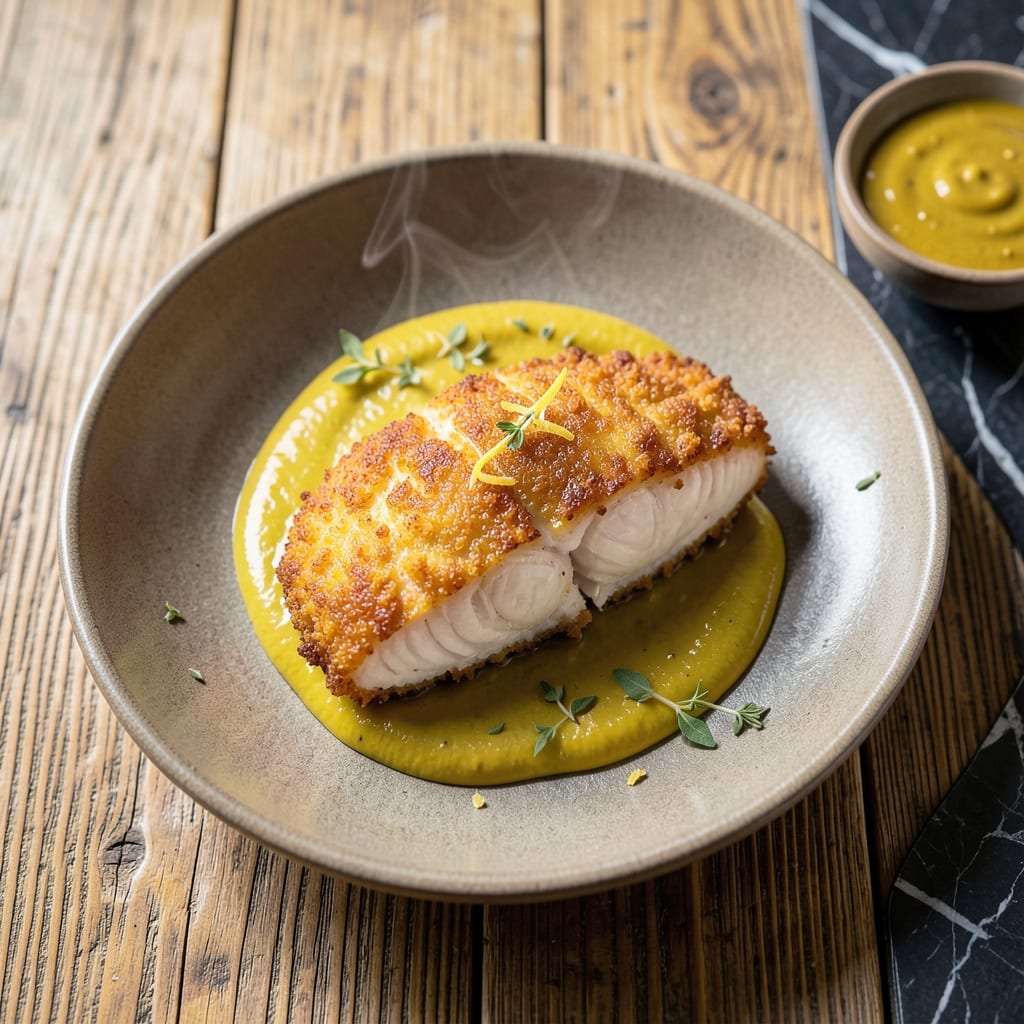
This fried fish delivers a crispy golden crust with a bold tangy punch that transforms ordinary fillets into something extraordinary. My grandmother taught me the importance of perfectly seasoned flour and hot oil for achieving that signature crunch.
The mustard doesn’t just add flavor—it creates a protective barrier that locks in moisture while enhancing the fish’s natural sweetness. I prefer using firm white fish like cod or haddock for the best texture and results.
What emerges from the pan is fillets with a shatteringly crispy exterior and tender, flaky interiors, all balanced by that distinctive mustard kick. The contrast between the crunch and the tangy sauce makes every bite irresistible.
Serve immediately with lemon wedges to cut through the richness. This method guarantees consistent results every time.
Ingredients for Fried Fish Recipe with Mustard
Pantry staples plus fresh fish create these golden, tangy fillets with serious crunch.
| Ingredient | Amount | Notes |
|---|---|---|
| Firm White Fish Fillets 🐟 | 1 ½ lb | Cod or haddock preferred |
| All-Purpose Flour 🌾 | 1 ½ cups | For crispy dredging |
| Dijon Mustard 🟡 | ½ cup | Bold tangy flavor base |
| Large Eggs 🥚 | 2 whole | Beaten for binding |
| Buttermilk 🥛 | ½ cup | For tenderizing fish |
| Cornmeal 🌽 | ½ cup | Adds extra crunch |
| Vegetable Oil 🫒 | 3 cups | For deep frying |
| Garlic Powder 🧄 | 1 tsp | Enhances seasoning blend |
| Onion Powder 🧅 | 1 tsp | Adds depth to coating |
| Paprika 🌶️ | 1 tsp | Sweet or smoked variety |
| Salt 🧂 | 1 tsp | Kosher or sea salt |
| Black Pepper 🌶️ | ½ tsp | Freshly ground preferred |
| Cayenne Pepper 🔥 | ¼ tsp | Optional for heat |
| Lemon Wedges 🍋 | 4 pieces | For serving fresh |
[recipe_ingredient_scaler]
The fish is everything here. Cod or haddock hold up best to frying—Trader Joe’s or Whole Foods have great fresh options. Look for fillets that are firm and smell like the ocean, not fishy. The mustard needs to be bold—Grey Poupon Dijon is my go-to. For the flour, King Arthur all-purpose gives the crispiest coating (worth the splurge). Don’t skip the cornmeal; it’s the secret to that extra shatter.
No buttermilk? Whole milk plus a splash of vinegar works in a pinch. Short on Dijon? Yellow mustard plus a pinch of turmeric gets you close. The cornmeal can be swapped for panko if you want even more crunch. For oil, peanut or canola have higher smoke points than vegetable. Skip the cayenne if heat isn’t your thing, but it adds a nice kick without overpowering.
Fry in small batches so the oil stays hot—this keeps everything crispy. Leftovers? Unlikely, but they’ll keep 2-3 days in the fridge. Reheat in the oven at 400°F for 10 minutes to revive the crunch. The mustard sauce can be prepped ahead and stored 1 week in the fridge.
Why You’ll Love This Recipe
- One Bowl Mix: I just dump flour, mustard, eggs, and buttermilk in one bowl—no whisking stations or extra dishes.
- Tangy Crunch: That Dijon mustard in the batter gives the fish a sharp kick that cuts through the crispy coating.
- Weeknight Rescue: Honestly, it’s my 25-minute dinner when I’ve got nothing else planned.
- Stretches Far: A pound of firm white fish feeds my family of four with enough left for sandwiches the next day.
Step-by-Step Instructions for Fried Fish With Mustard
Here’s the method for achieving perfectly crispy fillets with that signature tangy kick every time.
Step 1: Prepare the Tangy Mustard Batter
In a medium bowl, whisk together the 0.5 cup Dijon mustard, 2 whole large eggs, and 0.5 cup buttermilk until smooth. The mustard gives this batter its bold flavor, while the eggs and buttermilk create a base that clings beautifully to the fish.
I like to let this mixture sit for 5 minutes while I prepare the rest. This allows the flavors to meld and the buttermilk to slightly thicken, which helps the coating adhere better to the firm white fish fillets.
Step 2: Create the Seasoned Dredging Mixture
In a large shallow dish, combine the 1.5 cups all-purpose flour, 0.5 cup cornmeal, 1 tsp garlic powder, 1 tsp onion powder, 1 tsp paprika, 1 tsp salt, 0.5 tsp black pepper, and 0.25 tsp cayenne pepper. Whisk thoroughly to distribute the spices evenly.
The cornmeal adds that extra crunch to the coating, while the spices create a well-balanced flavor profile. I always use a shallow dish for dredging—it makes coating the fillets much easier and less messy.
Step 3: Coat and Bread the Fish Fillets
Pat the 1.5 lb firm white fish fillets dry with paper towels. This is crucial for achieving crispy results. Dip each fillet into the mustard batter, letting excess drip off, then press it into the flour mixture, turning to coat completely. Press firmly so the coating adheres well.
Place the breaded fillets on a wire rack set over a baking sheet. This allows air to circulate around them, preventing the coating from getting soggy before frying. Let them rest for 10 minutes to set the coating.
Step 4: Fry to Golden Perfection
Heat the 3 cups vegetable oil in a deep skillet or Dutch oven over medium-high heat until it reaches 350-375°F. Use a deep-fry thermometer for accuracy. The oil is ready when a pinch of flour sizzles and browns immediately when dropped in.
Fry the fillets in batches for 3-4 minutes per side until golden brown and crispy. Don’t crowd the pan—this lowers the oil temperature and leads to greasy fish. Transfer to a paper towel-lined plate to drain excess oil.
Step 5: Serve with Fresh Lemon Wedges
Serve the crispy fried fish immediately while hot, accompanied by the 4 pieces lemon wedges. The acidity from the lemon cuts through the richness of the fried coating, while the mustard in the batter provides that bold tangy kick with every bite.
For best results, serve with additional Dijon mustard on the side for dipping. The contrast between the crispy exterior and the tender, flavorful fish inside is what makes this dish truly special.
Pro Tips For Making Fried Fish Recipe With Mustard
- Pat Dry Thoroughly: I learned this the hard way—wet fish fillets steam instead of fry, ruining that crispy crust. Press them between paper towels for 30 seconds before dredging.
- Heat the Oil First: After burning three batches, I finally figured out the oil needs to shimmer (350°F) before the fish hits the pan, or you’ll get greasy, sad fillets.
- Thin the Mustard: Sounds weird, but it works: whisk 1 tablespoon buttermilk into the Dijon mustard before brushing—it spreads smoother and clings better to the fish.
- Rest Before Frying: Give your dredged fillets 5 minutes on a wire rack before frying—this keeps the coating from sliding off in the oil. I skip this when I’m lazy, but the crust is noticeably better when I don’t.
Troubleshooting fried fish recipe with mustard
Oil Temperature Issues
If your fish absorbs too much oil and turns greasy, your oil temperature is likely too low. Use a deep-fry thermometer to maintain 350-375°F. I check mine frequently with a Taylor Precision thermometer—it’s saved me from many soggy batches. 🌡️
Coating Falling Off
When the coating slides off during frying, the batter might be too thick or the oil not hot enough. Thin the mustard batter with 1-2 tbsp buttermilk if needed. Also, let breaded fillets rest for 10 minutes to set the coating before frying.
Uneven Browning
Hot spots in your pan cause uneven cooking. Use a heavy-bottomed Dutch oven like Le Creuset for even heat distribution. Rotate fillets halfway through frying and work in small batches to avoid temperature drops.
Fish Tastes Bitter
Bitter flavors often come from burnt spices in the coating. Reduce heat to medium-high and avoid overcrowding. Fresh Dijon mustard and recently opened spices make a noticeable difference in flavor.
Soggy Results
Sogginess usually happens when draining on paper towels too long. Transfer to a wire rack immediately after frying to maintain crispiness. Serve within 5 minutes for that perfect crunch my grandmother always insisted on. 🔥
Mustard Overpowering
If the mustard taste is too strong, balance it by reducing to ⅓ cup in the batter. Add 1 tsp honey to mellow the sharpness. I learned this trick when adapting the recipe for my East Coast Italian community’s more delicate palates.
Nutrition Facts
Frequently Asked Questions
What kind of fish works best for frying?
Firm white fish like cod or haddock hold up best. Their texture stays flaky yet sturdy enough for crispy coating. Avoid delicate fish like tilapia as they may fall apart.
Can I use yellow mustard instead of Dijon?
Yes, but add 1/4 tsp turmeric for depth. Yellow mustard is milder, so increase to 2/3 cup for similar tang. Dijon’s boldness is hard to match perfectly though.
How do I keep the fish crispy longer?
Drain on a wire rack, not paper towels. Serve within 5 minutes for maximum crunch. Reheat in oven at 400°F for 10 minutes if needed.
Why is my coating falling off in the oil?
Either the batter was too thick or oil wasn’t hot enough. Thin batter with extra buttermilk and ensure oil reaches 350-375°F before frying.

Trained in classic French technique but raised on slow-cooked ribs and spicy rubs, she blends culinary skill with smoke and soul.
- Recipe for Boneless Pork Chops in Cast Iron Skillet: Sear and Baste to Juicy Perfection - October 3, 2026
- Recipe for Boneless Cross Rib Roast: Slow-Roasted Beef with Herb Crust - October 3, 2026
- Hamburgers in Sauce Recipe Crock Pot: Slow-Cooked Savory Delight - October 3, 2026