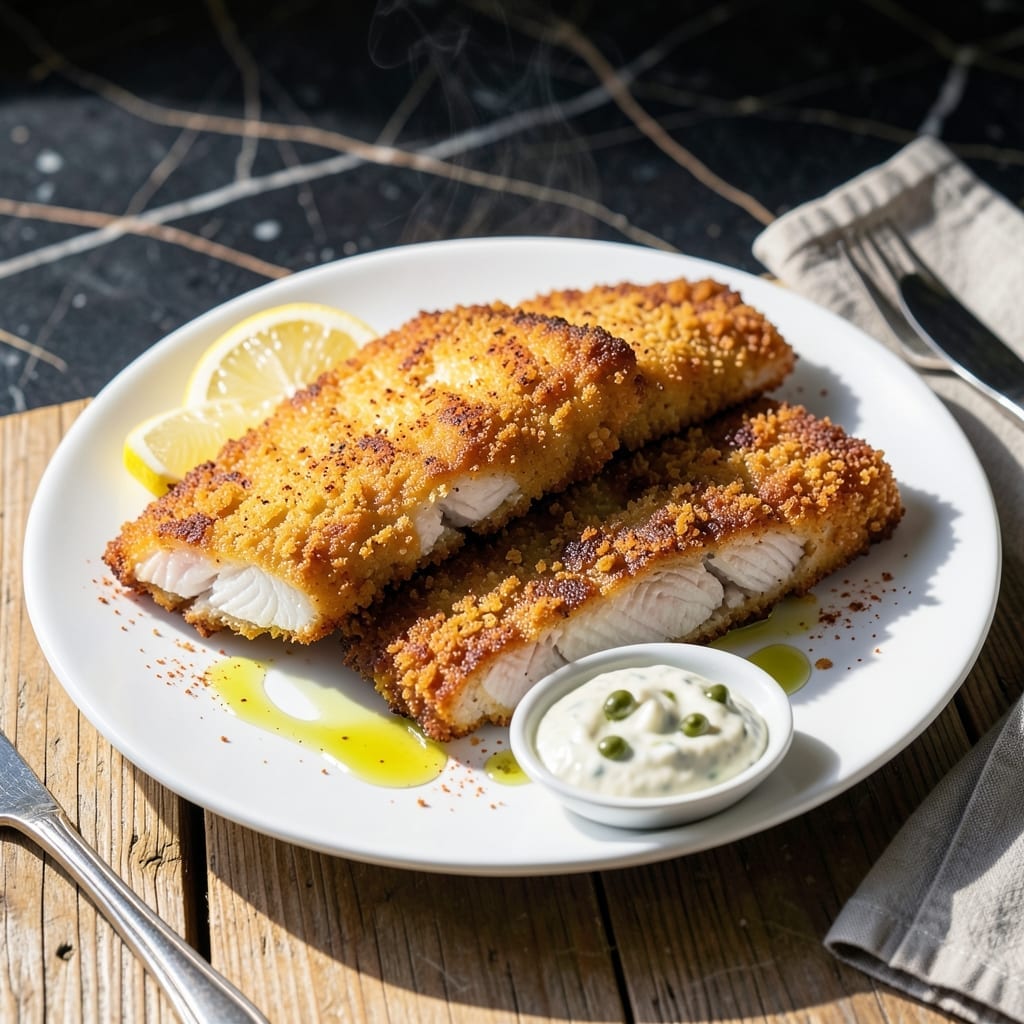
I’ve tested this method in my tiny Boston kitchen more times than I’d like to admit. The secret to crispy success lies in the panko and a precise frying temperature—no soggy coating here.
Grouper’s mild flavor shines through the golden crust, while the lemon aioli adds a bright contrast that cuts through the richness. This isn’t just fried fish—it’s a textural masterpiece.
With a foolproof double-dredging technique and hot oil, you’ll achieve restaurant-quality results at home. The panko creates an unbeatable crunch that holds up even after frying.
Serve immediately with the aioli for dipping. This dish turns a simple fillet into something extraordinary.
Ingredients for Fried Grouper Recipe Panko
Pantry staples and fresh fish create this crispy, restaurant-worthy dish in your own kitchen.
| Ingredient | Amount | Notes |
|---|---|---|
| Grouper Fillets 🐟 | 1 ½ lb | Skinless, boneless, about 1-inch thick |
| All-Purpose Flour 🌾 | 1 cup | For initial dredging |
| Large Eggs 🥚 | 2 whole | Beaten for egg wash |
| Panko Breadcrumbs 🍞 | 2 cups | Japanese-style for extra crunch |
| Cornstarch 🌾 | ¼ cup | For crispier coating |
| Salt 🧂 | 1 ½ tsp | Divided for seasoning |
| Black Pepper 🌶️ | ½ tsp | Freshly ground preferred |
| Paprika 🌶️ | 1 tsp | Sweet or smoked variety |
| Garlic Powder 🧄 | 1 tsp | For depth in seasoning |
| Vegetable Oil 🫒 | 4 cups | For frying, high smoke point |
| Mayonnaise 🥛 | ½ cup | Full-fat for creaminess |
| Lemon Zest 🍋 | 1 tbsp | Finely grated for aioli |
| Lemon Juice 🍋 | 2 tbsp | Freshly squeezed |
| Garlic Cloves 🧄 | 2 cloves | Minced for aioli |
| Dijon Mustard 🟡 | 1 tbsp | For aioli tang |
[recipe_ingredient_scaler]
The grouper is the star. Wild-caught from the Gulf or Atlantic is ideal—look for firm, translucent fillets at your seafood counter (ask them to skin it if it isn’t already). Panko is non-negotiable—regular breadcrumbs won’t give you that shatteringly crisp coating. I grab mine from Whole Foods or the Asian aisle at Stop & Shop. The fillets should be uniform in thickness so they cook evenly.
No grouper? Cod or haddock work great too—just adjust cooking time slightly based on thickness. Out of panko? Crushed saltine crackers at a 1:1 ratio get you close. For the aioli, Greek yogurt can sub for mayo if you’re avoiding eggs (though traditional mayo gives the richest texture). The cornstarch in the dredge is key—don’t skip it (worth the extra minute).
Fry in small batches to keep the oil hot. Leftovers? Not ideal—the crust loses its crunch. But if you must, store in the fridge for 1 day and reheat in a 400°F oven for 10 minutes to crisp back up. Fresh is always best with this one.
Why You’ll Love This Recipe
- Under 30 Minutes: I can bread and fry these fillets faster than ordering takeout, start to finish.
- Crispy Outside, Tender Inside: Panko and cornstarch give that golden crunch while the grouper stays moist and flaky.
- Weeknight Hero: Honestly, it’s my go-to for busy evenings when I need something quick but impressive.
- Budget Stretcher: Grouper fillets go further with a simple flour-egg-panko coating that fills everyone up.
Step-by-Step Instructions for Fried Grouper with Panko
Here’s the method I use to achieve that perfect crunch every time.
Step 1: Season and Coat the Grouper Fillets
Pat the 1.5 lb Grouper Fillets completely dry with paper towels—this is crucial for the coating to adhere properly. Season both sides with 1 tsp Salt, 0.5 tsp Black Pepper, 1 tsp Paprika, and 1 tsp Garlic Powder. The seasoning should be visible but not caked on.
Set up a breading station with three shallow dishes. In the first, combine the 1 cup All-Purpose Flour and 0.25 cup Cornstarch. In the second, beat the 2 whole Large Eggs until smooth. In the third, place the 2 cups Panko Breadcrumbs. The cornstarch in the flour mixture creates an extra-crispy base layer.
Dredge each fillet in the flour mixture, shaking off excess, then dip in the beaten eggs, letting any excess drip off. Finally, press the fillets firmly into the Panko Breadcrumbs, ensuring an even, thick coating on all sides. Place the breaded fillets on a wire rack set over a baking sheet.
Step 2: Heat the Oil and Prepare for Frying
Pour the 4 cups Vegetable Oil into a large, heavy-bottomed Dutch oven or deep skillet. The oil should be about 1.5 inches deep—enough to submerge the fillets completely. Heat over medium-high heat until it reaches 350°F on a deep-fry thermometer.
While the oil heats, let the breaded fillets rest for 5-10 minutes. This helps the coating set and adhere better during frying. If the oil starts to smoke before reaching temperature, reduce the heat slightly—you want 350°F for the perfect golden-brown finish without burning the Panko.
Step 3: Fry the Grouper to Golden Perfection
Carefully lower 2 fillets at a time into the hot oil using tongs, making sure not to overcrowd the pan. Fry for 3-4 minutes per side until the coating is deep golden brown and crispy. The fillets are done when they float easily and the internal temperature reaches 145°F.
Transfer the fried fillets to a paper towel-lined plate to drain excess oil. Sprinkle immediately with the remaining 0.5 tsp Salt while they’re still hot—this ensures the seasoning sticks to the crispy coating. Keep the first batch warm in a 200°F oven while you fry the remaining fillets.
Step 4: Prepare the Zesty Lemon Aioli
In a small bowl, whisk together the 0.5 cup Mayonnaise, 1 tbsp Lemon Zest, 2 tbsp Lemon Juice, 2 cloves minced Garlic Cloves, and 1 tbsp Dijon Mustard. The aioli should be smooth and slightly tangy, with a bright lemon flavor.
Let the aioli sit for 5 minutes to allow the flavors to meld together. Taste and adjust seasoning if needed, though the combination of lemon and Dijon should provide enough zing. This creamy, zesty sauce is the perfect complement to the crispy, mild grouper.
Pro Tips For Making Fried Grouper Recipe Panko
- Pat Fillets Dry: Use paper towels to thoroughly dry the grouper before dredging—I learned this the hard way after my first batch turned soggy instead of crispy.
- Chill the Coating: Pop your floured, egg-dipped, panko-crusted fillets in the fridge for 15 minutes before frying. It keeps the breading from sliding off in the oil.
- Use 375°F Oil: After burning three batches, I finally figured out that 375°F is the sweet spot for golden, crisp panko without overcooking the fish.
- Add Cornstarch to Flour: Mix 1 tablespoon cornstarch into your all-purpose flour for the first dredge—it makes the crust extra crunchy, like my grandmother swore by.
Serving Suggestions for This Dish
Plating with Purpose
I serve this dish on a warm platter lined with butter lettuce leaves for a pop of color. The contrast between the crispy fish and soft greens looks stunning. A lemon wedge on the side adds that restaurant-style finishing touch. 💛
Aioli Presentation
Spoon the lemon aioli into a small ramekin or drizzle it artfully across the plate. I like using the back of a spoon to create 3-4 swirls that guests can dip into. The bright yellow color stands out beautifully against the golden fish.
Side Dish Pairings
My go-to is crispy fries or sweet potato wedges—the saltiness complements the fish perfectly. For a lighter option, try steamed asparagus with a squeeze of lemon. Both options are easy to prep while the fish fries.
Family-Style Serving
For gatherings, I pile the fillets on a large wooden board with aioli in the center. Add college-style tartar sauce on the side for variety. This encourages sharing and makes the meal feel more interactive.
Garnish Like a Pro
A sprinkle of chopped parsley or microgreens adds freshness. I also love a pinch of lemon zest over the top for an extra citrus kick. These small touches elevate the dish without overpowering it.
Drink Pairings
A crisp Sauvignon Blanc or pilsner beer cuts through the richness. For non-alcoholic options, sparkling lemonade works wonderfully. The acidity balances the fried coating beautifully. 🍷
Nutrition Facts
Frequently Asked Questions
Can I use regular breadcrumbs instead of panko?
Panko creates the signature crispy texture, but regular breadcrumbs work in a pinch. Use 1.5 cups and press firmly onto fillets for better adhesion. The coating won’t be as light and crunchy, though.
How do I know when the oil is hot enough?
A deep-fry thermometer reading 350°F is ideal. Without one, test by dropping in a pinch of panko—if it sizzles immediately and floats, your oil is ready.
What’s the best way to keep the fish warm while frying batches?
Place finished fillets on a wire rack in a 200°F oven. This prevents sogginess while maintaining that crispy texture. Avoid stacking to preserve the coating.

Trained in classic French technique but raised on slow-cooked ribs and spicy rubs, she blends culinary skill with smoke and soul.
- Recipe for Boneless Pork Chops in Cast Iron Skillet: Sear and Baste to Juicy Perfection - October 3, 2026
- Recipe for Boneless Cross Rib Roast: Slow-Roasted Beef with Herb Crust - October 3, 2026
- Hamburgers in Sauce Recipe Crock Pot: Slow-Cooked Savory Delight - October 3, 2026