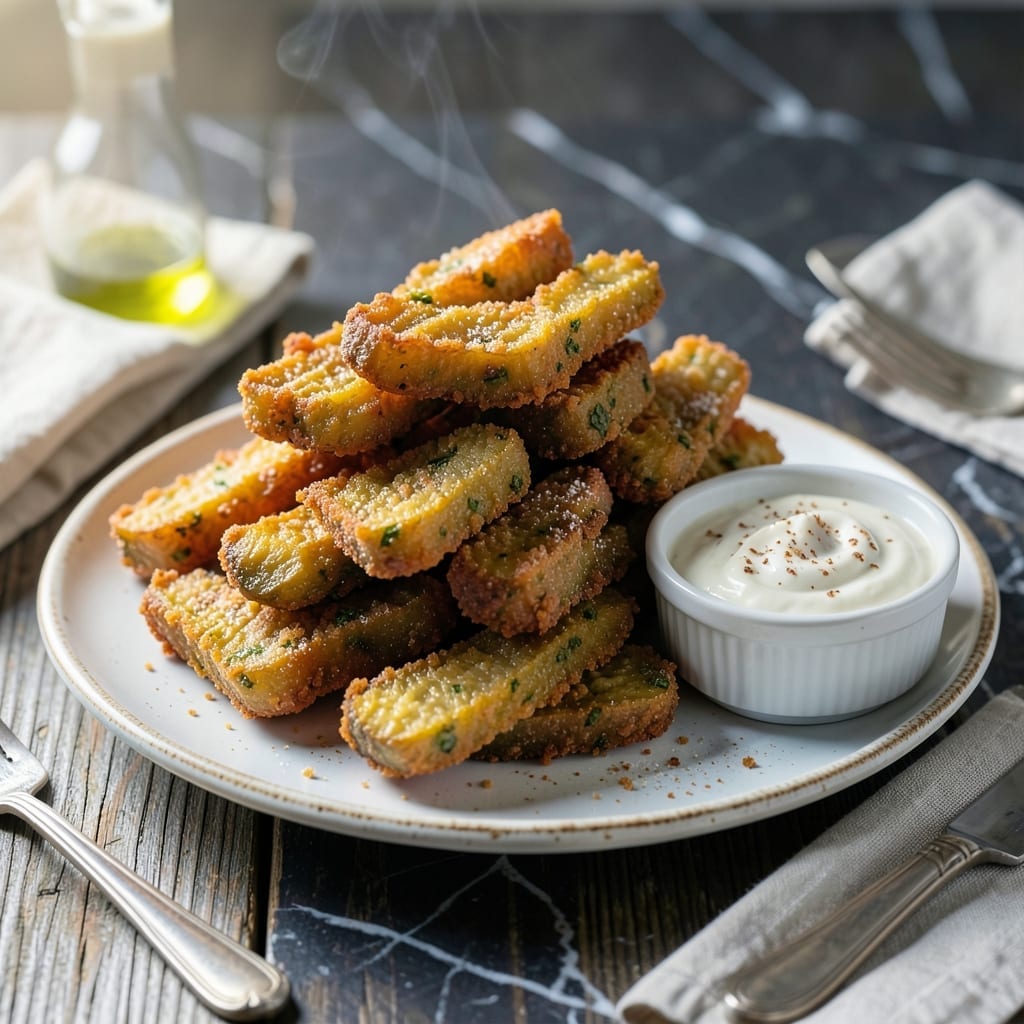
Crispy fried pickles without buttermilk are absolutely achievable with the right technique. This method delivers golden, crunchy results every time.
I developed this recipe after testing multiple coatings to find the perfect balance of texture and flavor. The secret lies in a simple flour and egg mixture that adheres beautifully to the pickles.
You’ll get perfectly crispy pickles with a tangy center, just like the ones from my grandmother’s diner on Peachtree Street. No special equipment required.
David, my official taste-tester, gives these his highest approval. Serve them hot for maximum crunch.
Ingredients for Fried Pickles Recipe No Buttermilk
Dill pickles, a crispy batter, and a few pantry staples bring this together beautifully.
| Ingredient | Amount | Notes |
|---|---|---|
| Dill Pickle Chips 🥒 | 24 pieces | Drained and patted dry |
| All-Purpose Flour 🌾 | 1 ½ cups | Divided for dredging and batter |
| Large Eggs 🥚 | 2 whole | Beaten for batter |
| Cornstarch 🌾 | ¼ cup | For extra crispiness |
| Garlic Powder 🧄 | 1 tsp | For seasoning batter |
| Onion Powder 🧅 | 1 tsp | For seasoning batter |
| Paprika 🌶️ | 1 tsp | Sweet or smoked variety |
| Salt 🧂 | 1 tsp | Fine grain for even distribution |
| Black Pepper 🌶️ | ½ tsp | Freshly ground preferred |
| Cayenne Pepper 🔥 | ¼ tsp | Optional for heat |
| Vegetable Oil 🫒 | 3 cups | For deep frying |
| Ranch Dressing 🥣 | 1 cup | For dipping (optional) |
[recipe_ingredient_scaler]
The pickles are everything here. Claussen or Vlasic have the best crunch for frying—avoid the soft, refrigerated kinds. Drain and pat them bone dry (the drier, the crispier). Most grocery stores carry these in the pickle aisle. I grab mine from Publix or Kroger when I’m restocking. If you’re feeling fancy, bread and butter pickles work too, but the sweetness changes the vibe.
No cornstarch? Swap in arrowroot powder at a 1:1 ratio. Short on flour? Self-rising flour works in a pinch (skip the salt in the batter). The egg is key for binding, but if you’re out, a flax egg (1 tbsp ground flax + 3 tbsp water per egg) gets you close. For oil, peanut or canola are great alternatives—just pick something with a high smoke point. The spices can be eyeballed, but don’t skip the paprika (that’s where the color comes from).
Fry in batches and keep warm in a 200°F oven—they stay crispy for up to 15 minutes. Leftovers (if there are any) reheat best in the air fryer for 3-4 minutes. Don’t bother with the microwave. The batter keeps 24 hours in the fridge if you want to prep ahead.
Why You’ll Love This Recipe
- No-Fuss Coating: I skip the buttermilk and just use eggs and flour—still gets that perfect crunch every time.
- Garlic Zing: The garlic powder in the flour mix gives these pickles a punchy, savory kick that’s downright addictive.
- Crowd-Pleasing App: Honestly, these disappear faster than I can fry them up, whether it’s game day or a random snack night.
- Budget Snack Win: Dill pickle chips are cheap, and the rest is pantry staples—so I can make a big batch without breaking the bank.
Step-by-Step Instructions for Fried Pickles No Buttermilk
Ditch the buttermilk and still get that perfect crunch. Here’s how I nail it every time.
Step 1: Prep the Pickles and Set Up Frying Station
Start by draining the 24 pieces dill pickle chips thoroughly, then pat them completely dry with paper towels. Any moisture will cause the coating to slide right off during frying. I spread them out on a clean kitchen towel to ensure they’re bone-dry before dredging.
Pour the 3 cups vegetable oil into a deep, heavy-bottomed pot or Dutch oven. You want at least 2 inches of oil depth for proper submergence. Place the pot over medium-high heat and bring the oil to 375°F—use a deep-fry or candy thermometer for accuracy. The oil is ready when it shimmers but isn’t smoking.
Step 2: Create the Two-Stage Breading System
Divide the 1.5 cups all-purpose flour evenly between two shallow bowls. To one bowl, add the 0.25 cup cornstarch, 1 tsp garlic powder, 1 tsp onion powder, 1 tsp paprika, 1 tsp salt, 0.5 tsp black pepper, and 0.25 tsp cayenne pepper. Whisk until fully combined—this is your seasoned dredge.
In a third bowl, beat the 2 whole large eggs until uniform in color and slightly frothy. This egg wash will be the glue that makes the coating stick. I like to add a splash of the pickle brine to the eggs for extra tang and adhesion.
Step 3: Bread the Pickles for Maximum Crisp
Working in batches, dredge each pickle chip in the seasoned flour mixture, pressing lightly to ensure full coverage. Shake off any excess—thick clumps will create uneven frying. Then dip it into the beaten eggs, letting any excess drip off for a moment.
Return the pickle to the plain flour for the final coating. This double-dredge technique creates that signature extra-crispy exterior. Place the breaded pickles on a wire rack set over a baking sheet. Don’t stack them or they’ll stick together. Let them rest for 5 minutes while the oil comes to temperature.
Step 4: Fry to Golden Perfection
Carefully lower 6-8 pickles at a time into the hot oil using a slotted spoon or tongs. Don’t overcrowd the pot—this lowers the oil temperature and leads to greasy results. Fry for 2-3 minutes until deep golden brown and floating at the surface.
Drain the fried pickles on a wire rack or paper towel-lined plate. The rack method keeps them crispier by allowing air circulation on all sides. Sprinkle with a pinch of extra salt while still hot to enhance the flavor. Repeat with the remaining pickles, allowing the oil to return to 375°F between batches.
Step 5: Serve Immediately While Hot and Crispy
These are best straight from the fryer when they’re at peak crispiness. Transfer to a serving platter and serve with the 1 cup ranch dressing on the side for dipping. I like to garnish with a sprinkle of paprika for color and a hint of extra flavor.
Real talk: fried pickles lose their crunch quickly, so serve them immediately. If you must hold them, keep them warm in a 200°F oven on a wire rack for no more than 15 minutes. The contrast of the hot, crispy exterior with the cool, tangy interior is what makes these irresistible.
Pro Tips For Making Fried Pickles Recipe No Buttermilk
- Drain the Pickles: Pat the dill pickle chips very dry with paper towels before dredging—I learned this the hard way after my first batch turned into soggy, oil-splattered disappointments.
- Cornstarch Boost: Swap half the all-purpose flour for cornstarch in your dredge; it makes the coating lighter and crispier, especially without buttermilk’s tang to mask texture flaws.
- Hot Oil Check: Drop a pinch of flour into the oil first—if it sizzles and floats immediately, it’s ready; anything less means your pickles will absorb oil like a sponge.
- Double Dredge: Dip the pickles in egg, then flour, then egg again, then flour for a thicker crust that actually clings; skip this and you’ll watch half your coating slide off mid-fry.
Dietary Considerations for These Flavors
Gluten-Free Adaptation
Swap the all-purpose flour for a 1:1 gluten-free flour blend like King Arthur Measure for Measure. The cornstarch already in the recipe helps bind, so you won’t need xanthan gum. I test every gluten-free batch on David—he can’t tell the difference. 💪
Dairy-Free Version
The egg wash can be replaced with a flax egg (1 tbsp ground flaxseed + 3 tbsp water per egg). Let it thicken for 5 minutes before using. The texture stays crispy, though the color may be slightly paler without the egg’s browning properties.
Vegan Modification
Combine the flax egg substitution with gluten-free flour for a fully plant-based version. Use avocado oil instead of vegetable oil for frying—it has a higher smoke point. The pickles will still deliver that tangy crunch Nana Mae would approve of.
Low-Carb Option
Replace the flour with 1 cup almond flour and ½ cup crushed pork rinds for the dredge. The pork rinds add saltiness, so reduce the added salt by ½ tsp. Fry at the same temperature, but watch closely—almond flour browns faster.
Allergy Considerations
For egg allergies, use aquafaba (chickpea brine) as a wash. Whip 3 tbsp aquafaba until frothy—it binds just as well. Always check pickle labels for hidden allergens like mustard or celery, common in some brands.
Sodium Control
Use low-sodium pickles and reduce the added salt by ½ tsp in the batter. Claussen’s Reduced Sodium are my go-to at Central Market. The cornstarch and spices still provide plenty of flavor without the extra salt.
Nutrition Facts
Frequently Asked Questions
Can I use whole pickles instead of chips?
Slice whole dill pickles into 1/4-inch rounds for similar results. Just pat them extra dry to ensure the coating sticks properly.
What can I use if I don’t have cornstarch?
Arrowroot powder works as a 1:1 substitute. For extra crispiness, try adding 1/4 cup crushed pork rinds to the flour mixture instead.
How do I keep them crispy if serving a crowd?
Fry in batches and keep warm on a wire rack in a 200°F oven. Don’t stack them or they’ll steam and lose crunch.
Why did my coating fall off during frying?
This usually happens if the pickles weren’t dry enough before breading. Also, ensure the oil is at 375°F before adding the pickles.

Trained in classic French technique but raised on slow-cooked ribs and spicy rubs, she blends culinary skill with smoke and soul.
- Recipe for Boneless Pork Chops in Cast Iron Skillet: Sear and Baste to Juicy Perfection - October 3, 2026
- Recipe for Boneless Cross Rib Roast: Slow-Roasted Beef with Herb Crust - October 3, 2026
- Hamburgers in Sauce Recipe Crock Pot: Slow-Cooked Savory Delight - October 3, 2026