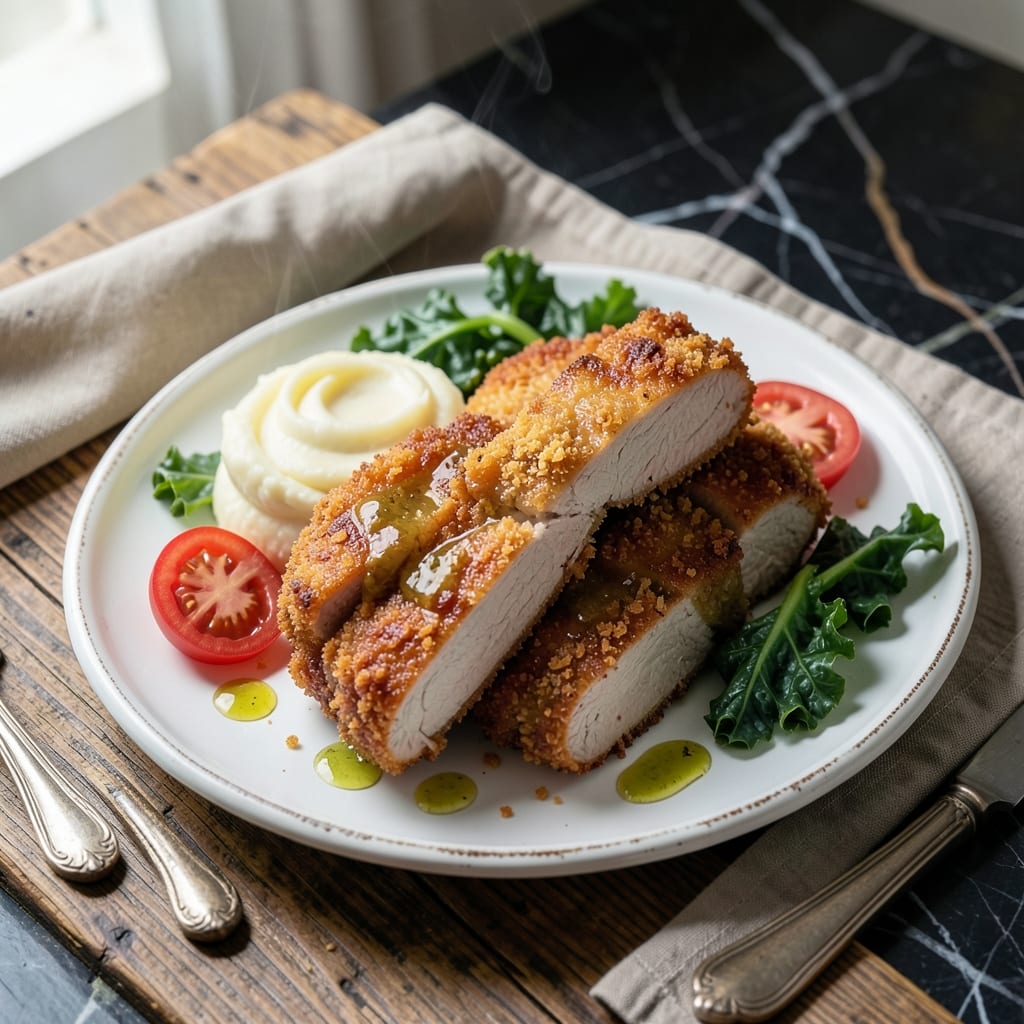
There’s nothing quite like a perfectly fried pork chop with a crunchy coating and juicy center to bring Southern comfort to your table.
I’ve refined this method over years of Sunday dinners, focusing on the right breading ratio and frying temperature to lock in moisture. The key is a hot skillet and patience—don’t rush the process, as this ensures the coating sets properly without drying out the meat.
What emerges is a chop with a golden, shatteringly crisp exterior giving way to tender meat inside. The seasoning in the breading adds just enough flavor to complement, not overpower, the natural taste of the pork.
Serve these with mashed potatoes and collard greens for a classic meal that tastes like home. Here’s how to achieve that perfect balance of texture and flavor.
Ingredients for Fried Pork Chops Recipe Southern Style
A handful of pantry staples creates that signature crispy, juicy Southern classic everyone craves.
| Ingredient | Amount | Notes |
|---|---|---|
| Bone-In Pork Chops 🍖 | 4 whole | Center-cut, 1-inch thick |
| All-Purpose Flour 🌾 | 1 ½ cups | For initial dredging |
| Cornstarch 🌾 | ¼ cup | For extra crispiness |
| Large Eggs 🥚 | 2 whole | Beaten for egg wash |
| Buttermilk 🥛 | 1 cup | For soaking chops |
| Panko Breadcrumbs 🍞 | 2 cups | Or substitute cornmeal |
| Kosher Salt 🧂 | 2 tsp | Divided for seasoning |
| Black Pepper 🌶️ | 1 tsp | Freshly ground preferred |
| Garlic Powder 🧄 | 1 tsp | For breading flavor |
| Onion Powder 🧅 | 1 tsp | For breading flavor |
| Paprika 🌶️ | 1 tsp | Sweet or smoked variety |
| Cayenne Pepper 🔥 | ¼ tsp | Optional for heat |
| Vegetable Oil 🫒 | 2 cups | For frying, peanut oil works too |
[recipe_ingredient_scaler]
The pork chops are the foundation—bone-in, center-cut stay juicier than boneless during frying. Look for chops about 1 inch thick (they’ll cook evenly without drying out). Butcher shops or the meat counter at Whole Foods usually have the best selection. Avoid pre-brined chops; you want to control the seasoning yourself. If you’re buying in bulk, Costco has solid options at a good price.
No buttermilk? Whole milk with 1 tbsp vinegar or lemon juice works in a pinch. Panko is ideal for crunch, but cornmeal at a 1:1 ratio gives a nice Southern-style texture. Swap garlic and onion powder for 1 tsp each of fresh minced garlic and onion if you prefer. The cayenne is optional—skip it for a milder version, or add half the amount for a subtle kick.
Fry in batches to avoid crowding the pan—this keeps the oil hot and the coating crisp. Leftovers (if there are any) keep in the fridge for 3-4 days, though they’re best fresh. Reheat in the oven at 350°F to maintain some crunch, but the microwave works too (just expect a softer coating).
Why You’ll Love This Recipe
- One Pan Wonder: I just need a skillet, a bowl for the buttermilk-egg wash, and 20 minutes to crisp these up.
- Crispy Perfection: That cornstarch in the flour mix? It makes the crust shatter like the best Southern diner chops.
- Feeds the Crew: Bone-in chops stay juicy even when doubled—so I make extra for sandwiches the next day.
- Budget Friendly: Pork chops are cheaper than steak, but with buttermilk and flour, they taste like a million bucks.
Step-by-Step Instructions for Southern Style Fried Pork Chops
This method delivers a perfect crunch with tender, juicy meat every single time.
Step 1: Season and Prepare the Breading Stations
Pat the bone-in pork chops dry with paper towels to ensure the coating adheres properly. Season both sides with 1 teaspoon kosher salt, ½ teaspoon black pepper, and ½ teaspoon paprika—this builds flavor depth before breading.
Set up three shallow dishes: one with the 1.5 cups all-purpose flour mixed with ¼ cup cornstarch, 1 teaspoon garlic powder, 1 teaspoon onion powder, ½ teaspoon kosher salt, and ¼ teaspoon cayenne pepper. The second dish holds the 2 beaten large eggs combined with 1 cup buttermilk. The third contains the 2 cups panko breadcrumbs.
Step 2: Bread the Chops with Care
Dredge each chop in the flour mixture first, pressing gently to coat all surfaces. Shake off any excess—this prevents a thick, gummy crust. Next, dip the floured chop into the egg-buttermilk mixture, allowing any excess to drip off for 5 seconds before moving to the panko.
Press the chop firmly into the panko, turning to coat completely. The panko’s coarse texture creates that signature crunch. Place the breaded chops on a wire rack set over a baking sheet. Let them rest for 10 minutes to set the coating—this step is crucial for preventing the breading from falling off during frying.
Step 3: Fry to Golden Perfection
Heat the 2 cups vegetable oil in a large, deep skillet over medium-high heat until it reaches 350°F. Use a thermometer for accuracy—oil that’s too cool will make the chops greasy, while oil that’s too hot will burn the breading before the meat cooks through.
Carefully place 2 chops at a time into the hot oil (overcrowding lowers the oil temperature). Fry for 4-5 minutes per side until the breading is deep golden brown and the internal temperature reaches 145°F. The crust should be crisp and the meat juicy. Drain on the wire rack to keep the coating crisp.
Step 4: Rest and Serve
Transfer the fried chops to a clean wire rack or paper towel-lined plate. Sprinkle lightly with the remaining ½ teaspoon kosher salt while still hot. Let them rest for 5 minutes—this allows the juices to redistribute, ensuring every bite is moist and flavorful.
Serve immediately while the coating is still crisp. Each chop should have a shatteringly crisp exterior with tender, juicy meat inside. The breading will stay crunchy longer on the rack than on a plate, as steam won’t soften the underside.
Pro Tips For Making Fried Pork Chops Recipe Southern Style
- Dredge Twice: Dip the chops in flour, then buttermilk, then flour again for that extra-crispy crust Southern-style fried pork chops are known for. I learned this the hard way—single-dipping just doesn’t cut it.
- Pat Dry First: Blot the pork chops with paper towels before dredging so the coating sticks properly. After burning three batches, I finally figured out moisture was the culprit.
- Hot Oil Only: Test the oil with a pinch of flour—if it sizzles immediately, it’s ready. My grandmother swore by this, and she was right: lukewarm oil makes greasy, sad chops.
- Rest Before Serving: Let the chops rest on a wire rack for 5 minutes after frying to keep them crispy. Sounds weird, but it works—I was skeptical until I tried it.
Troubleshooting This Dish
Breading Falls Off
If your coating isn’t sticking, your oil might be too hot or your chops too wet. Pat them completely dry before breading. The rest step after breading is crucial—10 minutes lets the coating set properly. I learned this the hard way with my first few attempts. 💡
Greasy Instead of Crispy
This usually means your oil temperature was too low. Use a thermometer to maintain 350°F. If the oil isn’t hot enough, the breading absorbs oil instead of crisping. Also, avoid overcrowding the pan—fry 2 chops at a time maximum.
Dry Pork Chops
Overcooking is the main culprit. Pull them when they reach 145°F internal temperature. The meat continues cooking while resting. For extra juiciness, soak in buttermilk for 30 minutes before breading—this keeps the pork moist.
Uneven Browning
Hot spots in your pan cause this. Use a heavy-bottomed skillet like cast iron for even heat distribution. Rotate your chops halfway through frying. If using electric, avoid the center where heat is often less consistent.
Breading Burns Before Cooking
Your oil is too hot. If it’s smoking, it’s definitely too hot. Adjust to 325-350°F. Also, ensure your chops are 1-inch thick—thinner cuts cook through too quickly, while thicker ones need more time.
Soggy Coating After Resting
Steam is the enemy of crispiness. Always drain on a wire rack, never directly on paper towels. This allows air circulation underneath. If serving a crowd, keep finished chops warm in a 200°F oven on a rack. 🔥
Nutrition Facts
Frequently Asked Questions
What’s the best oil for frying?
Vegetable or peanut oil works best due to their high smoke point. Avoid olive oil as it can burn at 350°F. Use enough to submerge chops halfway.
Can I use boneless chops instead?
Yes, but they cook faster and dry out more easily. Reduce frying time to 3-4 minutes per side and use a meat thermometer to avoid overcooking.
How do I keep them warm for serving?
Place finished chops on a wire rack in a 200°F oven. This prevents steam from making the coating soggy while you finish the batch.

Trained in classic French technique but raised on slow-cooked ribs and spicy rubs, she blends culinary skill with smoke and soul.
- Recipe for Boneless Pork Chops in Cast Iron Skillet: Sear and Baste to Juicy Perfection - October 3, 2026
- Recipe for Boneless Cross Rib Roast: Slow-Roasted Beef with Herb Crust - October 3, 2026
- Hamburgers in Sauce Recipe Crock Pot: Slow-Cooked Savory Delight - October 3, 2026