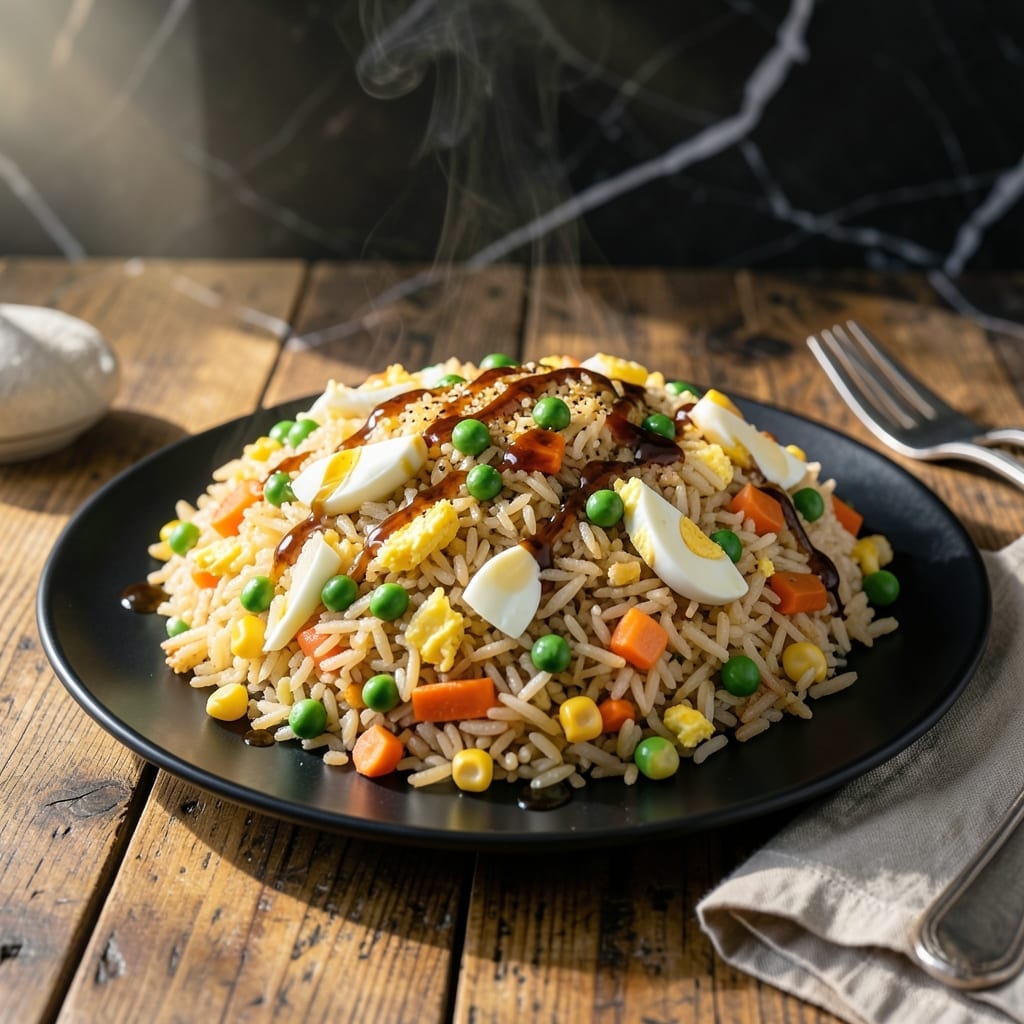
This fried rice recipe transforms frozen vegetables into a weeknight masterpiece in minutes. My grandmother never measured, but her technique taught me that perfect fried rice starts with hot oil and constant motion.
The beauty of using frozen vegetables is their convenience and consistent texture. They eliminate prep work while delivering the same crisp-tender bite as fresh. High heat and a quick hand prevent soggy results.
You’ll achieve restaurant-style flavor with simple pantry staples. The key is cooking the rice a day ahead—dry grains absorb seasonings better and resist turning mushy in the wok.
Each bite combines savory soy, sweet peas, and the subtle crunch of carrots. This dish proves that weeknight cooking can be both easy and extraordinary.
Ingredients for Fried Rice Recipe with Frozen Vegetables
Pantry staples meet frozen veggies for a dish that feels fancy but takes minutes.
| Ingredient | Amount | Notes |
|---|---|---|
| Cooked White Rice 🍚 | 4 cups | Day-old, cold, preferred |
| Frozen Mixed Vegetables 🥕 | 3 cups | Peas, carrots, corn blend |
| Large Eggs 🥚 | 3 whole | Lightly beaten |
| Soy Sauce 🫕 | 3 tbsp | Low-sodium preferred |
| Sesame Oil 🫒 | 1 tbsp | Toasted variety recommended |
| Vegetable Oil 🛢️ | 2 tbsp | High smoke point |
| Green Onions 🧅 | 4 whole | Thinly sliced, whites and greens separated |
| Garlic Cloves 🧄 | 3 cloves | Minced finely |
| Ground White Pepper 🌶️ | ½ tsp | Authentic flavor profile |
| Ground Ginger 🌿 | ¼ tsp | Freshly ground preferred |
| Salt 🧂 | ½ tsp | Adjust to taste |
| Sugar 🥄 | ¼ tsp | Balances soy sauce |
[recipe_ingredient_scaler]
The rice is everything here. Day-old white rice (jasmine or long-grain) gives you that perfect dry texture—freshly cooked turns to mush. I always make extra rice the night before (or spread it on a tray to cool fast). For the frozen veggies, any peas-and-carrots mix works, but check the bag for ice crystals—old freezer-burned stuff gets watery. Trader Joe’s has a great organic blend.
No eggs? Skip them—it’s still delicious. Want more protein? Firm tofu cubed and pan-fried works great (press it first to avoid sog). The sesame oil is non-negotiable though—it adds that nutty depth. If you’ve only got regular soy sauce, use one-third less to keep the salt in check. Fresh ginger? Double the amount of ground, and microplane it in.
Leftovers keep 4-5 days in the fridge—reheat in a skillet with a splash of water. Freeze without the eggs for 3 months (add them fresh when reheating). The green onions? Snip them over just before serving so they stay crisp.
Why You’ll Love This Recipe
- No Chopping Needed: I love that I can pull the veggies straight from the freezer—no prep, just toss them in the pan.
- Savory Depth: The soy sauce and sesame oil give it that rich, umami kick that makes it taste like takeout.
- Weeknight Hero: Honestly, it’s my go-to for busy evenings when I need dinner on the table in 15 minutes flat.
- Budget Stretcher: Leftovers taste even better the next day, and it’s a solid way to use up extra rice and eggs.
Step-by-Step Instructions for Fried Rice With Frozen Vegetables
Here’s the method I use to get that perfect wok hay flavor every single time.
Step 1: Prep and Scramble the Eggs
Lightly beat the 3 whole large eggs with a pinch of the 0.5 tsp salt until just combined. Heat 1 tablespoon of the 2 tbsp vegetable oil in a wok or large skillet over high heat until shimmering. Pour in the eggs and let them sit undisturbed for 10 seconds.
I use a silicone spatula to gently scramble the eggs until they’re just set but still slightly soft—this takes about 30-45 seconds. Remove them from the pan and set aside. The residual heat will finish cooking them while you work on the rest.
Step 2: Sauté the Aromatics and Vegetables
In the same wok, add the remaining 1 tablespoon vegetable oil and swirl to coat. Add the whites of the 4 whole green onions and the 3 cloves minced garlic cloves. Stir-fry for 15-20 seconds until fragrant but not browned.
Immediately add the 3 cups frozen mixed vegetables. I cook them over high heat for 4-5 minutes, stirring constantly, until they’re thawed and any excess moisture has evaporated. This prevents the final dish from becoming watery.
Step 3: Combine Rice and Season
Add the 4 cups cooked white rice to the wok, breaking up any clumps with your spatula. I press down firmly with the spatula for 30 seconds to ensure maximum contact with the hot surface—this creates those coveted crispy bits.
Drizzle the 3 tbsp soy sauce, 1 tbsp sesame oil, 0.5 tsp ground white pepper, 0.25 tsp ground ginger, remaining 0.5 tsp salt, and 0.25 tsp sugar over the rice. Toss everything together vigorously for 2-3 minutes until the rice is evenly coated and heated through.
Step 4: Finish with Eggs and Green Onions
Return the scrambled eggs to the wok and fold them into the rice mixture. I add the green parts of the 4 whole green onions at this point, reserving a small handful for garnish. Cook for an additional 1-2 minutes until everything is hot and the flavors have melded.
Taste and adjust seasoning if needed—the soy sauce provides most of the saltiness, but the sugar balances it out. The rice should have a slight sheen from the oils and a uniform color from the soy sauce, with visible flecks of egg and vegetable throughout.
Pro Tips For Making Fried Rice Recipe With Frozen Vegetables
- Use Day-Old Rice: Fresh rice turns mushy—spread yesterday’s cooked rice on a tray and refrigerate uncovered to dry it out. I learned this the hard way after too many soggy batches. —
- Thaw and Drain Veggies: Toss frozen mixed vegetables in the microwave for 1-2 minutes, then squeeze out excess water with a towel. Skip this and your fried rice will steam instead of sizzle. —
- Crank the Heat: High heat is non-negotiable for that classic wok-seared flavor. I use the highest setting and let the pan get screaming hot before adding oil. —
- Scramble Eggs First: Push scrambled eggs to one side of the pan before adding rice—this keeps them soft and distinct. Sounds weird, but it works better than mixing everything at once.
Storing and Reheating This Recipe
Fridge Storage
Let your fried rice cool completely before transferring to airtight containers—I use glass containers with snap-tight lids from my neighborhood grocery store. Store in the fridge at 40°F or below for up to 4-5 days. The flavors actually deepen as it sits. ❄️
Freezing for Later
Freeze portions without the scrambled eggs in flat freezer bags for up to 3 months. Squeeze out excess air to prevent freezer burn and label with the date. I learned the hard way that eggs get rubbery when frozen, so add them fresh when reheating.
Skillet Reheating
My preferred method: Heat a skillet over medium heat with 1 tablespoon vegetable oil. Add the fried rice and sprinkle with 2-3 tablespoons water to create steam. Cover and cook for 3-4 minutes, stirring occasionally. 🔥
Microwave Shortcut
For quick lunches, microwave individual portions covered with a damp paper towel. Heat on 70% power for 1-2 minutes, stir, then continue in 30-second intervals until hot. Add a splash of water if it looks dry.
Reviving Texture
If your rice seems dry after storage, crack an egg directly into the pan during reheating and scramble it in. This restores moisture and adds freshness. I also toss in a handful of fresh green onions at the end for that crisp bite.
Nutrition Facts
Frequently Asked Questions
Should I thaw the vegetables first?
No need to thaw! Add frozen vegetables directly to the hot wok. The high heat will cook them quickly while preserving texture. Thawing first makes them mushy.
Why does the rice need to be cold?
Cold, day-old rice has dried out slightly, so it fries up fluffy instead of sticky. Fresh rice releases too much moisture, resulting in mushy fried rice.
Can I use fresh vegetables instead?
Yes, but cut them small and uniform. Fresh veggies release more water, so cook them first and drain well before adding rice to prevent sogginess.
How do I fix bland fried rice?
Boost flavor with an extra splash of soy sauce or a pinch of sugar. Finish with a drizzle of sesame oil for depth. Taste as you go!

Trained in classic French technique but raised on slow-cooked ribs and spicy rubs, she blends culinary skill with smoke and soul.
- Recipe for Boneless Pork Chops in Cast Iron Skillet: Sear and Baste to Juicy Perfection - October 3, 2026
- Recipe for Boneless Cross Rib Roast: Slow-Roasted Beef with Herb Crust - October 3, 2026
- Hamburgers in Sauce Recipe Crock Pot: Slow-Cooked Savory Delight - October 3, 2026