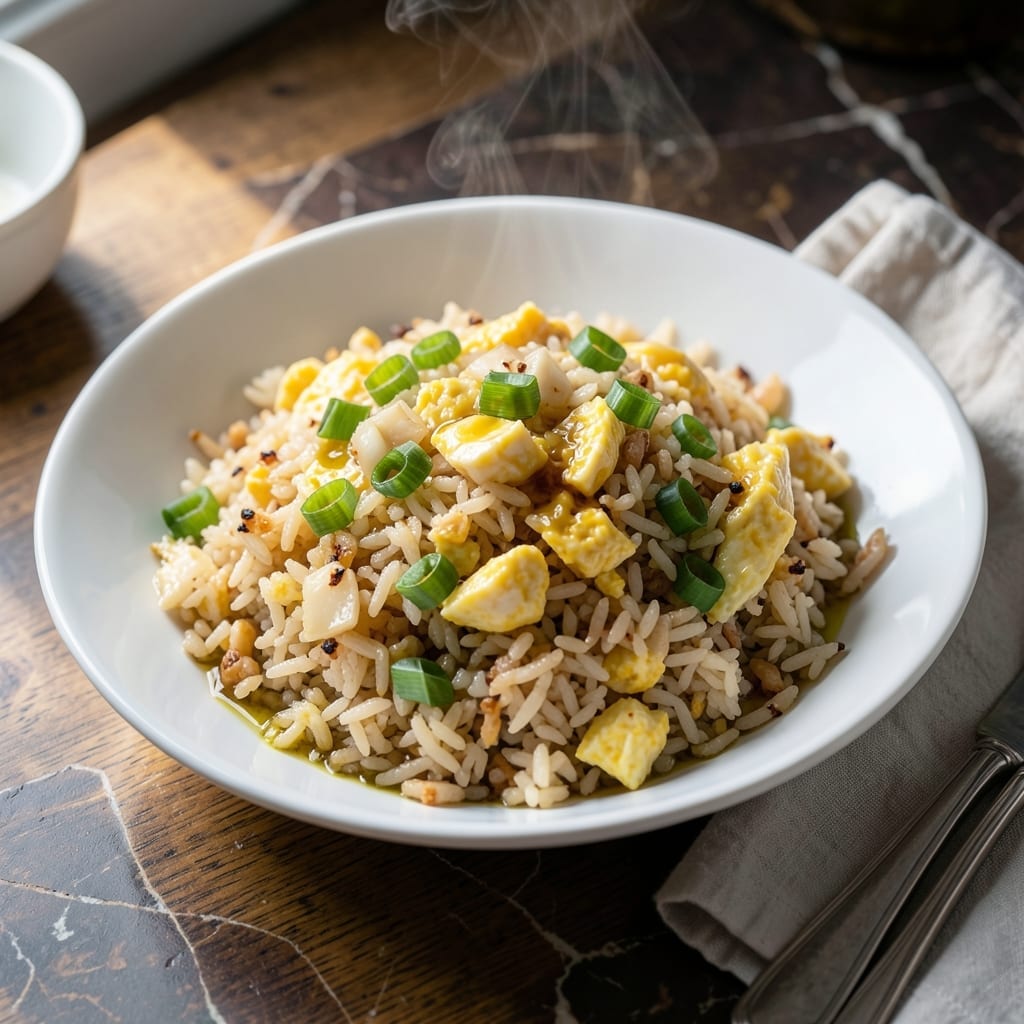
This recipe transforms leftover rice into a fluffy, savory masterpiece that rivals takeout. I developed this method after one too many soggy fried rice attempts in my Boston kitchen.
The key is using day-old rice, which has dried out slightly, preventing the mushy texture that plagues fresh rice versions. A hot wok and quick tossing create those signature slightly charred, golden-brown bits.
What results is a dish with distinct, separate grains that hold their shape while soaking up all the flavorful sauce. The aroma alone will have everyone gathering around the table before the first bite.
Perfect for using up fridge odds and ends, this adaptable recipe works for breakfast, lunch, or dinner. Here’s how to nail it.
Ingredients for Fried Rice Recipe with Old Rice
Day-old rice, a hot wok, and bold flavors turn leftovers into restaurant-quality savory bites.
| Ingredient | Amount | Notes |
|---|---|---|
| Day-Old Cooked White Rice 🍚 | 4 cups | Cold, dry, separated grains |
| Large Eggs 🥚 | 3 whole | Beaten until uniform |
| Vegetable Oil 🫒 | 3 tbsp | High smoke point preferred |
| Garlic Cloves 🧄 | 3 cloves | Minced finely |
| Fresh Ginger 🌿 | 1 tbsp | Peeled and grated |
| Green Onions 🧅 | 4 whole | Thinly sliced, whites and greens separated |
| Frozen Peas and Carrots 🥕 | 1 cup | No need to thaw |
| Low-Sodium Soy Sauce 💧 | 3 tbsp | Or tamari for gluten-free |
| Oyster Sauce 🍶 | 1 tbsp | Optional but recommended |
| Sesame Oil 🫒 | 1 tsp | Toasted for depth |
| Salt 🧂 | ½ tsp | Adjust to taste |
| Ground White Pepper 🌶️ | ¼ tsp | Traditional for authenticity |
| Cooked Chicken Breast 🍗 | 1 cup | Diced, optional protein |
[recipe_ingredient_scaler]
The rice must be completely cold and dry—day-old from the fridge is perfect. Fresh rice will turn to mush. For best results, use jasmine or long-grain white rice; avoid instant or sticky varieties. A well-seasoned carbon steel wok is ideal, but a heavy skillet works too. I source my rice from local Asian markets for optimal texture and authenticity.
No oyster sauce? Hoison or extra soy sauce works in a pinch. Swap chicken for shrimp, tofu, or extra veggies—whatever needs using up. The ginger and garlic are non-negotiable (fresh only), but frozen peas and carrots can be swapped for bell peppers or broccoli. For gluten-free, use tamari instead of soy sauce.
Leftover fried rice keeps 3-4 days in the fridge. Reheat in a skillet with a splash of water to restore moisture. Freeze for up to 3 months (best without egg for texture). Always cook the egg fresh—it doesn’t reheat well.
Why You’ll Love This Recipe
- One Pan Wonder: I toss everything into a single wok—rice, eggs, garlic, ginger—and it’s done in 15 minutes flat.
- Crave-Worthy Bite: That hit of fresh ginger with the garlic? It turns plain old rice into something I sneak bites of before serving.
- Weeknight Hero: Between us, it’s my Wednesday lifesaver when the fridge is half-empty but the hunger is real.
- Zero Waste Win: I use up leftover rice and odds and ends from the veggie drawer—no food wasted, just flavor added.
Step-by-Step Instructions for Wok-Tossed Savory Fried Rice
Achieve perfect texture and flavor with this tested method for restaurant-quality results at home.
Step 1: Prepare and Scramble the Eggs
Beat the 3 whole Large Eggs until uniform and set aside. Heat 1 tablespoon of the 3 tbsp Vegetable Oil in a wok or large skillet over medium-high heat until shimmering. Pour in the eggs and let them set slightly before stirring gently with a spatula.
Cook until just set but still slightly runny—about 30-45 seconds. Remove the eggs immediately and transfer to a plate. This prevents overcooking and maintains their tender, creamy texture. The eggs will finish cooking when combined with the hot rice later.
Step 2: Sauté Aromatics and Vegetables
Add the remaining 2 tbsp Vegetable Oil to the wok and increase heat to high. Add the minced 3 cloves Garlic Cloves and 1 tbsp Fresh Ginger, stirring constantly for 15-20 seconds until fragrant but not browned.
Immediately add the white parts of the 4 whole Green Onions and the 1 cup Frozen Peas and Carrots. Stir-fry for 2-3 minutes until the vegetables are heated through and the peas turn bright green. The frozen vegetables will release moisture, which helps deglaze the wok and build flavor.
Step 3: Combine Rice and Protein
Break up any clumps in the 4 cups Day-Old Cooked White Rice with your hands and add it to the wok. Stir-fry for 2-3 minutes, pressing the rice against the hot surface to create slight browning. Add the 1 cup Cooked Chicken Breast and continue stir-frying for another 1-2 minutes until everything is evenly combined and hot.
The rice should be dry and separate easily—this is why day-old rice works best. Fresh rice would be too moist and result in a mushy texture. The chicken should be warmed through but not overcooked, maintaining its tender texture.
Step 4: Season and Finish
Reduce heat to medium and add the 3 tbsp Low-Sodium Soy Sauce, 1 tbsp Oyster Sauce, 0.5 tsp Salt, and 0.25 tsp Ground White Pepper. Stir well to distribute the sauces evenly throughout the rice mixture.
Return the scrambled eggs to the wok along with the green onion tops. Drizzle with 1 tsp Sesame Oil and toss everything together for 30-60 seconds until fully incorporated. The sesame oil adds a final layer of aroma and depth, while the green onion tops provide a fresh, bright finish.
Taste and adjust seasoning if needed. The rice should be evenly coated with sauce, with distinct grains and a balance of savory, umami, and slightly sweet flavors. Serve immediately while hot.
Pro Tips For Making Fried Rice Recipe With Old Rice
- Break Up the Rice: Use your hands to crumble the day-old rice into individual grains before frying—this prevents clumps and guarantees even cooking. I learned this the hard way after too many sticky bites.
- Hot Pan, Fast Cook: Heat the wok or skillet until it’s smoking hot before adding oil, then work quickly. After burning three batches, I finally figured out that high heat is non-negotiable for that classic wok hei flavor.
- Prep Eggs Separately: Scramble the eggs in a small bowl first, then cook them in the pan before removing and setting aside. Sounds weird, but it works: this keeps them soft and distinct instead of disappearing into the rice.
- Skip Fresh Rice: Resist the urge to use just-cooked rice—it’s too moist and will turn mushy. Day-old, cold rice from the fridge is the thing that matters most for that perfect dry, separate texture.
Creative Variations of These Flavors
Kimchi Fried Rice
For a Korean twist, add 1 cup chopped kimchi with the vegetables. Its tangy spice pairs perfectly with gochujang—mix 1 tbsp into the soy sauce. I love how the fermented flavor deepens overnight in my Boston fridge. 🌶️
Pineapple Sweet & Sour
Create Hawaiian-style fried rice by stir-frying 1 cup diced fresh pineapple with the veggies. Add 2 tbsp sweet chili sauce at the end for a sticky, tangy glaze. The natural sugars caramelize beautifully in a hot wok.
Bacon & Scallion
Crisp 4 slices chopped bacon first, then use the rendered fat to cook the aromatics. This adds a smoky depth that reminds me of my Irish grandfather’s kitchen. Skip the chicken and let the bacon shine as the protein.
Vegetarian Tofu
Press and cube 1 cup extra-firm tofu, then pan-fry until golden before adding to the rice. I prefer House Foods tofu from my local market—it holds its shape better than other brands. Boost umami with 1 tbsp mushroom soy sauce.
Thai Basil & Lime
Finish with ½ cup Thai basil leaves and a squeeze of lime juice for bright, aromatic notes. This variation works especially well with jasmine rice. The citrus cuts through the richness beautifully. ✨
Breakfast Style
Add ½ cup shredded cheddar and 2 crumbled cooked sausage links at the end. Top each serving with a fried egg for that classic diner feel. My Boston brunch crowd always requests this version.
Nutrition Facts
Frequently Asked Questions
Why does the rice need to be day-old?
Day-old rice has dried out, preventing a mushy texture. Fresh rice contains too much moisture, which turns to steam when cooked quickly. The dry grains separate better and absorb flavors more effectively.
Can I use brown rice instead?
Yes, but it may need 1-2 extra minutes of cooking to soften. Brown rice has a chewier texture, so break up clumps thoroughly before stir-frying. The flavor will be nuttier than white rice.
How do I prevent soggy results?
Use high heat and work quickly. Overcrowding the wok steams the rice—cook in batches if needed. Always start with cold, dry rice and keep ingredients moving constantly.
What if I don’t have a wok?
A large, heavy skillet works well. Avoid nonstick pans as they don’t get hot enough. Cast iron is ideal for heat retention and even browning. Just be sure it’s well-seasoned.

Trained in classic French technique but raised on slow-cooked ribs and spicy rubs, she blends culinary skill with smoke and soul.
- Recipe for Boneless Pork Chops in Cast Iron Skillet: Sear and Baste to Juicy Perfection - October 3, 2026
- Recipe for Boneless Cross Rib Roast: Slow-Roasted Beef with Herb Crust - October 3, 2026
- Hamburgers in Sauce Recipe Crock Pot: Slow-Cooked Savory Delight - October 3, 2026