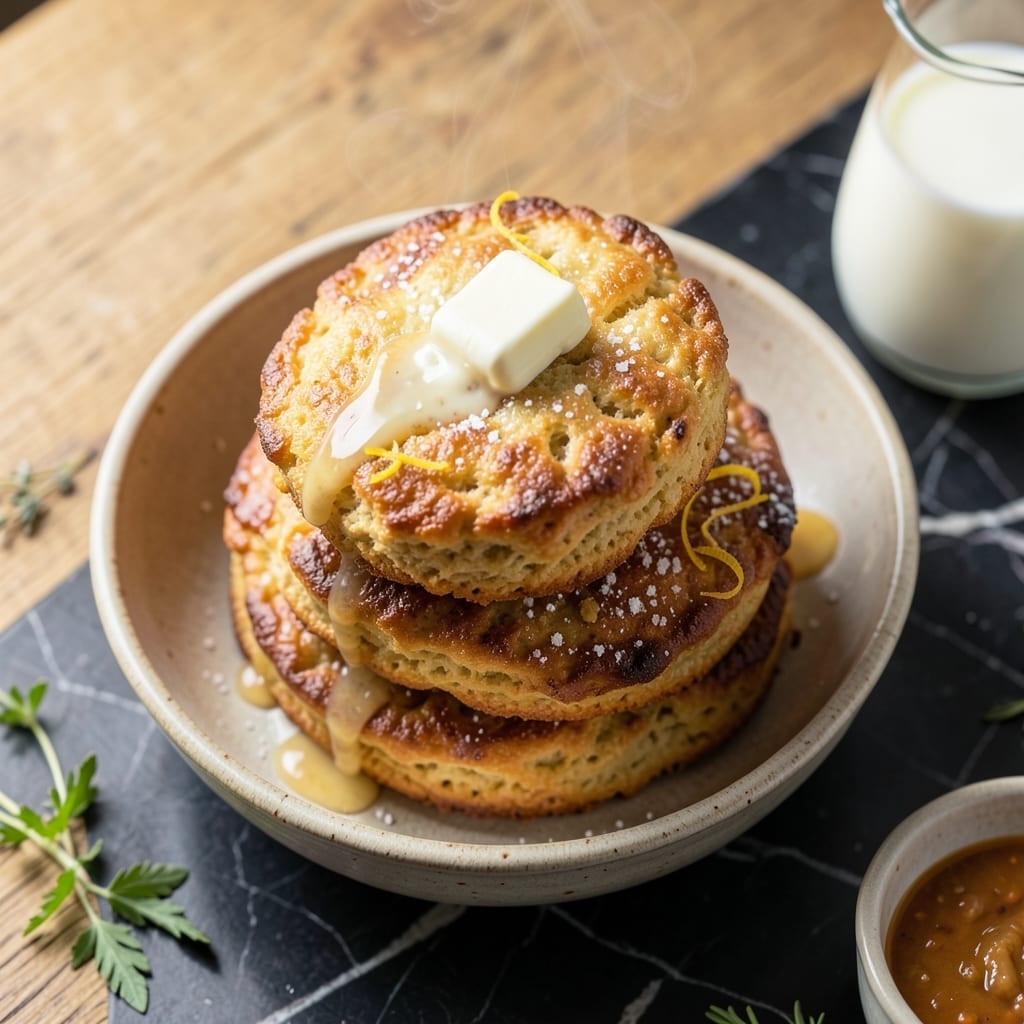
There’s something deeply satisfying about achieving fluffy fried scones without the waiting time that yeast requires. This method relies on a simple leavening combination that creates beautiful layers with minimal effort.
The dough comes together quickly with basic pantry staples, requiring no special equipment beyond a rolling pin and deep skillet. I’ve perfected the frying temperature to ensure golden exteriors while maintaining soft, airy interiors.
What emerges from the oil is a scone that’s crisp at the edges yet tender throughout, with that characteristic layered texture that makes them irresistible. The absence of yeast means you can enjoy fresh scones in under an hour.
Serve warm with jam, honey, or your favorite spread. Here’s how to make them perfectly every time.
Ingredients for Fried Scone Recipe Without Yeast
Basic pantry items transform into golden, flaky layers with this simple method.
| Ingredient | Amount | Notes |
|---|---|---|
| All-Purpose Flour 🌾 | 4 cups | Plus extra for dusting surface |
| Baking Powder 🧂 | 2 tbsp | Double-acting for best rise |
| Granulated Sugar 🍚 | ¼ cup | Adjust to taste preference |
| Salt 🧂 | 1 tsp | Fine sea salt preferred |
| Unsalted Butter 🧈 | ½ cup | Cold, cubed for flakiness |
| Whole Milk 🥛 | ¾ cup | Cold, plus extra for brushing |
| Large Egg 🥚 | 1 whole | For binding the dough |
| Vegetable Oil 🫒 | 2 cups | For deep frying (peanut or canola work too) |
| Vanilla Extract 🌿 | 1 tsp | Pure extract recommended |
| Ground Cinnamon 🌶️ | ½ tsp | Optional for spiced variation |
[recipe_ingredient_scaler]
The butter is key here—cold, cubed unsalted gives you those beautiful layers. I always use Plugrá or Kerrygold for the best flavor. The flour should be all-purpose; no need for anything fancy. Baking powder does the magic since we’re skipping yeast, so make sure yours is fresh (test it by dropping some in hot water—it should bubble vigorously). Milk and egg bind everything, but you can swap the milk for buttermilk if you’ve got it.
No buttermilk? Milk plus a splash of lemon juice works in a pinch. Skip the cinnamon if you want plain scones, or add nutmeg or cardamom for a different twist. The oil for frying needs a high smoke point—peanut or canola oil are my go-tos. If you’re avoiding dairy, coconut oil (solid) for the dough and any neutral oil for frying will do, though the flavor changes slightly.
Dough can be made ahead—wrap it tightly and refrigerate for up to 24 hours. Fried scones are best eaten fresh but will keep in an airtight container for 2 days. Reheat in a warm oven to revive the crispness. For longer storage, freeze the uncooked dough discs and fry from frozen, adding 1-2 minutes to cooking time.
Why You’ll Love This Recipe
- No Yeast Needed: I love that I can skip the waiting around for dough to rise—just mix, shape, and fry.
- Buttery Crisp Edges: The unsalted butter gives these scones a rich, golden crust with a tender center.
- Breakfast or Dessert: I serve them with jam at breakfast or dusted with sugar for an after-dinner treat.
- Pantry Staples Only: All-purpose flour and baking powder mean I can make these anytime without a special grocery trip.
Step-by-Step Instructions for Fried Scones Without Yeast
This no-yeast method delivers light, flaky layers with minimal effort and maximum flavor.
Step 1: Prepare the Dough Base
In a large mixing bowl, whisk together the 4 cups All-Purpose Flour, 2 tbsp Baking Powder, 0.25 cup Granulated Sugar, 1 tsp Salt, and 0.5 tsp Ground Cinnamon until evenly combined. The baking powder is your leavening agent here, so ensure it’s fresh for optimal rise.
Cut in the 0.5 cup Unsalted Butter (cold and cubed) using a pastry cutter or your fingers until the mixture resembles coarse crumbs with pea-sized butter pieces visible. This step creates the flaky texture you’re after—don’t overwork it, or the butter will melt prematurely.
Step 2: Bind the Dough and Rest
In a separate bowl, lightly beat the 1 whole Large Egg, 0.75 cup Whole Milk, and 1 tsp Vanilla Extract until smooth. Pour this wet mixture into the dry ingredients and stir gently with a wooden spoon until just combined. The dough will be slightly sticky but should hold together when pressed.
Turn the dough onto a lightly floured surface and pat it into a 1-inch thick rectangle. Avoid kneading—this isn’t bread. Overworking the dough will toughen the scones. Wrap it in plastic and let it rest in the refrigerator for 15 minutes to relax the gluten and firm up the butter.
Step 3: Shape and Cut the Scones
After resting, roll the dough to an even ¾-inch thickness on a floured surface. Use a 2½-inch round cutter to stamp out scones, pressing straight down without twisting—this ensures even rising. Gather the scraps, gently re-roll, and cut more scones until all dough is used.
Place the cut scones on a parchment-lined tray and brush the tops lightly with a bit of the reserved Whole Milk. This adds sheen and helps with browning. Let them rest for 5-10 minutes at room temperature while you heat the oil.
Step 4: Fry to Golden Perfection
In a deep, heavy-bottomed pot, heat the 2 cups Vegetable Oil to 350°F. Use a thermometer for accuracy—oil that’s too cool will make the scones greasy, while oil that’s too hot will burn the outside before the inside cooks.
Fry the scones in batches for 2-3 minutes per side until they’re deep golden brown and puffed. Don’t crowd the pot; this lowers the oil temperature and leads to uneven cooking. Transfer the fried scones to a wire rack or paper towels to drain excess oil.
Real talk: if the oil starts smoking, it’s too hot—lower the heat immediately. The scones should sizzle gently when they hit the oil, not hiss violently.
Pro Tips For Making Fried Scone Recipe Without Yeast
- Chill the Butter: Keep your unsalted butter ice-cold until the last second—this prevents it from melting into the flour and gives you flaky layers in the finished scone.
- Don’t Overmix: Stir the dough just until it comes together; overworking it makes the scones tough, and I learned this the hard way after a few dense batches.
- Test the Oil: Drop a tiny piece of dough into the oil first—if it sizzles and rises quickly, the oil is hot enough (about 350°F) for frying.
- Use Fresh Baking Powder: If your baking powder has been sitting in the cupboard for months, it loses its punch; swap in a fresh can for maximum rise.
Common Mistakes When Making Perfect Results
Overworking the Dough
Resist the urge to knead this dough like bread. Overworking develops gluten, making your scones tough instead of tender. I mix just until combined, then handle minimally when shaping. 💡
Cold Butter Matters
Your butter must stay cold for flaky layers. If it starts melting, refrigerate the dough for 10 minutes before proceeding. I use Plugrá and cut it into ½-inch cubes.
Oil Temperature
Too cool = greasy scones. Too hot = burnt outsides. Use a thermometer to maintain 350°F. I check with a Taylor digital thermometer for accuracy.
Crowding the Pot
Frying too many at once lowers oil temperature. Cook in batches with 2 inches between each scone. This ensures even cooking and proper browning.
Insufficient Resting
Let the dough rest 15 minutes after mixing. This relaxes the gluten and allows the baking powder to activate. Skipping this makes dense scones.
Uneven Thickness
Roll the dough to an even ¾-inch thickness. Use a ruler if needed. Uneven thickness leads to some scones being undercooked while others burn. 🔥
Nutrition Facts
Frequently Asked Questions
Can I make these without milk?
Yes! Substitute 0.75 cup of any plant-based milk like almond or oat. For extra richness, use coconut milk from a can.
Why did my scones come out dense?
Overworking the dough or using old baking powder are the usual culprits. Mix just until combined and check your leavening agent’s freshness first.
What oil works best for frying?
Any oil with a high smoke point like peanut, canola, or vegetable oil. Avoid olive oil as it can burn at 350°F.
Can I bake these instead of frying?
For baked scones, place on a tray at 400°F for 15-18 minutes. They’ll be less crispy but still delicious.

Trained in classic French technique but raised on slow-cooked ribs and spicy rubs, she blends culinary skill with smoke and soul.
- Recipe for Boneless Pork Chops in Cast Iron Skillet: Sear and Baste to Juicy Perfection - October 3, 2026
- Recipe for Boneless Cross Rib Roast: Slow-Roasted Beef with Herb Crust - October 3, 2026
- Hamburgers in Sauce Recipe Crock Pot: Slow-Cooked Savory Delight - October 3, 2026