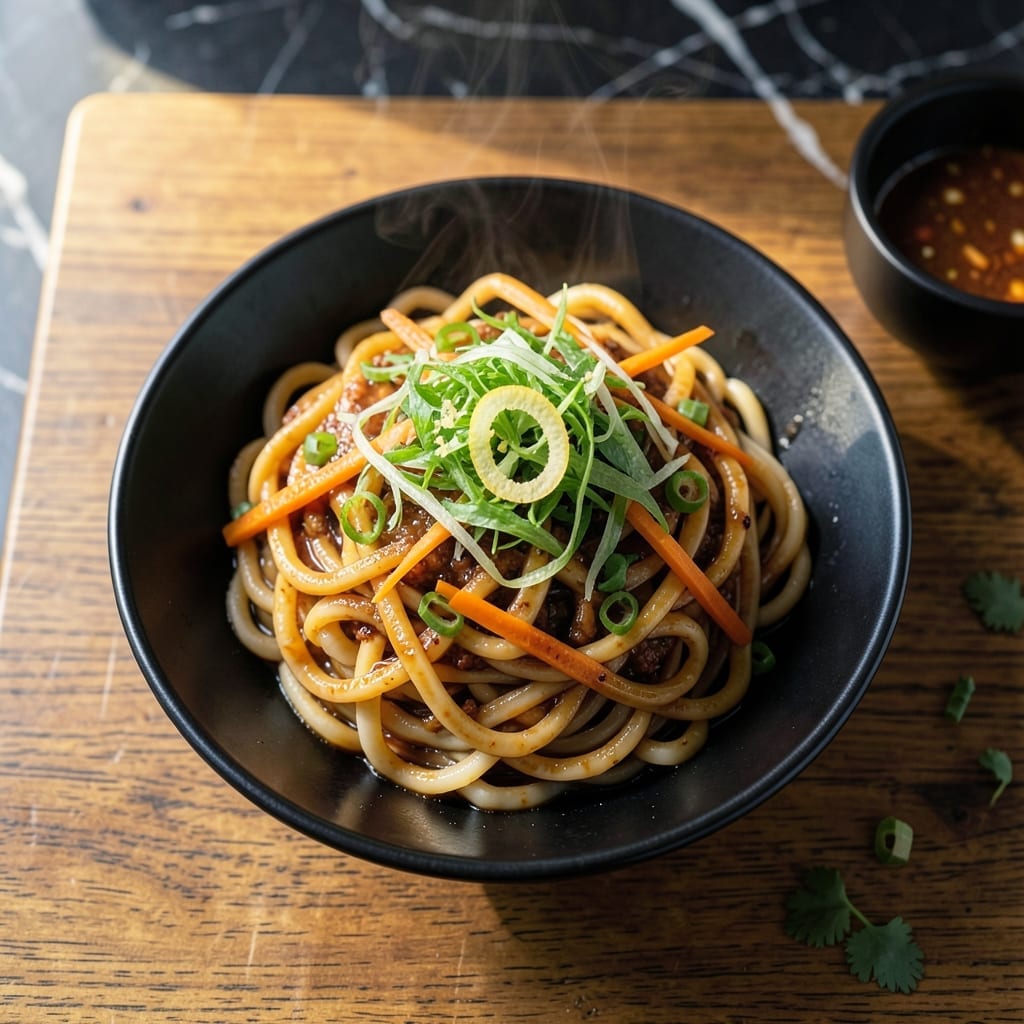
I first encountered Japanese fried udon in a tiny Boston ramen shop, where the chef’s pan-fried version stole the show. This dish transforms chewy wheat noodles into a savory, slightly crispy creation with a glossy soy-based glaze.
What makes this method special is the high-heat stir-fry technique, which creates caramelized edges while keeping the noodles tender. Fresh udon works best, but dried noodles can be pre-boiled for similar results.
The sauce is simple yet balanced—soy sauce, mirin, and a touch of sugar create that signature umami depth. Vegetables like cabbage and carrots add texture and color to each bite.
Serve this dish hot, straight from the pan, with a sprinkle of green onions for freshness. The contrast between the chewy noodles and crispy bits is irresistible.
Ingredients for Fried Udon Recipe Japanese
Fresh udon, crisp vegetables, and a glossy soy-mirin sauce bring this dish to life.
| Ingredient | Amount | Notes |
|---|---|---|
| Fresh Udon Noodles 🍜 | 1 ½ lb | Or dried pre-boiled |
| Soy Sauce 🫒 | ½ cup | Low-sodium preferred |
| Mirin 🍶 | ¼ cup | Sweet cooking rice wine |
| Granulated Sugar 🍚 | 2 tbsp | Balances sauce sweetness |
| Green Cabbage 🥬 | 2 cups | Thinly sliced for texture |
| Carrots 🥕 | 1 whole | Julienned or matchstick cut |
| Green Onions 🧅 | 4 whole | Thinly sliced for garnish |
| Garlic Cloves 🧄 | 3 cloves | Minced for sauce depth |
| Fresh Ginger 🌿 | 1 tbsp | Grated for aroma |
| Vegetable Oil 🛢️ | 3 tbsp | High smoke point for frying |
| Sesame Oil 🫒 | 1 tbsp | Toasted for finishing |
| Red Pepper Flakes 🌶️ | ½ tsp | Optional for heat |
| Sesame Seeds 🌰 | 1 tbsp | Toasted for garnish |
[recipe_ingredient_scaler]
The udon noodles are non-negotiable here. Fresh udon from an Asian market gives you that perfect chew—dried works if you pre-boil it (check the package for 100% wheat). For the sauce, Kikkoman soy sauce and Aji-Mirin are standard in professional kitchens. Avoid cheap soy sauces with added MSG—they’ll make your glaze taste harsh. Most well-stocked grocery stores carry these in the international aisle.
No mirin? Substitute dry sherry plus a teaspoon of sugar. Out of fresh ginger? Ground ginger at one-third the amount works in a pinch. The cabbage can be swapped for Napa cabbage or bok choy—just adjust the cooking time slightly. For extra protein, add thinly sliced chicken or shrimp (cook separately first). Vegetable oil can be any neutral oil with a high smoke point, like peanut or canola.
This dish is best eaten immediately—the noodles lose their crispness if held. Leftovers keep for 2 days in the fridge (reheat in a dry pan to revive texture). Sauce components can be mixed ahead and stored separately for 1 week. Always toast sesame seeds fresh for maximum aroma.
Why You’ll Love This Recipe
- One Pan Meal: I toss everything in a single skillet—udon, cabbage, and that sweet-savory soy-mirin glaze. Cleanup’s a breeze.
- Umami Bomb: The mirin and soy sauce caramelize into this sticky, salty-sweet coating that clings to every noodle.
- Weeknight Hero: Honestly, it’s my 15-minute dinner when I’m starving but don’t want takeout.
- Budget Stretcher: Fresh udon and cabbage feed four for less than a fiver. Leftovers? Still ridicuously good the next day.
Step-by-Step Instructions for Japanese Fried Udon
Master the technique for perfect texture and balanced flavor in this classic stir-fry.
Step 1: Prepare the Sauce and Vegetables
In a small bowl, whisk together the 0.5 cup Soy Sauce, 0.25 cup Mirin, and 2 tbsp Granulated Sugar until the sugar fully dissolves. This creates the signature sweet-savory glaze that coats every noodle.
Thinly slice the 2 cups Green Cabbage into ribbons and julienne the 1 whole Carrots into matchsticks. Thinly slice the 4 whole Green Onions, keeping the white and green parts separate. Mince the 3 cloves Garlic Cloves and grate the 1 tbsp Fresh Ginger.
Step 2: Parboil the Udon Noodles
Bring a large pot of water to a rolling boil. Add the 1.5 lb Fresh Udon Noodles and cook for 1-2 minutes until they begin to separate and soften. Drain immediately and rinse under cold water to stop the cooking process and remove excess starch.
This step ensures the noodles maintain their chewy texture when stir-fried. Shake off excess water and toss the noodles with 1 tbsp Sesame Oil to prevent sticking while you prepare the remaining ingredients.
Step 3: Stir-Fry the Aromatics and Vegetables
Heat 2 tbsp Vegetable Oil in a wok or large skillet over high heat until shimmering. Add the minced garlic and grated ginger, stir-frying for 30 seconds until fragrant but not browned. Immediately add the carrots and cabbage, stirring constantly for 3-4 minutes until the vegetables soften slightly but retain their crispness.
Push the vegetables to one side and add the remaining 1 tbsp Vegetable Oil to the empty space. Pour the prepared sauce into the pan and let it simmer for 1 minute to thicken slightly before combining with the vegetables.
Step 4: Combine and Finish the Dish
Add the parboiled udon noodles to the wok, using tongs to separate and distribute them evenly. Stir-fry everything together over high heat for 3-4 minutes until the noodles are heated through and fully coated in the sauce. The noodles should be tender with a slight chew.
Sprinkle the 0.5 tsp Red Pepper Flakes over the top and toss again to distribute evenly. The heat should be visible but not overwhelming. Remove from heat and stir in the sliced green onions, reserving some for garnish.
Step 5: Plate and Garnish
Transfer the fried udon to serving plates. Drizzle with any remaining sauce from the pan and sprinkle with the reserved green onions and 1 tbsp Sesame Seeds. The sesame seeds add a nutty crunch that contrasts beautifully with the chewy noodles.
Serve immediately while hot. Each bite should deliver a perfect balance of savory soy, sweet mirin, and the fresh crunch of vegetables. The noodles should be glossy and well-coated, with no dry spots.
Pro Tips For Making Fried Udon Recipe Japanese
- Parboil the Udon: I learned this the hard way—fresh udon needs a quick 30-second blanch in boiling water before frying to remove excess starch and prevent gummy clumps.
- Shred Cabbage Thin: Sounds tedious, but thinly sliced green cabbage wilts faster and distributes evenly, so you’re not chewing on raw chunks in the final dish.
- High Heat First: Crank the heat to medium-high when stir-frying the noodles to get those coveted crispy edges before the sauce softens them.
- Mix Sauce Ahead: Whisk the soy sauce, mirin, and sugar together before cooking starts—this keeps the flavors balanced and saves frantic stirring mid-fry.
Health Benefits of These Flavors
Complex Carbohydrates
Udon noodles provide sustained energy from their wheat-based complex carbs. A 1.5 lb serving offers about 50g of carbohydrates per portion, giving you steady fuel without blood sugar spikes. I notice I stay full for hours after eating this dish. 💪
Plant-Based Protein
While not a protein powerhouse, the cabbage and carrots contribute 2-3g of plant protein per serving. The combination with wheat noodles creates a complete amino acid profile when paired with other dishes like miso soup.
Digestive Health Boost
The 2 cups of green cabbage provides significant fiber—about 4g per serving—which supports healthy digestion. The fresh vegetables also add essential vitamins like vitamin C and K, making this more than just a carb-heavy meal.
Low in Saturated Fat
This dish uses minimal oil—just 3 tbsp vegetable oil for the entire recipe. The stir-fry method means most fat stays in the pan, not on your plate. I often use heart-healthy canola oil for an extra nutritional boost.
Rich in Antioxidants
Garlic, ginger, and green onions contain powerful antioxidants. The 3 cloves of garlic and 1 tbsp fresh ginger provide anti-inflammatory benefits that support immune function. The sesame seeds add sesamin, a compound linked to reduced oxidative stress. ✨
Balanced Sodium Control
Using low-sodium soy sauce lets you control salt intake while keeping the dish flavorful. The 0.5 cup soy sauce provides umami without excessive sodium when balanced with the natural sweetness of mirin and sugar.
Nutrition Facts
Frequently Asked Questions
Can I use dried udon instead of fresh?
Yes, but parboil dried udon for 1-2 minutes less than package instructions to maintain chewiness. Fresh udon gives the best texture.
Why rinse the noodles after boiling?
Rinsing removes excess starch so the noodles don’t clump together during stir-frying. It also stops the cooking process immediately.
Can I add protein to this dish?
Cook thinly sliced chicken, shrimp, or tofu separately first, then add at the end to warm through. This prevents overcooking.
How do I store leftovers?
Keep in an airtight container in the fridge for up to 2 days. Reheat in a dry pan to restore texture. Sauce can be stored separately for 1 week.

Trained in classic French technique but raised on slow-cooked ribs and spicy rubs, she blends culinary skill with smoke and soul.
- Recipe for Boneless Pork Chops in Cast Iron Skillet: Sear and Baste to Juicy Perfection - October 3, 2026
- Recipe for Boneless Cross Rib Roast: Slow-Roasted Beef with Herb Crust - October 3, 2026
- Hamburgers in Sauce Recipe Crock Pot: Slow-Cooked Savory Delight - October 3, 2026