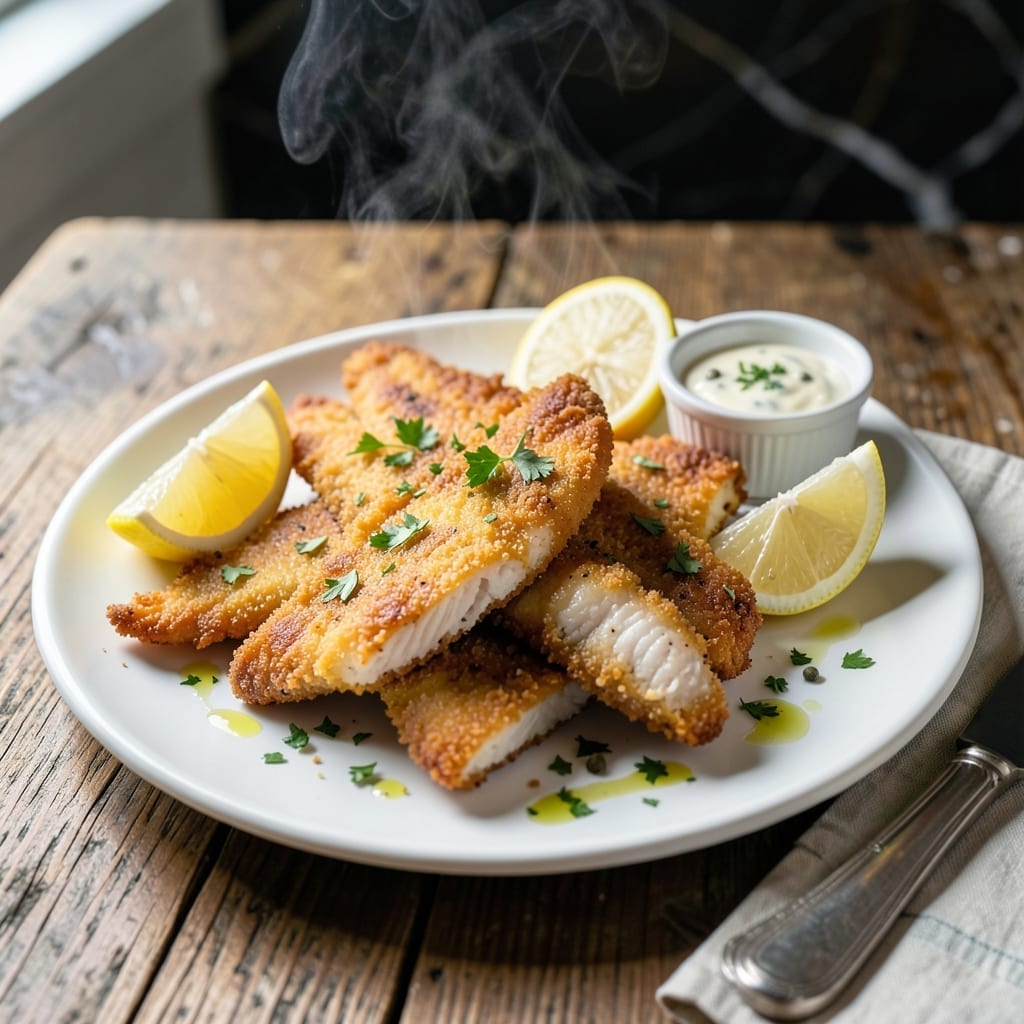
Crafting perfectly flaky fried whiting without cornmeal is simpler than you think. I tested multiple coating methods in my small Boston kitchen, and all-purpose flour created the best crisp texture.
The secret lies in the technique: seasoned flour forms a delicate crust that shatters with each bite. This method preserves the fish’s natural tenderness while delivering that coveted golden finish.
You’ll achieve restaurant-quality results with basic pantry staples. The flour coating locks in moisture, ensuring the whiting stays succulent inside while developing a satisfying crunch outside.
This approach works every time, even in cramped spaces. The flaky result proves you don’t need specialty ingredients for exceptional fried fish.
Ingredients for Fried Whiting Recipe Without Cornmeal
Pantry staples and fresh whiting come together for a perfectly flaky, crispy dish.
| Ingredient | Amount | Notes |
|---|---|---|
| Whiting Fillets 🐟 | 1 ½ lb | Fresh or thawed, patted dry |
| All-Purpose Flour 🌾 | 2 cups | For crispy coating crust |
| Kosher Salt 🧂 | 1 ½ tsp | Divided for seasoning flour and fish |
| Ground Black Pepper 🌶️ | 1 tsp | Freshly ground preferred |
| Garlic Powder 🧄 | 1 tsp | For depth in seasoning |
| Onion Powder 🧅 | 1 tsp | Balances the seasoning blend |
| Paprika 🌶️ | 1 tsp | Sweet or smoked variety |
| Cayenne Pepper 🔥 | ¼ tsp | Optional for heat |
| Vegetable Oil 🫒 | 3 cups | For deep frying |
| Lemon Wedges 🍋 | 4 slices | For serving |
| Fresh Parsley 🌿 | ¼ cup | Chopped, for garnish |
[recipe_ingredient_scaler]
The whiting is the star here. Fresh fillets from the seafood counter at Whole Foods or your local fishmonger are ideal—look for firm, translucent flesh with no fishy odor (the good stuff, not the pre-frozen kind). If using frozen, thaw overnight in the fridge. The flour needs to be all-purpose, nothing fancy. King Arthur is my go-to for consistent results.
Out of whiting? Cod or haddock work beautifully—they’re mild and flaky too. No cayenne? Skip it or use red pepper flakes at half the amount. If you’ve got cornstarch hiding in the cabinet, mix a tablespoon into the flour for extra crisp (but it’s not required). The oil should have a high smoke point—vegetable or peanut oil are perfect. Save the olive oil for dressings.
Fry in batches to avoid crowding—keeps the oil temp steady. Leftover fish? Not happening, but if you must, store in the fridge for 1-2 days max. Reheat in the oven at 350°F on a wire rack to maintain crispness. The seasoned flour? Use within 3 months stored in an airtight container.
Why You’ll Love This Recipe
- One Pan Wonder: I just dust the whiting in flour, season, and fry—no extra bowls or fancy steps.
- Garlic-Pepper Punch: That garlic powder and black pepper combo gives the fish a bold, savory kick without overpowering the mild whiting.
- Weeknight Rescue: Honestly, it’s my go-to when I need dinner fast but still want something satisfying.
- Budget Friendly: Whiting fillets are affordable, and the pantry staples mean I’m not buying extra ingredients.
Step-by-Step Instructions for Fried Whiting Without Cornmeal
Here’s the method I use to get perfectly flaky, golden fillets every time.
Step 1: Season and Coat the Whiting Fillets
First, pat the 1.5 lb whiting fillets completely dry with paper towels. Any moisture will prevent the coating from adhering properly. Season both sides lightly with ½ tsp kosher salt—you’ll add more in the flour mixture.
In a shallow dish, combine the 2 cups all-purpose flour with the remaining 1 tsp kosher salt, 1 tsp ground black pepper, 1 tsp garlic powder, 1 tsp onion powder, 1 tsp paprika, and 0.25 tsp cayenne pepper. Whisk until evenly distributed. The spices should coat the flour in a fine, fragrant layer.
Dredge each fillet in the seasoned flour, pressing gently to ensure full coverage. Shake off the excess—you want a thin, even layer that will crisp up beautifully. Set the coated fillets on a wire rack to rest for 5 minutes while you heat the oil.
Step 2: Heat the Vegetable Oil to the Right Temperature
Pour the 3 cups vegetable oil into a deep, heavy-bottomed skillet or Dutch oven. You need enough depth to submerge the fillets halfway. Heat the oil over medium-high heat until it reaches 350-375°F on a deep-fry thermometer.
If you don’t have a thermometer, test the oil by dropping in a pinch of flour. If it sizzles immediately and floats to the surface within 3-4 seconds, it’s ready. Maintain this temperature carefully—oil that’s too cool will make the fish greasy, while oil that’s too hot will burn the outside before the inside cooks.
Step 3: Fry the Fillets Until Golden and Crisp
Carefully lower 2-3 fillets into the hot oil at a time, being careful not to overcrowd the pan. Fry for 3-4 minutes per side, or until the coating turns deep golden brown and the fish flakes easily when tested with a fork.
Use a slotted spatula to transfer the fried whiting to a paper towel-lined plate to drain. Sprinkle with a pinch of kosher salt while still hot—this enhances the flavor and helps the coating stay crisp. Keep the finished fillets warm in a 200°F oven if frying in batches.
Step 4: Garnish and Serve Immediately
Arrange the fried whiting on a serving platter. Garnish with the 4 slices lemon wedges and a generous sprinkle of 0.25 cup fresh parsley, finely chopped. The acidity from the lemon cuts through the richness, while the parsley adds a fresh contrast.
Serve immediately while the coating is at its crispiest. The fillets should be light and flaky inside, with a shatteringly crisp exterior that holds up to the first bite. For best results, enjoy with a side of tartar sauce or a simple squeeze of lemon.
Pro Tips For Making Fried Whiting Recipe Without Cornmeal
- Pat Dry First: I learned this the hard way—wet fillets steam instead of fry, leaving you with a sad, soggy coating. Give them a good pat with paper towels before dredging in the flour.
- Heat the Oil: Sounds obvious, but I used to rush this part and ended up with greasy, undercooked fish. Get the oil shimmering hot (about 375°F) before adding the fillets.
- Skip the Crowding: Resist the urge to fry all the fillets at once. Overcrowding the pan drops the oil temp, and you’ll get uneven cooking instead of that perfect golden crust.
- Double Season: My grandmother swore by this: season the flour and the fillets. It makes a real difference—garlic powder in the flour plus salt and pepper directly on the fish guarantees every bite is flavorful.
Best Sauces and Condiments for These Flavors
Classic Tartar Sauce
This creamy companion is my go-to for fried fish. Mix ½ cup mayonnaise with 1 tbsp sweet pickle relish, 1 tsp lemon juice, and 1 tsp chopped capers. It adds just the right tang to cut through the richness. 💛
Spicy Comeback Sauce
For a Boston twist, combine ½ cup mayo, 2 tbsp ketchup, 1 tbsp hot sauce, and 1 tsp Worcestershire. This New England favorite brings a kick that balances the flaky fish perfectly.
Lemon-Dill Aioli
Whisk ½ cup mayo with 1 tbsp lemon zest, 1 tbsp fresh dill, and 1 garlic clove minced. The brightness complements the crisp coating beautifully, like Nonna used to make.
Quick Pickled Onions
Thinly slice 1 red onion and soak in ½ cup apple cider vinegar with 1 tsp sugar for 30 minutes. The sharp bite cuts through the fried richness.
Herbed Remoulade
Blend ½ cup mayo, 1 tbsp Dijon, 1 tsp prepared horseradish, and 1 tbsp chopped parsley. This French-inspired sauce adds sophisticated depth to your meal.
Simple Lemon Wedges
A squeeze of fresh lemon is all you need sometimes. The acidity enhances the fish’s natural flavor and keeps the coating crisp. I always serve these alongside. 🍋
Nutrition Facts
Frequently Asked Questions
What can I use instead of cornmeal for frying?
All-purpose flour works perfectly for a crispy coating. For extra crunch, add 1-2 tbsp cornstarch to the flour. Panko breadcrumbs also create a great texture if you prefer a thicker crust.
How do I keep the coating from falling off?
Pat the fillets completely dry before coating. Let the seasoned flour adhere for 5 minutes before frying. This helps the coating set properly and stay on during cooking.
What oil temperature should I use?
Maintain 350-375°F for perfect results. Too low and the fish absorbs oil; too high and the outside burns before the inside cooks. Use a thermometer for accuracy.
Can I bake the fish instead of frying?
Yes! Place coated fillets on a wire rack and bake at 400°F for 12-15 minutes. Spray with oil first for crispiness. The texture will differ but still be delicious.

Trained in classic French technique but raised on slow-cooked ribs and spicy rubs, she blends culinary skill with smoke and soul.
- Recipe for Boneless Pork Chops in Cast Iron Skillet: Sear and Baste to Juicy Perfection - October 3, 2026
- Recipe for Boneless Cross Rib Roast: Slow-Roasted Beef with Herb Crust - October 3, 2026
- Hamburgers in Sauce Recipe Crock Pot: Slow-Cooked Savory Delight - October 3, 2026