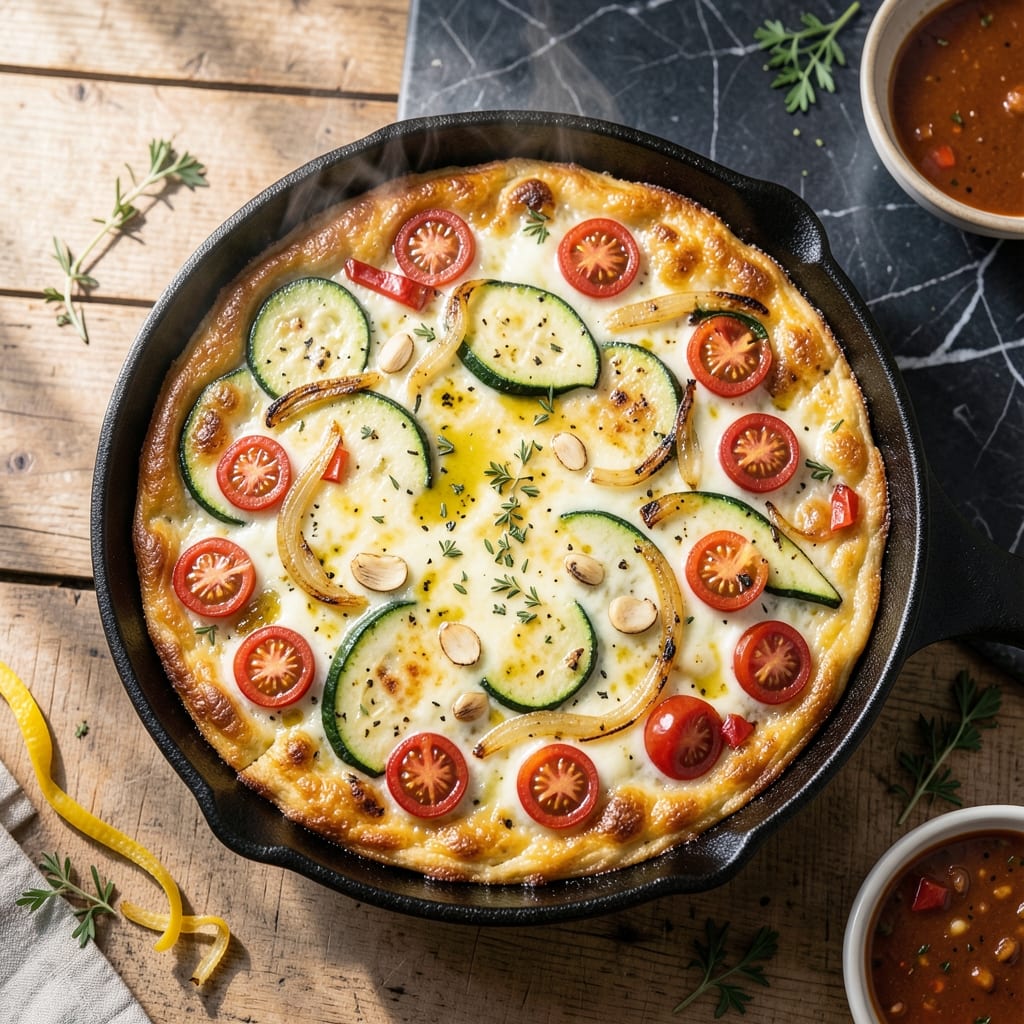
This baked frittata transforms simple eggs and garden veggies into a fluffy, satisfying meal. A one-pan wonder that’s perfect for breakfast, brunch, or a light dinner.
I learned this method from my grandmother in Sicily, where fresh, seasonal ingredients always took center stage. The key is whisking the eggs until just combined, then folding in the vegetables for even distribution.
The result is a dish with a golden crust and a tender center, packed with vibrant flavors. It’s versatile, easy to customize, and always a crowd-pleaser.
Serve warm or at room temperature, straight from the oven to the table. Here’s how to make it perfectly every time.
Ingredients for Fritata Recipe Baked
Fresh eggs, garden vegetables, and a few pantry staples for fluffy perfection.
| Ingredient | Amount | Notes |
|---|---|---|
| Large Eggs 🥚 | 8 whole | Room temperature preferred |
| Zucchini 🥒 | 1 whole | Medium, diced into 1/2-inch pieces |
| Red Bell Pepper 🌶️ | 1 whole | Seeded, diced into 1/2-inch pieces |
| Yellow Onion 🧅 | 1 whole | Medium, finely diced |
| Garlic Cloves 🧄 | 3 cloves | Minced finely |
| Cherry Tomatoes 🍅 | 1 cup | Halved |
| Fresh Spinach 🌿 | 2 cups | Chopped, packed |
| Parmesan Cheese 🧀 | ¾ cup | Freshly grated from block |
| Whole Milk 🥛 | ¼ cup | Full-fat for creaminess |
| Extra-Virgin Olive Oil 🫒 | 2 tbsp | Divided for cooking |
| Unsalted Butter 🧈 | 1 tbsp | For greasing the pan |
| Kosher Salt 🧂 | 1 tsp | Diamond Crystal preferred |
| Freshly Ground Black Pepper 🌶️ | ½ tsp | To taste |
| Dried Oregano 🍃 | ½ tsp | Crushed between fingers |
[recipe_ingredient_scaler]
The eggs must be fresh—look for organic or free-range at Whole Foods or your local farmers market. The Parmesan is non-negotiable: Parmigiano-Reggiano from a wedge, grated yourself (the pre-shredded stuff has anti-caking agents that affect texture). For the vegetables, seasonal produce from a reputable grocer like Trader Joe’s ensures optimal flavor. Zucchini and bell peppers should be firm, with vibrant color and no soft spots.
No zucchini? Yellow squash works identically. Short on spinach? Baby kale or Swiss chard at half the amount (they’re more concentrated). For a richer dish, swap whole milk for heavy cream. If you’re avoiding dairy, unsweetened almond milk works in a pinch, though the texture won’t be as custardy. The oregano can be fresh—use 1 tablespoon chopped if you’ve got it.
Frittata keeps well in the fridge for 3-4 days—store covered once fully cooled. It reheats beautifully in a 350°F oven for 10-15 minutes. For freezer storage, slice first, then wrap individual portions in parchment before bagging. Thaws overnight in the fridge, then reheat as above. Always bring eggs to room temperature before whisking for maximum fluffiness.
Why You’ll Love This Recipe
- One Pan Wonder: Honestly, I just toss everything in a dish and let the oven do the work—no flipping, no fuss.
- Roasted Veggie Magic: The zucchini and bell pepper caramelize while baking, and that garlic-onion combo? Ridiculously good.
- Breakfast or Dinner: I serve this for brunch, pack it for lunch, or even throw it together for a quick weeknight meal.
- Leftovers for Days: It tastes just as good cold the next day, and my kids actually fight over the last slice.
Step-by-Step Instructions for Baked Frittata
This method ensures a fluffy, golden frittata with perfectly set eggs and vibrant vegetables.
Step 1: Prepare and Sauté the Vegetables
Heat 1 tablespoon Extra-Virgin Olive Oil in a 10-inch oven-safe skillet over medium heat. Add the diced Yellow Onion and cook for 3-4 minutes until softened and translucent. This builds the flavor base for your frittata.
Add the diced Zucchini, Red Bell Pepper, and minced Garlic Cloves. Sauté for 5-6 minutes until the vegetables are tender but still hold their shape. Stir in the halved Cherry Tomatoes and chopped Fresh Spinach, cooking just until the spinach wilts—about 2 minutes. Season with 1 tsp Kosher Salt, 0.5 tsp Freshly Ground Black Pepper, and 0.5 tsp Dried Oregano.
Step 2: Whisk the Egg Mixture
In a large bowl, crack the 8 whole Large Eggs and add the 0.25 cup Whole Milk. Whisk vigorously until the mixture is completely homogeneous and slightly frothy. This incorporates air, which is key for achieving that light, fluffy texture.
Stir in 0.75 cup Parmesan Cheese until evenly distributed. The residual heat from the vegetables will begin to gently cook the eggs as they’re combined, so work efficiently but carefully to maintain the air you’ve incorporated.
Step 3: Combine and Cook on the Stovetop
Pour the egg mixture evenly over the sautéed vegetables in the skillet. Use a silicone spatula to gently distribute the eggs so they reach all the edges of the pan. Cook undisturbed over medium-low heat for 4-5 minutes until the edges begin to set and the bottom turns light golden brown.
As the frittata cooks, you’ll notice the center remains slightly liquid—this is normal. Resist the urge to stir; instead, occasionally lift the edges with your spatula to allow the uncooked egg to flow underneath for even cooking.
Step 4: Finish Under the Broiler
Preheat your broiler to high. Once the edges are set and the bottom is golden, transfer the skillet to the broiler. Broil for 3-4 minutes until the top is puffed and golden brown and the center is fully set. Watch closely to avoid over-browning.
The frittata is done when the center no longer jiggles and a knife inserted near the center comes out clean. The top should have a slightly crisp, golden crust, while the interior remains moist and tender.
Step 5: Rest and Serve
Remove the skillet from the oven and let the frittata rest for 5 minutes. This allows the eggs to set fully and makes slicing easier. Run a spatula around the edges to loosen, then slide the frittata onto a cutting board.
Cut into wedges and serve warm. The texture should be light and airy, with each bite featuring a mix of the fresh vegetables and creamy eggs. Leftovers can be stored in the refrigerator for up to 3 days and reheated gently in a skillet or microwave.
Pro Tips For Making Fritata Recipe Baked
- Pre-cook the Veggies: Sauté the zucchini, bell pepper, and onion for 5-7 minutes before adding eggs—raw veggies release too much moisture and make the frittata soggy. I learned this the hard way after pulling a watery mess from the oven.
- Whisk Eggs Hard: Beat the eggs vigorously for at least 30 seconds until fully homogeneous, with no streaks of white or yolk. Sounds tedious, but it makes the texture lighter and more uniform.
- Pull It Early: Take the frittata out when the center is just barely set—it’ll finish cooking as it rests. Overbaking turns it rubbery, and nobody wants a dry, tough slice.
- Use Room-Temp Eggs: Let the eggs sit on the counter for 10-15 minutes before whisking. Cold eggs don’t incorporate air as well, and the frittata ends up denser than it should be.
Regional Styles of This Dish
Sicilian Rustic Style
In my grandmother’s kitchen in Sicily, frittata was always made with whatever the garden provided that day. She used a cast-iron skillet over an open flame, finishing it under a broiler. The key was layering thinly sliced potatoes and onions at the bottom for a crispy crust. 🗺️
Roman Classic Version
Roman cooks often add pasta to their frittata for extra heartiness. Use 1 cup of cooked spaghetti mixed into the eggs. The pasta soaks up the egg mixture beautifully, creating a unique texture that’s popular in Roman trattorias.
Calabrian Spicy Kick
For a Southern Italian twist, add ½ tsp Calabrian chili paste to the egg mixture. The heat balances beautifully with the sweetness of roasted red peppers. I learned this version from a chef in Calabria during my travels. 🌶️
Tuscan Herb Focus
Tuscan cooks love their herbs. Add 1 tbsp fresh rosemary and 1 tbsp fresh thyme to the vegetables while sautéing. The aromatic herbs infuse the entire dish with that unmistakable Tuscan fragrance.
Venetian Seafood Style
In Venice, they often make frittata with seafood. Add ½ cup cooked shrimp or crab meat to the egg mixture. The delicate seafood pairs perfectly with the fluffy eggs, creating a coastal delight.
American Diner Style
For an American twist, add ½ cup shredded cheddar and ¼ cup crumbled bacon. This hearty version reminds me of Sunday brunches at East Coast diners. It’s a hit with kids and adults alike.
Nutrition Facts
Frequently Asked Questions
Can I use a different type of cheese?
Yes! Feta, goat cheese, or Gruyère all work well. Each brings a unique flavor profile.
How do I know when it’s fully cooked?
The center should be set with no jiggle, and a knife inserted near the center comes out clean. The top will be golden brown.
Can I make this ahead of time?
It keeps well in the fridge for 3-4 days. Reheat in a 350°F oven for best texture.
Why did my frittata turn out dense?
Overmixing the eggs or cooking at too high heat can cause this. Whisk just until combined and use medium-low heat.

Trained in classic French technique but raised on slow-cooked ribs and spicy rubs, she blends culinary skill with smoke and soul.
- Recipe for Boneless Pork Chops in Cast Iron Skillet: Sear and Baste to Juicy Perfection - October 3, 2026
- Recipe for Boneless Cross Rib Roast: Slow-Roasted Beef with Herb Crust - October 3, 2026
- Hamburgers in Sauce Recipe Crock Pot: Slow-Cooked Savory Delight - October 3, 2026