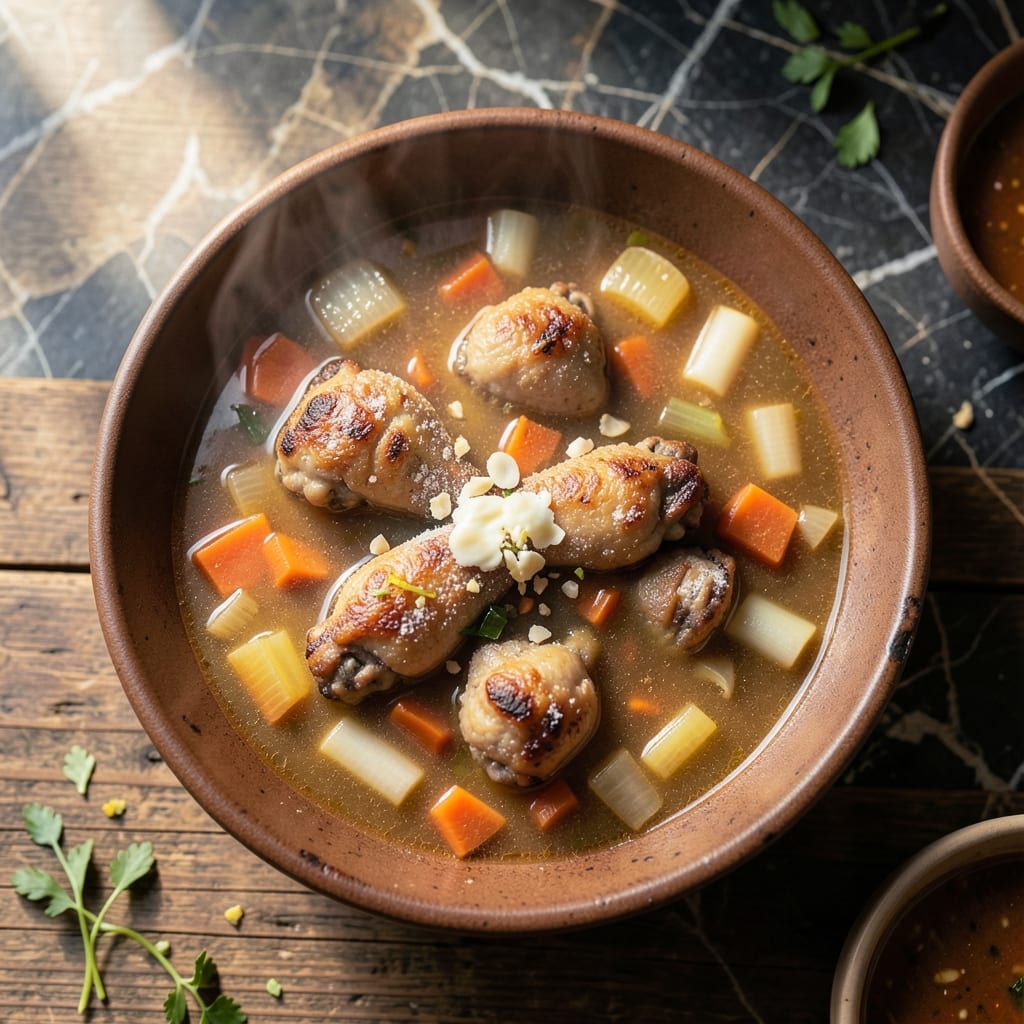
This rustic dish brings the heart of the French countryside straight to your kitchen table. I developed this recipe after tasting an authentic version in Provence, determined to recreate its comforting depth of flavor at home.
The secret lies in the slow simmering of tender frog legs with aromatic vegetables, white wine, and fresh herbs. This method transforms simple ingredients into a rich, flavorful broth that’s both elegant and deeply satisfying.
What you’ll achieve is a bowl of soup with a velvety texture, infused with the earthy notes of thyme and bay leaf. The frog meat becomes incredibly tender, soaking up the essence of the broth.
Perfect for a cozy dinner, this dish offers a taste of tradition with every spoonful. Here’s how to make it.
Ingredients for Frog Soup
Fresh frog legs and aromatic vegetables build the heart of this comforting French classic.
| Ingredient | Amount | Notes |
|---|---|---|
| Frog Legs 🐸 | 1 ½ lb | Fresh or frozen, thawed |
| Unsalted Butter 🧈 | 3 tbsp | For sautéing aromatics |
| Yellow Onion 🧅 | 1 whole | Medium, finely diced |
| Carrots 🥕 | 2 whole | Peeled, sliced into rounds |
| Celery Stalks 🌿 | 2 whole | Diced, including leaves |
| Garlic Cloves 🧄 | 4 cloves | Minced for depth |
| Dry White Wine 🍷 | 1 cup | Sauvignon Blanc or Pinot Grigio |
| Chicken Stock 🥣 | 4 cups | Low-sodium preferred |
| Fresh Thyme Sprigs 🌿 | 4 whole | Stems removed, leaves chopped |
| Bay Leaves 🍃 | 2 whole | Dried, whole leaves |
| Fresh Parsley 🌿 | ¼ cup | Chopped, for garnish |
| All-Purpose Flour 🌾 | 2 tbsp | For thickening broth |
| Salt 🧂 | 1 tsp | Kosher or sea salt |
| Black Pepper 🌶️ | ½ tsp | Freshly ground preferred |
[recipe_ingredient_scaler]
The frog legs are key here. Fresh is ideal if you can find them at a specialty butcher or Asian grocery store, but frozen works perfectly—just thaw overnight in the fridge. Look for legs that are plump and odorless (a mild, sweet smell is normal). For the wine, any dry white will do, but Sauvignon Blanc adds a nice crispness that balances the richness.
No white wine? Extra chicken stock with a splash of lemon juice works in a pinch. Out of fresh thyme? Dried thyme at one-third the amount is a fine swap, but add it earlier in the cooking process. If you can’t find frog legs, chicken thighs can be substituted, though the flavor will differ. The butter can be replaced with olive oil if avoiding dairy.
This soup reheats wonderfully—flavors deepen after 24 hours. Store in the fridge for up to 3 days or freeze for 2 months. The frog meat can be delicate, so handle gently when reheating to keep it intact.
Why You’ll Love This Recipe
- One Pot Simplicity: I toss in the frog legs, veggies, and butter—just one pot and a wooden spoon to stir. Honestly, cleanup’s almost as quick as the cooking.
- Rich, Earthy Depth: The butter slow-cooks the onion, carrots, and celery into this deep, sweet base that makes the frog legs taste like a fancy bistro dish.
- Weeknight Winner: It’s ready before the kids finish their homework, and leftovers? Taste even better the next day.
- Budget Stretcher: Frog legs are cheaper than chicken around here, and this soup feeds four with just a handful of ingredients.
Step-by-Step Instructions for Frog Soup
This rustic method delivers rich, comforting flavors that define French countryside cooking.
Step 1: Prepare the Aromatic Base
Melt the 3 tbsp unsalted butter in a large Dutch oven over medium heat. Add the diced yellow onion, sliced carrots, and diced celery stalks with the 1 tsp salt and 0.5 tsp black pepper.
Cook for 8-10 minutes, stirring occasionally, until the vegetables soften and the onion becomes translucent. This builds the flavor foundation. Add the minced garlic cloves and cook for an additional 1 minute until fragrant.
Step 2: Sear the Frog Legs
Pat the 1.5 lb frog legs dry with paper towels. Dust them lightly with the 2 tbsp all-purpose flour, shaking off any excess. This creates a light coating that will thicken the soup slightly.
Add the floured frog legs to the pot and sear for 3-4 minutes per side until they develop a light golden crust. Remove them and set aside. The residual flour will help thicken the cooking liquid naturally.
Step 3: Deglaze and Simmer
Pour the 1 cup dry white wine into the pot, scraping up any browned bits from the bottom. Let it simmer for 3-4 minutes until the liquid reduces by half. These browned bits contain concentrated flavor that defines rustic soups.
Return the frog legs to the pot. Add the 4 cups chicken stock, fresh thyme sprigs, and bay leaves. Bring to a boil, then reduce heat to low and let it simmer gently for 20-25 minutes until the frog legs are tender.
Step 4: Finish and Serve
Remove the bay leaves and discard. Taste and adjust the seasoning with additional salt or black pepper if needed. The soup should have a rich, savory depth with the wine and stock fully melded.
Ladle into bowls and garnish with the chopped fresh parsley. This final touch adds brightness that complements the earthy flavors. Serve immediately with crusty bread to soak up every comforting drop.
Pro Tips For Making Frog Soup
- Sear the Legs: I learned this the hard way—browning the frog legs in unsalted butter first (about 3-4 minutes per side) locks in flavor before adding any liquid. Sounds weird, but it works: the soup base tastes richer when you start with that golden crust.
- Sweat the Veggies: Cook the onion, carrots, and celery in the same butter until soft but not browned—about 8 minutes over medium-low heat. This builds a sweet, aromatic base without overpowering the delicate frog flavor.
- Skip the Boil: Resist the urge to bring the soup to a rolling boil once the legs are in; a gentle simmer for 15-20 minutes keeps the meat tender instead of rubbery. My grandmother swore by this, and she was right.
- Deglaze the Pan: After searing, pour a splash of broth or white wine into the pan and scrape up those browned bits before adding the rest of the liquid. It adds depth without extra effort—I was skeptical until I tried it.
Regional Styles of This Recipe
Provençal Tradition
In Provence, this soup often includes fennel and leek alongside the classic mirepoix. The locals use wild-caught frog legs from marshes, simmered with herbes de Provence for an earthy depth. I love how the anise notes from fennel complement the delicate frog meat. 🌿
Louisiana Gumbo Style
Down in the bayou, they transform this into a rich gumbo by adding okra and filé powder. The frog legs get a spicy kick from Cajun holy trinity (onion, bell pepper, celery). I’ve made this version for Mardi Gras parties—it’s always a hit.
Asian-Inspired Twist
In Vietnamese cuisine, frog legs are braised with lemongrass, ginger, and fish sauce. The broth becomes fragrant and umami-rich. I swap the white wine for rice wine and add shiitake mushrooms for extra depth.
Italian Minestra
Northern Italian versions use tomatoes and borlotti beans alongside the frog legs. A splash of balsamic vinegar at the end brightens the flavors. I love serving this with crusty ciabatta to soak up the broth. 💛
Creole Flavor
New Orleans adds Andouille sausage and tomato paste for a heartier stew. The frog legs take on a smoky, spicy character. I always include a dash of hot sauce at the table for those who want extra heat.
Rustic French Bisque
Some French cooks blend the cooked frog legs into the broth for a velvety bisque. A touch of cognac and heavy cream adds luxury. I finish with chives for a fresh, elegant garnish.
Nutrition Facts
Frequently Asked Questions
Where can I find frog legs for this?
Check specialty butcher shops, Asian grocery stores, or order online from seafood suppliers. Fresh is ideal, but frozen works—just thaw in the fridge overnight.
Can I substitute another protein?
Yes! Chicken thighs are the closest match in texture and flavor. For a seafood twist, try shrimp or scallops, but reduce cooking time to 5-7 minutes.
How do I know when the frog legs are done?
They’re ready when the meat turns opaque and pulls away from the bone easily, usually after 20-25 minutes of simmering. Avoid overcooking to keep them tender.
Can I make this in a slow cooker?
Sear the frog legs first, then transfer everything to the slow cooker and cook on low for 4-5 hours. The flavors will deepen beautifully.

Trained in classic French technique but raised on slow-cooked ribs and spicy rubs, she blends culinary skill with smoke and soul.
- Recipe for Boneless Pork Chops in Cast Iron Skillet: Sear and Baste to Juicy Perfection - October 3, 2026
- Recipe for Boneless Cross Rib Roast: Slow-Roasted Beef with Herb Crust - October 3, 2026
- Hamburgers in Sauce Recipe Crock Pot: Slow-Cooked Savory Delight - October 3, 2026