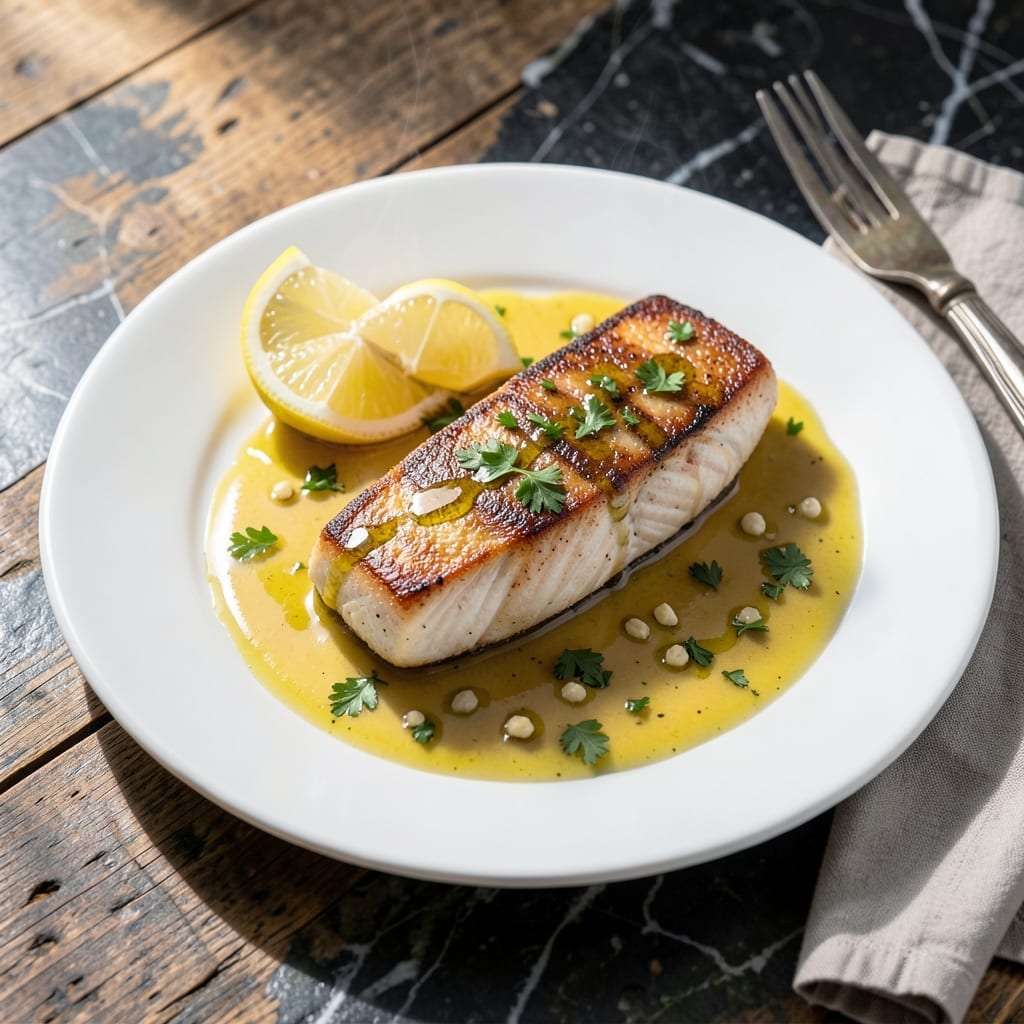
I developed this method after too many disappointing attempts with frozen seafood. The key is proper thawing and precise timing to achieve buttery results every time.
Working with frozen Chilean sea bass requires patience—never rush the thawing process. I tested this recipe in my small Boston kitchen until I found the foolproof approach that works with regular grocery store fish.
What you’ll get is perfectly flaky fish with a delicate texture that belies its frozen origins. The method ensures even cooking and prevents the dryness that plagues many home-cooked seafood dishes.
This technique transforms a freezer staple into a dish worthy of a special occasion. The results speak for themselves with each tender bite.
Ingredients for Frozen Chilean Sea Bass
Pantry staples plus a few fresh touches bring this freezer fish to life beautifully.
| Ingredient | Amount | Notes |
|---|---|---|
| Frozen Chilean Sea Bass Fillets 🐟 | 1 ½ lb | Skin-on or skinless |
| Unsalted Butter 🧈 | ½ cup | Melted, divided |
| Extra-Virgin Olive Oil 🫒 | 2 tbsp | For searing |
| Garlic Cloves 🧄 | 3 cloves | Minced finely |
| Fresh Lemon 🍋 | 1 whole | Zested and juiced |
| Fresh Parsley 🌿 | ¼ cup | Chopped, for garnish |
| Kosher Salt 🧂 | 1 tsp | Diamond Crystal preferred |
| Ground Black Pepper 🌶️ | ½ tsp | Freshly cracked |
| Dry White Wine 🍷 | ¼ cup | Sauvignon Blanc or Pinot Grigio |
| Shallot 🧅 | 1 whole | Finely diced |
| Fresh Thyme Sprigs 🌿 | 4 pieces | Leaves stripped |
| Heavy Cream 🥛 | ¼ cup | Optional for sauce |
[recipe_ingredient_scaler]
The fish is everything here. Chilean sea bass from Whole Foods or Trader Joe’s freezer section works great—just check for even thickness in fillets (helps them cook uniformly). I always grab wild-caught when available, but farmed is fine too. The butter needs to be unsalted so you can control the seasoning. Thaw in the fridge overnight (the good stuff, not the microwave).
No white wine? Seafood stock plus a squeeze of lemon gets you close. Out of thyme? Dried thyme at half the amount works in a pinch. Shallots are ideal but red onion is a decent swap. Skip the heavy cream if you want it lighter—just reduce the wine a bit more. The lemon zest is non-negotiable though—brightens everything up (worth the extra minute).
Cooked fish keeps 1-2 days max in the fridge—best eaten fresh. The sauce (if making) reheats gently but don’t boil it. Freezing cooked sea bass? Not recommended—texture suffers. Buy extra fillets and keep them frozen for next time instead.
Why You’ll Love This Recipe
- No Thaw Needed: I pull the fillets straight from the freezer and into the pan—no waiting, no stress.
- Buttery Garlic Magic: The butter and garlic melt into the fish while the lemon brightens every bite.
- Date Night Ready: Honestly, it feels fancy enough for company but takes less time than ordering takeout.
- Leftovers? Even Better: The flavors deepen overnight, so I actually look forward to lunch the next day.
Step-by-Step Instructions for Buttery Chilean Sea Bass
Here’s how I turn frozen fillets into restaurant-worthy seafood in under thirty minutes.
Step 1: Thaw and Prep the Fillets
Remove the 1.5 lb Frozen Chilean Sea Bass Fillets from the freezer and let them thaw in the refrigerator overnight. If you’re in a hurry, submerge the sealed fillets in cold water for 20-30 minutes until just pliable. Pat them completely dry with paper towels—this is crucial for getting that golden sear.
Season both sides generously with the 1 tsp Kosher Salt and 0.5 tsp Ground Black Pepper. I always use freshly cracked pepper for the best flavor. Let the fillets sit at room temperature for 10 minutes while you prep the rest—this ensures even cooking.
Step 2: Sear the Fillets to Golden Perfection
Heat the 2 tbsp Extra-Virgin Olive Oil in a large skillet over medium-high heat until it shimmers but doesn’t smoke. Add the fillets skin-side down (if skin-on) and press gently with a spatula for 10 seconds to prevent curling.
Sear undisturbed for 4-5 minutes until the edges turn opaque white and the bottom develops a golden crust. Flip carefully and sear the other side for 3-4 minutes. The fillets should release easily from the pan when ready to flip.
Step 3: Build the Aromatic Wine Sauce
Reduce heat to medium and add 2 tbsp of the 0.5 cup Unsalted Butter, the minced 3 cloves Garlic Cloves, and the finely diced 1 whole Shallot. Sauté for 1-2 minutes until fragrant but not browned. Stir in the stripped leaves from the 4 pieces Fresh Thyme Sprigs.
Pour in the 0.25 cup Dry White Wine and deglaze the pan, scraping up any browned bits with a wooden spoon. Let it simmer for 2-3 minutes until the liquid reduces by half and the alcohol smell dissipates.
Step 4: Finish with Butter and Lemon
Return the fillets to the skillet, nestling them into the sauce. Add the remaining 0.25 cup Unsalted Butter (cubed), the zest from the 1 whole Fresh Lemon, and the 0.25 cup Heavy Cream if using. Baste the fillets with the sauce for 1-2 minutes until the butter melts and the sauce turns silky.
Squeeze in 1 tbsp of the lemon juice and swirl to combine. The sauce should coat the back of a spoon lightly. Taste and adjust seasoning if needed—though the salt from earlier should be perfect.
Step 5: Garnish and Serve Immediately
Transfer the fillets to a serving platter and spoon the sauce over the top. Sprinkle with the chopped 0.25 cup Fresh Parsley for a pop of color and freshness. Serve with extra lemon wedges on the side for those who want a brighter finish.
The fillets should flake easily with a fork and glisten with the buttery sauce. This dish is best served immediately while the sauce is still warm and velvety. Pair with steamed asparagus or crusty bread to soak up every last drop.
Pro Tips For Making Frozen Chilean Sea Bass
- Thaw Slowly: Always defrost the sea bass overnight in the fridge—microwaving or warm water makes the texture mushy and uneven. I learned this the hard way after ruining two fillets trying to rush it.
- Pat It Dry: Use paper towels to thoroughly dry the fillets before cooking, even if they look dry. Sounds weird, but it works: this guarantees a good sear instead of steaming in their own moisture.
- Hot Pan First: Heat your pan until it’s almost smoking before adding the oil and fish. After burning three batches, I finally figured out that medium heat just doesn’t cut it for that perfect crust.
- Butter Last: Add the butter, garlic, and lemon only in the last 2 minutes of cooking to avoid burning the butter. My grandmother swore by this, and she was right: it keeps the flavor clean and rich.
Perfect Pairings for frozen chilean sea bass
Wine Pairings
A crisp Sauvignon Blanc from New Zealand cuts through the richness beautifully. The citrus notes complement the lemon in the dish while the acidity cleanses your palate. I always keep a bottle of Kim Crawford on hand for seafood nights. 🍷
Vegetable Sides
Steamed asparagus with a squeeze of lemon is my go-to—it cooks in 5 minutes while the fish rests. For something heartier, try roasted Brussels sprouts tossed with olive oil and a pinch of salt at 400°F for 20 minutes.
Starch Options
Crusty bread is essential for soaking up that buttery sauce. I love a warm baguette from my local Italian deli. For a lighter option, jasmine rice cooked with a bay leaf adds subtle fragrance without overpowering the fish.
Fresh Finishes
Beyond the parsley garnish, I sometimes add thin lemon slices or microgreens for extra color. A sprinkle of flaky sea salt like Maldon right before serving elevates the dish to restaurant quality. 💛
Light Salad
A simple arugula salad with shaved fennel and a light vinaigrette provides a refreshing contrast. Toss 4 cups arugula with 1 tbsp olive oil and ½ tsp lemon juice for brightness.
Nutrition Facts
Frequently Asked Questions
Can I cook the fillets straight from frozen?
No, always thaw first. Cooking from frozen leads to uneven cooking and dry fish.
What if my fillets are different thicknesses?
Fold thinner ends under to create even thickness. This ensures all parts cook at the same rate.
How do I know when it’s done?
Fillets should reach 145°F internally and flake easily with a fork. The flesh turns opaque white when cooked through.
Can I make this without wine?
Yes, substitute with 1/4 cup seafood stock plus 1 tbsp lemon juice for similar depth of flavor.

Trained in classic French technique but raised on slow-cooked ribs and spicy rubs, she blends culinary skill with smoke and soul.
- Recipe for Boneless Pork Chops in Cast Iron Skillet: Sear and Baste to Juicy Perfection - October 3, 2026
- Recipe for Boneless Cross Rib Roast: Slow-Roasted Beef with Herb Crust - October 3, 2026
- Hamburgers in Sauce Recipe Crock Pot: Slow-Cooked Savory Delight - October 3, 2026