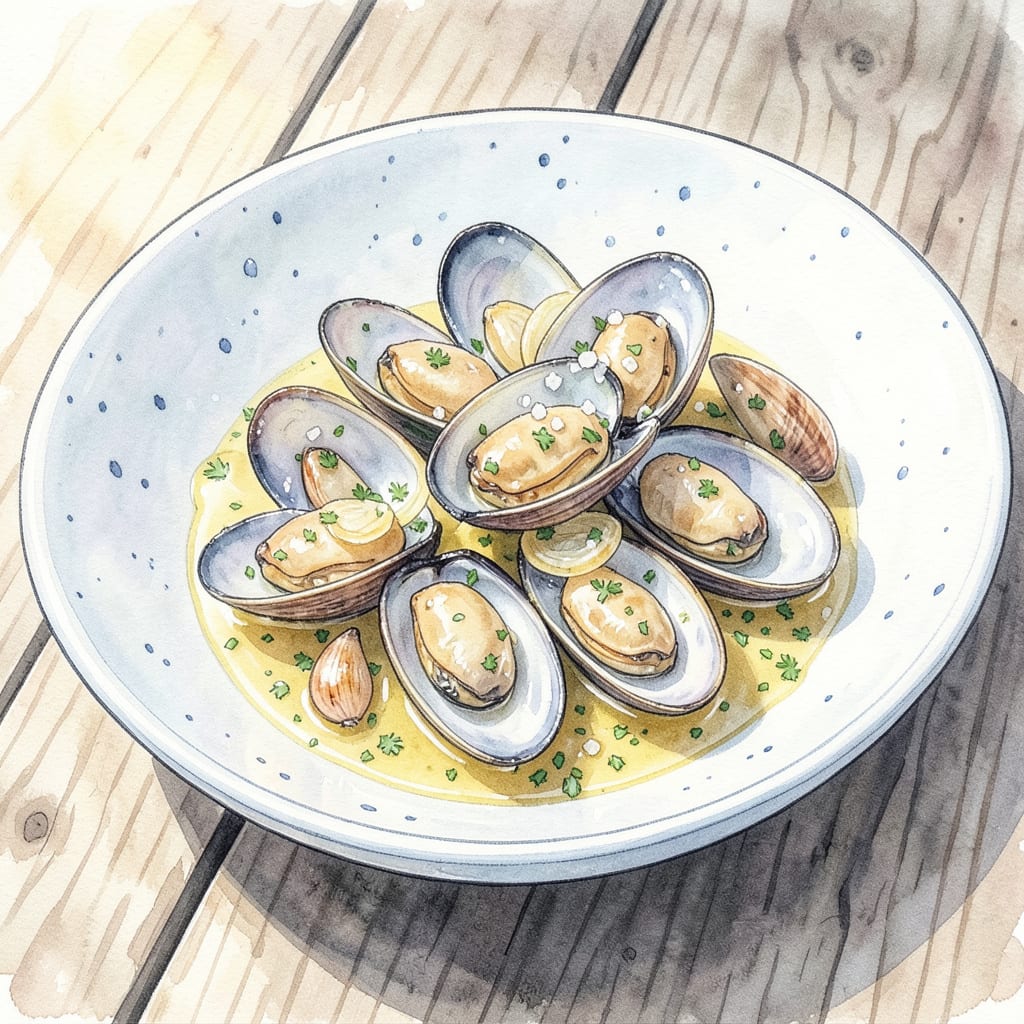
Frozen clams transform into a restaurant-quality dish with just 15 minutes and a handful of pantry staples. This professional technique ensures tender, flavorful clams every time, eliminating any concerns about using frozen seafood. The key lies in proper thawing and a quick, high-heat cooking method that preserves their natural brininess.
Garlic butter sauce elevates the clams to new heights, creating a dish that’s impressive enough for guests yet simple enough for weeknights. I’ve perfected this method through years of working with shellfish, focusing on food safety and optimal texture. Serve with crusty bread to soak up every drop of the rich, aromatic sauce.
Ingredients for Frozen Clams
Professional-grade ingredients transform frozen clams into a restaurant-worthy dish with minimal effort and maximum flavor.
| Ingredient | Amount | Notes |
|---|---|---|
| Frozen Littleneck Clams 🐚 | 2 lb | Thawed in cold water, drained |
| Unsalted Butter 🧈 | ½ cup | European-style preferred for richness |
| Extra-Virgin Olive Oil 🫒 | 2 tbsp | Cold-pressed for optimal flavor |
| Garlic Cloves 🧄 | 6 cloves | Finely minced for even distribution |
| Shallots 🧅 | 2 whole | Finely diced for aromatic base |
| Dry White Wine 🍷 | ½ cup | Sauvignon Blanc or Pinot Grigio recommended |
| Fresh Flat-Leaf Parsley 🌿 | ¼ cup | Chopped, stems removed |
| Lemon 🍋 | 1 whole | Zested and juiced |
| Crushed Red Pepper Flakes 🌶️ | ½ tsp | Adjust for heat preference |
| Kosher Salt 🧂 | 1 tsp | Diamond Crystal preferred for precision |
| Freshly Ground Black Pepper 🌶️ | ½ tsp | Coarse grind for texture |
| Crusty Baguette 🥖 | 1 whole | Sliced for serving |
| Clam Juice 💧 | ½ cup | Optional for enhanced brininess |
[recipe_ingredient_scaler]
The clams are the foundation—Littleneck clams offer the ideal balance of tenderness and brininess. Opt for wild-caught frozen clams from reputable brands like Crown Prince or Bar Harbor, available at most seafood counters or specialty grocers. Proper thawing is critical: submerge sealed bags in cold water for 30 minutes, then drain thoroughly. The butter quality directly impacts the sauce—European-style unsalted butter (such as Plugrá or Kerrygold) provides superior richness and lower water content, ensuring a velvety emulsion without separation.
For the wine component, any dry white wine will suffice, but Sauvignon Blanc or Pinot Grigio offer the ideal acidity to cut through the butter’s richness. In a pinch, substitute with additional clam juice plus 1 tbsp lemon juice to mimic the wine’s brightness. Shallots may be replaced with yellow onion at a 1:1 ratio, though the flavor profile will be slightly more assertive. For those avoiding alcohol entirely, vermouth provides a non-alcoholic alternative that maintains depth. The parsley should be fresh—dried parsley lacks the necessary vibrancy—but in emergencies, use one-third the amount of dried.
Store thawed clams in the refrigerator for up to 24 hours before cooking—never refreeze. The prepared dish maintains optimal quality for 2-3 days refrigerated in an airtight container, though the clams may become slightly firmer. For longer storage, freeze the cooked clams in their sauce for up to 3 months, omitting the parsley garnish until reheating. Always reheat gently over low heat to preserve texture. The garlic butter sauce may be prepared 2 days in advance and reheated separately for convenience.
Why You’ll Love This Recipe
- No-Thaw Needed: I toss these frozen littlenecks straight into the pan—no defrosting, no waiting. The butter and olive oil work their magic while the clams steam open, saving me 15 minutes compared to fresh.
- Garlic Butter Bomb: When those shallots turn translucent and the garlic hits the hot oil? That’s the moment this dish becomes irresistible. The clams soak up every bit of that rich, golden butter—honestly, I’ve been known to mop up the sauce with crusty bread.
- Date Night or Tuesday: This is my secret for looking like I put in effort when I didn’t. A quick sear, a splash of white wine (or not), and suddenly it’s a restaurant-worthy dish—yes, even on a Tuesday night.
- Budget Seafood Win: Frozen littlenecks cost half what fresh do at my market, but the flavor’s just as bright. I’ll be real: I stock up when they’re on sale and keep a bag for last-minute dinners that feel fancy.
Step-by-Step Instructions for Garlic Butter Clams
This professional method ensures perfectly cooked clams with a rich, aromatic sauce in minimal time.
Step 1: Prepare the Clams and Aromatics
Begin by thoroughly rinsing the 2 lb frozen littleneck clams under cold water to remove any residual sand or grit. Place them in a colander and let them drain completely. This step is crucial for preventing any grittiness in your final dish.
While the clams drain, finely mince the 6 cloves garlic cloves and finely dice the 2 whole shallots. The uniform size ensures even cooking and optimal flavor distribution. Heat a large, heavy-bottomed pot over medium heat and add the 2 tbsp extra-virgin olive oil.
Step 2: Sauté Aromatics and Deglaze
Add the diced shallots to the heated oil and cook for 2-3 minutes until they begin to soften and turn translucent. Stir in the minced garlic and 0.5 tsp crushed red pepper flakes, cooking for an additional 30 seconds until fragrant. Be careful not to let the garlic brown, as it can become bitter.
Pour in the 0.5 cup dry white wine and 0.5 cup clam juice, scraping up any browned bits from the bottom of the pot. Bring the mixture to a gentle simmer and let it reduce by about half, which should take approximately 3-4 minutes. This creates a flavorful base for your clams.
Step 3: Cook the Clams
Add the drained clams to the pot in a single layer if possible. Increase the heat to medium-high and cover the pot with a tight-fitting lid. Steam the clams for 5-7 minutes, shaking the pot occasionally to redistribute them. The clams are done when their shells have fully opened.
Using tongs, transfer the opened clams to a serving bowl, discarding any that remain closed. Return the pot to medium heat and add the 0.5 cup unsalted butter, stirring until completely melted and incorporated into the cooking liquid.
Step 4: Finish and Serve
Stir in the 1 tsp kosher salt, 0.5 tsp freshly ground black pepper, and the zest and juice of the 1 whole lemon. Taste and adjust seasoning if needed. The sauce should be rich, slightly tangy, and perfectly balanced.
Pour the garlic butter sauce over the cooked clams in the serving bowl. Sprinkle with the 0.25 cup fresh flat-leaf parsley and serve immediately with slices of the 1 whole crusty baguette for dipping. The bread should be warm and crisp to complement the briny clams and rich sauce.
Regional Styles of This frozen clams
New England Style
In coastal New England, clams are often prepared with a lighter touch, emphasizing their natural brininess. I like to add 1 cup of heavy cream to the garlic butter sauce and reduce the wine to ¼ cup. The result is a velvety broth perfect for soaking up with oyster crackers instead of baguette. 🌊
For authenticity, I’ll sometimes toss in 2 sprigs of fresh thyme during the simmering phase. This version pairs beautifully with a crisp local lager from one of Maine’s craft breweries. The key is maintaining the delicate balance between creaminess and the clams’ oceanic flavor.
Mediterranean Approach
Drawing from my French training, I’ll transform this dish by adding ½ cup chopped sun-dried tomatoes and ¼ cup kalamata olives when deglazing. The tomatoes’ sweetness and olives’ brininess create incredible depth. I serve this with grilled ciabatta instead of baguette for extra texture.
A sprinkle of feta cheese at the end adds a tangy contrast. This variation reminds me of coastal rides along the Mediterranean, where seafood dishes are always bright and herb-forward. The garlic butter base remains, but the additions transport you to another coastline entirely.
Spicy Cajun Twist
For a Louisiana-inspired kick, I’ll add 1 tbsp Cajun seasoning and ½ tsp smoked paprika to the aromatics. The heat level gets a boost from 1 tsp cayenne pepper instead of red pepper flakes. I’ve found this works best with Manila clams if you can find them.
Serve with cornbread instead of baguette to soak up the spicy broth. This version was actually inspired by a BBQ competition where I met a Cajun chef who showed me how to balance heat and seafood flavors. The garlic butter mellows the spice beautifully. 🔥
Asian-Inspired Fusion
I’ll swap the white wine for ½ cup sake and add 1 tbsp grated ginger with the garlic. The finishing touch is 1 tbsp soy sauce and 1 tsp sesame oil stirred into the butter sauce. Garnish with sliced scallions and toasted sesame seeds.
This version pairs wonderfully with jasmine rice instead of bread. I developed this after foraging wild ginger near the coast and realizing how well it complements shellfish. The umami depth from the soy sauce creates an addictive flavor profile.
Pacific Northwest Style
In the Pacific Northwest, I’ll incorporate 1 cup fresh dungeness crab meat during the final minute of cooking. The combination of clams and crab creates a luxurious seafood medley. I’ll also add 1 tbsp chopped fresh dill at the end for a bright, herbal note.
Serve with sourdough bread from a local bakery. This version reminds me of beachside cookouts where we’d gather whatever fresh seafood was available. The garlic butter sauce ties all the ocean flavors together beautifully.
Italian White Wine
For an Italian approach, I’ll use ½ cup dry vermouth instead of white wine and add ¼ cup chopped fresh basil at the end. The vermouth adds complexity without overpowering. I’ll also stir in 2 tbsp mascarpone cheese for extra creaminess.
This pairs perfectly with linguine pasta tossed in the sauce. The technique comes from my French training but with Italian ingredients. The garlic butter base remains the star, but the additions make it feel like a Roman trattoria dish.
Nutrition Facts

Trained in classic French technique but raised on slow-cooked ribs and spicy rubs, she blends culinary skill with smoke and soul.
- Recipe for Boneless Pork Chops in Cast Iron Skillet: Sear and Baste to Juicy Perfection - October 3, 2026
- Recipe for Boneless Cross Rib Roast: Slow-Roasted Beef with Herb Crust - October 3, 2026
- Hamburgers in Sauce Recipe Crock Pot: Slow-Cooked Savory Delight - October 3, 2026