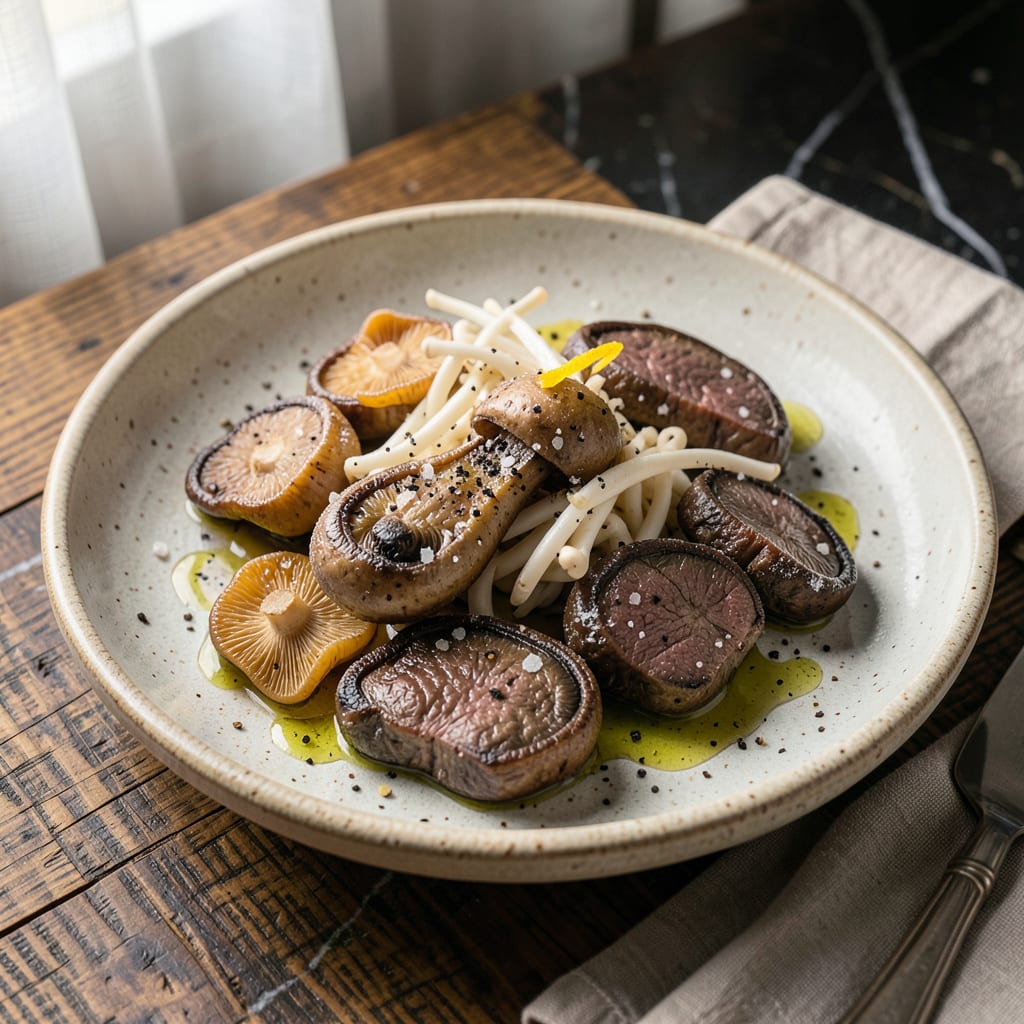
Cook frozen mushrooms directly from frozen—no thawing needed—to avoid a mushy texture. Sauté over medium-high heat with oil or butter until excess moisture evaporates, then season as desired. They work best in soups, stir-fries, or sauces where texture is less critical.
I’ve found that frozen mushrooms actually hold up surprisingly well in dishes where they can soak up flavors. 🔥 The key is high heat—it helps drive off the extra moisture released during freezing, which is what gives them that undesirable squishy texture. Think of them as little flavor sponges in sauces or broths, where they’ll absorb seasonings while contributing their earthy depth. My go-to move is tossing them straight into a hot pan with garlic and thyme to build layers of flavor before they even hit the main dish.
💡 In This Article
- Why Frozen Mushrooms Behave Differently When Cooked
- Best Recipes and Dishes for Frozen Mushrooms
Why Frozen Mushrooms Behave Differently When Cooked
When mushrooms freeze, ice crystals form inside their cells—literally piercing the cell walls like microscopic needles. This structural damage means that once thawed (or cooked from frozen), they release up to 30% more moisture than fresh mushrooms. The result? That familiar soggy texture you’re trying to avoid.
Fresh mushrooms maintain their cellular integrity, so they hold onto moisture better during cooking.
The freezing process also alters the mushrooms’ pectin structure—the natural “glue” that holds plant cells together. In fresh mushrooms, pectin creates that satisfying firm bite. But after freezing, the pectin breaks down, making the texture softer.
That’s why frozen mushrooms work best in dishes where they’ll be simmered for 15+ minutes (like soups) or blended (like sauces), where texture becomes less noticeable. 🔥
Here’s what’s happening in your pan: When frozen mushrooms hit heat, the ice crystals melt rapidly, creating a steam effect that initially makes them appear waterlogged. But if you keep the heat at medium-high (375°F) and resist stirring too soon, that moisture will evaporate.
I’ve found that waiting until you hear the sizzle change pitch—usually after 4-5 minutes—means the excess water has cooked off and browning can begin.
The flavor concentration changes too. Freezing causes some volatile aromatic compounds to degrade, which is why frozen mushrooms taste slightly milder than fresh. However, this makes them perfect for absorbing bold flavors.
Try this: After the initial moisture cooks off, add 1 tsp smoked paprika or 1 tbsp soy sauce to the pan—the mushrooms will soak it up like sponges. ✨
Pro tip from my test kitchen: If you’re using frozen mushrooms in a dish where texture matters (like stir-fries), pre-roast them at 425°F for 12-15 minutes before adding to your recipe. This extra step drives off moisture and concentrates flavor through caramelization. The result is surprisingly close to fresh-sautéed mushrooms, with a deeper umami punch.
What most home cooks don’t realize is that frozen mushrooms actually develop more glutamate—the compound responsible for umami—during the freezing process. That’s why they work so well in broths and sauces. A 1/2 cup of frozen mushrooms can add the same depth as 3/4 cup fresh when simmered properly. 💫
The key difference between fresh and frozen becomes obvious when you compare their water activity levels. Fresh mushrooms have a water activity of about 0.98, while frozen-thawed ones jump to nearly 0.99—meaning they’re more prone to bacterial growth if not cooked thoroughly.
Always ensure frozen mushrooms reach an internal temperature of 165°F during cooking, even if they’re going into a sauce that will simmer further.

Trained in classic French technique but raised on slow-cooked ribs and spicy rubs, she blends culinary skill with smoke and soul.
- Recipe for Boneless Pork Chops in Cast Iron Skillet: Sear and Baste to Juicy Perfection - October 3, 2026
- Recipe for Boneless Cross Rib Roast: Slow-Roasted Beef with Herb Crust - October 3, 2026
- Hamburgers in Sauce Recipe Crock Pot: Slow-Cooked Savory Delight - October 3, 2026