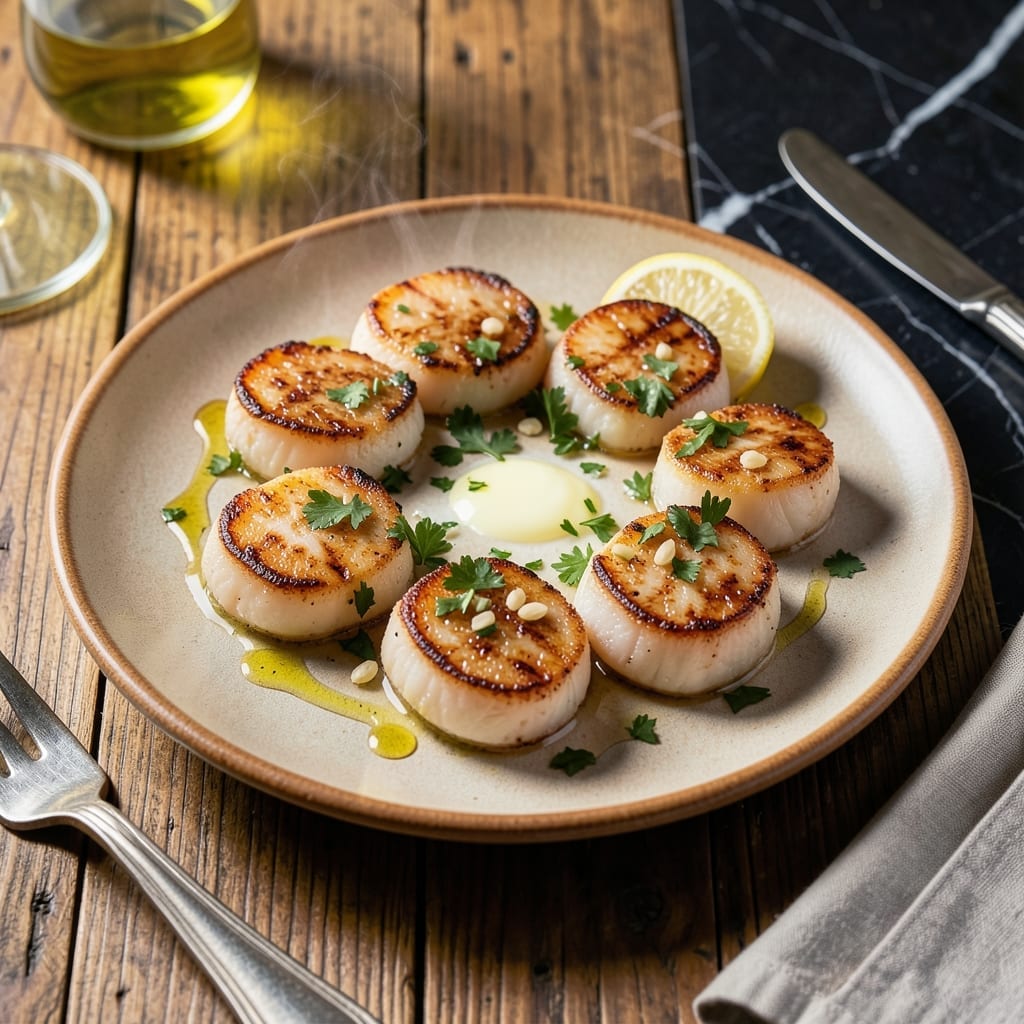
Frozen scallops can achieve perfect seared results with one key step: proper thawing. My method ensures they cook evenly without turning rubbery.
With high heat and a hot pan, you’ll get a golden crust outside and tender center inside. This technique works every time.
Ingredients for Frozen Scallops
Simple ingredients yield restaurant-quality seared scallops with a golden, buttery crust.
| Ingredient | Amount | Notes |
|---|---|---|
| Frozen Scallops 🦪 | 1 ½ lb | Dry-packed, large sea scallops preferred |
| Unsalted Butter 🧈 | 4 tbsp | Divided for cooking and finishing |
| Olive Oil 🫒 | 2 tbsp | High smoke point preferred |
| Garlic Cloves 🧄 | 3 cloves | Minced for aroma |
| Fresh Lemon 🍋 | 1 whole | Zested and juiced |
| Fresh Parsley 🌿 | ¼ cup | Chopped, for garnish |
| Kosher Salt 🧂 | 1 tsp | Plus more to taste |
| Black Pepper 🌶️ | ½ tsp | Freshly ground preferred |
| Dry White Wine 🍷 | ¼ cup | Optional for deglazing |
| Red Pepper Flakes 🌶️ | ¼ tsp | Optional for heat |
[recipe_ingredient_scaler]
The scallops are the star here. Dry-packed frozen scallops are essential—they thaw without excess moisture that causes steaming instead of searing. Look for large sea scallops (about 15-20 count per pound) at Whole Foods or Trader Joe’s. Avoid wet-packed scallops, as they often contain preservatives and retain too much water. Thaw them overnight in the fridge for best texture.
No white wine? Substitute chicken or vegetable broth for deglazing. If you skip the wine entirely, add an extra tablespoon of butter for richness. Fresh parsley can be swapped with chives or cilantro if preferred. The lemon is non-negotiable though—its acidity cuts through the butter and brightens the dish. For extra depth, a pinch of smoked paprika works well.
Cooked scallops are best served immediately, but leftovers keep in the fridge for 1-2 days. Reheat gently in a warm pan to avoid overcooking. Freezing cooked scallops isn’t recommended—they lose their tender texture. Always pat scallops very dry before cooking (this ensures a proper sear).
Why You’ll Love This Recipe
- 20-Minute Meal: I can go from freezer to fork faster than my kids can decide what they want for dinner. Honestly, just thaw, sear, and serve.
- Buttery Garlic Bite: That sizzle when the scallops hit the butter-garlic-oil mix? It smells as good as it tastes.
- Fancy Enough for Guests: I serve these at dinner parties and no one believes they started as frozen. The lemon finishes it off just right.
- Budget Seafood: Frozen scallops cost half what fresh do at my store, but with butter and garlic, they taste just as luxurious.
Step-by-Step Instructions for Seared Scallops
Master the technique for perfectly caramelized scallops with a golden crust and tender interior.
Step 1: Thaw and Pat the Scallops Dry
Begin by thawing the 1.5 lb frozen scallops in the refrigerator overnight. If you’re in a hurry, submerge them in cold water for 20-30 minutes, changing the water every 10 minutes until fully thawed. This prevents partial cooking and preserves texture.
Once thawed, pat the scallops completely dry with paper towels. I emphasize completely—any moisture will steam the scallops instead of searing them. This step is non-negotiable for achieving that coveted golden crust. Season both sides evenly with 1 tsp kosher salt and 0.5 tsp black pepper.
Step 2: Sear the Scallops to Golden Perfection
Heat 2 tbsp olive oil in a large skillet over medium-high heat until it shimmers but doesn’t smoke. Add 2 tbsp unsalted butter and let it melt. Once the butter stops foaming, add the scallops in a single layer, ensuring they’re not crowded—this ensures even browning.
Sear undisturbed for 2-3 minutes per side until they develop a deep golden-brown crust and release easily from the pan. The scallops should be opaque on the outside but still slightly translucent in the center when you flip them. Don’t move them around; patience is key here.
Step 3: Infuse Flavor with Garlic and Wine
Remove the scallops and set aside. Reduce heat to medium and add the 3 cloves garlic cloves to the same pan. Cook for 30 seconds, stirring constantly, until fragrant but not browned. Add the 0.25 tsp red pepper flakes for a subtle kick if desired.
Pour in the 0.25 cup dry white wine and deglaze the pan, scraping up any browned bits with a wooden spoon. Let it simmer for 2 minutes until the liquid reduces by half. This creates a flavorful base for the finishing sauce.
Step 4: Finish with Butter and Lemon
Return the scallops to the pan. Add the remaining 2 tbsp unsalted butter, the zest of 1 whole fresh lemon, and 1 tbsp of its juice. Swirl the pan gently for 1 minute to coat the scallops in the glossy, aromatic sauce. The butter will emulsify with the wine and lemon, creating a luxurious finish.
Taste and adjust seasoning with additional salt if needed. The sauce should be bright and balanced, with the acidity of the lemon cutting through the richness of the butter.
Step 5: Garnish and Serve Immediately
Transfer the scallops to a serving plate, spooning the pan sauce over the top. Garnish with 0.25 cup fresh parsley, finely chopped. Serve immediately while the scallops are hot and the crust is still crisp.
Each scallop should have a caramelized exterior that gives way to a tender, buttery interior. The sauce will pool slightly on the plate, perfect for soaking up with crusty bread. This is a dish where timing and technique make all the difference.
Pro Tips For Making Frozen Scallops
- Thaw Properly: I learned this the hard way—never cook scallops straight from frozen. Thaw them overnight in the fridge or under cold running water for 15-20 minutes, then pat them very dry with paper towels to get that perfect sear.
- High Heat Only: Crank your pan to medium-high and don’t overcrowd it. Scallops need a screaming hot surface to develop that golden crust—about 2 minutes per side, no peeking.
- Skip the Overcooking: Pull them off the heat when they’re just opaque in the center. They’ll keep cooking off the heat, and rubbery scallops are the fastest way to ruin this dish.
- Finish with Lemon: Squeeze fresh lemon juice over the scallops right before serving—it cuts through the butter and brightens up the whole dish. Sounds simple, but it actually changes the outcome.
Common Mistakes When Making frozen scallops
Skipping the Thaw
Never cook scallops straight from frozen. This leads to uneven cooking where the outside burns while the inside stays raw. I learned this the hard way at my first coastal BBQ competition—20-30 minutes in cold water is the fastest safe method. 💡
Overcrowding the Pan
Putting too many scallops in the pan at once causes steaming instead of searing. Use a large skillet and cook in batches if needed. Each scallop needs space for the golden-brown crust to develop properly.
Moving Them Too Soon
Resist the urge to check or flip scallops before they’re ready. They need 2-3 minutes per side undisturbed to form that perfect crust. If they stick, they’re not ready to flip yet.
Using Wet Scallops
Pat scallops completely dry before cooking. Any moisture creates steam, preventing the Maillard reaction that gives you that beautiful sear. I use 3-4 paper towels to ensure they’re bone-dry.
High Heat Overload
While you need medium-high heat, too high can burn the butter. If your butter starts smoking, reduce the heat slightly. The butter should foam but not burn.
This balances the sear with flavor development. 🔥
Skipping the Rest
Let cooked scallops rest for 2 minutes before serving. This allows the juices to redistribute. Serve immediately after resting for the best texture and flavor.
Nutrition Facts
Frequently Asked Questions
Can I cook them straight from the freezer?
Never cook scallops from frozen. This causes uneven cooking with a burnt exterior and raw center. Thaw in the fridge overnight or use the cold water method for 20-30 minutes.
How do I know when they’re done?
Scallops are done when they reach an internal temperature of 125°F and are opaque but still slightly translucent in the center. They should release easily from the pan after 2-3 minutes per side.
What’s the best pan for searing?
Use a heavy-bottomed skillet like stainless steel or cast iron. These retain heat well and create an even sear. Avoid nonstick pans as they don’t get hot enough for a good crust.
Why do my scallops stick to the pan?
Sticking usually means they’re not ready to flip or the pan isn’t hot enough. Ensure the pan is at medium-high heat and don’t move them until a golden crust forms.

Trained in classic French technique but raised on slow-cooked ribs and spicy rubs, she blends culinary skill with smoke and soul.
- Recipe for Boneless Pork Chops in Cast Iron Skillet: Sear and Baste to Juicy Perfection - October 3, 2026
- Recipe for Boneless Cross Rib Roast: Slow-Roasted Beef with Herb Crust - October 3, 2026
- Hamburgers in Sauce Recipe Crock Pot: Slow-Cooked Savory Delight - October 3, 2026