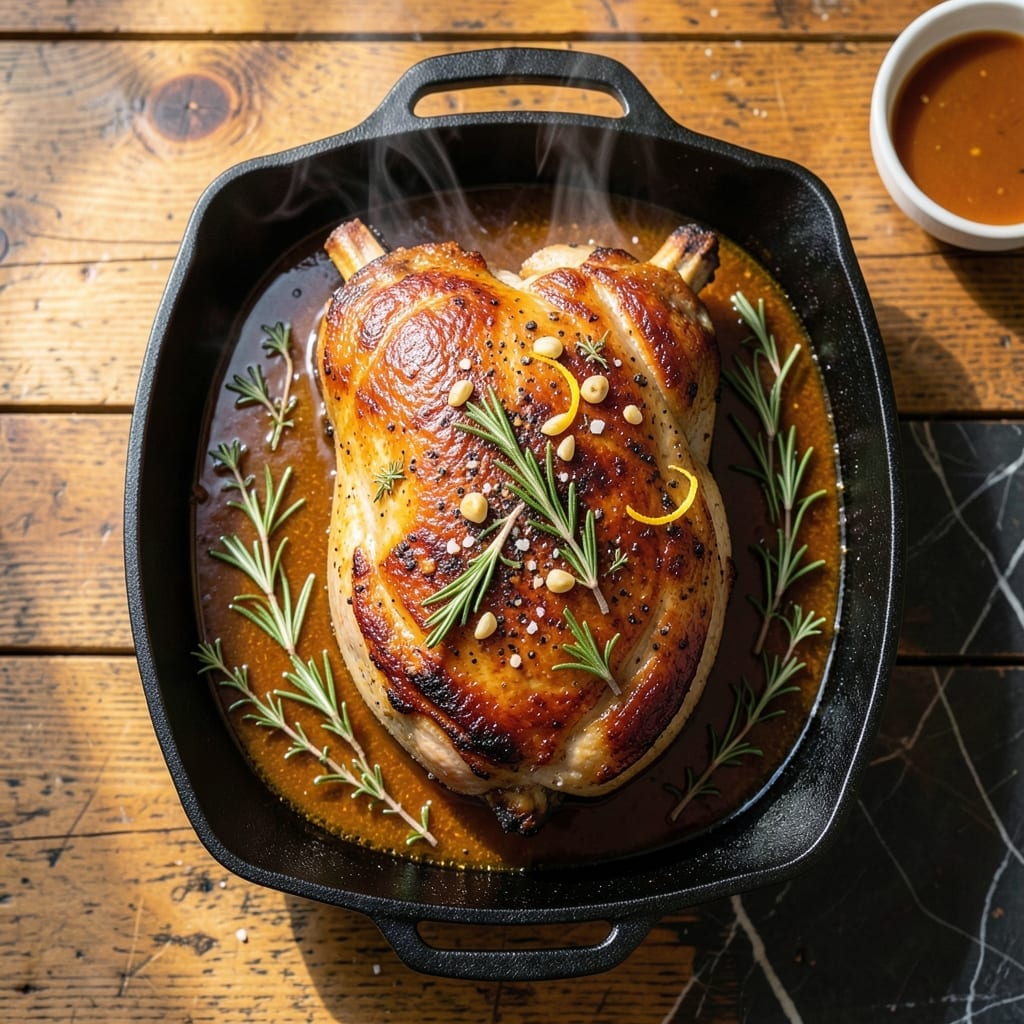
There’s nothing like a pork rib roast slow-roasted to perfect tenderness with a fragrant herb crust. This method ensures every bite is juicy, flavorful, and worth the wait.
I’ve refined this recipe over years of testing, balancing classic French technique with my love for deep, savory flavors. The result is a centerpiece dish that impresses every time.
Ingredients for Pork Rib Roast
A bone-in roast, fresh herbs, and classic French technique create this showstopping centerpiece.
| Ingredient | Amount | Notes |
|---|---|---|
| Bone-In Pork Rib Roast 🥩 | 4 lb | Rib bones frenched by butcher |
| Kosher Salt 🧂 | 1 ½ tbsp | Diamond Crystal preferred for texture |
| Freshly Ground Black Pepper 🌶️ | 1 tbsp | Coarse grind for rub |
| Fresh Rosemary Sprigs 🌿 | 4 whole | Stems removed, finely chopped |
| Fresh Thyme Sprigs 🍃 | 6 whole | Leaves stripped from stems |
| Fresh Garlic Cloves 🧄 | 6 cloves | Minced to fine paste |
| Dijon Mustard 🟡 | 3 tbsp | Smooth, high-quality brand |
| Extra-Virgin Olive Oil 🫒 | 2 tbsp | For searing and herb paste |
| Dry White Wine 🍷 | 1 cup | Crisp variety like Sauvignon Blanc |
| Low-Sodium Chicken Stock 🥣 | 1 cup | Homemade or high-quality boxed |
| Unsalted Butter 🧈 | 2 tbsp | Softened for herb crust |
| Shallots 🧅 | 2 whole | Finely minced for sauce |
| All-Purpose Flour 🌾 | 1 tbsp | For thickening pan sauce |
[recipe_ingredient_scaler]
The pork rib roast is the star—opt for bone-in with frenched ribs from a trusted butcher like Whole Foods or your local shop. Ask them to leave a fat cap of about 1/4-inch for even cooking. For the herbs, organic rosemary and thyme from the refrigerated section have superior aroma to dried. The Dijon mustard should be smooth and sharp—Maille or Grey Poupon are reliable choices.
No white wine? Substitute with additional chicken stock plus 1 tbsp lemon juice for acidity. Dried herbs can work at one-third the amount, but fresh is non-negotiable for the crust’s vibrancy. If you can’t find shallots, yellow onion at half the quantity is acceptable. The butter in the crust can be replaced with olive oil for a lighter finish, though the richness will be slightly diminished.
The roast can be prepped 12 hours ahead—rub with herb paste and refrigerate uncovered. Cooked leftovers keep 4-5 days refrigerated or freeze beautifully for 3 months. Slice only what you need, leaving the rest whole for optimal moisture retention.
Why You’ll Love This Recipe
- Set It and Forget: I rub the roast with salt, pepper, and fresh herbs, then let the oven do all the work.
- Herb Crusted Bliss: The rosemary and thyme form this crazy aromatic crust that makes every bite taste like a holiday.
- Sunday Dinner Star: It’s my go-to for feeding a crowd—impressive but unfussy, and always disappears fast.
- Leftover Magic: The next-day sandwiches with that juicy pork and crispy edges? Honestly, sometimes better than the first meal.
Step-by-Step Instructions for Herb-Crusted Pork Rib Roast
Master the technique for a perfectly tender roast with a fragrant herb crust and rich pan sauce.
Step 1: Prepare the Herb Rub and Season the Roast
Finely chop the stems from the 4 whole fresh rosemary sprigs and strip the leaves from the 6 whole fresh thyme sprigs. In a small bowl, combine these with the 1.5 tbsp kosher salt, 1 tbsp freshly ground black pepper, and minced 6 cloves fresh garlic cloves.
Pat the 4 lb bone-in pork rib roast completely dry with paper towels. This ensures the rub adheres properly and promotes even browning. Rub the herb mixture all over the roast, pressing it into the meat. Let it sit at room temperature for 30 minutes to allow the flavors to penetrate.
Step 2: Sear the Roast and Apply Mustard Butter
Preheat your oven to 325°F. In a large oven-safe roasting pan, heat the 2 tbsp extra-virgin olive oil over medium-high heat. Sear the roast on all sides until deeply browned, about 3-4 minutes per side. This step builds a flavorful crust.
Remove the pan from heat. In a small bowl, mix the 3 tbsp Dijon mustard with the 2 tbsp unsalted butter until smooth. Brush this mixture evenly over the seared roast. The mustard butter will create a glossy, flavorful crust as it roasts.
Step 3: Roast Low and Slow to Perfection
Place the roasting pan with the pork in the preheated oven. Roast for 2 to 2.5 hours, or until an instant-read thermometer inserted into the thickest part of the meat registers 145°F for medium-rare. Baste the roast with the pan juices every 30 minutes to keep it moist and enhance the crust.
The low and slow roasting method ensures the meat stays juicy and tender. The bones will add extra flavor to the final dish. You’ll know it’s ready when the crust is deep golden brown and the meat feels slightly firm but still yields to gentle pressure.
Step 4: Rest the Roast and Prepare the Pan Sauce
Transfer the roast to a cutting board and tent loosely with foil. Let it rest for 15-20 minutes—this allows the juices to redistribute for maximum tenderness. Meanwhile, place the roasting pan on the stovetop over medium heat.
Add the finely minced 2 whole shallots to the pan and cook for 2 minutes until softened. Sprinkle in the 1 tbsp all-purpose flour and stir to combine, cooking for 1 minute. Slowly pour in the 1 cup dry white wine and 1 cup low-sodium chicken stock, scraping up any browned bits from the bottom of the pan.
Step 5: Finish the Sauce and Serve
Simmer the sauce for 5-7 minutes until it thickens slightly and reduces by about a third. Strain the sauce through a fine-mesh sieve into a gravy boat or small pitcher for a smooth, refined finish. The sauce should coat the back of a spoon and have a rich, savory depth.
Slice the roast between the bones into individual chops and arrange on a serving platter. Drizzle some of the pan sauce over the top and serve the remainder on the side. The herb crust will be fragrant and crisp, while the meat remains succulent and flavorful.
Pro Tips For Making Pork Rib Roast
- Dry the Roast: Pat the pork rib roast thoroughly dry with paper towels before seasoning—this guarantees a better crust and helps the salt and herbs stick properly.
- Rest Before Slicing: Let the roast rest for 15-20 minutes under loose foil after cooking; it keeps the juices inside the meat instead of all over the cutting board.
- Fresh Herbs Only: Skip the dried rosemary and thyme—fresh sprigs bruised lightly with your fingers release way more flavor into the meat as it cooks.
- Start High, Finish Low: Sear the roast at 450°F for 20 minutes first, then drop the heat to 325°F for the rest of the time to get both a crispy exterior and tender inside.
Storing and Reheating pork rib roast
Refrigerator Storage
Let your roast cool for no more than 2 hours before storing. I use airtight containers or wrap tightly in heavy-duty aluminum foil—this keeps the herb crust intact. Store at 40°F or below for up to 4-5 days. 💡
Freezer Storage
For longer storage, freeze the roast whole or in slices. Wrap tightly in plastic wrap followed by freezer-safe bags, squeezing out excess air. It stays fresh for up to 3 months without losing texture or flavor.
Stovetop Reheating
This is my go-to method for leftovers. Place slices in a skillet with 2 tbsp chicken stock over medium-low heat, cover, and warm for 5-7 minutes. The stock prevents drying while reviving the herb crust. 🔥
Oven Reheating
For a whole roast, preheat oven to 300°F. Wrap in foil with ¼ cup chicken stock and reheat for 20-25 minutes until reaching 145°F internal temperature. This method preserves moisture beautifully.
Microwave Reheating
For quick meals, place individual slices on a microwave-safe plate with a damp paper towel. Heat on 50% power for 1-2 minutes, checking frequently to avoid overcooking. Add a splash of sauce to maintain juiciness.
Nutrition Facts
Frequently Asked Questions
What internal temperature should I aim for?
Use a meat thermometer to check for 145°F in the thickest part. This ensures perfect medium-rare doneness while keeping the meat juicy and tender.
Can I cook this in a slow cooker?
Not recommended. A slow cooker won’t achieve the crispy herb crust or even browning. For best results, stick to the oven method with searing first.
How do I prevent the herb crust from burning?
Tent the roast loosely with foil after the first 1 hour of roasting. This protects the crust while allowing the meat to cook evenly.
Is resting the roast necessary?
Yes, let it rest for 15-20 minutes before slicing. This allows juices to redistribute, ensuring every bite stays moist and flavorful.

Trained in classic French technique but raised on slow-cooked ribs and spicy rubs, she blends culinary skill with smoke and soul.
- Meat Loaf Recipe With Beef And Pork: Homestyle Blend With Rich Gravy - October 3, 2026
- Hamburger Patty Recipe No Egg: Juicy Bind With Breadcrumbs and Milk - October 3, 2026
- Recipe for Oven Baked Halibut: Buttery White Fish with Zesty Lemon Topping - October 3, 2026