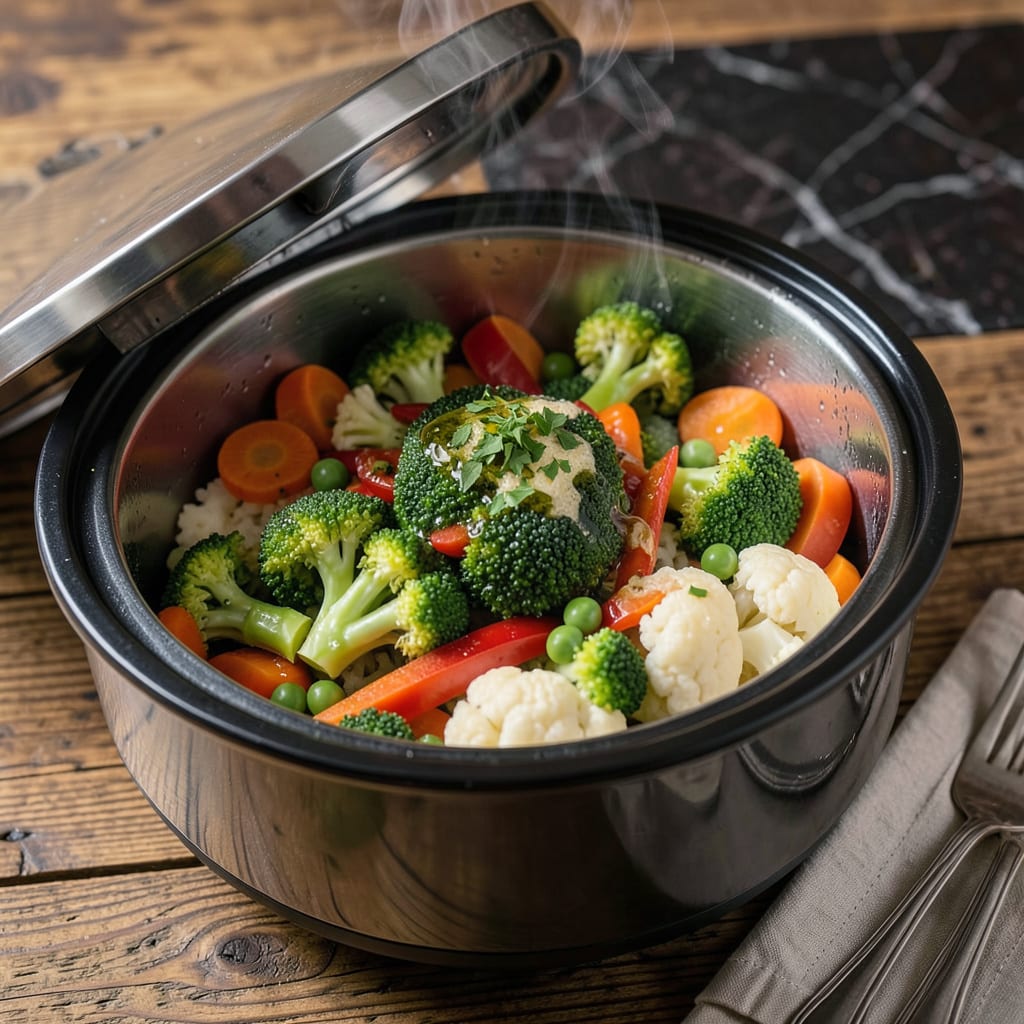
I’ll be real with you—frozen veggies get a bad rap, but they’re about to become your weeknight dinner hero. This rice cooker method turns that forgotten bag in your freezer into perfectly steamed vegetables with zero effort. No pots, no colanders, just dump-and-go convenience that actually tastes good.
Here’s the thing—most people overcomplicate veggie prep. I discovered this trick during a particularly chaotic week when even boiling water felt like too much work. The rice cooker’s steam function does all the heavy lifting, preserving color, texture, and nutrients better than any microwave. Add a splash of broth or a pat of butter, and suddenly you’ve got restaurant-quality sides.
You’ll end up with tender-crisp vegetables that maintain their bright color and natural sweetness. No mushy, waterlogged results here. The best part? While your veggies cook hands-off, you’re free to prep the rest of dinner—or just put your feet up for 15 minutes.
Works with any frozen veggie mix, from simple peas to stir-fry blends. Serve as a side, toss into fried rice, or blend into soups. Cleanup takes 30 seconds. Now that’s what I call perfect cooking.
📚 In This Guide
- What You’ll Need
- Instructions
- Tips and Common Mistakes
What Youll Need
- ● Rice cooker – Any standard model (3-cup capacity or larger works best for even cooking).
- ● Frozen vegetables – 1–2 cups per serving (mixed veggies, broccoli, carrots, or peas work great!).
- ● Water or broth – ¼–½ cup (adjust based on your rice cooker’s steam needs).
- ○ Cooking oil or butter (optional) – 1 tsp for extra flavor.
- ○ Seasonings (optional) – Salt, pepper, garlic powder, or soy sauce to taste.
- ● Measuring cup – For precise liquid and veggie portions.
- ● Spatula or wooden spoon – To fluff and serve without scratching the pot.
- ○ Timer (optional) – Helpful if your rice cooker lacks an auto-shutoff feature.
Instructions
Here’s the foolproof method I use to transform frozen vegetables into perfectly steamed sides with zero effort.
Prepare Your Rice Cooker and Vegetables
Begin by adding 1 cup of water to your rice cooker’s inner pot. This creates the steam needed to cook the vegetables evenly without drying them out. I always use filtered water to prevent any mineral buildup in my cooker.
Don’t add more water than specified—too much will create a watery base that makes your vegetables soggy instead of perfectly steamed. The goal is gentle, even steam circulation throughout the cooking process.
Arrange the Vegetables for Even Cooking
Place your frozen vegetables in the rice cooker’s steaming basket or directly into the pot if your model doesn’t have one. Spread them out in an even layer rather than piling them up. This ensures the steam can circulate freely around each piece.
I’ve found that mixing different vegetables? Cut them to similar sizes first. For example, if combining broccoli florets with sliced carrots, make sure the carrot pieces aren’t too thick. This prevents some vegetables from being overcooked while others remain underdone.
Cook Using the Steam Function
Close the lid and select the steam function on your rice cooker. Most models will automatically steam for 15-20 minutes, which is perfect for frozen vegetables. If your cooker doesn’t have a dedicated steam setting, use the regular cooking cycle.
Listen for the cooker to switch from boiling to steaming—you’ll hear the water bubbling vigorously at first, then settling into a gentle hiss. This is when the actual steaming begins. Resist the urge to peek during cooking, as releasing steam will extend your cooking time.
Check for Perfect Doneness
When the cooker switches to warm mode or the timer completes, open the lid carefully to avoid steam burns. Your vegetables should be vibrant in color and tender-crisp—easily pierced with a fork but still holding their shape.
If they’re not quite done to your liking, simply close the lid and let them steam for another 3-5 minutes in the residual heat. Different vegetable mixes may require slight adjustments, but this method consistently delivers perfect results.
Season and Serve Immediately
Transfer the steamed vegetables to a serving bowl while they’re still hot. I like to toss them with a pat of butter or a drizzle of olive oil, then season with salt and pepper to taste. The residual heat helps the seasoning adhere beautifully.
Serve immediately while the vegetables are at their peak texture and temperature. You’ll notice they retain more of their natural color and nutrients compared to boiling, plus they’ll have that perfect tender-crisp bite that makes them so satisfying.
Tips and Common Mistakes
Perfectly steamed vegetables from frozen require attention to detail—here’s what I’ve learned from years of testing.
Water Ratio Precision: The 1 cup of water specified in Step 1 isn’t arbitrary—it creates the ideal steam environment. Too little and your vegetables will undercook; too much and you’ll end up with a waterlogged, mushy texture. I always measure carefully using a liquid measuring cup for accuracy. Filtered water prevents mineral deposits that can affect both taste and your rice cooker’s longevity.
Steam Circulation Technique: When arranging vegetables in Step 2, think about airflow like you’re packing a suitcase—everything needs breathing room. I’ve found that spreading them in a single layer with at least ½-inch space between pieces ensures even cooking. For mixed vegetables, take the extra minute to cut denser items like carrots slightly smaller than softer ones like peas. This prevents the common problem of some pieces being overdone while others remain frozen inside.
Timing Nuances: The 15-20 minute cooking window in Step 3 accounts for different rice cooker models and vegetable densities. Here’s what to listen for: the initial vigorous bubbling should transition to a steady hiss within 3-4 minutes. If your cooker takes longer to reach this point, your vegetables may need the full 20 minutes. I always set a timer for 15 minutes, then check for doneness rather than waiting for the machine to switch off—this prevents overcooking.
Residual Heat Strategy: That 3-5 minute rest in Step 4 isn’t just about finishing cooking—it’s about texture perfection. The residual heat continues steaming gently while the vegetables firm up slightly. I’ve noticed that broccoli and green beans benefit most from this step, becoming perfectly tender-crisp. Just be sure to keep the lid closed during this time to maintain the steam environment you’ve created.
Pro Tips for Frozen Vegetables In Rice Cooker
- Perfectly steamed vegetables from frozen require attention to detail—here’s what I’ve learned from years of testing.
- Water Ratio Precision: The 1 cup of water specified in Step 1 isn’t arbitrary—it creates the ideal steam environment….
- Steam Circulation Technique: When arranging vegetables in Step 2, think about airflow like you’re packing a suitcase—…
Frequently Asked Questions
Can I cook frozen vegetables directly in a rice cooker without thawing?
Just toss frozen veggies (like peas, corn, or mixed blends) straight into the rice cooker with ¼ cup water or broth. No thawing needed—it saves time and preserves texture. Cook on the “Steam” or “White Rice” setting for 10–15 minutes, stirring once halfway.
How much water do I add for frozen veggies in a rice cooker?
Use ¼ to ½ cup liquid (water, veggie broth, or even lemon water for flavor). Too much = soggy veggies; too little = uneven cooking. For leafy greens (like spinach), skip extra liquid—they release moisture as they cook!
Why do my frozen veggies turn out mushy in the rice cooker?
Overcooking is the usual culprit. Pro tip: Set a timer for 10 minutes, then check doneness. For crisp-tender results, shock veggies in ice water post-cooking (works great for broccoli or green beans). Avoid overcrowding the cooker too!
Can I cook frozen veggies with rice in the same pot?
Yes! Layer uncooked rice + water first, then add frozen veggies on top (they’ll steam as the rice cooks). Use the standard rice-to-water ratio, and add 2–3 extra minutes to the cook time for firmer veggies like carrots.
What are the best frozen vegetables for rice cooker steaming?
Opt for small, uniform cuts like:
- Peas (cook in 8–10 mins)
- Corn kernels (10–12 mins)
- Diced carrots or green beans (12–15 mins)
- Cauli/rice blends (no extra water needed!)
Cooking frozen vegetables in a rice cooker is the ultimate hack for busy cooks—no fuss, no extra pots, and perfectly steamed results every time! 🌟 Whether you’re meal prepping or whipping up a quick side, this method saves time and locks in nutrients. Ready to try it? Grab your favorite frozen veggies, toss them in with your rice (or alone!), and let your rice cooker do the work. For even more hands-off meals, experiment with seasonings or mix-ins next—think garlic powder, soy sauce, or a sprinkle of sesame seeds!

Trained in classic French technique but raised on slow-cooked ribs and spicy rubs, she blends culinary skill with smoke and soul.
- Recipe for Boneless Leg of Lamb Roast in the Oven: Herb-Crusted and Rosy Pink Inside - October 3, 2026
- Meat Loaf Recipe With Beef And Pork: Homestyle Blend With Rich Gravy - October 3, 2026
- Hamburger Patty Recipe No Egg: Juicy Bind With Breadcrumbs and Milk - October 3, 2026