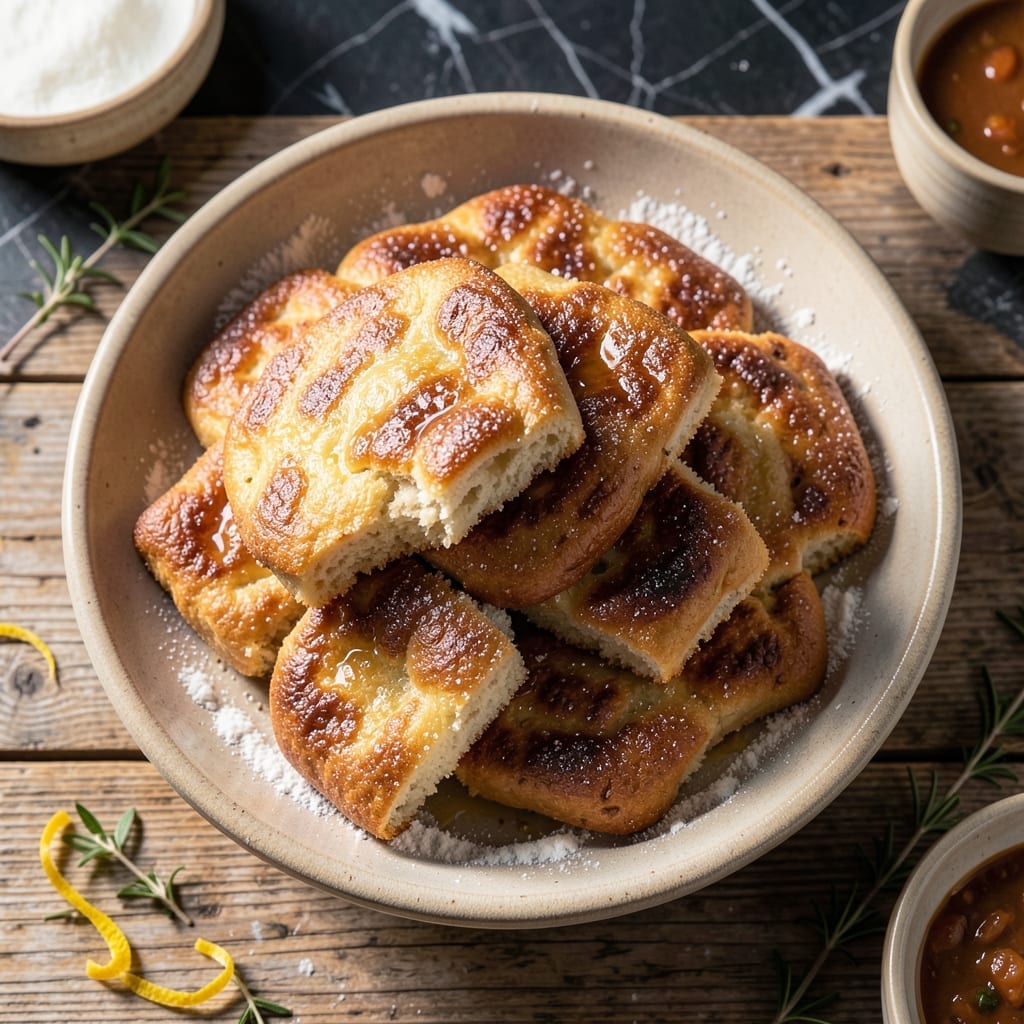
This fry bread recipe combines yeast and baking powder for pillowy golden puffs that are light inside with a crisp exterior. The dual leavening agents create perfect texture without long rise times.
I developed this method after testing countless variations to achieve that ideal balance of fluffiness and structure. The yeast adds depth of flavor while baking powder ensures immediate lift for consistent results every time.
The dough comes together quickly with simple pantry staples, then fries to golden perfection in minutes. Hot oil transforms the raw dough into irresistible puffs ready for sweet or savory toppings.
Serve warm for the best texture and flavor. This version delivers authentic taste with modern convenience.
Ingredients for Fry Bread Recipe with Yeast and Baking Powder
Simple pantry staples create these airy, golden puffs with dual leavening for perfect texture.
| Ingredient | Amount | Notes |
|---|---|---|
| All-Purpose Flour 🌾 | 4 cups | Plus extra for dusting surface |
| Active Dry Yeast 🍞 | 1 package | 2 1/4 tsp per package |
| Baking Powder 🧂 | 2 tsp | Double-acting for best rise |
| Granulated Sugar 🍚 | 1 tbsp | Feeds the yeast for activation |
| Salt 🧂 | 1 tsp | Fine sea salt preferred |
| Warm Water 💧 | 1 ¼ cups | 110°F for yeast activation |
| Vegetable Oil 🫒 | 2 cups | For frying, plus extra as needed |
| Unsalted Butter 🧈 | 2 tbsp | Melted, for dough richness |
| Powdered Sugar 🍬 | ½ cup | Optional for dusting finished puffs |
| Honey 🍯 | 2 tbsp | Optional for drizzling (vegetarian) |
[recipe_ingredient_scaler]
The yeast and baking powder are both essential here—Fleischmann’s or Red Star for reliable yeast, and Clabber Girl for consistent baking powder. Use all-purpose flour with a protein content around 10-12% (check the label). Warm water must be exactly 110°F—too hot kills the yeast, too cold won’t activate it. A kitchen thermometer is worth the investment for precision.
No yeast? Instant yeast works at the same ratio, but don’t use rapid-rise as it behaves differently. For a milder flavor, half the sugar still feeds the yeast adequately. The butter can be replaced with coconut oil for a dairy-free version (though this recipe remains vegetarian). If frying in oil concerns you, peanut oil has a higher smoke point and gives excellent results.
The dough can rest while you heat the oil—no need for a long rise. Fried puffs keep warm in a 200°F oven for up to 30 minutes while you finish the batch. Leftovers (if any exist) reheat best in a toaster oven to restore crispness. Dough doesn’t freeze well for this application.
Why You’ll Love This Recipe
- No-Fuss Dough: That yeast and baking powder combo means I can skip the long rise time—just mix, rest, and fry.
- Crispy Yet Fluffy: The sugar caramelizes while frying, giving that golden crust with a soft, pillowy center.
- Breakfast or Dinner: I’ve served this with honey for breakfast and as a taco base for dinner. Honestly, it works for both.
- Pantry Staples Only: Flour, yeast, baking powder—things I always have on hand. No last-minute grocery runs.
Step-by-Step Instructions for Fry Bread With Yeast and Baking Powder
Master the technique for achieving airy, golden puffs with a crisp exterior and tender crumb.
Step 1: Activate the Yeast and Prepare the Dough
In a large mixing bowl, combine the 1.25 cups Warm Water with the 1 package Active Dry Yeast and 1 tbsp Granulated Sugar. Let it sit for 5-7 minutes until the mixture becomes frothy and cloudy—this confirms the yeast is active and ready to work.
Add the 4 cups All-Purpose Flour, 2 tsp Baking Powder, and 1 tsp Salt to the yeast mixture. Stir until a shaggy dough forms. The baking powder provides an extra lift, ensuring your fry bread puffs up beautifully during cooking. Incorporate the 2 tbsp Unsalted Butter, melted, for added richness and tenderness.
Step 2: Knead and Rest the Dough
Turn the dough out onto a lightly floured surface and knead for 5-6 minutes until smooth and elastic. The dough should be soft but not sticky—add a bit more All-Purpose Flour if needed, but avoid overworking it, as this can make the fry bread tough.
Place the dough in a lightly greased bowl, cover with a clean kitchen towel, and let it rise in a warm, draft-free place for 1 hour. The dough should double in size, indicating the yeast has done its job. This resting period develops flavor and ensures a light, airy texture in the finished product.
Step 3: Shape and Prepare for Frying
After the dough has risen, punch it down to release the air and divide it into 8 equal portions. Roll each portion into a ball, then flatten into a ½-inch thick disc. This even thickness ensures consistent cooking and prevents underdone centers.
Let the shaped dough rest for 10 minutes while you prepare the frying station. This brief rest relaxes the gluten, making it easier to achieve even, puffy fry bread without tough spots.
Step 4: Fry to Golden Perfection
Heat the 2 cups Vegetable Oil in a deep, heavy-bottomed skillet over medium-high heat to 350-375°F. To test the temperature, drop a small piece of dough into the oil—it should sizzle immediately and rise to the surface within 10-15 seconds.
Carefully slide 2-3 pieces of dough into the hot oil, being cautious not to overcrowd the pan. Fry for 2-3 minutes per side until deep golden brown and puffed. Use a slotted spoon to turn the dough, ensuring even browning on both sides. Transfer the fried bread to a paper towel-lined plate to drain excess oil.
Step 5: Finish and Serve
While the fry bread is still warm, dust with 0.5 cup Powdered Sugar for a sweet finish, if desired. The residual heat from the bread will help the Powdered Sugar adhere evenly, creating a light, snowy coating.
For an extra touch of indulgence, drizzle with 2 tbsp Honey just before serving. Serve immediately for the best texture—the exterior should be crisp, while the interior remains soft and pillowy. These puffs are best enjoyed fresh and warm.
Pro Tips For Making Fry Bread Recipe With Yeast And Baking Powder
- Proof the Yeast: Always bloom the active dry yeast in warm water with a pinch of sugar first—about 5 minutes until foamy. I learned this the hard way after wasting flour on dough that never rose.
- Use Fresh Baking Powder: Check your baking powder’s expiration date; old cans lose potency and leave fry bread dense. My grandmother swore by replacing hers every 6 months, and she was right.
- Don’t Overwork the Dough: Mix just until combined—over-kneading makes fry bread tough. After burning three batches of chewy bread, I finally figured out less handling means better texture.
- Fry at 375°F: Use a thermometer to keep oil at 375°F. Sounds weird, but it works: too cool and bread absorbs oil, too hot and it burns before cooking through.
Dietary Considerations for This Recipe
Vegetarian Friendly
This recipe remains 100% vegetarian as written, using simple pantry staples without any meat or animal products except for dairy. The unsalted butter adds richness, but it can be swapped for coconut oil to make it vegan while keeping the same fluffy texture.
Gluten-Free Adaptation
For a gluten-free version, replace the 4 cups All-Purpose Flour with a 1:1 gluten-free baking blend. I recommend King Arthur’s Measure for Measure for best results. The dough may feel slightly different, but it will still puff beautifully in hot oil.
Dairy-Free Option
To make this dairy-free, simply replace the 2 tbsp Unsalted Butter with 2 tbsp coconut oil or a plant-based butter alternative. The texture remains just as tender, and you won’t sacrifice any of that golden, crispy exterior.
Sugar Considerations
The 1 tbsp Granulated Sugar is only for activating the yeast, so it doesn’t significantly impact the overall sweetness. For a lower-sugar version, reduce it to 1 tsp—the yeast will still activate, though slightly slower. 💡
Allergen Notes
This recipe contains gluten from the flour and dairy from the butter. If you have a nut allergy, ensure your frying oil is free from cross-contamination. Always check labels on your baking powder and yeast for hidden allergens.
Nut-Free Assurance
As written, this recipe is naturally nut-free. Just be mindful of your frying oil—stick with vegetable or canola oil to avoid any risk. The optional toppings like powdered sugar and honey are also safe for nut allergies. ✨
Nutrition Facts
Frequently Asked Questions
Why use both yeast and baking powder?
The yeast develops flavor during rising while baking powder gives immediate lift when frying. This combo ensures light texture without long wait times.
What oil works best for frying?
Use oils with high smoke points like vegetable or peanut oil. Heat to 350-375°F for even cooking. Avoid olive oil as it can burn at these temps.
Can I make these ahead of time?
Shape and refrigerate dough up to 24 hours. Fry just before serving as they’re best fresh. Reheat in a 200°F oven for 5-10 minutes if needed.
How do I know when they’re done?
Look for deep golden brown color and puffed appearance. They should sound hollow when tapped. Fry 2-3 minutes per side for perfect texture.

Trained in classic French technique but raised on slow-cooked ribs and spicy rubs, she blends culinary skill with smoke and soul.
- Recipe for Boneless Pork Chops in Cast Iron Skillet: Sear and Baste to Juicy Perfection - October 3, 2026
- Recipe for Boneless Cross Rib Roast: Slow-Roasted Beef with Herb Crust - October 3, 2026
- Hamburgers in Sauce Recipe Crock Pot: Slow-Cooked Savory Delight - October 3, 2026