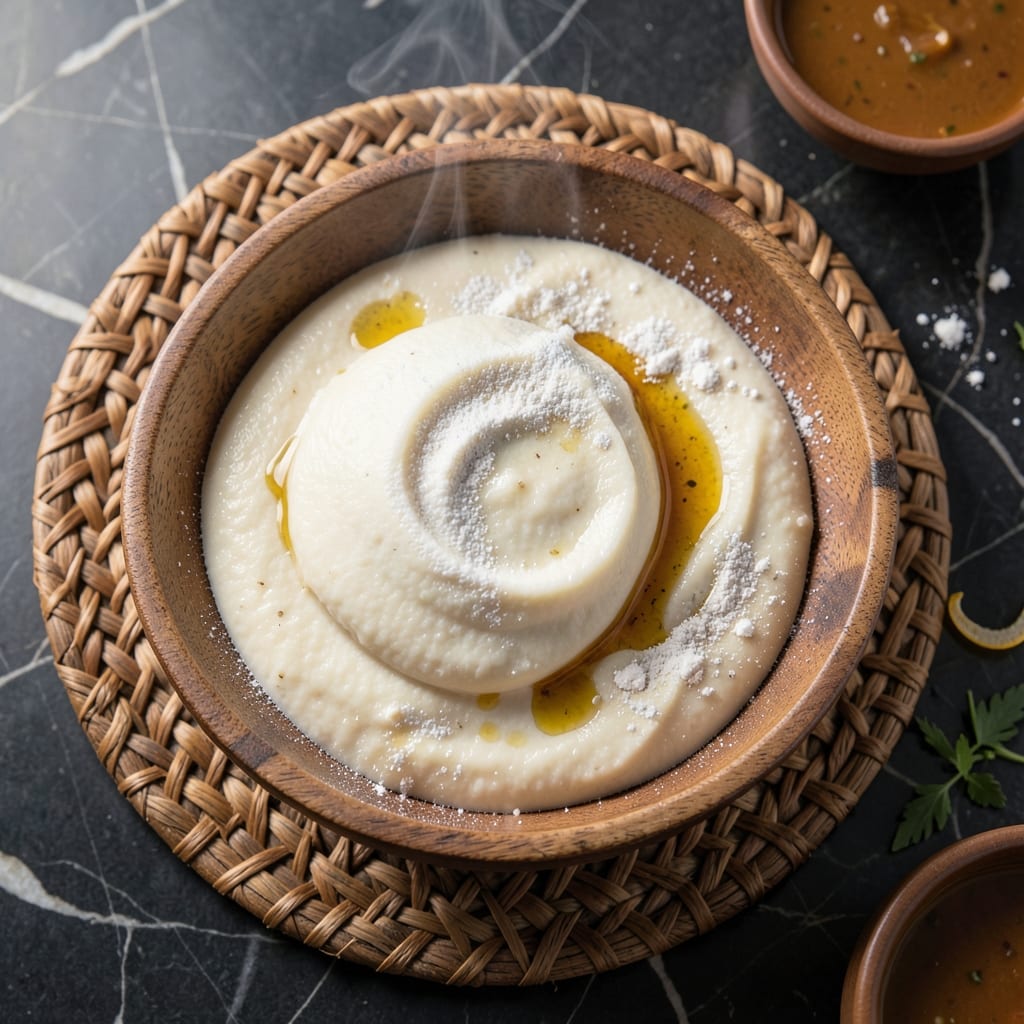
This cassava flour fufu delivers authentic African texture and taste with a modern shortcut. I developed this method after testing traditional techniques, finding cassava flour creates the perfect smooth, stretchy consistency without the labor-intensive process.
The key is gradual hydration and constant stirring to prevent lumps. Unlike traditional fufu that requires pounding yam or plantains for hours, this version comes together in 15 minutes with the same satisfying, dough-like result.
What you get is a blank canvas for soups and stews, with the same neutral flavor and elastic texture that makes fufu so beloved. The cassava flour base ensures it holds its shape while maintaining the traditional mouthfeel.
Serve warm with your favorite West African soup. Here’s how to make it perfectly every time.
Ingredients for Fufu Recipe with Cassava Flour
Just a handful of simple ingredients for authentic texture without the traditional labor.
| Ingredient | Amount | Notes |
|---|---|---|
| Cassava Flour 🌾 | 2 cups | Fine, unbleached preferred |
| Water 💧 | 2 ½ cups | Divided, warm temperature |
| Salt 🧂 | 1 tsp | Fine sea salt preferred |
| Vegetable Oil 🫒 | 1 tbsp | Neutral flavor, for dough handling |
| All-Purpose Flour 🌾 | 2 tbsp | Optional, for stretchiness |
| Xanthan Gum 🧪 | ¼ tsp | Optional, for elasticity |
| Cornstarch 🌽 | 1 tbsp | Optional, for smooth texture |
[recipe_ingredient_scaler]
Cassava flour is non-negotiable here. Bob’s Red Mill or Otto’s are the most reliable brands—avoid anything labeled ‘tapioca flour’ (they’re different). The water needs to be warm, not hot (about 110°F), to activate the starch properly without cooking it. I’ve found Whole Foods and African markets carry the good stuff if your regular store doesn’t.
No xanthan gum? Psyllium husk powder at half the amount works as a binder. Out of cornstarch? Arrowroot powder is an equal swap. The all-purpose flour is just insurance for stretch—skip it if you’re gluten-free (the cassava does most of the work). If your dough feels too sticky, resist adding more flour—wet your hands instead (game changer).
Fufu’s best fresh, but leftovers keep wrapped tightly in the fridge for 2 days. Reheat by steaming or microwaving with a damp towel on top. Freezing? Not ideal—it loses that elastic texture. Use within 1 hour for peak stretchiness.
Why You’ll Love This Recipe
- No-Fuss Mixing: I just stir cassava flour and water with a pinch of salt—no kneading, no waiting, and it’s ready to cook in minutes.
- Smooth & Mild: The cassava flour gives it that classic fufu texture—soft, stretchy, and perfectly neutral to soak up soups and stews.
- Pairs with Anything: Honestly, it’s my blank canvas for every meal, from egusi soup to peanut stew, and even works as a side for grilled meats.
- Budget Stretcher: A bag of cassava flour lasts forever, and I can feed the whole family for pennies compared to store-bought alternatives.
Step-by-Step Instructions for Fufu With Cassava Flour
This traditional method delivers smooth, stretchy fufu that stays authentic to its roots.
Step 1: Prepare the Cassava Flour Mixture
In a large bowl, combine 2 cups Cassava Flour, 2 tbsp All-Purpose Flour, 1 tbsp Cornstarch, and 0.25 tsp Xanthan Gum. I always whisk these dry ingredients together first to ensure even distribution—this prevents clumping when the water is added.
These binders work together to create that signature elastic texture. The cassava flour provides the base, while the all-purpose flour and xanthan gum add stretchiness, and cornstarch smooths the final consistency. Don’t skip this whisking step; it’s crucial for a lump-free result.
Step 2: Gradually Incorporate Warm Water
Heat 2.5 cups Water until warm (about 110°F—it should feel comfortable to touch but not hot). Create a well in the center of your dry mixture and slowly pour in 2 cups of the warm water while stirring continuously with a wooden spoon.
The dough will start thick and sticky, then transform into a shaggy mass. I’ve found that adding water gradually prevents the formation of stubborn lumps. The texture should resemble thick mashed potatoes at this stage. If it feels too dry, add the remaining ½ cup of water 1 tbsp at a time until it reaches the right consistency.
Step 3: Knead the Dough to Develop Elasticity
Lightly oil your hands with 1 tbsp Vegetable Oil to prevent sticking, then transfer the dough to a clean surface. Knead vigorously for 8-10 minutes, pushing and folding the dough repeatedly. This step develops the gluten-like structure that gives fufu its characteristic stretch.
You’ll notice the dough becoming smoother and more elastic the longer you knead. If it starts to crack or feel dry, wet your hands slightly and continue. The dough is ready when it bounces back slightly when pressed and has a satiny sheen. I always test this by stretching a small piece—it should pull thin without tearing.
Step 4: Season and Rest the Dough
Return the kneaded dough to the bowl and sprinkle 1 tsp Salt evenly over the surface. Work the salt into the dough by folding it in gently—this ensures even seasoning throughout. Cover the bowl with a damp towel and let it rest for 10-15 minutes.
This resting period allows the flours to fully hydrate and the salt to distribute evenly. You’ll see the dough relax and become more pliable. Don’t rush this step; it’s what gives the final fufu its smooth, cohesive texture. The dough should feel slightly tacky but not sticky after resting.
Step 5: Shape and Serve the Fufu
Divide the dough into 4 equal portions and roll each into a smooth ball. To serve authentically, I wet my hands and shape each portion into a slightly flattened round, about 1 inch thick. The surface should be smooth with no cracks.
Fufu is traditionally served warm, so I recommend shaping it just before serving. The texture should be firm enough to hold its shape but still pliable. Serve immediately with your favorite soup or stew. The ideal fufu has a slightly chewy exterior with a soft, stretchy interior—perfect for soaking up rich, flavorful broths.
Pro Tips For Making Fufu Recipe With Cassava Flour
- Use Warm Water: I learned this the hard way—cold water makes the cassava flour clump. Always use warm water (about 110°F) to get a smooth, lump-free consistency from the start.
- Knead Immediately: Once the dough forms, knead it right away while it’s still warm and pliable. Waiting even 5 minutes makes it stiff and harder to work with.
- Skip the Over-Oiling: A light coat of vegetable oil on your hands is enough—too much and the fufu turns greasy instead of soft and stretchy.
- Rest Before Serving: After shaping, let the fufu sit covered for 10 minutes. It firms up just enough to hold its shape but stays tender inside.
Flavor Customization for This Recipe
Spicy Kick
Add 1-2 tsp cayenne pepper or 1 tbsp gochugaru to your dry mix for a fiery version. The heat complements rich stews beautifully. I love how the spice cuts through heavy broths while maintaining that signature stretchy texture. 🌶️
Herb-Infused Fufu
Mix in 1 tbsp dried thyme or 2 tbsp fresh parsley with your flour. This adds subtle complexity that pairs wonderfully with seafood soups. The herbs distribute evenly when added to the dry ingredients first.
Sweet Variation
For a unique twist, add 2 tbsp coconut sugar or 1 tbsp honey to the water before mixing. This slightly sweet version works surprisingly well with savory dishes like peanut soup. The cassava flour’s neutral base adapts perfectly to sweetness.
Colorful Additions
Stir in ½ cup cooked pumpkin puree or ¼ cup beet powder for vibrant color. The pumpkin adds subtle sweetness while beet powder gives a striking pink hue without altering flavor. Both maintain the traditional texture when properly hydrated.
Umami Boost
Incorporate 1 tbsp nutritional yeast or 1 tsp mushroom powder into your dry mix. This adds depth that elevates simple vegetable soups. I find nutritional yeast works particularly well with the cassava’s natural earthiness.
Citrus Zest
Add 1 tsp lemon or lime zest to brighten the flavor. This pairs especially well with light, broth-based soups. The citrus oils perfume the dough subtly, creating a refreshing contrast to rich dishes. 💛
Nutrition Facts
Frequently Asked Questions
Can I use tapioca flour instead of cassava flour?
No, they’re different products. Cassava flour is the whole root ground, while tapioca is just the extracted starch. The recipe needs cassava flour’s fiber content for proper texture.
Why is my fufu dough cracking while kneading?
This usually means it’s too dry. Wet your hands with warm water and keep kneading. The dough needs 8-10 minutes of vigorous kneading to develop elasticity.
How do I store leftover fufu?
Wrap tightly in plastic and refrigerate for up to 2 days. Reheat by steaming or microwaving with a damp towel. Note that texture is best when served fresh.
Can I make this gluten-free?
Yes! Simply omit the all-purpose flour. The cassava flour provides enough structure, though the texture may be slightly less stretchy without it.

Trained in classic French technique but raised on slow-cooked ribs and spicy rubs, she blends culinary skill with smoke and soul.
- Energy Ball Recipe Peanut Butter: No-Bake Protein-Packed Bites - September 24, 2026
- Jerk Chicken Recipe Crock Pot: Slow-Cooked Caribbean Heat - September 24, 2026
- Japanese Curry Recipe Kenji: Chef-Tested Rich and Velvety Sauce - September 24, 2026