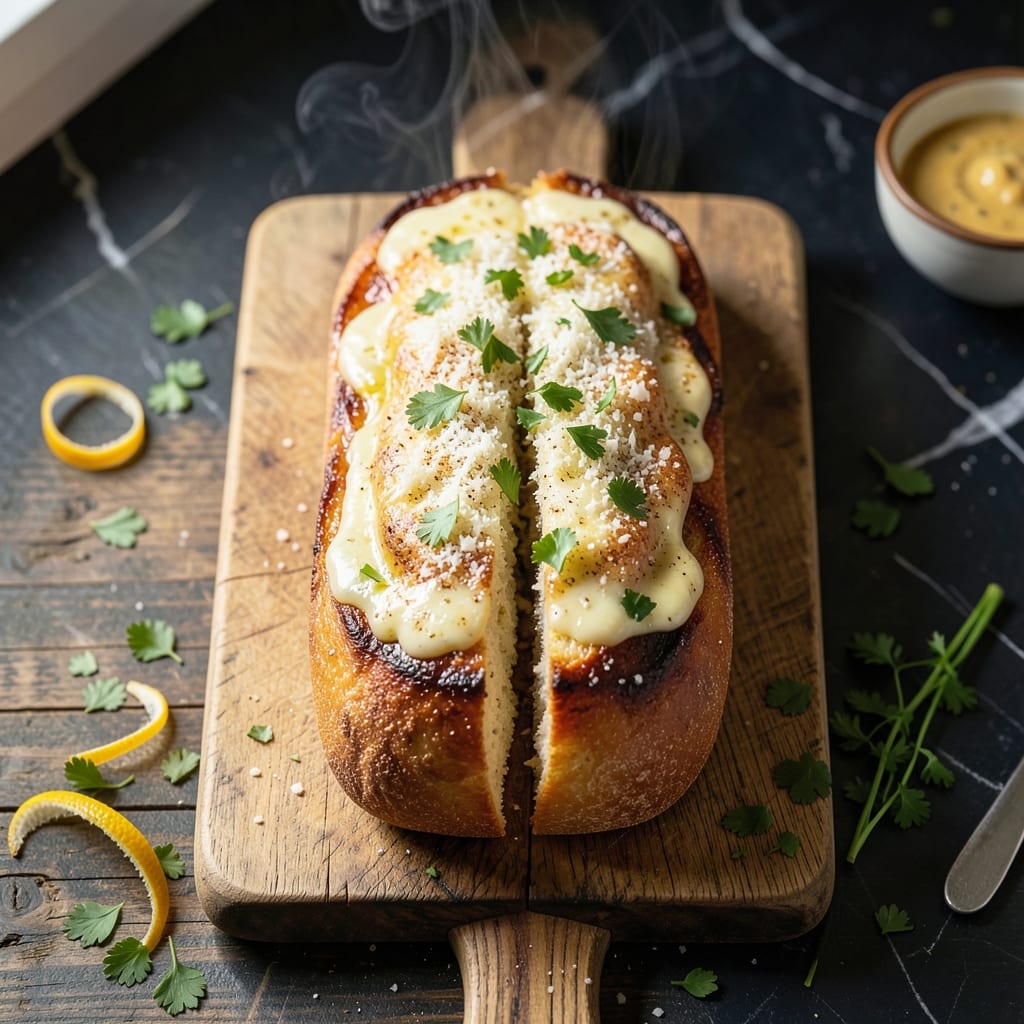
This recipe delivers crispy, golden garlic bread without the hassle of fresh cloves. A simple blend of garlic powder, butter, and parsley creates bold flavor with minimal effort.
The method is straightforward: mix softened butter with garlic powder, spread it generously on bread, and bake until perfectly browned. This ensures even coverage and maximum crispy texture in every bite.
What you get is a loaf with a shatteringly crispy crust and soft, buttery interior. The aroma alone will have everyone gathering around the table before it even cools.
Serve warm as a side for pasta, soup, or as an appetizer. This approach guarantees consistent results every time.
Ingredients for Garlic Bread Recipe with Garlic Powder
Nine simple ingredients transform a plain loaf into golden, buttery perfection.
| Ingredient | Amount | Notes |
|---|---|---|
| French Bread Loaf 🍞 | 1 whole | Day-old works best for crispiness |
| Unsalted Butter 🧈 | ¾ cup | Softened to room temperature |
| Garlic Powder 🧄 | 2 tsp | Not garlic salt |
| Fresh Parsley 🌿 | 2 tbsp | Finely chopped for garnish |
| Parmesan Cheese 🧀 | ¼ cup | Freshly grated preferred |
| Salt 🧂 | ½ tsp | Kosher or sea salt |
| Black Pepper 🌶️ | ¼ tsp | Freshly ground preferred |
| Olive Oil 🫒 | 1 tbsp | For brushing bread |
| Dried Oregano 🍃 | ½ tsp | Optional for extra flavor |
| Onion Powder 🧅 | ½ tsp | Complements garlic flavor |
[recipe_ingredient_scaler]
The bread is key here. Day-old French bread from a local bakery absorbs the butter better than fresh, giving you that shatteringly crisp texture. I grab mine from Whole Foods or any artisanal baker—just avoid the pre-sliced sandwich loaves. Unsalted butter lets you control the salt level, and Kerrigold or Plugrá are excellent choices for rich flavor.
No fresh parsley? Dried parsley at half the amount works in a pinch, though it won’t have the same vibrant pop. Parmesan can be swapped for Pecorino Romano if you want a sharper bite. Skip the onion powder if you prefer pure garlic flavor. For extra richness, add a splash of heavy cream to the butter mixture—totally optional but delicious.
This is best served fresh from the oven but reheats well. Wrap leftovers in foil and warm at 350°F for 5-10 minutes. The butter mixture can be made ahead and stored in the fridge for up to 3 days. Always bring it to room temperature before spreading.
Why You’ll Love This Recipe
- No Chopping Needed: Honestly, garlic powder does all the work—no mincing, no sticky fingers, just rich flavor in seconds.
- Buttery Crunch: The combo of melted butter, sharp Parmesan, and that crispy French bread edge? Ridiculously good.
- Feeds a Crowd: I’ve served this at dinner parties and weeknight meals—always disappears first.
- Budget Friendly: A loaf of French bread, butter, and pantry staples stretch further than you’d think.
Step-by-Step Instructions for Garlic Bread with Garlic Powder
This method ensures a perfectly crispy, golden loaf with rich garlic flavor every time.
Step 1: Prepare the French Bread Loaf
Preheat your oven to 375°F. Slice the French bread loaf lengthwise, stopping just before the bottom to keep it intact. This creates a hinge that makes serving easier.
Brush the cut sides lightly with the 1 tablespoon olive oil. This prevents the bread from drying out and adds a subtle richness to the base layer. Set aside while you prepare the garlic butter mixture.
Step 2: Make the Garlic Butter Spread
In a mixing bowl, combine the 0.75 cup unsalted butter (softened), 2 tsp garlic powder, 0.5 tsp salt, 0.25 tsp black pepper, 0.5 tsp dried oregano, and 0.5 tsp onion powder. Mix until the spices are evenly distributed throughout the butter.
The garlic powder provides concentrated flavor without the moisture of fresh garlic, which is key for achieving that crispy texture. I use a fork to blend everything smoothly, ensuring no dry pockets remain.
Step 3: Spread and Top the Bread
Spread the garlic butter mixture evenly over both cut sides of the bread, all the way to the edges. This ensures every bite is packed with flavor and promotes even browning.
Sprinkle the 0.25 cup parmesan cheese evenly over the buttered surfaces. The cheese will melt into a golden, savory crust during baking. For the best results, use freshly grated parmesan as it melts more smoothly.
Step 4: Bake to Crispy Perfection
Place the bread on a baking sheet and bake for 10-12 minutes until the edges are golden brown and the cheese is fully melted. Watch closely during the last few minutes to prevent over-browning.
For extra crispiness, I switch the oven to broil for the final 1-2 minutes. Keep a close eye on it during this step—broiling can go from perfectly crisp to burnt very quickly.
Step 5: Garnish and Serve Immediately
Remove the garlic bread from the oven and sprinkle the 2 tbsp fresh parsley evenly over the top. The parsley adds a pop of color and freshness that cuts through the richness of the butter and cheese.
Let it cool for just 2-3 minutes before slicing into pieces. Serve warm while the bread is still crispy and the cheese is gooey. This dish is best enjoyed fresh from the oven.
Pro Tips For Making Garlic Bread Recipe With Garlic Powder
- Preheat the Oven: Crank it to 375°F before the bread goes in—cold starts make the butter soak in instead of crisping up nicely.
- Soften the Butter: Leave the unsalted butter out for 30 minutes so it spreads easily without tearing the French bread.
- Skip the Overload: Garlic powder is potent—1 teaspoon per stick of butter is plenty, or you’ll end up with a bitter, overpowering bite.
- Toast Twice: After the first 5 minutes, sprinkle the parmesan and parsley, then broil for 1-2 minutes for that golden, crispy finish.
Troubleshooting garlic bread recipe with garlic powder
Bread Too Soft?
If your bread isn’t crispy enough, your oven might not be hot enough. Always preheat to 375°F and bake for the full 10-12 minutes. Using day-old bread helps too, as it dries out slightly for better crisping.
Burnt Edges
For burnt spots, reduce baking time by 1-2 minutes or lower the temperature to 350°F. Broiling should only be done for the final 1-2 minutes with constant monitoring. I keep my oven light on during this step. 💡
Weak Garlic Flavor
If the garlic taste is too subtle, increase the garlic powder to 1 tbsp next time.
Cheese Not Melting
Shred your own parmesan cheese instead of using pre-shredded. The anti-caking agents in pre-shredded cheese prevent smooth melting. Also, ensure the cheese is sprinkled evenly over the buttered surface before baking.
Soggy Middle
To prevent a soggy center, don’t overload the butter mixture. Stick to 0.75 cup for a standard loaf. Slicing the bread lengthwise but keeping it attached at the bottom helps maintain structure.
Uneven Browning
Rotate your baking sheet halfway through the cooking time. This ensures even exposure to heat. If using a darker pan, check for doneness 1-2 minutes early, as it can absorb more heat. 🔥
Nutrition Facts
Frequently Asked Questions
Can I use salted butter instead?
Yes, but reduce added salt by half. Salted butter already contains salt, so using 0.25 tsp instead of 0.5 tsp prevents oversalting. The flavor will still be rich and balanced.
Why use garlic powder over fresh?
Garlic powder provides consistent flavor without moisture, which helps achieve that perfect crispy texture. Fresh garlic can make the bread soggy. Plus, it’s quicker and more convenient.
How do I store leftovers?
Wrap cooled bread tightly in foil and refrigerate for up to 3 days. Reheat at 350°F for 5-10 minutes to restore crispiness. Avoid microwaving, as it will make the bread soft.
Can I add other herbs or spices?
Try adding 1 tsp dried basil or 0.5 tsp red pepper flakes for extra flavor. Just keep the total spice amount balanced to avoid overpowering the garlic taste.

Trained in classic French technique but raised on slow-cooked ribs and spicy rubs, she blends culinary skill with smoke and soul.
- Recipe for Boneless Pork Chops in Cast Iron Skillet: Sear and Baste to Juicy Perfection - October 3, 2026
- Recipe for Boneless Cross Rib Roast: Slow-Roasted Beef with Herb Crust - October 3, 2026
- Hamburgers in Sauce Recipe Crock Pot: Slow-Cooked Savory Delight - October 3, 2026