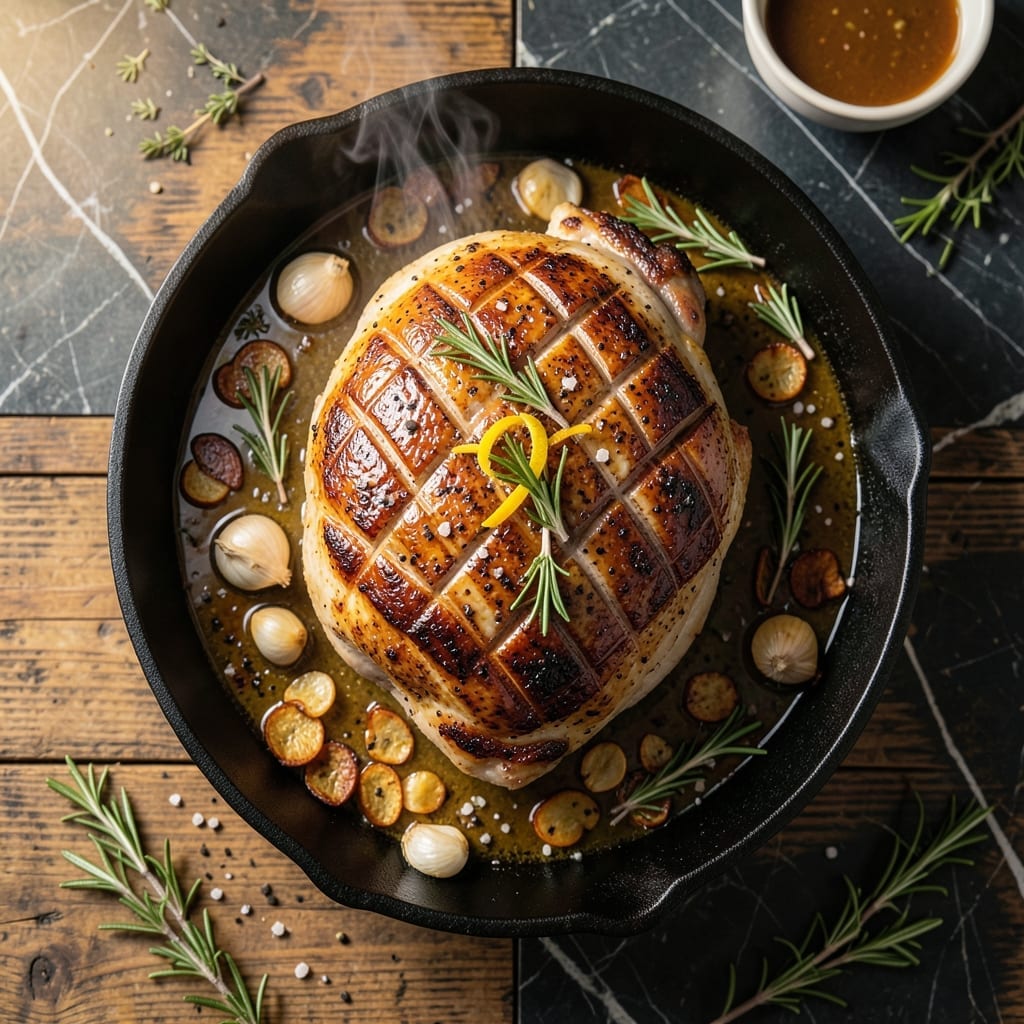
This oven-roasted pork transforms a simple cut into a centerpiece worth celebrating. The secret lies in a generous garlic and herb rub that infuses every bite with aromatic depth.
I developed this method to maximize flavor while minimizing effort. The pork roasts at a steady 375°F until the outside forms a golden crust, sealing in juices that keep the meat tender throughout.
What emerges is succulent pork with a garlic clove surprise in each slice, surrounded by crispy, herb-infused edges. The aroma alone will draw everyone to the kitchen.
The technique is foolproof, delivering consistent results whether you’re cooking for two or feeding a crowd. This is modern comfort food at its best.
Ingredients for Garlic Pork Roast Recipe Oven
A few quality ingredients transform pork shoulder into a showstopping roast with herb depth.
| Ingredient | Amount | Notes |
|---|---|---|
| Pork Shoulder Roast 🥩 | 3 lb | Bone-in, skin-on preferred |
| Garlic Cloves 🧄 | 12 cloves | Peeled, 6 whole, 6 minced |
| Fresh Rosemary 🌿 | 2 tbsp | Finely chopped, stems discarded |
| Fresh Thyme 🍃 | 2 tbsp | Finely chopped, stems discarded |
| Coarse Kosher Salt 🧂 | 1 ½ tbsp | Diamond Crystal preferred |
| Freshly Ground Black Pepper 🌶️ | 1 tbsp | Coarse grind recommended |
| Olive Oil 🫒 | 2 tbsp | Extra-virgin for richness |
| Dijon Mustard 🟡 | 1 tbsp | Whole grain for texture |
| Dry White Wine 🍷 | ½ cup | Sauvignon Blanc or Pinot Grigio |
| Chicken Stock 🥣 | ½ cup | Low-sodium preferred |
| Unsalted Butter 🧈 | 2 tbsp | Softened for finishing |
| Fresh Parsley 🌿 | ¼ cup | Chopped for garnish |
[recipe_ingredient_scaler]
The pork shoulder is non-negotiable for this preparation. Bone-in, skin-on yields the most flavorful results, with the fat cap rendering into the meat as it roasts. Source from Whole Foods or a trusted butcher—look for vibrant pink color and good marbling. The garlic should be fresh, firm heads with tight skins; avoid any sprouting (a sign of age). For herbs, organic bunches from the produce section outperform pre-packaged.
No pork shoulder? Pork butt (they’re nearly identical cuts) works perfectly. Out of fresh herbs? Use one-third the amount of dried, but rehydrate in a bit of warm water first. The wine can be swapped for additional chicken stock plus a splash of apple cider vinegar. For a richer finish, duck fat can replace the butter—just reduce the salt slightly.
The roast benefits from resting 30 minutes before slicing—this redistributes the juices. Leftovers keep in the fridge for 4 days or can be frozen for 3 months. Reheat gently in the oven to preserve moisture, avoiding the microwave which can toughen the meat.
Why You’ll Love This Recipe
- Hands-Off Cooking: I rub the pork with garlic, rosemary, and thyme, pop it in the oven, and walk away—no babysitting required.
- Garlic-Herb Magic: The roast soaks up every bit of garlic and fresh herbs, making each bite rich and aromatic.
- Feeds a Crowd: One pork shoulder and I’ve got a hearty meal for Sunday dinner or a potluck with leftovers to spare.
- Budget Stretcher: Pork shoulder is affordable, and this roast turns a humble cut into a centerpiece that feels fancy.
Step-by-Step Instructions for Garlic Pork Roast Oven
This method ensures tender, aromatic pork with a caramelized crust and herb-infused juices throughout.
Step 1: Prepare and Season the Pork Shoulder
Pat the 3 lb pork shoulder roast dry with paper towels. This step is crucial for achieving a proper sear and crispy exterior. Score the fat cap in a crosshatch pattern, creating ½-inch deep incisions about 1 inch apart.
Rub the entire surface with the 1.5 tbsp coarse kosher salt and 1 tbsp freshly ground black pepper, pressing the seasoning into the meat. Insert the 6 whole peeled garlic cloves into the scored slits, ensuring they’re fully submerged in the flesh.
Step 2: Create the Herb Paste and Sear
In a small bowl, combine the 2 tbsp olive oil, 1 tbsp Dijon mustard, 6 minced garlic cloves, 2 tbsp fresh rosemary, and 2 tbsp fresh thyme. The mixture should form a thick, fragrant paste.
Heat a large oven-safe Dutch oven over medium-high heat. Sear the pork on all sides for 8-10 minutes total until deeply browned. The sear should create a rich, caramelized crust that locks in the herb paste you’ll apply next.
Step 3: Deglaze and Begin Roasting
Remove the pork from the Dutch oven and spread the herb paste evenly over the entire surface, including the fat cap. Return the pork to the pot. Over medium heat, add the 0.5 cup dry white wine to deglaze, scraping up all the browned bits from the bottom.
Pour in the 0.5 cup chicken stock and bring to a gentle simmer. The liquid should come about ½ inch up the sides of the pork. Cover the pot and transfer to a preheated 325°F oven.
Step 4: Roast to Perfection
Roast the pork for 2.5 to 3 hours, turning the meat every 45 minutes and basting with the pan juices. The pork is done when it reaches an internal temperature of 195-200°F and the meat pulls apart easily with a fork.
During the last 30 minutes of cooking, remove the lid to allow the fat cap to crisp. The exposed surface should develop a deep, golden-brown crust that contrasts beautifully with the tender interior.
Step 5: Rest and Finish
Transfer the pork to a cutting board and tent loosely with foil. Let it rest for 20-30 minutes—this allows the juices to redistribute throughout the meat. Skim excess fat from the cooking liquid, then whisk in the 2 tbsp unsalted butter to create a rich sauce.
Shred or slice the pork against the grain and arrange on a platter. Spoon the sauce over the top and garnish with the 0.25 cup fresh parsley. The sauce should cling to the meat, enhancing each bite with its herbaceous depth.
Pro Tips For Making Garlic Pork Roast Recipe Oven
- Sear First, Roast Later: Start with a screaming hot pan to sear the pork shoulder on all sides—this locks in juices and gives that deep brown crust. Then transfer to the oven at 325°F to finish slow and even.
- Slice Garlic Thin: Cut the garlic cloves into slivers instead of crushing them, so they melt into the meat without overpowering any single bite. I learned this the hard way after biting into a harsh, raw garlic chunk mid-meal.
- Don’t Skip the Dry Rub: Pat the pork shoulder completely dry before seasoning with salt and herbs—moisture on the surface steams the meat instead of letting it brown. Sounds tedious, but it actually changes the outcome.
- Rest Before Carving: Let the roast rest under foil for at least 15 minutes after pulling it from the oven—this lets the juices redistribute. I skip this when I’m in a rush, but the meat is noticeably drier when I do.
Storing and Reheating garlic pork roast recipe oven
Refrigerator Storage
Let your pork cool for no more than 2 hours before transferring to airtight containers. I use glass containers with locking lids. Store at 40°F or below for up to 4 days. The flavors intensify overnight. ❄️
Freezer Storage
This roast freezes beautifully for up to 3 months without quality loss. I recommend portioning into 1-lb freezer bags—they stack efficiently and thaw faster. Squeeze out excess air to prevent freezer burn.
Oven Reheating
Preheat to 350°F and place pork in a baking dish with ¼ cup chicken stock. Cover with foil and heat for 20-25 minutes until reaching 165°F. This maintains moisture better than other methods. 🔥
Stovetop Reheating
For smaller portions, use a skillet over medium-low heat. Add pork and 2 tbsp chicken stock, cover, and heat for 8-10 minutes. Stir occasionally to prevent sticking.
Shredded Pork Storage
If shredding for tacos or sandwiches, store in its juices to maintain moisture. Reheat in a skillet with a splash of stock for 5-7 minutes until hot. This keeps the texture perfect.
Nutrition Facts
Frequently Asked Questions
What’s the best cut for this dish?
Use bone-in, skin-on pork shoulder or pork butt. Both have enough fat to stay juicy during the long cook. Avoid lean cuts like tenderloin—they’ll dry out.
Can I use pre-minced garlic from a jar?
Fresh cloves give the best flavor, but jarred minced works in a pinch. Use 1 tbsp jarred per 2 fresh cloves, and add it only to the paste, not the slits.
Why is my pork not pulling apart easily?
It likely needs more time. Pork shoulder requires 195-200°F internal temp to break down properly. If stalled, check your oven temp with a thermometer.
How do I prevent the herbs from burning?
Press the herb paste into the meat, not just on top. Cover the roast for most of cooking, uncovering only the last 30 minutes to crisp the fat cap.

Trained in classic French technique but raised on slow-cooked ribs and spicy rubs, she blends culinary skill with smoke and soul.
- Recipe for Boneless Pork Chops in Cast Iron Skillet: Sear and Baste to Juicy Perfection - October 3, 2026
- Recipe for Boneless Cross Rib Roast: Slow-Roasted Beef with Herb Crust - October 3, 2026
- Hamburgers in Sauce Recipe Crock Pot: Slow-Cooked Savory Delight - October 3, 2026