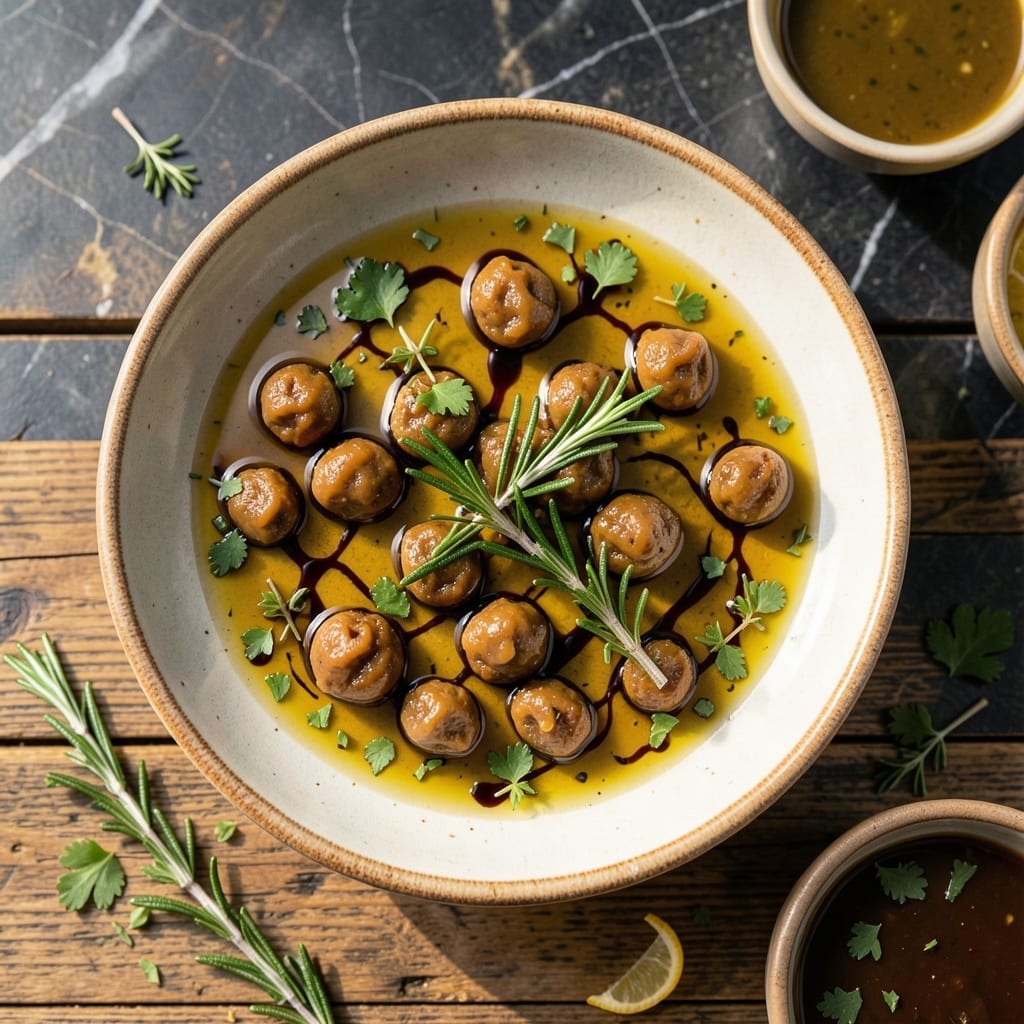
This marinade transforms ordinary proteins into restaurant-quality dishes with minimal effort. The roasted garlic base creates depth, while fresh herbs add brightness that enhances any cut of meat.
I developed this blend after years of testing combinations at local BBQ competitions. It delivers bold flavor without overpowering the natural taste of your ingredients.
Ingredients for Grill Mates Roasted Garlic and Herb Marinade
Ten bold ingredients that turn any protein into a BBQ champion. No shortcuts here.
| Ingredient | Amount | Notes |
|---|---|---|
| Roasted Garlic Cloves 🧄 | 12 cloves | Peeled, mashed into paste |
| Fresh Rosemary 🌿 | 2 tbsp | Finely chopped, stems discarded |
| Fresh Thyme Leaves 🍃 | 2 tbsp | Stems removed, loosely packed |
| Fresh Flat-Leaf Parsley 🌿 | ¼ cup | Finely chopped, stems trimmed |
| Extra-Virgin Olive Oil 🫒 | ¾ cup | High-quality, fruity notes preferred |
| Balsamic Vinegar 🍷 | ¼ cup | Aged for depth of flavor |
| Dijon Mustard 🟡 | 2 tbsp | Smooth, no seeds |
| Worcestershire Sauce 🍶 | 1 tbsp | Use vegetarian if preferred |
| Honey 🍯 | 2 tbsp | Raw or pure variety |
| Kosher Salt 🧂 | 1 tbsp | Diamond Crystal preferred for texture |
| Freshly Ground Black Pepper 🌶️ | 1 tsp | Coarse grind for texture |
[recipe_ingredient_scaler]
The roasted garlic is non-negotiable—slow-roast whole heads at 400°F for 45 minutes until caramelized. Trader Joe’s sells pre-roasted garlic in a jar (it’s decent, but fresh is better). For herbs, Whole Foods has the best selection of vibrant, not-wilted bunches. Olive oil matters here; California Olive Ranch or Colavita are solid grocery-store picks. Don’t waste expensive extra-virgin on this—save that for finishing.
No fresh herbs? Dried at one-third the amount works, but the flavor won’t be as bright. Swap balsamic for apple cider vinegar if that’s what you’ve got (tangier, but fine). Honey can be maple syrup or agave—just don’t use artificial sweeteners. Worried about sodium? Cut the salt in half and add more to taste after marinating. The Dijon can be regular yellow mustard in a pinch, but it’ll be milder.
Marinade keeps 1 week in the fridge in a sealed jar. The flavors meld and deepen over time—24 hours is ideal before using. Freeze extras in ice cube trays for up to 3 months. Thaw overnight in the fridge before using.
Why You’ll Love This Recipe
- One-Bowl Magic: I just toss the roasted garlic, fresh herbs, and olive oil together—no fancy prep, no mess.
- Garlicky Herb Bomb: Honestly, the roasted garlic and fresh thyme make everything taste ridiculously good, even my picky nephew’s chicken.
- Meat or Veggie Hero: I’ve used it on steaks, chops, potatoes, and even tofu. Between us, it’s my go-to for any protein.
- Pantry Stretch: One batch lasts all week, and it’s cheaper than buying those little marinade packets.
Step-by-Step Instructions for Roasted Garlic and Herb Marinade
This method delivers maximum flavor with minimal effort—just whisk and marinate.
Step 1: Prepare the Herb Base
In a medium bowl, combine the 12 cloves roasted garlic cloves (mashed into a paste), 2 tbsp fresh rosemary, 2 tbsp fresh thyme leaves, and 0.25 cup fresh flat-leaf parsley. I like to crush the rosemary and thyme between my fingers first to release their essential oils—this makes a noticeable difference in flavor intensity.
The roasted garlic should be soft and spreadable, almost like a thick paste. If it’s not, keep roasting until it reaches that consistency. This base layer of herbs and garlic forms the aromatic foundation of your marinade, so take your time here.
Step 2: Build the Liquid Components
To the herb mixture, add the 0.75 cup extra-virgin olive oil, 0.25 cup balsamic vinegar, 2 tbsp Dijon mustard, 1 tbsp Worcestershire sauce, and 2 tbsp honey. The olive oil should be high-quality with fruity notes—it carries the other flavors and adds richness to the marinade.
Whisk everything together vigorously until the mixture is fully emulsified. You’ll notice the color deepen and the texture become slightly thicker as the mustard and honey incorporate. This step ensures all the flavors are evenly distributed throughout the marinade.
Step 3: Season and Adjust Consistency
Add the 1 tbsp kosher salt and 1 tsp freshly ground black pepper to the bowl. Stir well to dissolve the salt completely. Taste and adjust the seasoning if needed—I sometimes add a pinch more salt if the flavors seem flat, but remember that the marinade will intensify as it sits.
The consistency should be pourable but thick enough to cling to your protein. If it seems too thick, you can add a splash more olive oil, but I’ve found the 0.75 cup extra-virgin olive oil is usually perfect for balancing the acidity from the vinegar and the sweetness from the honey.
Step 4: Marinate for Optimal Flavor Infusion
Transfer your protein to a resealable plastic bag or shallow dish and pour the marinade over it, making sure it’s fully coated. For the best results, marinate in the refrigerator for at least 2 hours, but overnight is ideal. The longer it marinates, the deeper the flavors penetrate.
If you’re marinating for more than a few hours, I recommend using a resealable bag—it saves space in the fridge and allows you to easily flip the protein halfway through to ensure even marination. Always marinate in the refrigerator to prevent bacterial growth.
Pro Tips For Making Grill Mates Roasted Garlic And Herb Marinade
- Roast Garlic Slow: I learned this the hard way—wrap those garlic cloves in foil with a drizzle of olive oil and roast at 400°F for 30-40 minutes until they’re soft and golden, not browned. Rush it and you’ll get bitter, harsh flavors.
- Bruise the Herbs: Sounds weird, but it works: gently crush the rosemary and thyme with the flat side of your knife before chopping. It releases the oils and makes the marinade taste like it’s been infusing for hours.
- Skip Dried Herbs: Fresh rosemary, thyme, and parsley are non-negotiable here—dried versions just don’t give that bright, vibrant pop the recipe needs. I was skeptical until I tried it side by side.
- Bloom in Oil: Heat the olive oil in a small pan for 1-2 minutes with the chopped herbs before mixing with the roasted garlic. This quick step actually changes the outcome by deepening the flavors.
Essential Equipment for This Dish
Mixing Bowls
A 2-3 quart stainless steel mixing bowl is ideal for whisking your marinade. I love my Cuisinox bowl—it’s lightweight yet durable, and the sloped sides make pouring easy. Avoid reactive metals like aluminum, which can impart off-flavors. 💡
Whisks
For emulsifying, a balloon whisk with a comfortable grip works best. The OXO Good Grips 11-inch is my go-to for marinades. It creates a vortex that helps blend the oil and vinegar seamlessly, preventing separation.
Measuring Tools
Precise measurements matter here. I use stainless steel measuring cups and spoons from Winco—they’re affordable and won’t stain like plastic. For small amounts like the 1 tsp black pepper, a magnetic set stays organized in my drawer.
Storage Containers
For marinating, heavy-duty zip-top bags (like Hefty Slider) are space-efficient and allow easy flipping. For storing leftover marinade, 16 oz mason jars with tight lids keep it fresh for up to 1 week in the fridge.
Garlic Press
While not essential, a garlic press makes quick work of the roasted cloves. I prefer the Kuhn Rikon Epicurean—it handles soft roasted garlic beautifully and cleans easily. Skip the press if you enjoy the texture of hand-mashed paste.
Fine Mesh Strainer
If you want ultra-smooth marinade, strain out the herb bits with a fine mesh sieve. I use a 5-inch strainer from RSVP for small batches. This step is optional but creates a silky texture that clings beautifully to proteins.
Nutrition Facts
Frequently Asked Questions
How long should I marinate chicken?
For best results, marinate boneless chicken for 2-4 hours. For bone-in pieces, extend to 4-12 hours for deeper flavor penetration. Avoid marinating longer than 24 hours as the acid can start to break down the meat texture.
Can I use dried herbs instead of fresh?
Yes, but use 1/3 the amount since dried herbs are more concentrated. Soak them in 2 tbsp warm water for 10 minutes first to rehydrate and release flavors. Fresh herbs still give the best results though.
What’s the best way to store leftover marinade?
Transfer to an airtight container and refrigerate for up to 1 week. For longer storage, freeze in ice cube trays for up to 3 months. Always thaw in the fridge before using.
Can I reuse marinade that touched raw meat?
Never reuse marinade that touched raw meat unless you boil it first for 3 minutes to kill bacteria. Better to set aside some marinade before adding meat if you want extra for serving.

Trained in classic French technique but raised on slow-cooked ribs and spicy rubs, she blends culinary skill with smoke and soul.
- Recipe for Boneless Pork Chops in Cast Iron Skillet: Sear and Baste to Juicy Perfection - October 3, 2026
- Recipe for Boneless Cross Rib Roast: Slow-Roasted Beef with Herb Crust - October 3, 2026
- Hamburgers in Sauce Recipe Crock Pot: Slow-Cooked Savory Delight - October 3, 2026