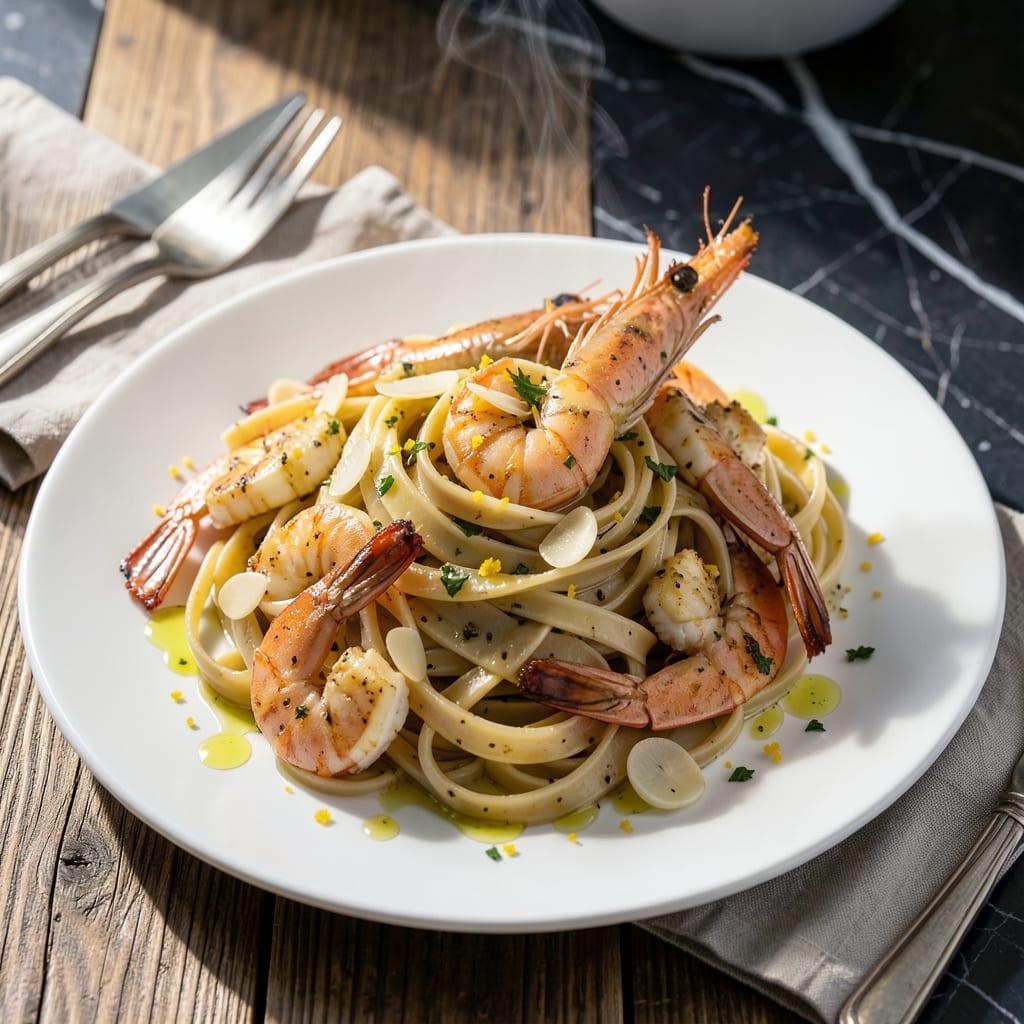
This dish proves that healthy doesn’t mean sacrificing flavor. I developed this recipe after realizing how often “light” versions fall short on taste, and it’s become my go-to for weeknight satisfaction.
The secret lies in balancing garlic and lemon zest to create layers of flavor without excess fat. Fresh herbs add brightness while keeping the dish clean and simple, with shrimp cooking in 5 minutes for perfect texture.
What you get is a pasta dish that feels indulgent but is packed with lean protein and vibrant flavors. The garlic infuses every bite, the shrimp stays tender, and the lemon adds a refreshing finish.
Serve with a sprinkle of parsley for color and extra freshness. This method delivers restaurant-quality results with minimal effort.
Ingredients for Garlic Shrimp Pasta Recipe Healthy
Bright, punchy flavors come from garlic, lemon zest, and fresh herbs. Nothing heavy here.
| Ingredient | Amount | Notes |
|---|---|---|
| Linguine Pasta 🍝 | 12 oz | Whole wheat or regular |
| Large Shrimp 🦐 | 1 ½ lb | Peeled, deveined, tails off |
| Extra-Virgin Olive Oil 🫒 | 3 tbsp | Divided for cooking |
| Garlic Cloves 🧄 | 6 cloves | Minced finely |
| Lemon Zest 🍋 | 1 tbsp | From 1-2 lemons |
| Fresh Lemon Juice 🍋 | 2 tbsp | About 1 lemon |
| Fresh Parsley 🌿 | ½ cup | Chopped, flat-leaf preferred |
| Fresh Basil 🌿 | ¼ cup | Chopped, for garnish |
| Red Pepper Flakes 🌶️ | ½ tsp | Optional for heat |
| Salt 🧂 | 1 tsp | Kosher or sea salt |
| Black Pepper 🌶️ | ½ tsp | Freshly ground |
| White Wine 🍷 | ½ cup | Dry variety like Pinot Grigio |
| Reserved Pasta Water 💧 | ½ cup | Starchy water for sauce |
[recipe_ingredient_scaler]
The shrimp is non-negotiable—wild-caught or sustainably farmed if you can swing it. Whole Foods or Trader Joe’s usually have solid options. Look for shrimp labeled 16/20 count (that’s 16-20 per pound), which gives you plump, meaty bites. For the garlic, fresh cloves only—none of that jarred stuff. And don’t skimp on the lemon zest (a microplane makes this a 30-second job).
No white wine? Substitute chicken or vegetable broth with a splash of lemon juice. Fresh herbs can be swapped—dill or cilantro both work if you’re not a parsley fan. The pasta shape is flexible too; spaghetti or fettuccine hold up just as well. For extra richness without the fat, stir in a spoonful of low-fat cream cheese at the end (trust me on this one).
This keeps surprisingly well. Leftovers taste great cold the next day (like pasta salad) or reheated gently. Store in an airtight container for up to 3 days in the fridge. Doesn’t freeze well—shrimp gets rubbery—so make just what you’ll eat.
Why You’ll Love This Recipe
- One Pan Wonder: I love that everything cooks in a single skillet—linguine, shrimp, and that golden garlic oil all come together with barely any cleanup.
- Bright & Zesty: The lemon zest cuts right through the richness of the olive oil and shrimp, making every bite feel fresh and vibrant.
- Weeknight Lifesaver: Honestly, it’s my go-to when I need something impressive for guests but only have 25 minutes to pull it off.
- Budget-Friendly Luxury: Large shrimp feel indulgent, but the simple pantry staples keep the cost down—plus, leftovers taste even better the next day.
Step-by-Step Instructions for Garlic Shrimp Pasta
Here’s how I make this light, herb-packed dish that feels indulgent but stays healthy.
Step 1: Cook the Linguine to Al Dente Perfection
Bring a large pot of salted water to a rolling boil. Add the 12 oz Linguine Pasta and cook according to package instructions until 1 minute shy of al dente. The pasta will finish cooking in the sauce, so you want it slightly underdone at this stage.
Before draining, scoop out the 0.5 cup Reserved Pasta Water—this starchy liquid is pure gold for creating a silky sauce later. Drain the pasta but don’t rinse it; that surface starch helps the sauce cling beautifully to every strand.
Step 2: Sauté Shrimp with Garlic and Red Pepper Flakes
While the pasta cooks, heat 2 tbsp Extra-Virgin Olive Oil in a large skillet over medium-high heat. Pat the 1.5 lb Large Shrimp dry (this prevents steaming), then season with 1 tsp Salt and 0.5 tsp Black Pepper. Add the shrimp to the hot pan in a single layer.
Cook for 1-2 minutes per side until the shrimp turn pink and opaque. Add the 6 cloves Garlic Cloves and 0.5 tsp Red Pepper Flakes during the last minute of cooking. Stir constantly—garlic burns in seconds, and you want it fragrant but not bitter.
Step 3: Deglaze with White Wine and Build the Sauce
Remove the shrimp from the pan and set aside. Add the remaining 1 tbsp Extra-Virgin Olive Oil to the skillet, then pour in the 0.5 cup White Wine. Scrape up all the browned bits from the bottom of the pan with a wooden spoon—this is where the big flavor lives.
Let the wine reduce by half, about 2-3 minutes. Return the shrimp to the pan, then add the cooked pasta, 1 tbsp Lemon Zest, and 2 tbsp Fresh Lemon Juice. Toss everything together, adding the 0.5 cup Reserved Pasta Water a splash at a time until the sauce coats the pasta perfectly.
Step 4: Finish with Fresh Herbs and Serve Immediately
Remove the skillet from heat and stir in the 0.5 cup Fresh Parsley. Taste and adjust seasoning if needed—the lemon and herbs should brighten the dish without overpowering it. The parsley adds a fresh, slightly peppery note that balances the richness.
Transfer to serving plates and top with the 0.25 cup Fresh Basil for a pop of color and sweet aroma. Serve immediately while hot—the sauce will thicken slightly as it cools, so work quickly. Each bite should deliver tender shrimp, al dente pasta, and a bright, garlicky sauce that feels light yet satisfying.
Pro Tips For Making Garlic Shrimp Pasta Recipe Healthy
- Pat Shrimp Dry: I learned this the hard way—damp shrimp steams instead of searing in olive oil, so blot them with a paper towel before they hit the pan.
- Low and Slow Garlic: Keep the heat at medium-low for the garlic to prevent burning; about 2 minutes until fragrant and golden, not brown.
- Salt the Pasta Water: Use about 1 tablespoon of salt per 4 quarts of water—it should taste like the sea, otherwise the pasta will be bland.
- Zest Before Juicing: Sounds weird, but it works: zest the lemon first, then cut it open for juice—you’ll get more flavor without the mess.
Common Mistakes When Making This Dish
Overcooking Shrimp
Shrimp cooks in 5 minutes or less—any longer and it turns rubbery. I pull mine from the pan as soon as it turns pink and opaque. Remember, it continues cooking off the heat, so timing is everything. 🦐
Skipping the Pasta Water
That starchy 0.5 cup Reserved Pasta Water is your secret weapon for a silky sauce. I always save it before draining. Without it, your sauce might cling poorly to the linguine.
Burning Garlic
Garlic burns in seconds over high heat. I add mine during the last 1 minute of cooking the shrimp, stirring constantly. Burnt garlic tastes bitter and ruins the dish.
Overcrowding the Pan
Cook shrimp in a single layer with space between pieces. If you crowd the pan, they’ll steam instead of sear. I use a large skillet—at least 12 inches—for proper heat distribution.
Rinsing Pasta
Never rinse pasta after cooking. That starch on the surface helps the sauce cling. I simply drain and shake off excess water, keeping the pasta ready for saucing.
Ignoring Wine Reduction
Let the 0.5 cup White Wine reduce by half before adding other ingredients. This concentrates flavors and burns off the alcohol. I wait until it’s syrupy but not dry. 💡
Nutrition Facts
Frequently Asked Questions
Can I use frozen shrimp?
Yes, thaw frozen shrimp overnight in the fridge or under cold water for 15 minutes. Pat them completely dry before cooking to prevent steaming. Never cook from frozen.
What pasta shape works best?
Linguine or spaghetti hold the sauce well, but penne or fusilli work too. Choose whole wheat for extra fiber. Avoid chunky shapes that trap too much sauce.
How do I make this dairy-free?
The recipe is already dairy-free! For extra creaminess, stir in 1 tablespoon of cashew cream or omit entirely. The starchy pasta water creates a silky texture.
Can I make this ahead?
Cook and store components separately. Reheat shrimp gently in a pan with a splash of water for 2-3 minutes. Toss with fresh pasta and sauce.

Trained in classic French technique but raised on slow-cooked ribs and spicy rubs, she blends culinary skill with smoke and soul.
- Recipe for Boneless Pork Chops in Cast Iron Skillet: Sear and Baste to Juicy Perfection - October 3, 2026
- Recipe for Boneless Cross Rib Roast: Slow-Roasted Beef with Herb Crust - October 3, 2026
- Hamburgers in Sauce Recipe Crock Pot: Slow-Cooked Savory Delight - October 3, 2026