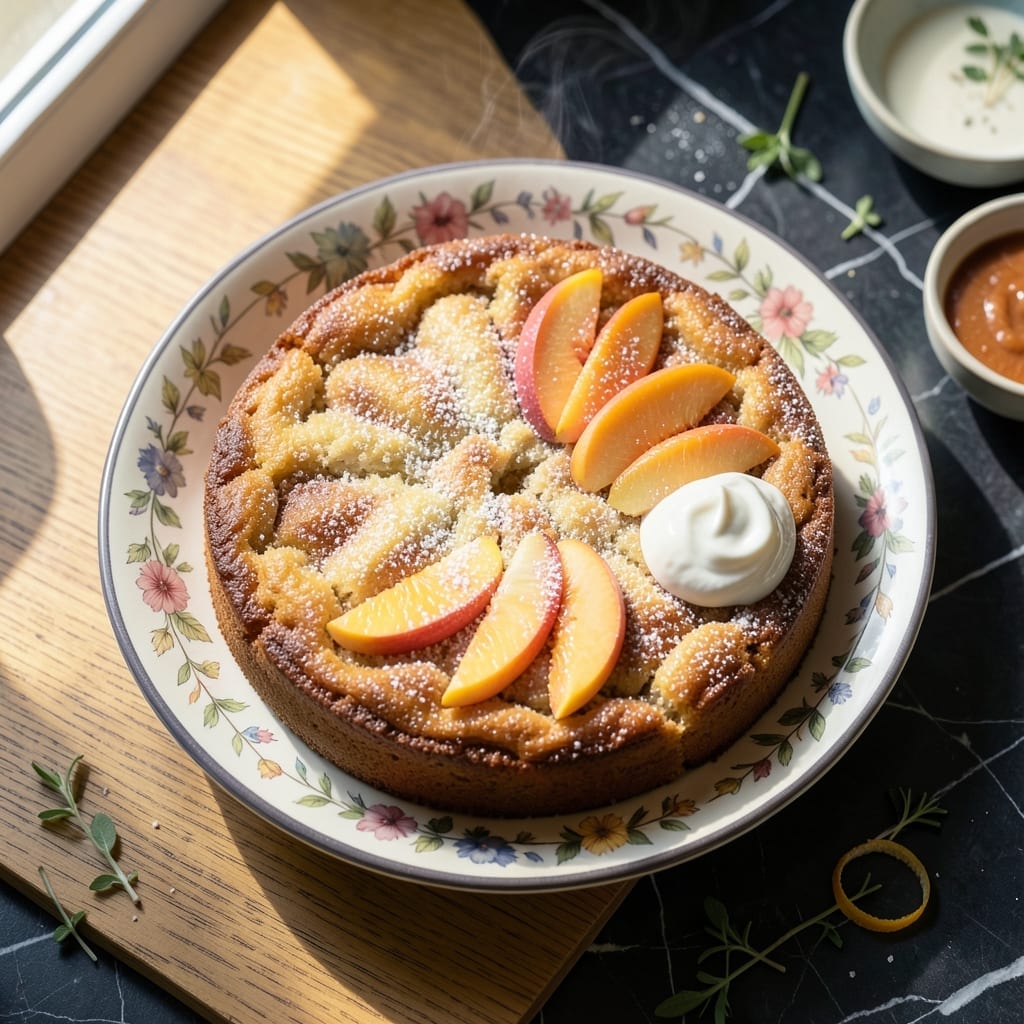
This traditional cake embodies German baking at its finest. A buttery base supports a perfect custard layer, finished with fruit or streusel.
Every slice delivers authentic taste and texture, just as it should. The method is straightforward, with traditional techniques that ensure consistent results.
Ingredients for German Kuchen
Traditional German baking requires quality ingredients for authentic flavor and texture in this classic cake.
| Ingredient | Amount | Notes |
|---|---|---|
| All-Purpose Flour 🌾 | 2 cups | Sifted for lighter texture |
| Granulated Sugar 🍚 | ¾ cup | Divided between dough and custard |
| Unsalted Butter 🧈 | ¾ cup | Cold, cubed for pastry |
| Large Eggs 🥚 | 2 whole | Room temperature, separated |
| Sour Cream 🥛 | ¾ cup | Full-fat for richness |
| Vanilla Extract 🌿 | 1 tsp | Pure vanilla preferred |
| Baking Powder 🧂 | 2 tsp | Fresh for best rise |
| Salt 🧂 | ½ tsp | Fine sea salt |
| Fresh Plums 🍑 | 6 whole | Pitted and halved |
| Ground Cinnamon 🌿 | 1 tsp | For streusel topping |
| Brown Sugar 🍚 | ¼ cup | Packed, for streusel |
| Whole Milk 🥛 | ¼ cup | For custard layer |
[recipe_ingredient_scaler]
The butter is critical here—European-style unsalted butter (like Plugrá or Kerrygold) has higher fat content for superior flakiness. Sour cream adds the necessary tang; full-fat Daisy or Breakstone’s work perfectly. For authentic results, King Arthur Flour is the gold standard. Plums should be ripe but firm—Italian prune plums are traditional if available at your local market.
No plums? Pitted cherries or sliced peaches work beautifully. Substitute Greek yogurt at the same amount if you lack sour cream. For a nutty twist, add 1/4 cup chopped almonds to the streusel. The vanilla can be vanilla bean paste for visible specks, though extract is perfectly acceptable. Brown sugar can be replaced with granulated if needed, but the molasses notes add depth.
The dough rests for 30 minutes before assembly. Baked kuchen keeps at room temperature for 2 days or refrigerated for 5 days. Freeze slices airtight for up to 3 months. Reheat briefly to restore the custard’s creaminess.
Why You’ll Love This Recipe
- One Bowl Wonder: I love that everything—flour, sugar, butter, eggs, sour cream—goes straight into one bowl. No fancy gadgets, just a spatula and 10 minutes of mixing.
- Buttery Richness: The combination of butter and sour cream makes this kuchen so tender it practically melts. Honestly, it’s the kind of richness that makes you stop mid-bite.
- Brunch to Dessert: It’s just as good with coffee in the morning as it is with ice cream at night. I’ll be real: I’ve served it both ways in the same day.
- Keeps Like a Champ: Leftovers stay moist for days, and the flavor only gets better. Between us, I sometimes make two just to have extras in the fridge.
Step-by-Step Instructions for German Kuchen
Master this traditional technique for a flaky crust and perfectly balanced custard fruit topping.
Step 1: Prepare the Pastry Dough
In a large mixing bowl, cut the 0.75 cup Unsalted Butter into the 2 cups All-Purpose Flour using a pastry cutter or your fingertips until the mixture resembles coarse crumbs. This step is crucial for achieving that tender, flaky texture traditional kuchen is known for.
Add the 0.5 tsp Salt and 2 tsp Baking Powder, then make a well in the center. Pour in the 0.75 cup Sour Cream and mix just until the dough comes together. Avoid overworking the dough—this prevents toughness. The mixture will be slightly shaggy, which is exactly what you want.
Step 2: Create the Custard Layer
Separate the 2 whole Large Eggs, placing the yolks in one bowl and the whites in another. To the yolks, add the 0.75 cup Granulated Sugar, 1 tsp Vanilla Extract, and 0.25 cup Whole Milk. Whisk vigorously until the mixture is pale and slightly thickened, about 2-3 minutes.
In a separate bowl, beat the egg whites until they form stiff peaks that hold their shape when the whisk is lifted. Gently fold the whites into the yolk mixture until just combined. This creates a light, airy custard that will bake up tender and delicate.
Step 3: Prepare the Plum Topping and Streusel
Pit and halve the 6 whole Fresh Plums, then arrange them cut-side down in a circular pattern over the custard layer. Press them lightly into the custard so they stay in place during baking. The fruit will soften and release its juices, creating a natural glaze.
For the streusel, combine the 0.25 cup Brown Sugar with the 1 tsp Ground Cinnamon in a small bowl. Mix well, then sprinkle evenly over the plums. This adds a warm, spiced crunch that contrasts beautifully with the soft fruit and creamy custard.
Step 4: Bake to Golden Perfection
Preheat your oven to 375°F. Roll out the pastry dough on a lightly floured surface to fit a 9-inch springform pan. Press it into the bottom and slightly up the sides, then pour the custard mixture over the dough. The pastry should be about ¼-inch thick for even baking.
Bake for 45-50 minutes until the crust is golden brown and the custard is set with a slight jiggle in the center. The edges should pull away slightly from the pan, and the plums should be tender when pierced with a knife.
Step 5: Cool and Serve
Remove the kuchen from the oven and let it cool in the pan on a wire rack for 15 minutes. This allows the custard to set completely and makes it easier to slice. The residual heat will finish the cooking process gently.
After cooling, run a knife around the edge of the pan to loosen the kuchen, then release the springform. Serve warm or at room temperature. For the best experience, slice with a sharp serrated knife and serve with a dusting of powdered sugar or a dollop of whipped cream.
Pro Tips For Making German Kuchen
- Room Temp Butter: I learned this the hard way—cold butter won’t cream properly with the sugar, so pull it out 1-2 hours before baking. The texture of your kuchen depends on this.
- Don’t Overmix Dough: After adding flour, mix just until it comes together. Overworking it makes the kuchen tough instead of tender.
- Use Full-Fat Sour Cream: Skip the low-fat version; the richness of full-fat sour cream keeps the crumb moist and the flavor deep.
- Check at 25 Minutes: Oven temps vary, and kuchen can over-brown fast. Start checking 5 minutes early—look for a golden top and a clean toothpick.
Troubleshooting Great german kuchen
Dough Too Tough
If your pastry feels dense or elastic, you’ve likely overworked it. Stop mixing the moment the dough comes together—it should look shaggy. I chill mine for 30 minutes to relax the gluten before rolling. This restores tenderness. 💡
Soggy Bottom Crust
Prevent this by pressing the dough thin (¼-inch thick) and pre-baking the crust for 8-10 minutes at 375°F before adding custard. This creates a barrier against fruit juices. Also, use a springform pan for even air circulation.
Custard Not Setting
Under-baked custard often means the oven temperature was too low. Verify with an oven thermometer—many run 25-50°F cool. Bake until the center has just a slight jiggle; it firms up as it cools.
Fruit Sinks to Bottom
Press plum halves lightly into the custard but don’t submerge them. If they still sink, fold 1 tbsp extra flour into the custard to thicken it. Ripe but firm plums hold their shape better than overripe ones.
Streusel Disappears
If your topping melts into the custard, sprinkle it on just before baking. Mix the brown sugar and cinnamon with 1 tbsp cold butter to create crumbly texture that holds its form.
Uneven Browning
Rotate the pan 180 degrees halfway through baking. If the top browns too quickly, tent loosely with foil. Every oven has hot spots—know yours and adjust accordingly.
Nutrition Facts
Frequently Asked Questions
Can I use different fruit for the topping?
While plums are traditional, pitted cherries, sliced peaches, or apples work beautifully. Just ensure the fruit is ripe but firm to hold its shape during baking.
What if I don’t have a springform pan?
A 9-inch pie dish or cake pan works as a substitute. Line it with parchment paper for easy removal. Press the dough evenly to prevent uneven baking.
How should I store leftovers?
Store in an airtight container at room temperature for up to 2 days. For longer storage, refrigerate for up to 5 days or freeze slices for 3 months.
Can I make the dough ahead of time?
Yes! Prepare the dough, wrap it tightly, and refrigerate for up to 24 hours. Let it sit at room temperature for 15 minutes before rolling.

Trained in classic French technique but raised on slow-cooked ribs and spicy rubs, she blends culinary skill with smoke and soul.
- Hamburger Patty Recipe No Egg: Juicy Bind With Breadcrumbs and Milk - October 3, 2026
- Recipe for Oven Baked Halibut: Buttery White Fish with Zesty Lemon Topping - October 3, 2026
- Meatball Curry Recipe Kerala Style: Coconut-Spiced Gravy With Tender Bites - October 3, 2026