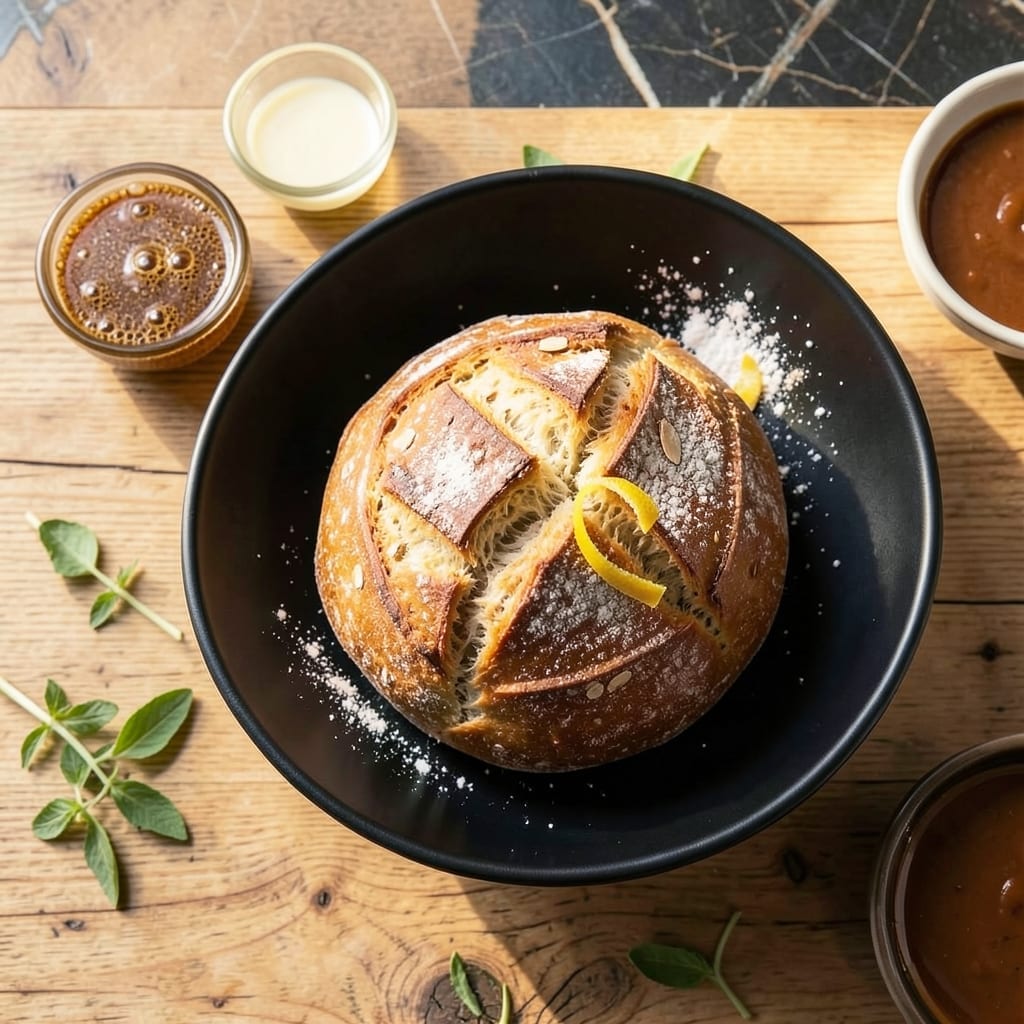
This recipe delivers low-carb bread with a texture so light it feels like biting into a cloud. I’ve tested countless variations to perfect the balance between structure and airiness.
With simple ingredients and precise technique, you’ll achieve slices that hold together beautifully while keeping carbs minimal. The result is satisfying, versatile, and ideal for any diet.
Ingredients for Barely Bread
Simple plant-based ingredients create that coveted cloud-like texture with minimal carbs per slice.
| Ingredient | Amount | Notes |
|---|---|---|
| Almond Flour 🌰 | 2 cups | Blanched, super fine texture |
| Psyllium Husk Powder 🌿 | ¼ cup | Essential for binding structure |
| Baking Powder 🧂 | 2 tsp | Aluminum-free preferred |
| Apple Cider Vinegar 🍏 | 1 tbsp | Activates baking reaction |
| Coconut Oil 🥥 | 2 tbsp | Melted, for moisture |
| Warm Water 💧 | ¾ cup | About 110°F for activation |
| Sea Salt 🧂 | ½ tsp | Fine grain for even distribution |
| Egg Replacer 🥚 | 2 tbsp | Vegan flax or chia mixture |
| Xanthan Gum 🧪 | ½ tsp | Optional for extra elasticity |
| Olive Oil 🫒 | 1 tbsp | For greasing pan |
| Sesame Seeds 🌻 | 1 tbsp | Optional topping for crust |
[recipe_ingredient_scaler]
The almond flour must be blanched and super fine—Bob’s Red Mill or King Arthur brands work exceptionally well. Psyllium husk powder (not whole husks) is non-negotiable for structure; find it in the supplement aisle at Whole Foods or Sprouts. Baking powder should be aluminum-free for clean flavor. The coconut oil adds moisture without dairy, but ensure it’s refined to avoid coconut taste.
No psyllium husk? Ground flaxseed at double the amount can substitute, though texture differs slightly. For egg replacer, 1 tbsp ground flax + 3 tbsp water per ‘egg’ works perfectly. Xanthan gum can be omitted, but bread may be slightly crumbly. Apple cider vinegar is key for lift—white vinegar in a pinch, but avoid balsamic as it adds color and flavor.
Store dry ingredients in airtight containers at room temperature for up to 3 months. Once baked, bread keeps 5 days at room temperature or 1 month frozen. Slice before freezing for easy portioning. Always bring to room temperature before serving for best texture.
Why You’ll Love This Recipe
- I’ll be real: most low-carb breads crumble the next day, but this one holds up for nearly a week in the fridge.
- One Bowl Wonder: I just dump the almond flour, psyllium husk, and the rest into one bowl—no fancy steps, no extra dishes.
- Nutty & Tangy: The almond flour gives it this rich, toasty depth, while the apple cider vinegar adds a subtle zing that keeps me reaching for another slice.
- Gluten-Free Hero: Honestly, it’s my go-to for sandwiches, toast, or even as a quick pizza base when I’m avoiding gluten.
Step-by-Step Instructions for Low-Carb Bread
This method ensures a light, airy texture with the structural integrity of traditional bread.
Step 1: Activate the Psyllium Husk Gel
In a mixing bowl, combine the 0.25 cup Psyllium Husk Powder with the 0.75 cup Warm Water. Whisk vigorously for 30 seconds until a thick, gelatinous mixture forms. This activation is critical—the psyllium husk absorbs the water and creates the binding structure that replaces gluten.
Let the gel sit for 2 minutes to fully thicken. You’ll notice it develops a taffy-like consistency. This step ensures your bread holds together without traditional flour. I always use a timer here to prevent under- or over-thickening.
Step 2: Combine Dry and Wet Ingredients
In a separate large bowl, whisk together the 2 cups Almond Flour, 2 tsp Baking Powder, 0.5 tsp Sea Salt, and 0.5 tsp Xanthan Gum until evenly distributed. The xanthan gum adds elasticity, while the baking powder provides lift for that cloud-like texture.
Add the psyllium gel, 1 tbsp Apple Cider Vinegar, 2 tbsp Coconut Oil, and 2 tbsp Egg Replacer to the dry ingredients. Mix with a spatula for 1-2 minutes until a uniform, slightly sticky dough forms. The vinegar reacts with the baking powder, creating air pockets for a lighter crumb.
Step 3: Shape and Proof the Dough
Line a loaf pan with parchment paper and brush it lightly with 1 tbsp Olive Oil. Transfer the dough into the pan, using wet hands to smooth the top—this prevents sticking and helps create an even surface. The dough will be dense but pliable.
Let the dough rest in the pan for 10 minutes. During this time, the psyllium continues to absorb moisture, and the baking powder begins its leavening action. You’ll see the dough rise slightly, indicating it’s ready for baking.
Step 4: Bake to Golden Perfection
Preheat your oven to 350°F. Bake the loaf on the middle rack for 50-55 minutes until the top is golden brown and a toothpick inserted into the center comes out clean. The internal temperature should reach 205°F for optimal structure.
If the top browns too quickly, tent the pan with foil after 30 minutes. This prevents over-browning while allowing the interior to cook thoroughly. The loaf should spring back lightly when pressed.
Step 5: Cool and Finish
Remove the loaf from the oven and let it cool in the pan for 10 minutes. Then transfer it to a wire rack and cool completely for 1 hour. This cooling period is essential—it allows the structure to set and prevents a gummy texture.
Once cooled, brush the top with additional olive oil and sprinkle with 1 tbsp Sesame Seeds for added crunch and visual appeal. Slice with a serrated knife for clean, even pieces. The result is a light, airy loaf with a subtle nutty flavor and perfect low-carb structure.
Pro Tips For Making Barely Bread
- Preheat the Oven: I learned this the hard way—crank the oven to 350°F for at least 15 minutes before baking. Psyllium husk needs consistent heat to rise properly, or you’ll end up with a dense brick.
- Weigh the Almond Flour: Sounds tedious, but 1 cup of almond flour can vary by 20 grams. Use a scale for accuracy, or your loaf might turn out greasy or dry.
- Mix Vinegar Last: Add the apple cider vinegar right before baking—it reacts with baking powder instantly. If you mix it too early, the bread won’t get that crucial lift.
- Use Melted Coconut Oil: Skip cold coconut oil—melt it first so it blends smoothly with the dry ingredients. Otherwise, you’ll get oily pockets that ruin the texture.
Wine and Beer Pairings for This Recipe
White Wine Pairings
A crisp Sauvignon Blanc from New Zealand cuts through the nutty richness of this bread beautifully. Its citrus notes and bright acidity complement the almond flour base without overwhelming the subtle flavors. I always keep a bottle of Kim Crawford on hand for this exact reason. ✨
Red Wine Options
For red wine lovers, a light-bodied Pinot Noir from Oregon works surprisingly well. The earthy undertones and gentle tannins pair nicely with the bread’s toasty notes. Try Domaine Drouhin for a reliable choice.
Beer Pairings
A Belgian-style witbier with its citrus and coriander notes offers a refreshing contrast. Hoegaarden is my go-to, but local craft versions often have more pronounced spice profiles. The carbonation cleanses your palate between bites. 🍺
Sparkling Choices
Both Prosecco and dry sparkling cider work wonderfully. The bubbles and slight sweetness balance the bread’s savory elements. I love serving La Marca Prosecco at gatherings—it’s always a crowd pleaser.
For non-alcoholic options, a sparkling water with lime provides the same palate-cleansing effect.
Tea Pairings
A light Earl Grey with its bergamot notes complements the nutty flavor profile. I prefer Twinings for consistency. For herbal options, peppermint tea offers a clean, refreshing contrast.
Nutrition Facts
Frequently Asked Questions
Why does the dough feel sticky before baking?
The psyllium husk creates a gel that makes the dough slightly sticky—this is normal. Wet hands help shape it without sticking. The texture firms up during baking.
Can I use whole psyllium husks instead of powder?
No, whole husks won’t absorb liquid properly and will create a gritty texture. Always use powder for the right binding structure.
How do I prevent the bread from sinking after baking?
Ensure the internal temperature reaches 205°F and cool completely on a rack. Opening the oven too soon can cause collapse.
What’s the best way to store leftovers?
Slice and store in an airtight container at room temperature for up to 5 days, or freeze for 1 month.

Trained in classic French technique but raised on slow-cooked ribs and spicy rubs, she blends culinary skill with smoke and soul.
- Recipe for Boneless Pork Chops in Cast Iron Skillet: Sear and Baste to Juicy Perfection - October 3, 2026
- Recipe for Boneless Cross Rib Roast: Slow-Roasted Beef with Herb Crust - October 3, 2026
- Hamburgers in Sauce Recipe Crock Pot: Slow-Cooked Savory Delight - October 3, 2026