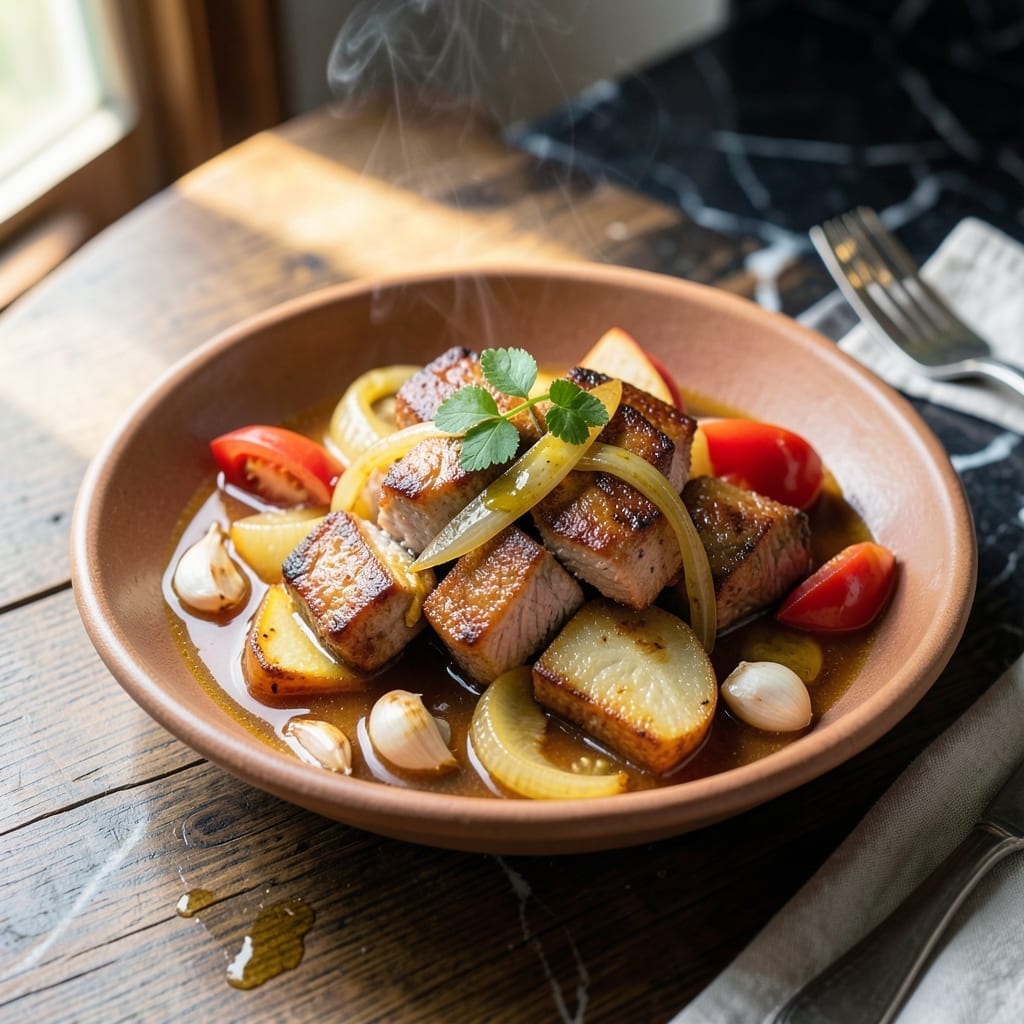
I discovered the beauty of this squash and pork stir-fry while testing recipes in my tiny Boston kitchen. The combination of tender pork and mild upo creates a comforting dish that’s both simple and satisfying.
What makes this creation special is its ability to transform basic ingredients into a flavorful meal. The pork adds richness while the upo absorbs the savory notes, making every bite perfectly balanced.
The result is a homey, one-pan dish that’s quick to prepare yet feels like a complete meal. It’s the kind of recipe that proves you don’t need fancy ingredients to eat well.
Serve it steaming hot over rice for a taste of Filipino home cooking. This is comfort food at its most approachable.
Ingredients for Ginisang Upo Recipe with Pork
Simple ingredients create this flavorful Filipino stir-fry with pork and upo squash.
| Ingredient | Amount | Notes |
|---|---|---|
| Pork Shoulder 🍖 | 1 lb | Thinly sliced for even cooking |
| Upo Squash 🥬 | 2 lb | Peeled and sliced into rounds |
| Garlic Cloves 🧄 | 6 cloves | Minced for maximum flavor |
| Yellow Onion 🧅 | 1 whole | Thinly sliced for texture |
| Tomatoes 🍅 | 2 whole | Diced, ripe preferred |
| Fish Sauce 🐟 | 2 tbsp | Filipino patis preferred |
| Soy Sauce 🫙 | 2 tbsp | Use low-sodium if preferred |
| Ground Black Pepper 🌶️ | 1 tsp | Freshly ground for best flavor |
| Vegetable Oil 🫒 | 2 tbsp | Neutral flavor for sautéing |
| Green Onions 🌱 | ½ cup | Chopped for garnish |
| Salt 🧂 | 1 tsp | Adjust to taste |
| Water 💧 | ¼ cup | For deglazing pan |
[recipe_ingredient_scaler]
The pork should be tender and well-marbled—pork shoulder or belly are ideal. Look for fresh upo squash at Asian markets or specialty grocers like H Mart. The squash should feel firm with smooth skin. If you can’t find upo, zucchini or chayote can work in a pinch, though the flavor will differ slightly.
No fish sauce? Soy sauce with a pinch of sugar mimics the umami depth. For a lighter version, swap pork for chicken thighs—they stay juicy and absorb flavors well. If you’re avoiding gluten, use tamari instead of soy sauce. The tomatoes add acidity, but tomato paste diluted in water works if you’re short on fresh.
This dish reheats well and tastes even better the next day. Store leftovers in an airtight container for up to 3 days in the fridge. Avoid freezing, as the squash can turn mushy. Serve with steamed rice to soak up the savory sauce.
Why You’ll Love This Recipe
- One Pot Meal: I love how everything—pork shoulder, upo, and tomatoes—cooks together in a single pan.
- Savory Garlic Bite: The garlic cloves and yellow onion give that rich, aromatic flavor that makes every spoonful irresistible.
- Feeds the Family: This dish stretches easily, so it’s my go-to for big gatherings or meal prep for the week.
- Budget Friendly: Pork shoulder and upo are affordable, and this recipe fills us up without breaking the bank.
Step-by-Step Instructions for Ginisang Upo With Pork
Here’s the method. Straightforward, tested, works every time.
Step 1: Sauté Aromatics and Brown the Pork
Heat the 2 tbsp Vegetable Oil in a large wok or deep skillet over medium-high heat. Add the 6 cloves Garlic Cloves and 1 whole Yellow Onion, sautéing for 2-3 minutes until the onion turns translucent and the garlic releases its aroma. Be careful not to let the garlic burn.
Add the 1 lb Pork Shoulder and cook for 5-6 minutes, breaking it into smaller pieces with your spatula. Stir occasionally until the pork turns light brown and is no longer pink. This builds a flavorful base for your dish.
Step 2: Incorporate Tomatoes and Seasonings
Stir in the 2 whole Tomatoes and cook for another 2-3 minutes until they soften and begin to break down. This step enhances the natural sweetness of the tomatoes, balancing the savory elements.
Season with the 1 tsp Salt, 1 tsp Ground Black Pepper, 2 tbsp Soy Sauce, and 2 tbsp Fish Sauce. Stir well to evenly distribute the flavors. The soy sauce adds depth, while the fish sauce delivers that authentic umami taste.
Step 3: Cook the Upo Squash
Add the 2 lb Upo Squash to the wok, stirring to combine with the pork and aromatics. The squash should be peeled and sliced into rounds for even cooking. Pour in the 0.25 cup Water, then cover and let it simmer on medium heat for 8-10 minutes.
Check occasionally and stir gently to prevent sticking. The upo squash is done when it becomes tender but still holds its shape. Avoid overcooking, as it can turn mushy.
Step 4: Finish and Garnish
Once the squash is tender, remove the lid and let any excess liquid cook off for 2-3 minutes on medium-high heat. This step ensures your dish isn’t watery and allows the flavors to concentrate.
Taste and adjust the seasoning if needed. Transfer to a serving dish and garnish with the 0.5 cup Green Onions. Serve hot with steamed rice for the best experience. The green onions add a fresh, vibrant finish to the dish.
Pro Tips For Making Ginisang Upo Recipe With Pork
- Sear the Pork First: Brown the pork shoulder in batches over medium-high heat until golden—this builds flavor and prevents the meat from stewing in its own juices.
- Peel the Upo Last: Upo oxidizes fast once peeled, so wait until just before cooking to avoid bitterness and discoloration.
- Skip the Overcrowding: I learned this the hard way—cook the pork in a single layer so it sears properly instead of steaming in the pan.
- Use Ripe Tomatoes: Sounds obvious, but slightly overripe tomatoes break down faster and sweeten the sauce naturally without extra sugar.
Health Benefits of ginisang upo recipe with pork
Low-Calorie Comfort
This dish clocks in at just 250-300 calories per serving, making it a light yet filling option. The upo squash is low in calories but high in fiber, keeping you satisfied without the guilt. I love that it feels indulgent while being nutritious. 💪
Rich in Vitamins
The upo squash is packed with vitamin C and B vitamins, supporting immune function and energy metabolism. Meanwhile, the pork provides iron and zinc, essential minerals for maintaining healthy blood and immune systems.
Hydration Boost
Upo squash is 90% water, helping with daily hydration needs. It also contains electrolytes like potassium, which aids in maintaining proper fluid balance. This makes the dish especially refreshing during warmer months.
Protein Power
The 1 lb pork shoulder delivers about 20-25 grams of protein per serving, essential for muscle repair and growth. Combined with the squash’s fiber, this creates a balanced meal that sustains energy levels throughout the day.
Digestive Health
The fiber in upo squash promotes healthy digestion and can help regulate blood sugar levels. It also supports a healthy gut microbiome. Honestly, I notice I feel lighter and more energized after eating this dish. ✨
Heart-Healthy Fats
While pork shoulder contains some saturated fat, the dish’s overall fat content is moderate. The 2 tbsp vegetable oil provides healthier unsaturated fats, which are better for heart health when consumed in moderation.
Nutrition Facts
Frequently Asked Questions
Can I use a different type of squash?
Yes, zucchini or chayote work as substitutes. Zucchini cooks faster, so add it 5 minutes after the pork. Chayote has a similar texture but a slightly sweeter taste.
How do I know when the pork is cooked?
The pork is done when it turns light brown and reaches an internal temperature of 145°F. Cut into a piece to ensure no pink remains inside.
What if my dish turns out too watery?
Remove the lid and simmer on medium-high heat for 3-5 minutes to evaporate excess liquid. Stir occasionally to prevent sticking.
Can I make this ahead of time?
Store in an airtight container in the fridge for up to 3 days. Reheat gently to avoid mushy squash.

Trained in classic French technique but raised on slow-cooked ribs and spicy rubs, she blends culinary skill with smoke and soul.
- Recipe for Boneless Pork Chops in Cast Iron Skillet: Sear and Baste to Juicy Perfection - October 3, 2026
- Recipe for Boneless Cross Rib Roast: Slow-Roasted Beef with Herb Crust - October 3, 2026
- Hamburgers in Sauce Recipe Crock Pot: Slow-Cooked Savory Delight - October 3, 2026