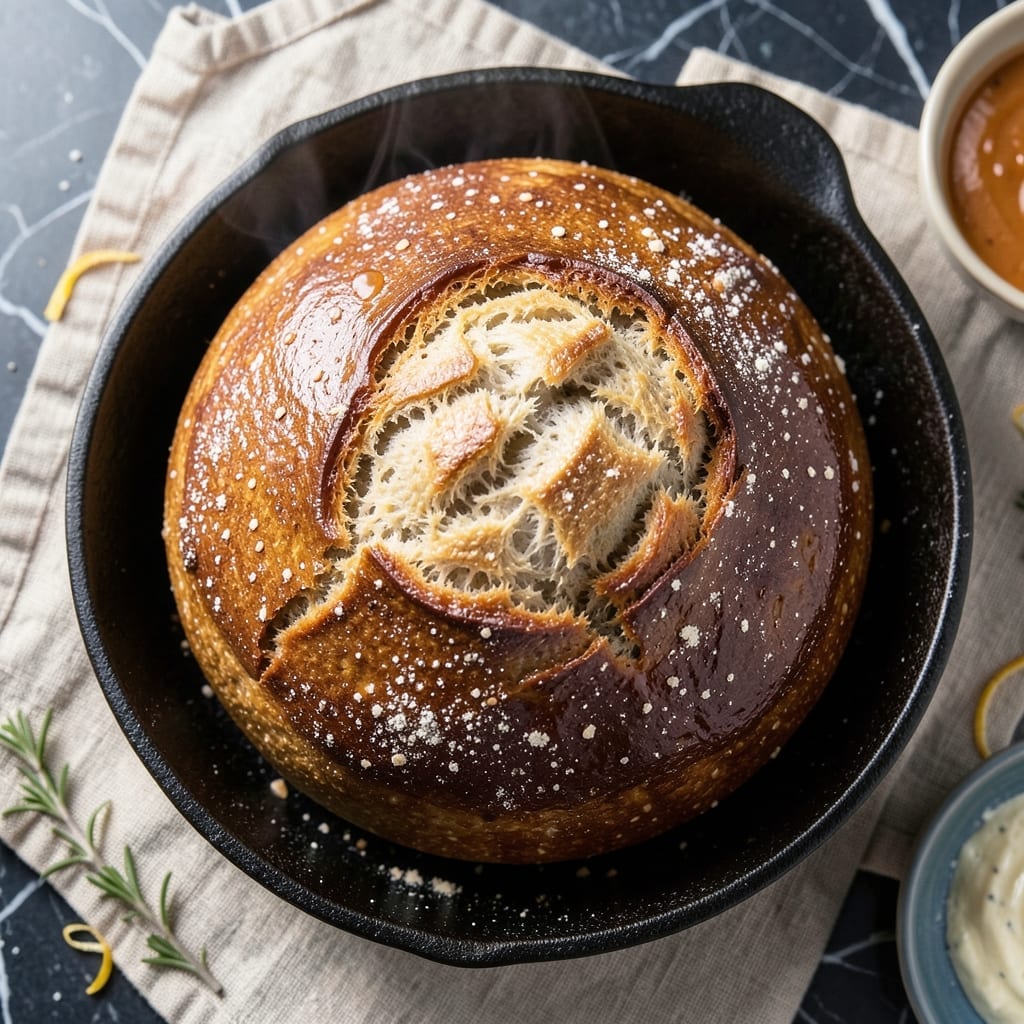
This gluten-free bread delivers impressive texture without yeast or animal products. The secret lies in the right balance of alternative flours and leavening agents.
You’ll achieve light, airy loaves with a proper rise and soft crumb. No waiting for dough to proof—just mix, bake, and enjoy fresh bread.
Ingredients for Gluten Free Bread Recipe No Yeast
No yeast, no animal products, no problem. These ingredients create light, airy loaves.
| Ingredient | Amount | Notes |
|---|---|---|
| Gluten-Free All-Purpose Flour 🌾 | 2 ½ cups | 1:1 baking blend recommended |
| Almond Flour 🌰 | 1 cup | Fine, blanched preferred |
| Tapioca Starch 🌾 | ½ cup | For chewy texture |
| Baking Powder 🧂 | 2 tbsp | Ensures proper rise |
| Baking Soda 🧂 | 1 tsp | Balances acidity |
| Apple Cider Vinegar 🍏 | 2 tbsp | Activates leavening agents |
| Flaxseed Meal 🌿 | 3 tbsp | Binds like eggs |
| Warm Water 💧 | 1 ¼ cups | About 110°F for best results |
| Maple Syrup 🍁 | 3 tbsp | Adds sweetness and moisture |
| Olive Oil 🫒 | ¼ cup | Light or extra-virgin |
| Psyllium Husk Powder 🌿 | 2 tsp | Essential for structure |
| Salt 🧂 | 1 tsp | Fine sea salt preferred |
[recipe_ingredient_scaler]
The gluten-free flour blend is key here. King Arthur’s 1:1 or Bob’s Red Mill are my go-tos—both have xanthan gum already mixed in, so no need to add extra. Almond flour adds richness, but make sure it’s fine and blanched (not almond meal, which is coarser). Psyllium husk powder is non-negotiable for that perfect crumb. Find it in the supplement aisle at Whole Foods or online.
No flaxseed meal? Chia seeds soaked in water (1 tbsp chia + 3 tbsp water = 1 egg equivalent) work too. Apple cider vinegar can be swapped for white vinegar or lemon juice—just use the same amount. Out of maple syrup? Agave or date syrup keeps it vegan. The olive oil can be melted coconut oil if you prefer a neutral taste.
This bread stays fresh at room temp for 2 days in an airtight container. Slice and freeze the rest—it toasts beautifully straight from frozen. Keeps well for 1 month in the freezer without losing texture or flavor.
Why You’ll Love This Recipe
- No Yeast Needed: I skip the waiting for dough to rise—just mix, bake, and enjoy fresh bread.
- Nutty Warmth: The almond flour gives it this rich, toasty depth that’s way better than store-bought.
- Meal Prep Hero: I bake a loaf Sunday and it’s still soft enough for sandwiches midweek.
- Pantry Staples: Between us, I always have these flours on hand, so it’s my backup plan for sudden cravings.
Step-by-Step Instructions for Gluten Free Bread No Yeast
Here’s the method I use for perfectly light, airy loaves without the wait for rising.
Step 1: Activate the Psyllium Husk and Flaxseed
In a large mixing bowl, whisk together the 2.5 cups Gluten-Free All-Purpose Flour, 1 cup Almond Flour, 0.5 cup Tapioca Starch, 2 tbsp Baking Powder, 1 tsp Baking Soda, and 1 tsp Salt until fully combined. These dry ingredients create the base structure for your bread.
In a separate small bowl, combine the 3 tbsp Flaxseed Meal with the 1.25 cups Warm Water. Let this sit for 5 minutes to thicken—it should resemble a gel-like consistency, which mimics the binding properties of eggs in traditional bread.
Step 2: Create the Wet Mixture
In another bowl, whisk together the 3 tbsp Maple Syrup, 0.25 cup Olive Oil, and 2 tbsp Apple Cider Vinegar. The vinegar reacts with the baking soda to create lift, while the maple syrup adds subtle sweetness and helps retain moisture in the finished loaf.
Add the 2 tsp Psyllium Husk Powder to the flaxseed gel and stir vigorously for 30 seconds. This step is critical—psyllium husk absorbs liquid quickly and forms the elastic network that gives gluten-free bread its structure. The mixture will thicken noticeably as you stir.
Step 3: Combine and Mix the Batter
Pour the wet ingredients into the dry ingredients all at once. Using a sturdy silicone spatula or wooden spoon, stir until just combined. The batter will be thick but pourable, almost like a very thick pancake batter.
Let the batter rest for 10 minutes. During this time, the psyllium husk continues to absorb liquid and the flours fully hydrate. You’ll notice the batter thickens slightly—this is exactly what you want for a well-structured loaf.
Step 4: Bake to Golden Perfection
Preheat your oven to 350°F and grease a 9×5-inch loaf pan thoroughly. Pour the batter into the prepared pan, smoothing the top with a wet spatula. The batter won’t rise much during baking, so fill the pan about ¾ full.
Bake on the center rack for 50-55 minutes until the top is deep golden brown and a toothpick inserted in the center comes out clean. If the top begins to brown too quickly, tent the pan loosely with aluminum foil to prevent over-browning.
The bread is done when it reaches an internal temperature of 205°F and the top sounds hollow when tapped lightly. This higher temperature ensures the center is fully set without drying out the loaf.
Step 5: Cool Completely Before Slicing
Remove the pan from the oven and let the bread cool in the pan for 10 minutes. Then, transfer it to a wire rack to cool completely for at least 1 hour. I know it’s tempting to slice into it right away, but gluten-free bread continues to set as it cools.
Slicing too soon can result in a gummy texture. Once fully cooled, the bread should hold its shape well and slice cleanly. Store any leftovers in an airtight container at room temperature for up to 3 days or freeze for longer storage.
Pro Tips For Making Gluten Free Bread Recipe No Yeast
- Preheat the Oven: Crank it to 350°F and let it stabilize for at least 15 minutes—gluten-free batters are finicky and need consistent heat to rise properly.
- Weigh Your Flours: I learned this the hard way: cup measurements for gluten-free flour blends can vary wildly. Use a kitchen scale for accuracy, especially with almond flour, which packs down.
- Don’t Overmix: After combining the wet and dry ingredients, mix just until the batter comes together. Overworking it makes the bread dense instead of light and airy.
- Add an Egg: Sounds simple, but adding one extra egg to the batter binds everything better and gives the bread structure without yeast. I was skeptical until I tried it.
Best Sauces and Condiments for This gluten free bread recipe no yeast
Sweet Spreads
I love pairing this bread with almond butter or sunflower seed butter for a protein boost. The nutty flavors complement the subtle sweetness from the maple syrup. Try Justin’s Classic Almond Butter—it spreads beautifully on warm slices. 💛
Fruit Preserves
Raspberry jam or orange marmalade adds a bright, tangy contrast to the bread’s mild flavor. I use Bonne Maman preserves because they have just the right balance of fruit and sugar. Warm the bread slightly for easier spreading.
Savory Options
For a heartier option, try hummus or avocado mash with a sprinkle of everything bagel seasoning. The creamy texture pairs perfectly with the bread’s soft crumb. Sabra Classic Hummus is my go-to for its smooth consistency.
Dairy-Free Butter
A simple spread of vegan butter like Miyoko’s Creamery or Earth Balance lets the bread’s natural flavors shine. Add a pinch of flaky sea salt to elevate each bite. This is my favorite way to enjoy it fresh out of the oven.
Spicy Kick
Mix 1 tbsp sriracha with 2 tbsp vegan mayo for a spicy sandwich spread. The heat cuts through the bread’s richness beautifully. I also love adding sliced jalapeños for extra crunch and spice.
Herb-Infused Oils
Drizzle with basil-infused olive oil or garlic olive oil for an Italian-inspired treat. Warm the oil slightly to release the aromatics before drizzling. This works especially well for bruschetta-style servings. ✨
Nutrition Facts
Frequently Asked Questions
Why does this recipe use both baking powder and baking soda?
Baking powder provides lift while baking soda neutralizes acidity from the vinegar. Together they create a better rise in yeast-free bread.
Can I substitute the flaxseed meal with something else?
Yes! Use chia seeds soaked in water (1 tbsp chia + 3 tbsp water = 1 egg equivalent). This maintains the binding properties needed.
How do I prevent a dense texture in my loaf?
Don’t skip the 10-minute rest after mixing! This lets psyllium husk absorb liquid fully. Also, ensure your baking powder is fresh for maximum rise.
What’s the best way to store leftovers?
Keep in an airtight container at room temp for 2-3 days. For longer storage, slice and freeze for up to 1 month. Toast frozen slices directly.

Trained in classic French technique but raised on slow-cooked ribs and spicy rubs, she blends culinary skill with smoke and soul.
- Recipe for Boneless Pork Chops in Cast Iron Skillet: Sear and Baste to Juicy Perfection - October 3, 2026
- Recipe for Boneless Cross Rib Roast: Slow-Roasted Beef with Herb Crust - October 3, 2026
- Hamburgers in Sauce Recipe Crock Pot: Slow-Cooked Savory Delight - October 3, 2026