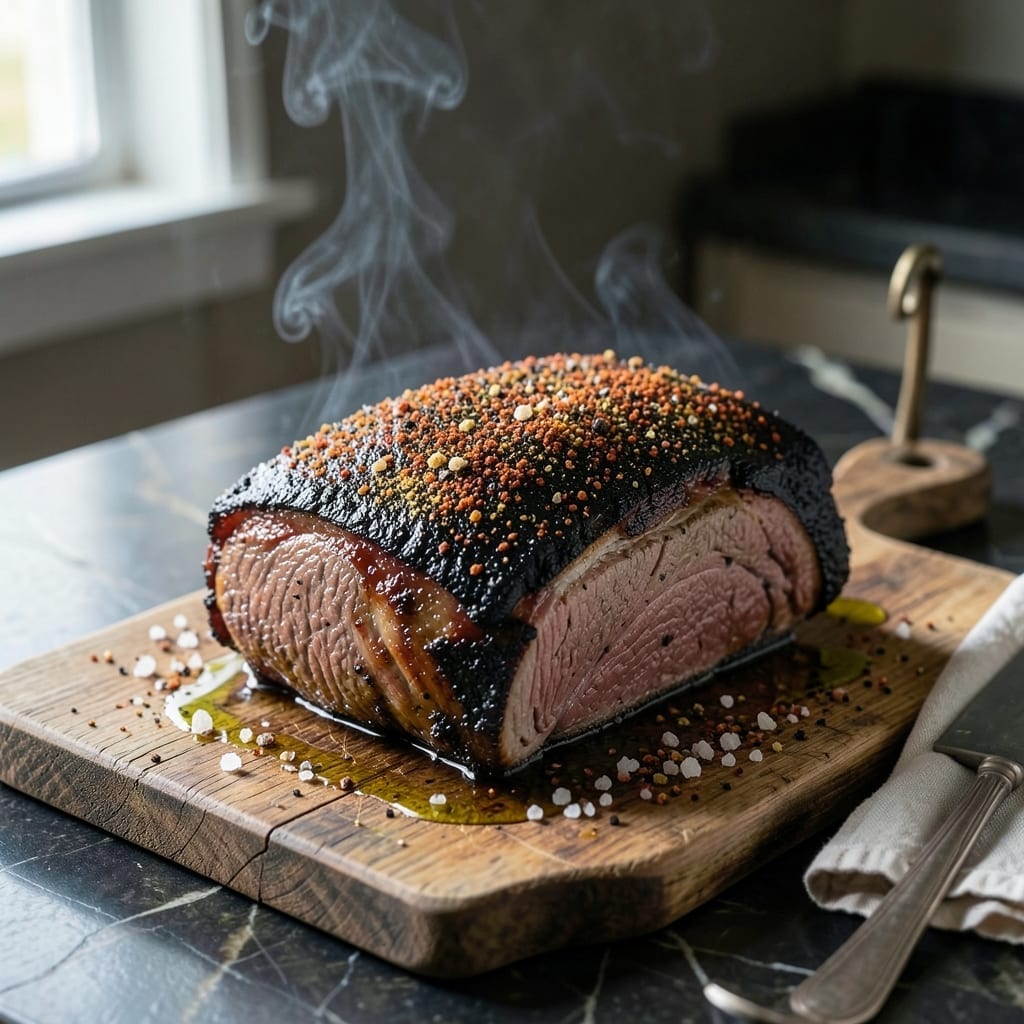
Achieving fall-apart tender brisket without gluten requires precision, not compromise. This method delivers the same smoky depth and melt-in-your-mouth texture as traditional recipes, with simple adaptations that never sacrifice flavor.
I developed this approach after years of testing in my small kitchen, focusing on a dry rub and cooking process that avoids all gluten-containing ingredients. The result is brisket that’s rich, juicy, and safe for everyone at the table.
The slow-smoking process transforms tough cuts into something extraordinary. Low heat and patience break down the fibers, while a carefully balanced rub ensures every bite is packed with bold, savory flavor.
Whether for a holiday gathering or weekend meal, this brisket will be the star. Here’s how to make it perfectly every time.
Ingredients for Gluten Free Brisket
Pantry staples and a quality brisket. Nothing exotic, just bold, smoky flavor waiting to happen.
| Ingredient | Amount | Notes |
|---|---|---|
| Beef Brisket 🥩 | 5 lb | Whole packer cut preferred |
| Coarse Kosher Salt 🧂 | ¼ cup | Diamond Crystal recommended |
| Black Pepper 🌶️ | ¼ cup | Freshly ground for best flavor |
| Smoked Paprika 🌶️ | 2 tbsp | Sweet or hot variety |
| Garlic Powder 🧄 | 2 tbsp | Not garlic salt |
| Onion Powder 🧅 | 2 tbsp | Freshly ground preferred |
| Dried Mustard 🌿 | 1 tbsp | Ensures gluten-free certification |
| Brown Sugar 🍚 | ½ cup | Light or dark, packed |
| Cayenne Pepper 🔥 | 1 tsp | Adjust for heat preference |
| Hickory Wood Chunks 🪵 | 4 pieces | For smoking, soaked |
| Apple Cider Vinegar 🍏 | ½ cup | For spritzing during cook |
| Yellow Mustard 🟡 | ½ cup | Gluten-free binder for rub |
[recipe_ingredient_scaler]
The brisket itself is non-negotiable here. Whole packer cut from a butcher gives you the best fat marbling—Costco has decent pre-packaged options if you’re in a pinch. Look for USDA Choice or Prime grades, with a thick fat cap (at least 1/4 inch). The salt matters too: Diamond Crystal kosher salt is my go-to for its clean flavor and even distribution. Avoid iodized table salt, which can taste metallic and overpower the meat.
No packer cut? Flat cut works in a pinch (just trim excess fat). Out of smoked paprika? Regular paprika plus liquid smoke (1/4 tsp per tbsp) gets you close. The mustard is just a binder—Dijon works too (just verify it’s gluten-free). Brown sugar can be swapped for coconut sugar, but the flavor profile shifts slightly. For the wood, pecan or oak are great hickory alternatives if you want a milder smoke.
Rub keeps in an airtight container for 3 months (the spices lose potency after that). The brisket itself is best cooked fresh, but you can trim and dry-brine it 24 hours ahead. Leftovers? They reheat beautifully—slice against the grain and warm in a 325°F oven with a splash of beef broth for 20-30 minutes.
Why You’ll Love This Recipe
- Set It and Forget: I rub the brisket with salt, pepper, and smoked paprika, then let the oven do the work for hours.
- Smoky and Bold: The garlic powder and smoked paprika create a deep, rich crust that’s irresistibly flavorful.
- Feeds a Crowd: This brisket is my go-to for gatherings—always a hit and plenty to go around.
- Leftovers for Days: Honestly, it tastes even better the next day in tacos, sandwiches, or just reheated.
Step-by-Step Instructions for Slow-Smoked Brisket
Here’s the method that delivers competition-quality results with a perfect bark every time.
Step 1: Prepare and Season the Brisket
Start by trimming the 5 lb Beef Brisket fat cap to about ¼ inch thickness using a sharp knife. This protects the meat while allowing smoke to penetrate. Pat the brisket completely dry—moisture prevents the rub from adhering properly.
In a bowl, combine the 0.25 cup Coarse Kosher Salt, 0.25 cup Black Pepper, 2 tbsp Smoked Paprika, 2 tbsp Garlic Powder, 2 tbsp Onion Powder, 1 tbsp Dried Mustard, 0.5 cup Brown Sugar, and 1 tsp Cayenne Pepper. Rub this mixture all over the brisket, pressing firmly to make it stick. Then spread the 0.5 cup Yellow Mustard as a binder for the rub.
Step 2: Set Up Your Smoker for Low and Slow
Soak the 4 pieces Hickory Wood Chunks in water for at least 30 minutes before smoking. Preheat your smoker to 225-250°F using the soaked hickory. Place a water pan inside to maintain moisture during the long cook.
When the smoker reaches temperature and produces thin blue smoke, place the brisket on the grate fat-side up. This position allows the rendering fat to baste the meat naturally. Close the lid and resist the urge to check on it—each time you open the smoker, you lose heat and add to the cooking time.
Step 3: Smoke and Spritz for Tenderness
Smoke the brisket undisturbed for 4-5 hours until the internal temperature reaches 165-170°F. At this point, you’ll hit the “stall,” where the temperature plateaus as moisture evaporates.
Every 1-2 hours, spritz the brisket with the 0.5 cup Apple Cider Vinegar to keep the surface moist and build up the bark. This step is crucial for developing that beautiful, dark exterior while maintaining juiciness inside.
Step 4: Wrap and Power Through the Stall
Once the brisket hits the stall, wrap it tightly in pink butcher paper or foil. This “Texas crutch” method helps push through the stall while preserving moisture. Return it to the smoker and continue cooking until the internal temperature reaches 200-205°F.
Use a probe thermometer to check for doneness—it should slide into the meat like butter with no resistance. This usually takes another 3-4 hours of smoking after wrapping.
Step 5: Rest and Slice for Maximum Tenderness
Remove the brisket from the smoker and let it rest, still wrapped, for at least 1 hour (I prefer 2 hours in a cooler). This resting period allows the juices to redistribute throughout the meat.
Unwrap and slice against the grain into ¼-inch thick pieces. The flat and point have different grain directions, so adjust your angle as needed. Serve immediately while still warm for the most tender, flavorful results.
Pro Tips For Making Gluten Free Brisket
- Dry the Brisket: Pat the brisket completely dry with paper towels before seasoning—I learned this the hard way after my first few attempts had a steamed, pale crust instead of that deep bark we all want.
- Season Overnight: Rub the coarse kosher salt, black pepper, smoked paprika, and garlic powder into the meat at least 12 hours ahead. The spices penetrate deeper and the salt starts breaking down the muscle fibers for a more tender result.
- Skip the High Heat: Resist the urge to crank the oven above 275°F. Low and slow is non-negotiable with brisket—any higher and the fat renders out too fast, leaving the meat tough and dry.
- Rest Under Foil: After cooking, wrap the brisket tightly in foil and let it rest for at least 30 minutes, up to an hour. I used to slice right in and watched all those precious juices spill out onto the cutting board—now I wait, and the meat stays juicy.
Troubleshooting This Dish
Bark Not Forming
If your brisket lacks that coveted dark crust, your smoker temperature might be too low. Aim for a consistent 225-250°F and ensure thin blue smoke. Spritz with apple cider vinegar every 1-2 hours to build layers of flavor and texture. 💡
Stall Lasting Too Long
When the internal temperature plateaus at 165-170°F, wrap tightly in pink butcher paper to push through. This “Texas crutch” can shave 2-3 hours off your cook time. Avoid peeking—each opening adds 15-30 minutes to the process.
Dry Brisket
Dryness often comes from overcooking or insufficient resting. Pull the brisket at 200-205°F internal and rest it wrapped for at least 1 hour. I rest mine in a cooler for 2 hours to lock in juices. ❄️
Uneven Cooking
If one end cooks faster, rotate the brisket 180 degrees halfway through. Also, ensure your smoker’s heat source is evenly distributed. I position my water pan directly under the brisket for consistent moisture.
Tough Texture
Toughness usually means it needs more time. Brisket is done when a probe slides in like butter. If it’s still firm at 205°F, keep cooking—it’s not ready yet. Patience is key with this cut.
Gluten Concerns
Double-check all spices, especially dried mustard and smoked paprika. Some brands add anti-caking agents with gluten. I stick with McCormick or Penzeys for guaranteed gluten-free options. 🔥
Nutrition Facts
Frequently Asked Questions
What’s the best wood for smoking?
Hickory gives that classic bold smoke flavor, but pecan or oak work well too for a milder taste. Soak chunks for 30 minutes before using to prevent burning.
How do I know when it’s done?
Use a probe thermometer—it’s ready at 200-205°F internal. The probe should slide in like butter with no resistance. Don’t rely on time alone.
Can I use a different binder instead of mustard?
Yes! Dijon or even olive oil work as binders. Just verify they’re gluten-free. The binder helps the rub stick and form a good bark.
Why does the temperature stall during cooking?
This happens when moisture evaporates, cooling the meat. Wrap in butcher paper at 165-170°F to push through the stall faster. Avoid opening the smoker too often.

Trained in classic French technique but raised on slow-cooked ribs and spicy rubs, she blends culinary skill with smoke and soul.
- Recipe for Boneless Pork Chops in Cast Iron Skillet: Sear and Baste to Juicy Perfection - October 3, 2026
- Recipe for Boneless Cross Rib Roast: Slow-Roasted Beef with Herb Crust - October 3, 2026
- Hamburgers in Sauce Recipe Crock Pot: Slow-Cooked Savory Delight - October 3, 2026