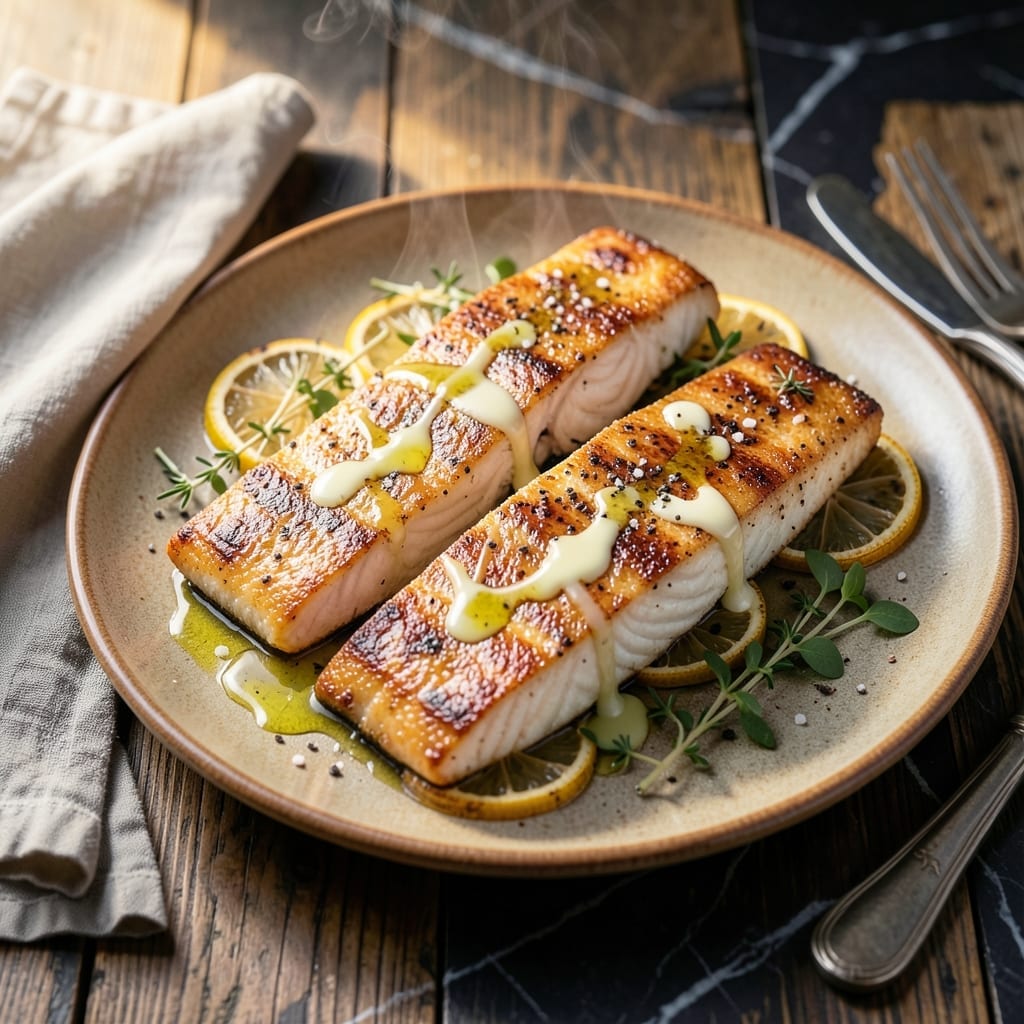
This ling cod preparation brings Pacific Coast flavors to your home kitchen with minimal effort. I developed this method after testing various techniques to highlight the fish’s natural sweetness and delicate texture.
The key is a simple pan-searing process that creates a golden crust while keeping the interior moist and flaky. A buttery finish adds richness that complements without overpowering the mild ling cod.
You’ll achieve restaurant-quality results with just a few ingredients and basic equipment. The technique works consistently, whether you’re cooking for two or a crowd.
Serve with lemon wedges and fresh herbs for a dish that tastes as good as it looks. Here’s how to make it perfectly every time.
Ingredients for Ling Cod
Fresh Pacific cod meets rich, buttery simplicity with just a handful of quality ingredients.
| Ingredient | Amount | Notes |
|---|---|---|
| Ling Cod Fillets 🐟 | 1 ½ lb | Skin-on, boneless, about 1-inch thick |
| Unsalted Butter 🧈 | 4 tbsp | Divided for cooking and finishing |
| Extra-Virgin Olive Oil 🫒 | 2 tbsp | High smoke point preferred |
| All-Purpose Flour 🌾 | ¼ cup | For light dredging |
| Kosher Salt 🧂 | 1 tsp | Diamond Crystal preferred |
| Freshly Ground Black Pepper 🌶️ | ½ tsp | Coarse grind recommended |
| Garlic Cloves 🧄 | 3 cloves | Minced finely |
| Fresh Lemon 🍋 | 1 whole | Cut into wedges for serving |
| Fresh Parsley 🌿 | ¼ cup | Chopped, for garnish |
| Fresh Thyme Sprigs 🌿 | 4 sprigs | Optional for aroma |
| Dry White Wine 🍷 | ¼ cup | Sauvignon Blanc or Pinot Grigio |
| Shallot 🧅 | 1 whole | Minced for sauce |
[recipe_ingredient_scaler]
The ling cod is the star—source skin-on, boneless fillets from a reputable fishmonger or Whole Foods seafood counter. Look for fillets about 1-inch thick for even cooking. The buttery finish requires high-quality unsalted butter; I prefer European-style for its richer flavor profile. Diamond Crystal kosher salt is ideal for precise seasoning. If your fishmonger has fresh-caught ling cod, grab it—freezing degrades the delicate texture slightly.
No white wine? Substitute chicken or vegetable stock with a splash of lemon juice. Fresh herbs are preferred, but dried at one-third the amount works in a pinch. The flour dredge can be swapped for cornstarch for a gluten-free version. For extra depth, add a pinch of smoked paprika to the flour. If using frozen ling cod, thaw it overnight in the fridge—never at room temperature.
Cooked ling cod keeps in the fridge for 2 days max—it’s best served immediately. Store raw fillets on a bed of ice in the coldest part of your fridge for up to 1 day. The butter finish can be prepped ahead; just reheat gently. Fresh herbs wilt quickly, so chop them right before serving.
Why You’ll Love This Recipe
- One Pan Magic: Honestly, I just sear the fillets in butter and oil, dusted with a little flour and salt—no fuss, no complicated steps.
- Buttery Crisp Perfection: That golden crust from the flour and butter with the tender fish inside? I’ll be real: it’s my new favorite way to eat cod.
- Weeknight Hero: I throw this together on busy evenings—(yes, even on a Tuesday night)—and it’s ready before the rice finishes cooking.
- Budget-Friendly Luxury: Ling cod feels fancy, but it’s affordable, and leftovers taste just as good the next day in a sandwich or salad.
Step-by-Step Instructions for Ling Cod
Master the technique for flaky, buttery ling cod with a golden crust and bright pan sauce.
Step 1: Prep and Season the Fillets
Pat the 1.5 lb ling cod fillets completely dry with paper towels—this is non-negotiable for achieving a proper sear. Season both sides evenly with the 1 tsp kosher salt and 0.5 tsp freshly ground black pepper, pressing gently so the seasoning adheres.
Lightly dredge each fillet in the 0.25 cup all-purpose flour, shaking off any excess. The flour creates a delicate crust while protecting the delicate fish during cooking. I always use a shallow dish for dredging to minimize mess and ensure even coverage.
Step 2: Sear the Fillets to Golden Perfection
Heat the 2 tbsp extra-virgin olive oil in a large skillet over medium-high heat until it shimmers but doesn’t smoke. Add the floured fillets skin-side down first, pressing gently with a fish spatula for 10 seconds to prevent curling.
Cook undisturbed for 3-4 minutes until the edges appear opaque and golden brown. Carefully flip and cook for another 2-3 minutes until the fish is just cooked through—the flesh should flake easily when tested with a fork. Transfer the fillets to a warm plate.
Step 3: Build the Aromatic Pan Sauce
Reduce heat to medium and add 2 tbsp unsalted butter to the same skillet. Once melted, add the minced 1 whole shallot and cook for 1-2 minutes until softened but not browned. Stir in the minced 3 cloves garlic cloves and 4 sprigs fresh thyme sprigs, cooking for 30 seconds until fragrant.
Deglaze with the 0.25 cup dry white wine, scraping up any browned bits with a wooden spoon. Simmer for 2-3 minutes until the liquid reduces by half and the sauce begins to emulsify with the butter. The sauce should coat the back of a spoon lightly.
Step 4: Finish and Serve
Remove the skillet from heat and discard the thyme sprigs. Stir in the remaining 2 tbsp unsalted butter until melted and fully incorporated. Taste and adjust seasoning if needed—though the fish should be perfectly seasoned from the initial dredging.
Spoon the sauce over the fillets and garnish with the 0.25 cup fresh parsley. Serve immediately with wedges from the 1 whole fresh lemon for a bright, citrusy finish. The fish should be moist and flaky with a delicate crust, complemented by the rich, aromatic sauce.
Pro Tips For Making Ling Cod
- Pat Fillets Dry: I learned this the hard way—ling cod releases moisture as it cooks, so patting the fillets dry with paper towels first guarantees a crispy crust instead of a steamed mess.
- Heat the Pan First: Crank the skillet to medium-high until it’s almost smoking before adding oil or butter, or you’ll end up with pale, soggy fish instead of that golden sear.
- Skip the Cold Butter: Use room-temperature butter for basting—it melts evenly and coats the fish better than straight-from-the-fridge, which can make the pan temperature drop too fast.
- Rest Before Serving: Give the cod a solid 3-4 minutes off the heat under loose foil—it finishes cooking gently and keeps the juices inside where they belong.
Creative Variations of This Dish
Mediterranean Style
Swap the white wine for ½ cup chopped Kalamata olives and add 1 tsp dried oregano to the pan sauce. I also toss in ½ cup cherry tomatoes halved for freshness. This variation reminds me of summer nights in Nonna’s tiny kitchen, the air thick with garlic and olive oil. 🌿
Asian-Inspired Glaze
Replace the wine with 2 tbsp soy sauce and 1 tbsp honey, adding 1 tsp grated ginger to the butter sauce. The sweet-savory glaze pairs beautifully with ling cod’s mild flavor. Garnish with sliced green onions and sesame seeds.
New England Chowder Style
After searing, transfer fillets to a baking dish and cover with 1 cup warm milk mixed with 2 tbsp butter and 2 tbsp flour. Bake at 375°F for 12-15 minutes until bubbly. Top with crushed Ritz crackers for crunch.
Spicy Cajun Blackened
Swap the flour dredge for 2 tbsp Cajun seasoning (I use Tony Chachere’s from the neighborhood market). Sear in a screaming-hot cast-iron skillet with 1 tbsp olive oil for 2 minutes per side. Serve with lemon and hot sauce. 🔥
Herb-Crusted Variation
Mix ½ cup panko breadcrumbs with 2 tbsp chopped parsley and 1 tbsp lemon zest. Press onto floured fillets before searing. The crust adds texture while keeping the fish moist. I test this often—it’s forgiving if you’re short on time.
Nutrition Facts
Frequently Asked Questions
What’s the best way to tell when it’s done?
The fish should flake easily with a fork and reach an internal temperature of 145°F. Look for opaque flesh throughout with no translucent spots. Overcooking will make it dry, so pull it off just as it reaches temperature.
Can I use a different type of fish?
Yes! Try cod, haddock, or halibut with the same method. Adjust cooking time for thinner fillets—reduce by 1-2 minutes per side. Thicker cuts may need 1-2 minutes extra.
How do I keep the skin crispy?
Pat the fillets very dry before seasoning and use medium-high heat. Press gently with a spatula for 10 seconds when you first add them to the pan to prevent curling.
What if my sauce breaks?
If the butter separates, remove the pan from heat and whisk vigorously. For stubborn cases, add 1 tsp cold water and whisk until smooth. This brings the emulsion back together.

Trained in classic French technique but raised on slow-cooked ribs and spicy rubs, she blends culinary skill with smoke and soul.
- Recipe for Boneless Pork Chops in Cast Iron Skillet: Sear and Baste to Juicy Perfection - October 3, 2026
- Recipe for Boneless Cross Rib Roast: Slow-Roasted Beef with Herb Crust - October 3, 2026
- Hamburgers in Sauce Recipe Crock Pot: Slow-Cooked Savory Delight - October 3, 2026