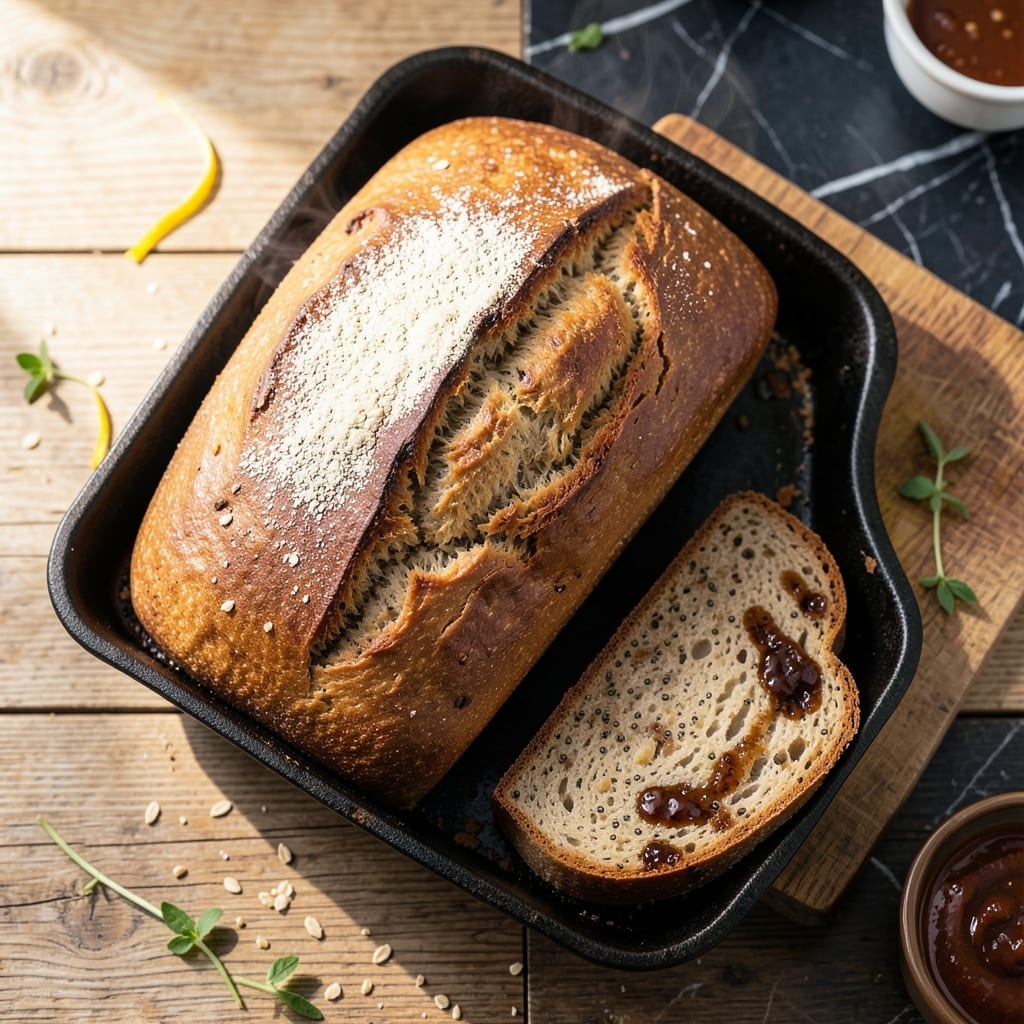
Traditional Irish brown bread holds a special place in my kitchen, adapted here for gluten-free baking without sacrificing its characteristic hearty texture.
This version maintains the rich molasses depth and dense crumb that define authentic Irish brown bread, using carefully selected gluten-free flours.
What emerges from the oven is a golden loaf with the same rustic charm and deep flavor as the original, perfect for pairing with soups or enjoying with butter.
The process stays true to traditional methods, proving gluten-free baking can honor heritage recipes.
Ingredients for Gluten Free Brown Bread Recipe Ireland
Rich molasses and hearty gluten-free flours create this authentic Irish-inspired loaf with deep flavor.
| Ingredient | Amount | Notes |
|---|---|---|
| Gluten-Free Oat Flour 🌾 | 2 cups | Certified gluten-free for safety |
| Almond Flour 🌰 | 1 cup | Finely ground for even texture |
| Tapioca Starch 🌾 | ½ cup | Helps bind the dough |
| Molasses 🍯 | ¼ cup | Unsulphured for pure flavor |
| Baking Soda 🧂 | 1 tsp | For proper rise in bread |
| Salt 🧂 | 1 tsp | Fine sea salt preferred |
| Buttermilk 🥛 | 1 ½ cups | Room temperature for best results |
| Large Egg 🥚 | 1 whole | Helps bind the mixture |
| Unsalted Butter 🧈 | 2 tbsp | Melted for richness |
| Chia Seeds 🌿 | 2 tbsp | Soaked in water 5 minutes |
| Water 💧 | 6 tbsp | For chia seed gel |
| Sunflower Seeds 🌻 | ¼ cup | For crunch and nutrition |
[recipe_ingredient_scaler]
The flours are key here. Bob’s Red Mill is my go-to for certified gluten-free oat flour—check the label to be sure. Almond flour adds moisture and richness, but King Arthur or Anthony’s brands work just as well. For the molasses, Brer Rabbit unsulphured is the gold standard (no bitter aftertaste). Buttermilk can be tricky to find—Whole Foods usually stocks it, or make your own with milk and a splash of vinegar.
No buttermilk? Plain yogurt thinned with milk works in a pinch. Out of molasses? Dark brown sugar dissolved in hot water mimics the depth (use half the amount). Almond flour can be swapped for buckwheat flour if you prefer a nuttier taste. The chia seeds are my secret for that traditional dense crumb—skip the flax here, it doesn’t bind the same way. Egg is optional but helps hold everything together.
This bread actually gets better the next day. Wrap the cooled loaf in a clean towel, then store in a bread box or airtight container for 3-4 days. Freeze slices for up to 3 months—toast straight from frozen. The chia gel can be made ahead and kept in the fridge for 2 days.
Why You’ll Love This Recipe
- One Bowl Wonder: I love that I can mix the oat flour, almond flour, and tapioca starch in a single bowl—no fancy equipment, just a spoon and five minutes.
- Rich & Malty: The molasses gives it that deep, caramelized sweetness that makes every slice taste like a hug from an Irish bakery.
- Breakfast to Tea Time: Honestly, it’s just as good toasted with butter in the morning as it is served with soup for dinner.
- Keeps Like a Champ: This loaf stays moist for days, so I can bake one on Sunday and still enjoy it fresh by Wednesday.
Step-by-Step Instructions for Gluten Free Brown Bread
This traditional method delivers that authentic Irish texture with deep molasses flavor.
Step 1: Prepare the Chia Seed Gel
Combine the 2 tbsp Chia Seeds with the 6 tbsp Water in a small bowl. I always use a fork to stir it vigorously at first, then let it sit for 5 minutes to thicken into a gel-like consistency.
This chia gel replaces gluten in binding the bread while adding moisture and structure. You’ll know it’s ready when the mixture looks like a thick pudding and the seeds have absorbed most of the liquid. Don’t skip this step—it’s crucial for the bread’s texture.
Step 2: Mix the Dry Ingredients
In a large bowl, whisk together the 2 cups Gluten-Free Oat Flour, 1 cup Almond Flour, 0.5 cup Tapioca Starch, 1 tsp Baking Soda, and 1 tsp Salt. I like to sift the baking soda through my fingers as I add it to prevent clumping.
The oat flour provides the base for that traditional brown bread flavor, while the almond flour and tapioca starch work together to create the perfect crumb. The mixture should look evenly combined with no visible clumps of baking soda.
Step 3: Combine Wet and Dry Components
In another bowl, whisk the 1.5 cups Buttermilk, 0.25 cup Molasses, 1 whole Large Egg, and 2 tbsp Unsalted Butter (melted and cooled) until fully incorporated. The molasses will give the mixture a deep, rich color and that characteristic Irish brown bread flavor.
Pour the wet ingredients into the dry ingredients and add the prepared chia gel. Stir with a wooden spoon just until combined—don’t overmix. The batter will be thick but pourable. Fold in the 0.25 cup Sunflower Seeds last, distributing them evenly for that satisfying crunch in every bite.
Step 4: Bake to Golden Perfection
Pour the batter into a greased 9×5-inch loaf pan and smooth the top with a spatula. Bake in a preheated 375°F oven for 50-60 minutes, or until the top is deep golden brown and a toothpick inserted in the center comes out clean.
I start checking at 50 minutes because ovens vary. The bread should pull slightly away from the sides of the pan and feel firm to the touch. If the top browns too quickly, tent the pan with foil for the remaining baking time.
Step 5: Cool Completely Before Slicing
Let the bread cool in the pan for 10 minutes, then transfer it to a wire rack to cool completely. This cooling period is essential—it allows the bread to set properly and prevents it from becoming gummy when sliced.
Once completely cool, slice with a serrated knife for clean cuts. The bread should have a moist, dense crumb with a slightly crisp crust. The sunflower seeds will provide a delightful contrast in texture, and the molasses will give each slice that authentic Irish depth of flavor.
Pro Tips For Making Gluten Free Brown Bread Recipe Ireland
- Preheat the Oven: I learned this the hard way—crank your oven to 180°C (350°F) at least 15 minutes before baking. Gluten-free breads like this one need consistent heat to rise properly, and a cold start leaves you with a dense loaf.
- Warm the Molasses: Sounds weird, but it works: gently warm the molasses for 10-15 seconds in the microwave before mixing. It blends smoother into the dry ingredients and prevents those stubborn sticky clumps.
- Skip Overmixing: After burning three batches, I finally figured out that stirring just until the wet and dry ingredients meet is enough. Overmixing develops grittiness in gluten-free flours, especially with tapioca starch.
- Add a Teaspoon of Vinegar: My grandmother swore by this, and she was right: a teaspoon of apple cider vinegar with the wet ingredients boosts the baking soda’s lift. It’s the thing that matters most for getting that classic Irish brown bread height without gluten.
Regional Styles of This Recipe
Dublin Style
In Dublin, brown bread often includes whole wheat flour and wheat bran for extra texture. I replicate this with gluten-free oat flour and extra sunflower seeds for that signature nuttiness. The molasses remains the star, giving that deep, almost bitter sweetness Dubliners love. 🔥
Cork Variation
Cork bakers traditionally add treacle instead of molasses, creating a lighter sweetness. I use 1 tbsp blackstrap molasses plus 2 tbsp golden syrup for a similar effect. The texture stays dense but gains a subtle caramel note that pairs beautifully with local cheeses.
Galway Coastal
Galway’s version often incorporates sea salt and oats for a heartier bite. I boost the chia seeds to 3 tbsp and add 1 tsp flaky sea salt on top before baking. This mimics the coastal influence and adds a lovely crunch.
Ulster Twist
Northern Irish bakers sometimes use soda bread techniques. I replace ½ cup buttermilk with plain yogurt for tang. The result is slightly denser but with that familiar soda bread texture that’s beloved across Ulster.
West Coast Irish
In counties like Clare, brown bread often includes honey or brown sugar. I swap 2 tbsp molasses for 2 tbsp local honey when I can find it at farmers markets. This adds a floral note that’s distinctly West Coast.
Nutrition Facts
Frequently Asked Questions
Can I use regular oats instead of gluten-free oat flour?
No, regular oats are often cross-contaminated with gluten. Always use certified gluten-free oat flour to ensure safety. You can make your own by grinding gluten-free oats in a blender until fine.
Why does this recipe include chia seeds?
Chia seeds replace gluten as a binder while adding moisture and structure. They create that authentic dense crumb typical of Irish brown bread. Don’t skip this step—it’s essential for texture.
How do I know when the bread is fully baked?
Check at 50 minutes—it’s done when the top is deep golden brown and a toothpick comes out clean. The loaf should pull slightly from the pan edges and feel firm to the touch.
Can I substitute honey for molasses?
Yes, but the flavor will be milder. Use the same amount of dark honey for a similar depth, though molasses gives that traditional Irish richness. Adjust sweetness to taste.

Trained in classic French technique but raised on slow-cooked ribs and spicy rubs, she blends culinary skill with smoke and soul.
- Recipe for Boneless Pork Chops in Cast Iron Skillet: Sear and Baste to Juicy Perfection - October 3, 2026
- Recipe for Boneless Cross Rib Roast: Slow-Roasted Beef with Herb Crust - October 3, 2026
- Hamburgers in Sauce Recipe Crock Pot: Slow-Cooked Savory Delight - October 3, 2026