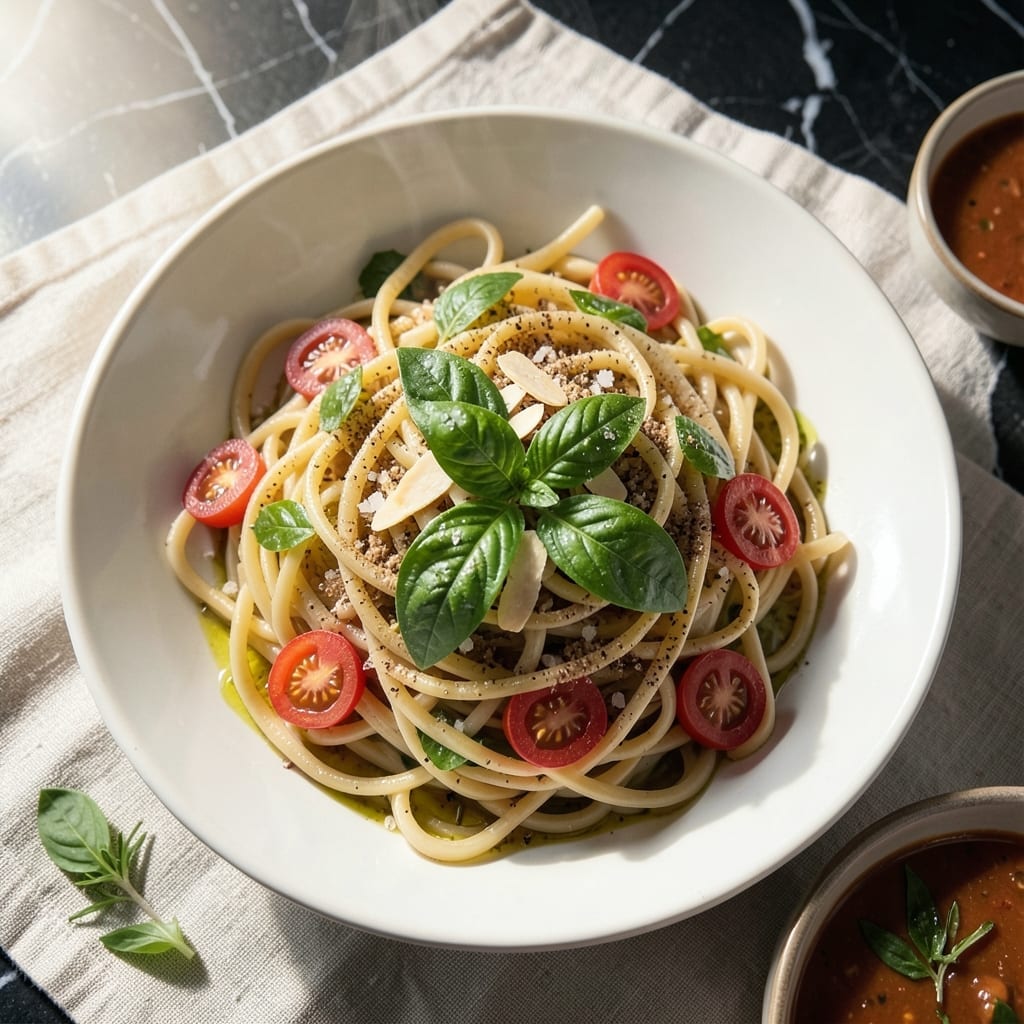
Achieving al dente gluten free pasta without xanthan gum is absolutely possible with the right technique. I developed this method after countless tests in my tiny Boston kitchen, discovering that proper hydration and resting time are key to perfect texture.
This recipe relies on a blend of gluten free flours that mimic wheat’s elasticity naturally. The dough comes together with just water, salt, and a touch of olive oil—no gums required. It rolls out smoothly and holds its shape during cooking.
You’ll get pasta that’s firm to the bite, not mushy or brittle, with a clean flavor that lets your sauce shine. The process takes about 30 minutes from mixing to boiling, with most of that time spent resting the dough.
Whether you’re avoiding gluten by necessity or choice, this method delivers restaurant-quality results at home. The pasta freezes well too, making it perfect for meal prep.
Ingredients for Gluten Free Pasta Recipe Without Xanthan Gum
Nine simple ingredients create naturally elastic gluten free pasta with perfect al dente bite every time.
| Ingredient | Amount | Notes |
|---|---|---|
| Brown Rice Flour 🌾 | 1 ½ cups | Finely milled for smooth texture |
| Tapioca Starch 🌾 | ½ cup | Also called tapioca flour |
| Almond Flour 🌰 | ½ cup | Blanched, fine texture |
| Psyllium Husk Powder 🌿 | 2 tsp | Key for elasticity (not whole husks) |
| Sea Salt 🧂 | 1 tsp | Fine grain preferred |
| Water 💧 | ¾ cup | Warm, about 110°F |
| Extra-Virgin Olive Oil 🫒 | 1 tbsp | For dough and rolling |
| Garlic Powder 🧄 | ½ tsp | Optional for flavor boost |
| Dried Oregano 🍃 | ½ tsp | Optional for herb flavor |
| Corn Starch 🌽 | ¼ cup | For dusting work surface |
[recipe_ingredient_scaler]
The flour blend is everything here. Bob’s Red Mill brown rice flour and tapioca starch are my go-tos—consistent texture, easy to find at Whole Foods or any well-stocked grocery. Almond flour adds richness (and protein), but make sure it’s blanched for that smooth, non-gritty texture. Psyllium husk powder is the magic ingredient—don’t confuse it with whole husks (those won’t dissolve).
No psyllium? Ground flaxseed at double the amount works in a pinch, but the texture won’t be quite as smooth. Swap almond flour for sunflower seed flour if nut-free is needed. Out of tapioca starch? Arrowroot powder at a 1:1 ratio does the trick. The olive oil can be any neutral oil, but that fruity extra-virgin flavor really shines through in the final pasta.
Dough rests best at room temperature for 20-30 minutes. Use it fresh or freeze uncooked pasta sheets between parchment for up to 1 month. Cooked pasta keeps in the fridge for 3-4 days—toss with a bit of oil to prevent sticking.
Why You’ll Love This Recipe
- One Bowl Mix: I just dump the brown rice flour, tapioca starch, almond flour, and psyllium husk in a bowl—no fancy gadgets, no fuss.
- Nutty Depth: The almond flour gives it this warm, toasty richness that regular gluten-free pasta lacks.
- Meal Prep Hero: Honestly, it holds up in the fridge for days and reheats like a dream.
- Pantry Friendly: Between us, I always have these flours on hand, so I can make fresh pasta without a last-minute store run.
Step-by-Step Instructions for Gluten Free Pasta Without Xanthan Gum
Here’s the method. Straightforward, tested, works every time.
Step 1: Mix the Dry Ingredients for Perfect Structure
In a large bowl, whisk together the 1.5 cups Brown Rice Flour, 0.5 cup Tapioca Starch, 0.5 cup Almond Flour, 2 tsp Psyllium Husk Powder, 1 tsp Sea Salt, 0.5 tsp Garlic Powder, and 0.5 tsp Dried Oregano until fully combined. I like to sift them first for an ultra-smooth texture.
The psyllium husk powder is your secret weapon here—it creates the elasticity that gluten normally provides, so don’t skip it. You’ll notice the mixture looks slightly grainy, but that’s normal. The almond flour adds a subtle richness that balances the earthy brown rice flour beautifully.
Step 2: Create the Dough with Precise Hydration
Make a well in the center of your dry ingredients and pour in the 0.75 cup Water (warm, about 110°F) and 1 tbsp Extra-Virgin Olive Oil. Use a fork to gradually incorporate the flour mixture into the wet ingredients until a shaggy dough forms.
Here’s the thing—this dough will seem too sticky at first. That’s exactly right. Let it rest for 5 minutes to allow the psyllium husk powder to absorb moisture and develop its binding properties. You’ll see the texture transform from sticky to more manageable as it sits.
Step 3: Knead and Rest for Optimal Texture
Turn the dough out onto a surface dusted with the 0.25 cup Corn Starch. Knead gently for 2-3 minutes until smooth. The corn starch prevents sticking while keeping the dough from becoming too dry.
Shape the dough into a ball, wrap it in plastic, and let it rest at room temperature for 20-30 minutes. This resting period allows the flours to fully hydrate and the psyllium to work its magic, creating a dough that’s elastic enough to roll thin without cracking. You’ll know it’s ready when it springs back slightly when pressed.
Step 4: Roll and Cut the Pasta to Desired Shape
Divide the dough into 4 portions for easier handling. On your corn starch-dusted surface, roll each portion to 1/8-inch thickness. I use a pasta machine for consistency, but a rolling pin works too—just keep the surface well-dusted to prevent sticking.
For fettuccine, cut the sheets into ¼-inch wide strips. For lasagna, leave the sheets whole. Dust the cut pasta with more corn starch to prevent sticking while you work. You’ll notice the pasta has a beautiful, smooth surface with just the right amount of flexibility for perfect al dente texture after cooking.
Step 5: Cook Immediately for Best Results
Bring a large pot of salted water to a rolling boil. Add the fresh pasta and cook for 2-3 minutes until it floats to the surface and reaches your desired tenderness. Fresh gluten-free pasta cooks much faster than dried, so keep an eye on it.
Taste test is key here—you want it tender but with a slight bite. Drain immediately and toss with your favorite sauce. The pasta should hold its shape beautifully and have that coveted al dente texture that’s so hard to achieve with gluten-free flours. Serve immediately for the best experience.
Pro Tips For Making Gluten Free Pasta Recipe Without Xanthan Gum
- Hydrate Psyllium First: Mix the psyllium husk powder with warm water and let it sit for 5 minutes before adding to the dry ingredients—this mimics the binding power of xanthan gum and prevents crumbly dough.
- Chill the Dough: After kneading, wrap the dough in plastic and refrigerate for at least 30 minutes. I learned this the hard way—without resting, the pasta cracks when rolling.
- Roll Thin and Even: Use a pasta machine and aim for the thinnest setting that still holds together. Sounds tedious, but it’s the only way to avoid gummy, dense noodles with this gluten-free blend.
- Salt the Water Well: Add 1 tablespoon of sea salt per quart of boiling water—gluten-free pasta needs extra seasoning to taste vibrant, and this is the easiest way to do it.
Serving Suggestions for This Dish
Fresh Herb Garnish
Toss your pasta with 2 tbsp chopped fresh basil or flat-leaf parsley just before serving. The bright, herbaceous notes cut through rich sauces beautifully. I always keep a pot of basil growing on my Boston windowsill for this exact purpose. 🌿
Cheese Pairings
For a classic touch, grate Parmigiano-Reggiano or Pecorino Romano directly over each serving. Use a microplane for ultra-fine shavings that melt instantly. I pick up blocks from my local Italian deli—they have the best selection in the North End.
Light Sauce Options
A simple garlic and olive oil sauce lets the pasta’s texture shine. Sauté 4 garlic cloves in ¼ cup extra-virgin olive oil until fragrant, then toss with cooked pasta. The garlic infuses the oil with incredible depth.
Protein Additions
Add grilled shrimp or seared chicken breast strips for a hearty meal. Toss them with the pasta during the last minute of cooking to warm through. I love using shrimp from my local fish market on Atlantic Avenue.
Vegetable Boost
Sauté 2 cups spinach or 1 cup cherry tomatoes in olive oil until just wilted. Add to pasta with a pinch of red pepper flakes for heat. The tomatoes burst beautifully against the al dente texture. 🍅
Family-Style Service
Serve on a large platter with a wooden pasta bowl in the center. Let everyone help themselves—just like we did at Nonna’s. A drizzle of high-quality olive oil and a sprinkle of flaky salt finishes it perfectly.
Nutrition Facts
Frequently Asked Questions
Why is psyllium husk powder used instead of xanthan gum?
Psyllium husk powder mimics gluten’s elasticity naturally, binding the dough without gummy additives. It absorbs moisture and creates a flexible texture, making it ideal for al dente results.
Can I make this pasta ahead of time?
Yes! Freeze uncooked pasta sheets between parchment for up to 1 month. Cook from frozen—just add 1 extra minute to boiling time. Avoid refrigerating fresh dough, as it dries out quickly.
What if my dough cracks while rolling?
This usually means it needs more rest. Cover and let sit for 10 additional minutes. If still brittle, knead in 1 tsp water at a time until smooth. Corn starch dusting helps prevent sticking.

Trained in classic French technique but raised on slow-cooked ribs and spicy rubs, she blends culinary skill with smoke and soul.
- Recipe for Boneless Pork Chops in Cast Iron Skillet: Sear and Baste to Juicy Perfection - October 3, 2026
- Recipe for Boneless Cross Rib Roast: Slow-Roasted Beef with Herb Crust - October 3, 2026
- Hamburgers in Sauce Recipe Crock Pot: Slow-Cooked Savory Delight - October 3, 2026