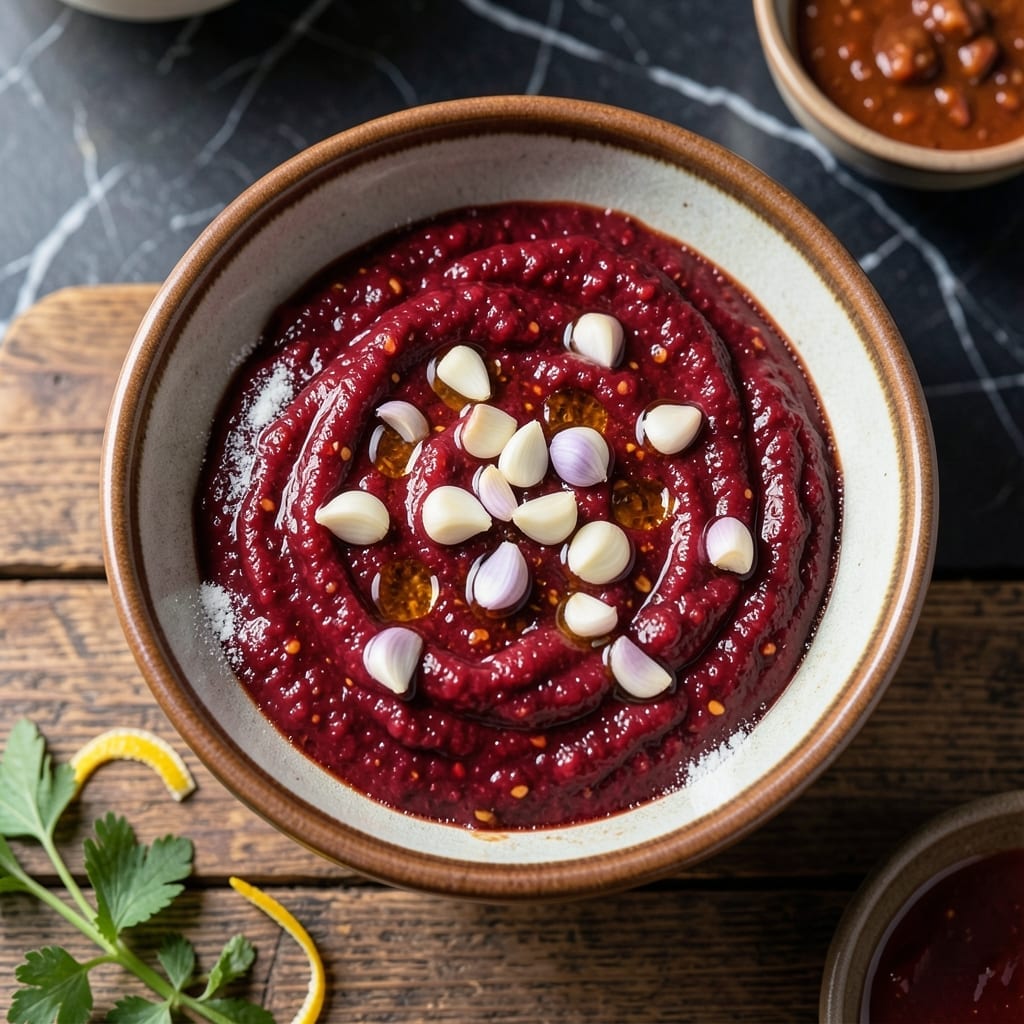
This fermented chili paste brings umami depth to any dish with its complex, spicy-sweet profile. I developed this version after years of experimenting with fermentation techniques to capture authentic Korean flavors at home.
Use it as a base for marinades, soups, or stir-fries. The fermentation process creates a rich, tangy paste that improves with age, lasting months when stored properly.
Ingredients for Gochujang
Nine ingredients transform into this complex, fermented Korean chili paste with deep umami character.
| Ingredient | Amount | Notes |
|---|---|---|
| Gochugaru (Korean Red Pepper Flakes) 🌶️ | 1 cup | Fine or coarse, adjust for heat |
| Glutinous Rice Flour 🌾 | ½ cup | Also called sweet rice flour |
| Fermented Soybean Powder (Meju) 🫘 | ½ cup | Or substitute Korean soybean paste |
| Barley Malt Syrup 🍯 | ½ cup | Or brown rice syrup |
| Kosher Salt 🧂 | 2 tbsp | Diamond Crystal preferred |
| Garlic Cloves 🧄 | 8 cloves | Minced to paste consistency |
| Fresh Ginger 🌿 | 2 tbsp | Finely grated, peeled |
| Onion Powder 🧅 | 2 tbsp | For depth of flavor |
| Sugar 🍚 | 2 tbsp | Organic cane preferred |
[recipe_ingredient_scaler]
The gochugaru is non-negotiable—Korean markets or H Mart carry authentic brands like Sempio. Look for vibrant red color and fresh aroma; dull flakes mean stale product. Glutinous rice flour (not regular rice flour) provides the sticky base that binds everything. Bob’s Red Mill makes a reliable version if you can’t find it at an Asian grocery. Fermented soybean powder is traditional, but Korean soybean paste (doenjang) works in a pinch.
No barley malt syrup? Brown rice syrup or agave at a 1:1 ratio maintains the sticky sweetness. If you skip the meju, miso paste (white or red) adds similar umami at half the amount. The garlic and ginger must be fresh—powdered versions lack the bright complexity. For a smoother paste, blend all ingredients thoroughly before fermenting.
This paste improves with age. Store in a clean, airtight jar at room temperature for 1-2 weeks during active fermentation, then refrigerate for up to 1 year. The flavor deepens over months. Always use a clean spoon to prevent contamination.
Why You’ll Love This Recipe
- Five Ingredients Only: I just mix gochugaru, rice flour, meju, barley syrup, and salt—no chopping, no fuss.
- Deep Umami Heat: The meju and gochugaru blend into this rich, fermented spice that’s sweet, funky, and just hot enough.
- Marinade to Sauce: Honestly, I slather it on ribs one night, then stir it into stew the next—endlessly adaptable.
- Stays Fresh: One batch lasts me months in the fridge, and the flavor only gets better with time.
Step-by-Step Instructions for Gochujang
This traditional method ensures proper fermentation and balanced flavors in your paste.
Step 1: Create the Starch Base
In a large mixing bowl, combine the 1 cup Gochugaru (Korean Red Pepper Flakes) with the 0.5 cup Glutinous Rice Flour. I use a whisk to break up any clumps in the flour, ensuring it distributes evenly through the chili flakes.
This step creates the foundation of your paste. The glutinous rice flour will thicken during fermentation and help bind all the ingredients together while providing a subtle sweetness that balances the heat.
Step 2: Incorporate the Fermented Elements
Add the 0.5 cup Fermented Soybean Powder (Meju) to the bowl. This ingredient is crucial for developing the deep umami flavor that characterizes authentic gochujang. Stir thoroughly to combine with the chili and flour mixture.
The meju should be fully dispersed—you shouldn’t see any dry pockets. If your meju is particularly lumpy, press it through a fine-mesh sieve first. This ensures a smooth texture in the final paste.
Step 3: Build the Flavor Profile
Measure in the 2 tbsp Kosher Salt, 2 tbsp Sugar, 2 tbsp Onion Powder, 8 cloves Garlic Cloves (minced to a paste), and 2 tbsp Fresh Ginger (finely grated). Each of these contributes to the complex flavor: salt for balance, sugar for fermentation, onion powder for depth, garlic for pungency, and ginger for warmth.
Mix everything until you have a uniform, dry mixture. The garlic and ginger should be so fine that they almost disappear into the powder, leaving only their aromatic essence.
Step 4: Achieve the Perfect Consistency
Slowly pour in the 0.5 cup Barley Malt Syrup while continuously stirring. This sweetener not only adds flavor but also provides the necessary moisture to kickstart fermentation. The mixture should transform from a dry powder to a thick, cohesive paste.
You’ll know it’s ready when it holds together when pressed but isn’t overly sticky. If it seems too dry, add the syrup in 1 tablespoon increments until you reach the right texture. The paste should be similar to a thick tomato paste in consistency.
Step 5: Ferment for Optimal Flavor
Transfer the paste to a clean, non-reactive container (glass jars work perfectly). Press down to eliminate air pockets, then cover with a lid. Let it ferment at room temperature for 24-48 hours, stirring once daily to prevent mold growth on the surface.
After the initial fermentation, move it to the refrigerator. The paste will continue to develop depth over time—most traditional recipes ferment for at least 3 months for full complexity. The color will deepen and the flavors will meld into the rich, spicy-sweet paste you expect from gochujang.
Pro Tips For Making Gochujang
- Toast the Meju: Dry-toast the fermented soybean powder over low heat for 3-4 minutes until fragrant—I learned this the hard way after my first batch tasted raw and chalky.
- Bloom the Gochugaru: Mix the gochugaru with warm (not hot) water first and let it sit for 10 minutes to release its full depth before combining with other ingredients.
- Skip Tap Water: Use filtered or bottled water for the rice flour slurry to avoid chlorine interfering with fermentation.
- Use Fine Gochugaru: Grind coarse gochugaru into a finer powder with a spice grinder—this makes a real difference in achieving that smooth, paste-like texture without grit.
Best Sauces and Condiments for This Recipe
Classic Pairings
I love stirring 2 tbsp of this paste into 1 cup mayonnaise for a spicy aioli that elevates burgers or fries. The creamy base tames the heat while highlighting the deep umami. Try it on fried chicken sandwiches—it’s a game-changer. 🌶️
Marinade Base
Combine ¼ cup gochujang with 2 tbsp soy sauce, 1 tbsp sesame oil, and 1 tbsp honey for a marinade that transforms chicken or tofu. Let it sit for at least 4 hours—overnight for maximum flavor penetration.
Soup Enhancer
Add 1-2 tbsp to a pot of hot chicken or vegetable broth for instant Korean-inspired soup. I often drop in soft tofu, mushrooms, and scallions. The paste dissolves beautifully, creating a rich, spicy broth in minutes.
Dipping Sauce
Thin it with 1 tbsp rice vinegar and 1 tsp toasted sesame seeds for a quick dipping sauce. Perfect for dumplings, spring rolls, or even as a salad dressing base. Adjust sweetness with a touch of honey if needed.
Stir-Fry Boost
Toss 1 tbsp gochujang with 1 lb cooked noodles, 1 cup stir-fried veggies, and your choice of protein. The paste clings to ingredients, coating everything in its complex, spicy-sweet flavor. 💫
Grilled Glaze
Mix 3 tbsp gochujang with 1 tbsp maple syrup and brush onto ribs or wings during the last 5 minutes of grilling. The sugars caramelize, creating a sticky, glossy finish with a smoky-sweet kick.
Nutrition Facts
Frequently Asked Questions
Can I make this without meju powder?
Yes! Substitute ¼ cup miso paste for the meju. White miso gives milder umami while red miso adds deeper flavor. The fermentation will still develop beautifully.
How long does homemade gochujang last?
Stored in an airtight container in the fridge, it keeps for up to 1 year. The flavor improves with age, becoming richer and more complex over time.
My paste is too thick. How do I fix it?
Add warm water 1 tbsp at a time until reaching your desired consistency. For immediate use, a splash of rice vinegar thins it while adding tang.
Is this recipe gluten-free?
Yes, if you use certified gluten-free meju or miso. Check all labels, especially barley malt syrup, as some brands contain gluten.

Trained in classic French technique but raised on slow-cooked ribs and spicy rubs, she blends culinary skill with smoke and soul.
- Recipe for Boneless Pork Chops in Cast Iron Skillet: Sear and Baste to Juicy Perfection - October 3, 2026
- Recipe for Boneless Cross Rib Roast: Slow-Roasted Beef with Herb Crust - October 3, 2026
- Hamburgers in Sauce Recipe Crock Pot: Slow-Cooked Savory Delight - October 3, 2026