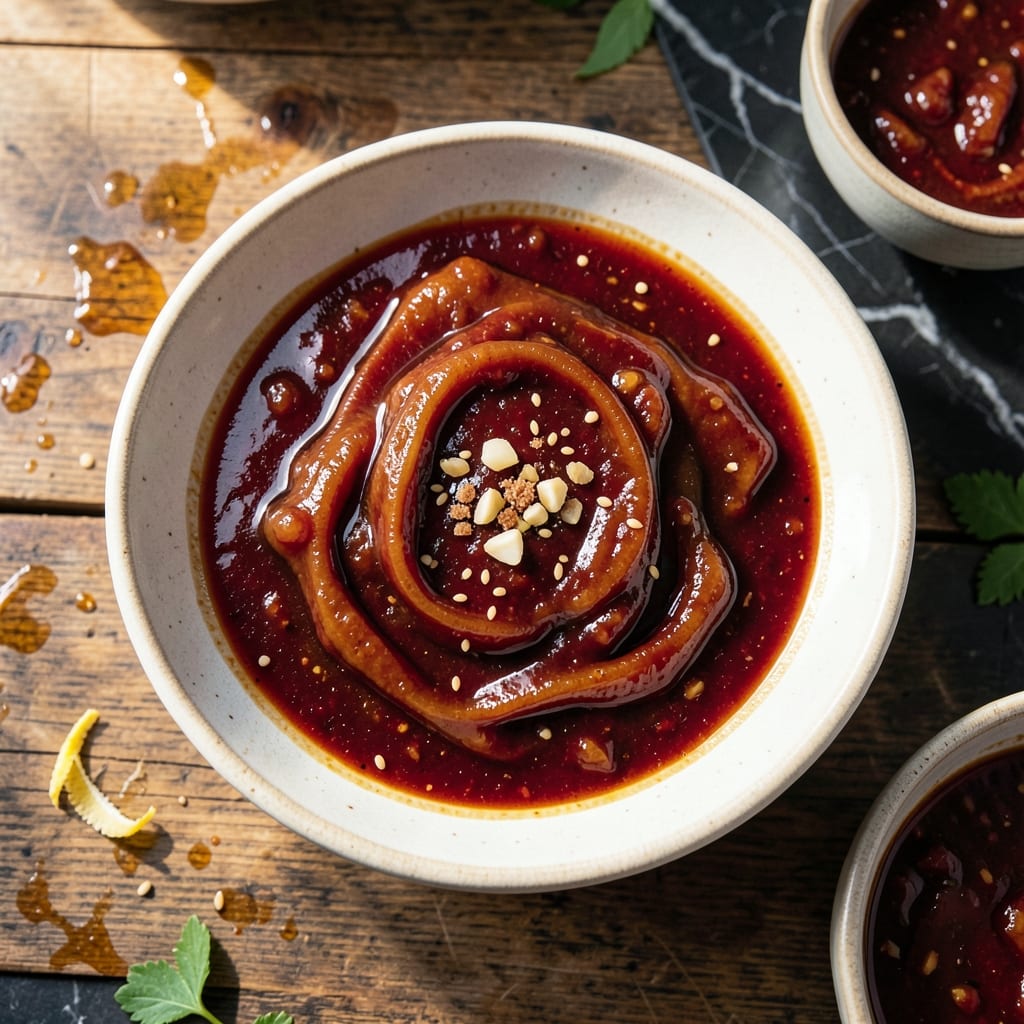
This Korean stir fry sauce delivers the perfect balance of heat, sweetness, and umami depth that transforms any dish. After years of tweaking ratios, I’ve landed on a version that captures authentic flavors without overwhelming complexity.
The foundation is gochujang, the fermented chili paste that gives this sauce its signature spicy-sweet profile. Combined with soy sauce, honey, and garlic, it creates a versatile base that works with chicken, beef, tofu, or vegetables.
What makes this sauce special is its ability to caramelize slightly when cooked, coating ingredients in a glossy, flavorful glaze. The aroma alone will draw everyone to the kitchen.
Make a double batch and store it for up to a week—this sauce only gets better as the flavors meld.
Ingredients for Gochujang Stir Fry Sauce
Nine ingredients for a complex, balanced Korean-inspired stir fry sauce everyone will love.
| Ingredient | Amount | Notes |
|---|---|---|
| Gochujang 🌶️ | ½ cup | Korean fermented chili paste |
| Soy Sauce 🫒 | ⅓ cup | Low-sodium preferred |
| Honey 🍯 | 3 tbsp | Or sub maple syrup |
| Garlic Cloves 🧄 | 4 cloves | Minced or grated |
| Rice Vinegar 🍚 | 2 tbsp | For brightness |
| Sesame Oil 🫒 | 1 tbsp | Toasted for aroma |
| Ginger Root 🌿 | 1 tbsp | Freshly grated |
| Brown Sugar 🍚 | 2 tbsp | Light or dark |
| Sesame Seeds 🌰 | 1 tsp | Toasted for garnish |
[recipe_ingredient_scaler]
The gochujang is non-negotiable—look for Sempio or Chung Jung One brands at H Mart or the Asian aisle of larger supermarkets. It should be thick, deep red, and smell funky-sweet. Fresh ginger and garlic make a huge difference (the jarred stuff works in a pinch). For soy sauce, Kikkoman low-sodium keeps the salt in check without sacrificing depth.
No gochujang? Miso plus sriracha (2 tbsp miso + 1 tbsp sriracha) gets you close but won’t be the same. Swap honey for maple syrup or agave if needed—just avoid artificial pancake syrup. Rice vinegar can be apple cider vinegar in equal amounts. The sesame oil is key for that nutty aroma, but if you’re out, a pinch of toasted sesame seeds in hot oil works.
This keeps 1 week in the fridge in a sealed jar. The flavors deepen after a day, so make it ahead if you can. Freezes for 3 months too—portion into ice cube trays for easy single servings. Stir before using as ingredients may settle.
Why You’ll Love This Recipe
- 5-Minute Mix: I just dump everything in one bowl—gochujang, soy, honey, garlic, vinegar—and stir. No cooking required.
- Sweet & Spicy Kick: The honey balances the gochujang’s heat perfectly, while the garlic and vinegar add this bright, tangy depth I can’t get enough of.
- Endless Meal Prep: Toss it with chicken, tofu, or veggies—this sauce makes everything taste intentional. Honestly, I batch it weekly for lunches.
- Pantry Hero: All five ingredients are shelf-stable staples. I’ll be real: it’s saved me from more than one “nothing in the fridge” crisis.
Step-by-Step Instructions for Gochujang Stir Fry Sauce
Master the technique and you’ll create a perfectly balanced sauce with depth and complexity every time.
Step 1: Combine the Base Ingredients
In a medium bowl, whisk together the 0.5 cup Gochujang and 0.33 cup Soy Sauce until smooth. The gochujang is thick and sticky, so use a sturdy whisk or fork to break up any lumps. This forms the rich, umami-packed foundation of your sauce.
I always start with these two ingredients first—they create a paste that makes it easier to incorporate the remaining components. You’ll notice the color deepen as the gochujang and soy sauce blend together. This step ensures even distribution of flavors throughout the sauce.
Step 2: Add Sweet and Tangy Elements
Stir in the 3 tbsp Honey, 2 tbsp Brown Sugar, and 2 tbsp Rice Vinegar. The honey and brown sugar add layers of sweetness that balance the heat from the gochujang, while the rice vinegar introduces a bright, tangy note that lifts the entire sauce.
Whisk vigorously until the honey and brown sugar fully dissolve into the mixture. You should have a glossy, slightly thick liquid at this stage. Taste it—you’ll notice the complexity starting to build, with sweet, spicy, and salty elements all present.
Step 3: Incorporate Aromatic Ingredients
Add the 4 cloves Garlic Cloves (minced or grated) and 1 tbsp Ginger Root (freshly grated) to the sauce. These aromatics add a pungent, fresh depth that complements the fermented richness of the gochujang. Stir well to distribute them evenly.
The garlic and ginger will release their fragrant oils into the sauce, creating a more dynamic flavor profile. I prefer freshly grated ginger for its vibrant, sharp quality, but finely minced works too. The sauce should now have a strong, inviting aroma that signals its depth of flavor.
Step 4: Finish with Sesame Oil and Check Consistency
Drizzle in the 1 tbsp Sesame Oil and whisk to incorporate. The sesame oil adds a nutty, toasted richness that rounds out the sauce beautifully. At this point, the sauce should be smooth, glossy, and slightly thick, coating the back of a spoon.
If the sauce seems too thick, you can thin it with a splash of water, but I find this ratio perfect for clinging to stir-fried vegetables and proteins. Taste and adjust the balance if needed—though with these proportions, you should have a harmonious blend of spicy, sweet, tangy, and umami flavors.
Step 5: Garnish and Use Immediately
Sprinkle the 1 tsp Sesame Seeds over the sauce just before using. The sesame seeds add a subtle crunch and visual appeal, enhancing both texture and presentation. Stir them in lightly or leave them on top for garnish.
This sauce is best used fresh, while the aromatics are at their peak. It pairs exceptionally well with beef, chicken, tofu, or vegetables. The flavors will meld further as it sits, but for the brightest taste, use it within a few hours of making.
Pro Tips For Making Gochujang Stir Fry Sauce
- Bloom the Gochujang: Cook the gochujang in a dry pan for 30 seconds before adding liquids—I learned this the hard way after my first few sauces tasted raw and harsh.
- Mince Garlic Fine: Smash and mince the garlic to a near-paste, about 1/8-inch pieces or smaller, so it melts into the sauce instead of leaving chunky bits that burn.
- Skip Cold Honey: Warm the honey for 10 seconds in the microwave first, or it’ll seize up when it hits the cold vinegar and soy sauce, making a clumpy mess.
- Taste Before Salting: Soy sauce and gochujang already bring plenty of salt, so taste the sauce before adding more—my grandmother swore by this, and she was right.
Storing and Reheating This Dish
Refrigerator Storage
Transfer your sauce to a clean airtight glass jar once completely cooled. I use 8-ounce mason jars for perfect portioning. It keeps beautifully in the fridge at 40°F or below for up to 7 days. ❄️
Flavor Maturation
The flavors deepen and harmonize after 24-48 hours in the fridge. I often make it a day ahead for maximum depth. Stir before each use as the thicker ingredients may settle at the bottom.
Freezing Instructions
Portion into ice cube trays for easy single-serving use. Once frozen solid, transfer cubes to a freezer-safe bag where they’ll keep for 3 months without quality loss. Leave ½ inch headspace for expansion.
Thawing Methods
For quick use, microwave frozen cubes on 50% power in 30-second intervals. Alternatively, place in the fridge overnight. The sauce maintains its vibrant color and complex flavor profile through freezing.
Reheating for Cooking
When using stored sauce for stir-frying, add it directly to your hot pan. The residual heat will warm it through in 1-2 minutes. If too thick, thin with 1-2 tbsp water before adding to your dish.
Storage Tip
Always use a clean, dry spoon when scooping to prevent contamination. I label my jars with the date to track freshness. The vibrant red color fades slightly over time, but the flavor remains bold. 💡
Nutrition Facts
Frequently Asked Questions
Can I make this sauce less spicy?
Yes! Reduce the gochujang to 1/4 cup and add 2 tbsp tomato paste for depth without heat. You can also balance with extra 1 tbsp honey or 1 tbsp brown sugar.
What’s the best way to use this sauce?
Toss it with hot cooked noodles, vegetables, or proteins at the end of stir-frying. The heat helps the sauce cling and caramelize slightly. It also works as a marinade for 30 minutes to 2 hours.
Can I substitute maple syrup for honey?
Use an equal amount of maple syrup for a similar sweetness. Agave nectar works too, but avoid artificial syrups—they can add an off-flavor.
Why did my sauce separate in the fridge?
This is normal! The thicker ingredients settle. Just stir vigorously before using. If it’s too thick, thin with 1-2 tbsp warm water to restore the perfect consistency.

Trained in classic French technique but raised on slow-cooked ribs and spicy rubs, she blends culinary skill with smoke and soul.
- Recipe for Boneless Pork Chops in Cast Iron Skillet: Sear and Baste to Juicy Perfection - October 3, 2026
- Recipe for Boneless Cross Rib Roast: Slow-Roasted Beef with Herb Crust - October 3, 2026
- Hamburgers in Sauce Recipe Crock Pot: Slow-Cooked Savory Delight - October 3, 2026