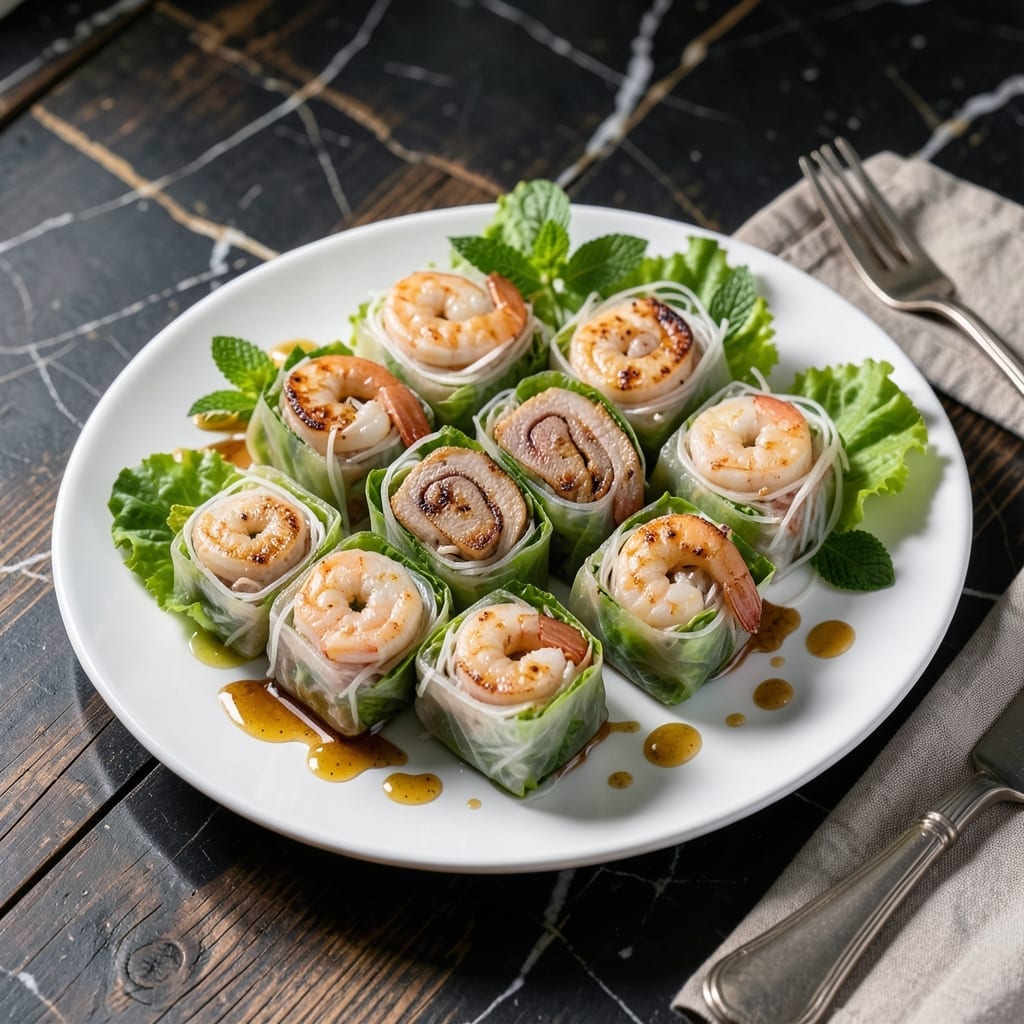
Vietnamese fresh spring rolls combine delicate rice paper with vibrant herbs, tender pork, and plump shrimp for a refreshing meal. I’ve refined this method over years to ensure each roll stays intact and bursts with flavor.
This dish highlights fresh ingredients and precise assembly. The key is prepping all components before starting—shrimp peeled, pork sliced thin, and herbs washed. Rice paper softens quickly, so work efficiently.
You’ll love the balance of textures: crisp lettuce, tender pork, and shrimp wrapped in a chewy rice paper shell. The dipping sauce, a sweet and tangy mix, ties everything together beautifully.
Serve immediately for the best experience. These rolls are perfect for warm weather or a light, satisfying appetizer.
Ingredients for Goi Cuon Recipe Pork
Delicate rice paper, fresh herbs, and tender proteins come together for vibrant spring rolls.
| Ingredient | Amount | Notes |
|---|---|---|
| Rice Paper Wrappers 🌯 | 12 sheets | Spring roll size, about 8.5 inch diameter |
| Pork Tenderloin 🥩 | ¾ lb | Thinly sliced, pounded to 1/8 inch thickness |
| Medium Shrimp 🦐 | ¾ lb | Peeled, deveined, tails removed |
| Rice Vermicelli Noodles 🍜 | 3 ½ oz | Cooked and cooled |
| Butter Lettuce 🥬 | 1 whole | Leaves separated, washed, dried |
| Fresh Mint Leaves 🌿 | ½ cup | Loosely packed, stems removed |
| Fresh Cilantro Leaves 🌿 | ½ cup | Loosely packed, stems removed |
| Fresh Thai Basil Leaves 🌿 | ½ cup | Loosely packed, stems removed |
| English Cucumber 🥒 | ½ whole | Julienned into matchsticks |
| Carrots 🥕 | 2 whole | Julienned into matchsticks |
| Hoisin Sauce 🥫 | ½ cup | For dipping sauce base |
| Peanut Butter 🥜 | ¼ cup | Smooth, unsweetened preferred |
| Sriracha 🌶️ | 1 tbsp | Adjust to preferred spice level |
| Lime Juice 🍈 | 2 tbsp | Freshly squeezed |
| Garlic Cloves 🧄 | 2 cloves | Minced for dipping sauce |
[recipe_ingredient_scaler]
Rice paper quality matters—Thai Kitchen or Spring Roll Skins brands soften evenly without tearing. Pork tenderloin is ideal for its leanness and tenderness; Costco often carries pre-trimmed cuts. Shrimp should be wild-caught if possible, available at most Whole Foods or seafood counters. Fresh herbs are non-negotiable: look for bright green leaves without wilting at Asian markets for best selection.
No pork? Chicken breast or tofu works as a substitute—slice thin for even cooking. Shrimp can be replaced with scallops or firm white fish. For herb swaps, Italian basil can stand in for Thai basil in a pinch. Rice vermicelli can be substituted with thin rice sticks. The hoisin sauce is key for authenticity, but oyster sauce (if not strictly vegetarian) can add depth too.
Prep all components before assembling—this keeps the rice paper from drying out. Store uncooked rolls wrapped in damp towels for up to 2 hours before serving. Leftovers keep 1 day in the fridge, though textures soften. Best enjoyed fresh with dipping sauce.
Why You’ll Love This Recipe
- No Cook Assembly: I just soak the rice paper, stuff with pork, shrimp, and noodles, and roll—no stove required for most of it.
- Bright Fresh Crunch: The butter lettuce stays crisp, the shrimp adds a sweet bite, and the pork keeps it hearty all in one wrap.
- Feeds a Crowd: Between us, these disappear fast at potlucks, but they’re just as good for a quiet lunch the next day.
- Budget Stretcher: Honestly, pork tenderloin and shrimp split across all those wraps make it feel fancy without the price tag.
Step-by-Step Instructions for Fresh Spring Rolls With Pork and Shrimp
Master the technique for perfectly rolled spring rolls with these precise, professional steps.
Step 1: Prepare the Filling Components
Begin by quickly poaching the 0.75 lb Medium Shrimp in simmering water for 2-3 minutes until they turn opaque pink. Drain and halve them lengthwise for easier rolling. Meanwhile, heat a skillet over medium-high heat and sear the 0.75 lb Pork Tenderloin slices for 1-2 minutes per side until just cooked through and still tender.
Julienne the 0.5 whole English Cucumber and 2 whole Carrots into matchsticks as specified. Separate the 1 whole Butter Lettuce into individual leaves, ensuring they’re dry to prevent soggy wrappers. This preparation ensures all components are ready for assembly.
Step 2: Soften the Rice Paper Wrappers
Fill a large, shallow dish with warm water. Submerge one Rice Paper Wrapper at a time for 5-8 seconds until pliable but still slightly firm—over-soaking makes them tear. I use a dinner plate as my work surface, laying the wrapper flat immediately after removing it from water.
The wrapper should be soft enough to fold without cracking but strong enough to hold the filling. Work quickly but carefully; the 12 sheets Rice Paper Wrappers will continue to soften as you assemble. Keep unused wrappers covered with a damp towel to prevent drying.
Step 3: Assemble the Spring Rolls
Place a small amount of 3.5 oz Rice Vermicelli Noodles near the bottom third of the wrapper. Layer with a piece of butter lettuce, then add shrimp and pork. Top with a few sticks of cucumber, carrot, and a mix of 0.5 cup Fresh Mint Leaves, 0.5 cup Fresh Cilantro Leaves, and 0.5 cup Fresh Thai Basil Leaves.
Fold the bottom edge over the filling, then fold in the sides, and roll tightly but gently away from you, similar to a burrito. The roll should be snug enough to hold together but not so tight that it tears the wrapper. Place each finished roll seam-side down on a serving platter.
Step 4: Prepare the Dipping Sauce
In a small bowl, whisk together the 0.5 cup Hoisin Sauce, 0.25 cup Peanut Butter, 1 tbsp Sriracha, 2 tbsp Lime Juice, and 2 cloves Garlic Cloves that have been minced. The sauce should be smooth and slightly thick, with a balance of sweet, spicy, and tangy flavors.
If the sauce is too thick, thin it with a teaspoon of warm water at a time until it reaches your desired consistency. Adjust the spice level with additional sriracha if needed. Let it sit for 10 minutes to allow the flavors to meld before serving.
Pro Tips For Making Goi Cuon Recipe Pork
- Soak Wrappers Briefly: Dip rice paper in warm water for 5-7 seconds max—any longer and they turn gummy. I learned this the hard way after my first few batches tore apart when rolling.
- Slice Pork Thin: Cut pork tenderloin into paper-thin strips against the grain. Sounds tedious, but it makes the rolls easier to bite through and ensures even cooking if you’re quick-searing it first.
- Skip Overfilling: Resist the urge to stuff too much lettuce or noodles—it bursts the wrapper. After a few messy attempts, I now stick to 2-3 shrimp, a few noodles, and a single lettuce leaf per roll.
- Use Warm Water: Keep your soaking water just barely warm, not hot. My grandmother swore by this, and she was right: hot water makes the wrappers too sticky, while cold water leaves them brittle.
Make-Ahead Tips for This Recipe
Prep Ahead Strategy
I always prep all my fillings 4-6 hours before assembly. Cook and cool the 3.5 oz rice vermicelli, poach the shrimp, and sear the pork. Store each component separately in airtight containers in the fridge. This lets flavors meld while keeping ingredients fresh. 💡
Herb Storage
Wash and dry your herbs—mint, cilantro, and Thai basil—then wrap them in damp paper towels. Store in sealed containers in the fridge for up to 2 days. This keeps them crisp for rolling. I learned this trick from a vendor at Portland farmers market.
Rice Paper Prep
Keep your 12 rice paper sheets in their original package, sealed tightly. If your kitchen is humid, add a silica packet to the package. These wrappers stay fresh for 6 months unopened, but once opened, use within 1 month for best results.
Dipping Sauce
Make your hoisin-peanut sauce up to 3 days ahead. The flavors deepen beautifully over time. Store in a jar in the fridge—stir well before serving. I often double the recipe so there’s plenty for dipping. 🥜
Assembly Timing
Assemble your rolls no more than 2 hours before serving. Wrap finished rolls in a damp kitchen towel and cover with plastic wrap. This prevents drying while keeping them fresh. Serve at room temperature for the best texture.
Leftover Care
If you have leftovers, wrap each roll individually in plastic wrap. They’ll keep in the fridge for 1 day, though the texture softens. Reheat gently in a steamer for 30 seconds to refresh. Honestly, they’re best eaten fresh!
Nutrition Facts
Frequently Asked Questions
What’s the best way to slice pork for spring rolls?
Slice pork tenderloin against the grain into thin strips, about 1/8 inch thick. Pounding with a meat mallet helps ensure even thickness. This makes the pork easier to roll and more tender when cooked.
Can I use a different protein instead of pork?
Chicken, shrimp, or tofu work well. For chicken, slice thinly and cook until 165°F. For tofu, press and pan-fry for a firmer texture. Shrimp can be used alone or combined with pork.
How do I keep rice paper from tearing?
Use warm water and soak for only 5-8 seconds. Over-soaking makes them fragile. Work on a damp surface and keep unused wrappers covered with a towel.
How long can I store assembled rolls?
Assembled rolls stay fresh for up to 2 hours at room temperature. Wrap in a damp towel and cover with plastic. For best texture, serve immediately.

Trained in classic French technique but raised on slow-cooked ribs and spicy rubs, she blends culinary skill with smoke and soul.
- Recipe for Boneless Pork Chops in Cast Iron Skillet: Sear and Baste to Juicy Perfection - October 3, 2026
- Recipe for Boneless Cross Rib Roast: Slow-Roasted Beef with Herb Crust - October 3, 2026
- Hamburgers in Sauce Recipe Crock Pot: Slow-Cooked Savory Delight - October 3, 2026