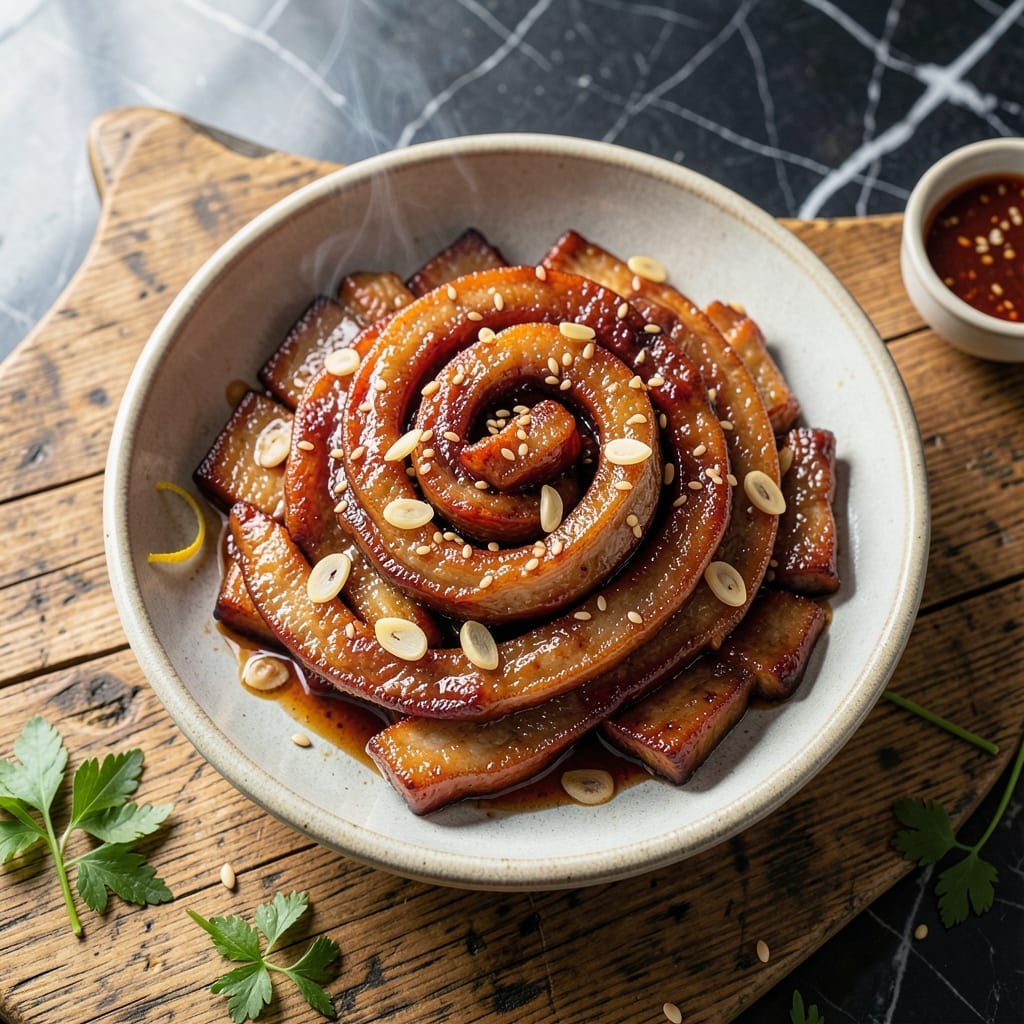
This Korean barbecue-style pork jerky delivers sweet, smoky umami in every bite. The marinade blends traditional flavors with a natural approach.
I’ve refined this method to ensure tender results with deep, caramelized edges. It’s a foolproof way to bring bold taste to your kitchen.
Ingredients for Golden Island Natural Style Pork Jerky Korean Barbecue
Thin pork slices soak up a bold, balanced marinade for irresistible Korean BBQ jerky.
| Ingredient | Amount | Notes |
|---|---|---|
| Pork Shoulder 🥩 | 2 lb | Thinly sliced against grain |
| Soy Sauce 🫒 | ½ cup | Low-sodium preferred for balance |
| Brown Sugar 🍚 | ⅓ cup | Light or dark variety |
| Gochujang 🌶️ | 3 tbsp | Korean chili paste for depth |
| Sesame Oil 🫒 | 2 tbsp | Toasted for nutty aroma |
| Rice Vinegar 🍚 | 2 tbsp | Balances sweetness with tang |
| Garlic Cloves 🧄 | 6 cloves | Minced for even distribution |
| Fresh Ginger 🌿 | 1 tbsp | Grated for zesty kick |
| Toasted Sesame Seeds 🌰 | 2 tbsp | For garnish and crunch |
| Green Onions 🧅 | 4 whole | Thinly sliced for freshness |
| Black Pepper 🌶️ | 1 tsp | Freshly cracked for heat |
| Red Pepper Flakes 🔥 | ½ tsp | Adjust for spice preference |
[recipe_ingredient_scaler]
The pork shoulder is non-negotiable here—look for well-marbled cuts at Whole Foods or your local butcher. Slicing against the grain ensures tenderness. Costco often carries pre-sliced pork for jerky, which saves time without sacrificing quality. Avoid lean cuts like tenderloin, as they dry out during dehydration. Freshness matters, so use the pork within 2 days of purchase.
No gochujang? Miso paste plus sriracha (1:1 ratio) creates a similar depth. Brown sugar can be swapped for coconut sugar or maple syrup if avoiding refined sugar. For a gluten-free version, tamari replaces soy sauce seamlessly. The sesame oil is key—don’t substitute with other oils, as it provides the signature nutty flavor. Green onions can be replaced with chives in a pinch.
Store marinated pork in the fridge for up to 24 hours before dehydrating. Finished jerky keeps in an airtight container at room temperature for 2 weeks, or freeze for 3 months. For best texture, let it cool completely on a rack before storing (worth the extra minute).
Why You’ll Love This Recipe
- One Pan Magic: I just toss the pork shoulder with the marinade and let the oven do the work—no fancy techniques required.
- Sweet Heat: That gochujang and brown sugar combo gives it the perfect sticky, spicy-sweet kick every time.
- Meal Prep Hero: Honestly, I make a big batch on Sunday and it’s my lunch savior all week—great hot or cold.
- Budget Friendly: Pork shoulder is cheap, and a little goes a long way with these bold flavors.
Step-by-Step Instructions for Golden Island Natural Style Pork Jerky Korean Barbecue
Follow this professional method for creating tender, flavorful pork jerky with authentic Korean barbecue notes.
Step 1: Prepare the Marinade Base
In a large mixing bowl, combine the 0.5 cup soy sauce, 0.33 cup brown sugar, 3 tbsp gochujang, 2 tbsp sesame oil, and 2 tbsp rice vinegar. Whisk vigorously for 1-2 minutes until the brown sugar fully dissolves and the mixture becomes smooth and glossy.
The soy sauce provides the umami foundation while the brown sugar creates the sweetness that caramelizes during cooking. The gochujang adds depth and a subtle heat that defines Korean barbecue flavor. Ensure no sugar granules remain at the bottom of the bowl.
Step 2: Incorporate Aromatics and Spices
Add the 6 cloves minced garlic, 1 tbsp grated fresh ginger, 1 tsp black pepper, and 0.5 tsp red pepper flakes to the marinade. Stir for 30 seconds until all ingredients are fully distributed throughout the liquid.
The garlic and ginger provide aromatic complexity while the black pepper and red pepper flakes add warmth. The red pepper flakes should be evenly suspended in the liquid rather than clumping. This is where the marinade transforms from simple to authentically Korean.
Step 3: Coat and Marinate the Pork
Add the 2 lb thinly sliced pork shoulder to the marinade bowl. Using your hands, massage the marinade into every slice for 2-3 minutes until each piece is completely coated. The pork should be thoroughly saturated with the liquid, with no dry spots visible.
Transfer the pork and all the marinade to a resealable plastic bag or airtight container. Refrigerate for at least 4 hours, or preferably overnight for maximum flavor penetration. The pork will absorb the marinade, becoming more tender and flavorful with time.
Step 4: Dry and Cook the Jerky
Preheat your oven to its lowest setting, ideally 175°F. Remove the pork from the marinade and arrange the slices on wire racks set over baking sheets, ensuring they don’t touch. Pat each slice dry with paper towels to remove excess marinade—this prevents steaming and promotes proper drying.
Place in the oven and cook for 4-6 hours, flipping the slices every 1-2 hours. The jerky is done when the edges appear dry and slightly darkened, yet the center remains slightly pliable. The texture should be chewy, not brittle.
For the final touch, sprinkle with 2 tbsp toasted sesame seeds and garnish with 4 thinly sliced green onions just before serving. The sesame seeds add crunch while the green onions provide freshness to balance the rich flavors.
Pro Tips For Making Golden Island Natural Style Pork Jerky Korean Barbecue
- Slice Against Grain: Cut the pork shoulder into thin strips against the grain—about 1/4 inch thick—for tender jerky that doesn’t chew like leather. I learned this the hard way after my first batch came out tough as boot soles.
- Marinate Overnight: Give the pork at least 8 hours in the soy sauce, brown sugar, and gochujang mix. Sounds weird, but it works: the flavors sink deep, and the sugar caramelizes better during cooking.
- Pat Dry Before Cooking: After marinating, blot the pork strips dry with paper towels. Skip this and you’ll steam the meat instead of getting that glossy, slightly charred finish.
- Low and Slow Finish: Start the jerky on medium-high to sear, then drop to low heat for the last 10 minutes. After burning three batches, I finally figured out this keeps the sugars from scorching while the pork gets sticky and tender.
Serving Suggestions for Leftovers
Plating for Impact
Arrange jerky strips on a wooden cutting board or slate platter for rustic appeal. I like to fan them out slightly to showcase the glossy, caramelized edges. The natural wood grain contrasts beautifully with the deep brown of the jerky. 🔥
Garnish Generously
Sprinkle with the 2 tbsp toasted sesame seeds and 4 thinly sliced green onions just before serving. The seeds add a nutty crunch, while the onions cut through the richness with a fresh, sharp bite.
Dipping Sauce Pairing
Serve with a side of ssamjang (Korean dipping sauce) for an authentic touch. Mix 2 tbsp gochujang with 1 tbsp sesame oil and 1 tsp rice vinegar for a quick version. The sauce adds extra depth and moisture.
Beer and Wine
Pair with a crisp Korean lager like Hite or a dry riesling to balance the sweet and smoky flavors. The carbonation in beer cleanses the palate, while the wine’s acidity complements the dish. 🍺
Party Presentation
For gatherings, skewer 3-4 strips on small bamboo picks for easy grabbing. I often add a sprinkle of red pepper flakes on top for a pop of color and extra heat.
Storage Display
Store in a glass mason jar with a ribbon tied around the rim for a charming, giftable look. This also keeps the jerky fresh and visible, so guests can admire the glossy finish before digging in.
Nutrition Facts
Frequently Asked Questions
What’s the best cut for making jerky?
Use pork shoulder for its marbling and tenderness. Slice against the grain for optimal texture. Lean cuts like tenderloin dry out too much.
Can I marinate longer than overnight?
Yes, but limit to 24 hours max. The acidity in vinegar and gochujang can start breaking down the meat if left too long.
How do I know when the jerky is done?
Look for dry, slightly darkened edges with a pliable center. It should bend without snapping. Over-drying makes it brittle.
Can I use a dehydrator instead of an oven?
Set to 160°F and check after 4 hours. Dehydrators circulate air more efficiently for even drying.

Trained in classic French technique but raised on slow-cooked ribs and spicy rubs, she blends culinary skill with smoke and soul.
- Recipe for Boneless Pork Chops in Cast Iron Skillet: Sear and Baste to Juicy Perfection - October 3, 2026
- Recipe for Boneless Cross Rib Roast: Slow-Roasted Beef with Herb Crust - October 3, 2026
- Hamburgers in Sauce Recipe Crock Pot: Slow-Cooked Savory Delight - October 3, 2026