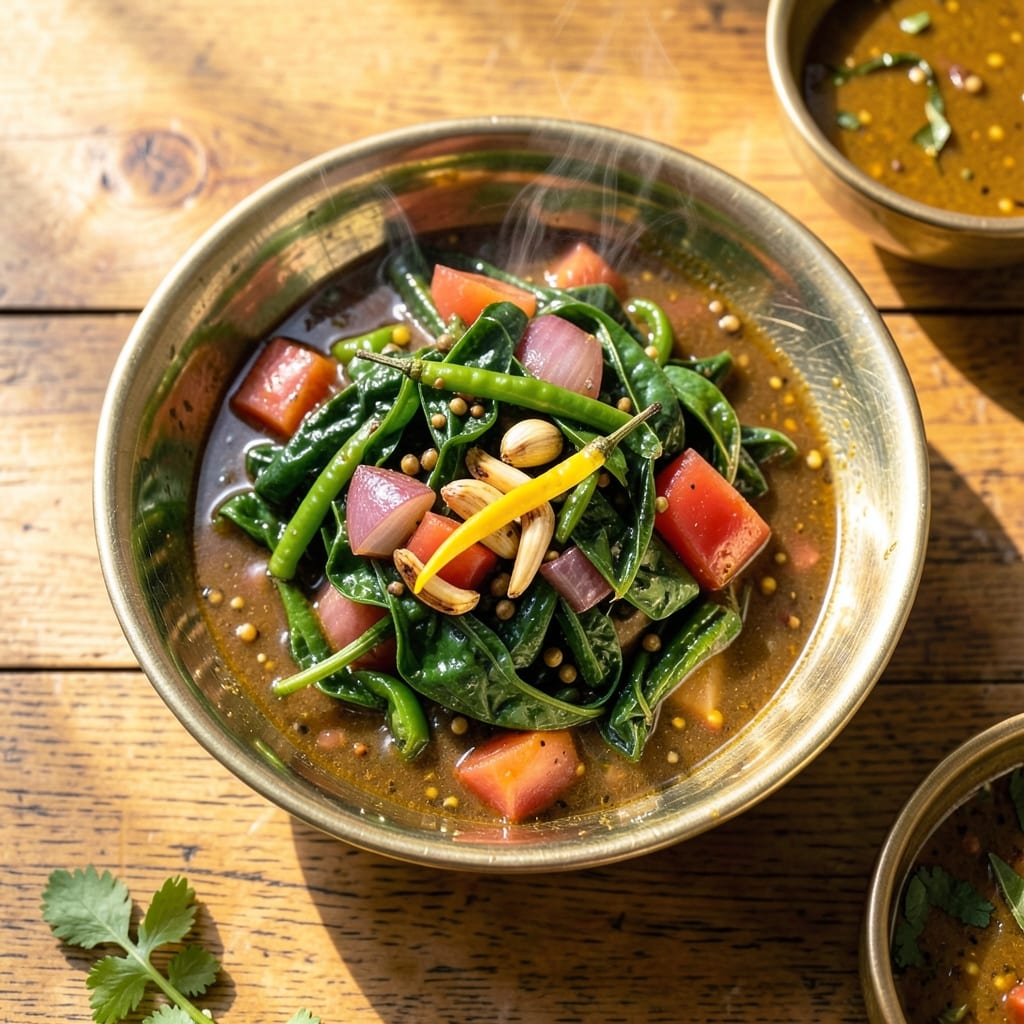
This Andhra-style curry captures the bold, tangy essence of gongura leaves in a rich, spicy tamarind gravy. The dish balances heat and sourness perfectly, a hallmark of traditional Telugu cuisine.
I developed this recipe after tasting authentic versions in Hyderabad, focusing on the slow-cooked depth of flavor. The process involves wilting the sorrel leaves, then blending them with roasted spices for maximum impact.
What results is a vibrant, deeply flavored curry with a thick, glossy sauce clinging to every bite. The tamarind adds the signature tang, while the spice blend delivers authentic Andhra heat.
Serve with steamed rice or roti to balance the bold flavors. This curry keeps well, with flavors intensifying overnight.
Ingredients for Gongura Curry Recipe Andhra Style
A vibrant blend of sorrel leaves, tamarind, and spices creates this authentic Andhra dish.
| Ingredient | Amount | Notes |
|---|---|---|
| Fresh Gongura Leaves 🌿 | 4 cups | Sorrel leaves, washed and chopped |
| Tamarind Paste 🍋 | 2 tbsp | Adjust for desired tanginess |
| Red Onion 🧅 | 1 whole | Finely chopped for base |
| Tomatoes 🍅 | 2 whole | Ripe, diced for balance |
| Green Chilies 🌶️ | 4 pieces | Adjust for heat preference |
| Garlic Cloves 🧄 | 4 cloves | Minced for depth of flavor |
| Fresh Ginger 🌿 | 1 whole | 1-inch piece, grated |
| Cumin Seeds 🌿 | 1 tsp | Toasted for aroma |
| Mustard Seeds 🌿 | ½ tsp | For tempering |
| Turmeric Powder 🌶️ | ½ tsp | For color and earthiness |
| Red Chili Powder 🌶️ | 1 tsp | Adjust for spice level |
| Coriander Powder 🌿 | 1 tbsp | For earthy base |
| Vegetable Oil 🫒 | 3 tbsp | For cooking and tempering |
| Salt 🧂 | 1 tsp | Adjust to taste |
| Fresh Cilantro 🌿 | ¼ cup | Chopped, for garnish |
[recipe_ingredient_scaler]
The gongura leaves are essential here. Indian grocery stores often carry them fresh or frozen—avoid wilted or yellowing leaves. I source mine from Patel Brothers when available. For the tamarind, paste is more convenient than pulp, but both work. Look for deep brown, seedless tamarind for the best flavor. The green chilies can be Thai or serrano—both deliver the required heat.
No fresh gongura? Spinach plus a splash of lemon juice gets you close (though less tangy). Out of tamarind? Lime juice with a pinch of sugar mimics the sour-sweet balance. For the spices, whole seeds toasted and ground fresh outperform pre-ground every time. The cilantro garnish is optional but adds a bright finish—parsley works too if that’s what you’ve got.
This curry tastes even better the next day after flavors meld. Store in an airtight container in the fridge for up to 5 days. Freezes well for 3 months—portion before freezing for easy reheating.
Why You’ll Love This Recipe
- One Pot Wonder: I toss everything in a single pan—gongura, tamarind, and onions—and let it simmer while I set the table.
- Tangy Punch: The tamarind and green chilies hit that perfect sour-spicy balance I crave with steaming rice.
- Feeds a Crowd: I make a big batch and it tastes even better the next day, honestly.
- Pantry Friendly: Between us, gongura grows wild here, so I rarely spend extra on this flavor-packed meal.
Step-by-Step Instructions for Gongura Curry Andhra Style
Master the technique for this tangy, spicy dish with perfect balance every time.
Step 1: Prepare the Gongura Leaves and Aromatics
Thoroughly wash the 4 cups Fresh Gongura Leaves and chop them finely. I like to stack several leaves together and cut them in thin ribbons for even cooking. The leaves release a lot of moisture, so pat them dry with a clean towel to prevent watering down the curry.
Next, finely chop the 1 whole Red Onion, dice the 2 whole Tomatoes, and slice the 4 pieces Green Chilies. Mince the 4 cloves Garlic Cloves and grate the 1 whole Fresh Ginger. Having all these prepared before cooking ensures a smooth process without burnt spices.
Step 2: Temper the Spices in Hot Oil
Heat the 3 tbsp Vegetable Oil in a heavy-bottomed pan over medium heat. When the oil shimmers, add the 0.5 tsp Mustard Seeds and 1 tsp Cumin Seeds. Cover immediately as the mustard seeds will pop vigorously.
Once the popping subsides, add the 0.5 tsp Turmeric Powder, 1 tsp Red Chili Powder, and 1 tbsp Coriander Powder. Stir for 15-20 seconds until fragrant but don’t let them burn. The spices should darken slightly but not turn black—this develops their flavors without bitterness.
Step 3: Cook the Base Vegetables
Add the chopped Red Onion to the tempered spices and sauté for 3-4 minutes until soft and translucent. Then stir in the Garlic Cloves and Fresh Ginger, cooking for another 30 seconds until the raw aroma disappears.
Incorporate the diced Tomatoes and Green Chilies. Cook for 5-6 minutes on medium-low heat until the tomatoes break down and the oil starts to separate at the edges. This creates a thick, flavorful base for the curry.
Step 4: Incorporate Gongura and Tamarind
Add the chopped Fresh Gongura Leaves to the pan, stirring well to combine with the spice mixture. The leaves will wilt quickly—cook for 5-7 minutes until they reduce in volume and turn a deeper green color.
Stir in the 2 tbsp Tamarind Paste and 1 tsp Salt. Add ½ cup water and bring to a gentle simmer. Cook uncovered for 8-10 minutes until the gravy thickens and the raw taste of tamarind disappears. The final consistency should coat the back of a spoon.
Step 5: Finish and Garnish
Taste and adjust seasoning if needed. The curry should have a perfect balance of tang from the tamarind, spice from the chilies, and earthiness from the gongura. Remove from heat and let it sit for 5 minutes to allow the flavors to meld.
Just before serving, stir in the 0.25 cup Fresh Cilantro. The cilantro adds a fresh, bright note that complements the rich, tangy flavors. Serve hot with steamed rice or roti for the authentic Andhra experience.
Pro Tips For Making Gongura Curry Recipe Andhra Style
- Blanch Gongura First: I learned this the hard way—blanch the gongura leaves in boiling water for 2 minutes before chopping to mellow their sharpness and keep the curry from turning bitter.
- Toast Spices Slow: Cook your mustard seeds, cumin, and dried red chilies on medium-low for 30 seconds until fragrant, not smoking—burnt spices will ruin the Andhra flavor.
- Balance Tamarind Early: Add tamarind paste little by little and taste as you go; gongura is already tangy, and too much tamarind will make the curry unpleasantly sour.
- Rest Before Serving: Let the curry sit off heat for 10-15 minutes—this lets the flavors meld and the gongura soften fully, so it’s not harsh on the palate.
Health Benefits of This Dish
Rich in Vitamins
Gongura leaves are a powerhouse of vitamin C, providing about 70% of your daily needs in just 1 cup. They’re also packed with vitamin A and iron, supporting immune function and energy levels. I love how this dish delivers nutrition without sacrificing flavor. 💪
Digestive Health Boost
The tamarind in this curry aids digestion thanks to its natural fiber content and tartaric acid, which helps stimulate bile production. It’s a traditional remedy in Andhra cuisine for promoting gut health after heavy meals.
Antioxidant Properties
Both gongura and tamarind are rich in antioxidants, which combat free radicals and reduce inflammation. The spices—like turmeric and cumin—add even more protective compounds, making this dish a nutritional powerhouse.
Low-Calorie Nutrition
A serving of this curry is naturally low in calories (around 120-150 per bowl) but high in fiber and essential nutrients. It’s a filling, flavorful way to enjoy a meal without the guilt. Honestly, it’s one of my go-to dishes for a healthy yet satisfying lunch.
Bone Health Support
The calcium and magnesium in gongura leaves contribute to strong bones and teeth. Regular consumption can help maintain bone density, especially important as we age. I like knowing this dish is as good for my body as it is for my taste buds. ✨
Hydration and Electrolytes
Gongura leaves have a high water content, aiding hydration, while the tamarind provides potassium and other electrolytes. This makes the curry a great option for replenishing after a long day or a workout.
Nutrition Facts
Frequently Asked Questions
Can I use frozen gongura leaves?
Yes, frozen gongura works well! Thaw and drain excess water before chopping.
How do I adjust the sourness?
Add more tamarind paste for tang or a pinch of sugar to balance. Start with 1 tbsp extra tamarind, then taste.
What if my curry turns bitter?
Bitterness often comes from overcooked leaves. Reduce cooking time to 5 minutes after adding gongura.
Can I make this less spicy?
Reduce green chilies to 2 pieces and use ½ tsp red chili powder instead.

Trained in classic French technique but raised on slow-cooked ribs and spicy rubs, she blends culinary skill with smoke and soul.
- Recipe for Boneless Pork Chops in Cast Iron Skillet: Sear and Baste to Juicy Perfection - October 3, 2026
- Recipe for Boneless Cross Rib Roast: Slow-Roasted Beef with Herb Crust - October 3, 2026
- Hamburgers in Sauce Recipe Crock Pot: Slow-Cooked Savory Delight - October 3, 2026