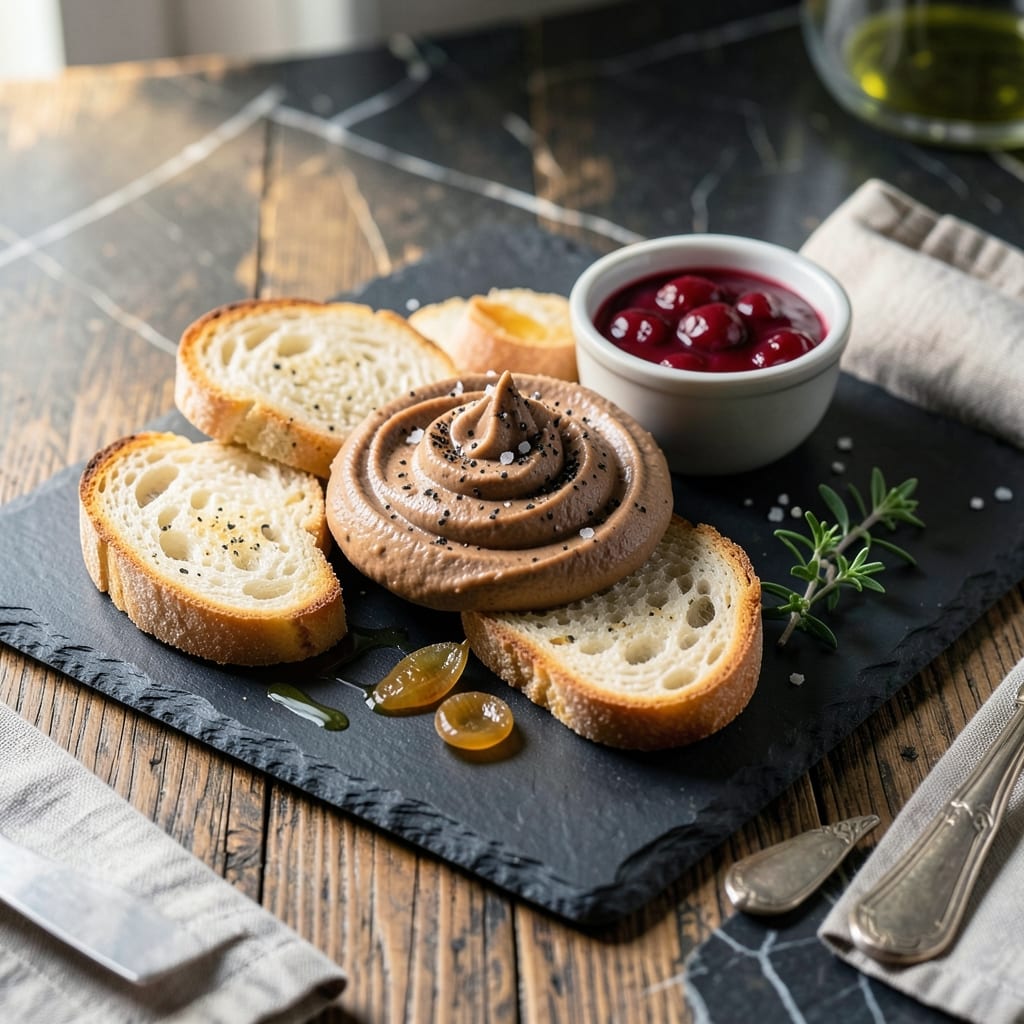
This French-inspired creation elevates any gathering with its velvety texture and rich depth of flavor. I developed this method after years of refining traditional techniques to achieve professional results at home.
The process transforms simple goose liver into a luxurious spread through careful seasoning and precise cooking. A water bath ensures gentle, even heat for the perfect consistency every time.
What emerges is a smooth, decadent pâté with balanced seasoning that pairs beautifully with crusty bread or crackers. The flavor profile is sophisticated yet approachable for home cooks.
Serve chilled as part of a charcuterie board or as an elegant appetizer. The technique is straightforward but yields impressive, restaurant-quality results.
Ingredients for Goose Pate
Elevate your appetizer spread with these refined ingredients for a luxurious French classic.
| Ingredient | Amount | Notes |
|---|---|---|
| Goose Liver 🍖 | 1 lb | Fresh, trimmed of connective tissue |
| Unsalted Butter 🧈 | ½ cup | European-style preferred for richness |
| Shallots 🧅 | 2 whole | Finely minced for even distribution |
| Garlic Cloves 🧄 | 2 cloves | Minced to paste consistency |
| Kosher Salt 🧂 | 1 tsp | Diamond Crystal brand preferred |
| Freshly Ground Black Pepper 🌶️ | ½ tsp | Coarse grind for texture |
| Fresh Thyme Leaves 🌿 | 1 tbsp | Stems removed, finely chopped |
| Dry White Wine 🍷 | ¼ cup | Sauvignon Blanc or Pinot Grigio |
| Heavy Cream 🥛 | ¼ cup | Full-fat for velvety texture |
| Cognac 🥃 | 2 tbsp | Optional but recommended for depth |
| Bay Leaf 🍃 | 1 whole | Lightly crushed to release aroma |
| Fresh Parsley 🌿 | 1 tbsp | Finely chopped for garnish |
[recipe_ingredient_scaler]
The goose liver is non-negotiable—sourcing fresh, high-quality liver from a trusted butcher like D’Artagnan or Hudson Valley Foie Gras ensures optimal texture and flavor. European-style butter (think Plugrá or Kerrygold) delivers superior richness compared to standard butter. Look for liver with a deep, uniform color and no off odors. If purchasing frozen, thaw overnight in the refrigerator for best results.
No cognac? Brandy or Armagnac work as suitable substitutes. Shallots can be replaced with yellow onion at half the quantity, though the flavor will be slightly more pungent. For a non-alcoholic version, apple cider with a splash of vinegar mimics the acidity. Heavy cream is essential for the velvety mouthfeel—avoid half-and-half or milk, as they lack the necessary fat content.
Pâté keeps refrigerated in an airtight container for up to 5 days. For longer storage, freeze for 3 months—portion into small ramekins before freezing for easy serving. Always bring to room temperature for 30 minutes before serving to allow the flavors to fully develop.
Why You’ll Love This Recipe
- Minimal Effort: I just blend the liver with butter, sautéed shallots, and garlic—no fancy techniques required.
- Rich & Luxurious: The goose liver and butter melt into this ridiculously smooth, crave-worthy spread that’s honestly hard to stop eating.
- Party Starter: I serve this at gatherings and it’s always the first thing to disappear, especially with crusty bread or crackers.
- Stretches Far: A little goes a long way, so one batch covers appetizers for a crowd or leftovers for sandwiches all week.
Step-by-Step Instructions for Goose Pate
Master this refined technique to create an exceptionally smooth and luxurious spread.
Step 1: Prepare and Sear the Goose Liver
Begin by trimming the 1 lb Goose Liver of any connective tissue. Pat it dry thoroughly with paper towels—this ensures proper searing. Season both sides with 1 tsp Kosher Salt and 0.5 tsp Freshly Ground Black Pepper.
Heat a large skillet over medium-high heat and add 0.5 cup Unsalted Butter. Once the butter foams, carefully add the liver and sear for 2-3 minutes per side until the exterior is browned but the interior remains pink. Avoid overcooking—this preserves the delicate texture.
Step 2: Sauté the Aromatics
Remove the liver from the skillet and set aside. In the same pan with the rendered butter, add the 2 whole Shallots and 2 cloves Garlic Cloves, both finely minced. Sauté for 3-4 minutes until the shallots soften and turn translucent.
Stir in the 1 tbsp Fresh Thyme Leaves and 1 whole Bay Leaf, lightly crushed. Cook for an additional 30 seconds to release their aromatic oils. This builds a fragrant base that complements the richness of the liver.
Step 3: Deglaze and Create the Sauce
Pour in the 0.25 cup Dry White Wine and 2 tbsp Cognac, scraping the bottom of the skillet to lift any browned bits. Simmer for 2-3 minutes until the liquid reduces by half, allowing the alcohol to cook off.
Reduce the heat to low and stir in the 0.25 cup Heavy Cream. Simmer for another 2 minutes until the mixture thickens slightly. This creates a velvety sauce that will bind the pâte together.
Step 4: Blend and Chill to Perfection
Return the seared liver to the skillet and simmer for 1-2 minutes to meld the flavors. Transfer the mixture to a blender or food processor. Pulse until completely smooth, scraping down the sides as needed. The texture should be silky and uniform.
Pour the mixture into ramekins or a small terrine. Cover with plastic wrap, pressing it directly onto the surface to prevent a skin from forming. Refrigerate for at least 4 hours (overnight is ideal) to allow the pâte to set fully.
Step 5: Garnish and Serve
Once chilled, remove the plastic wrap and smooth the top with a knife if needed. Garnish with the 1 tbsp Fresh Parsley, finely chopped, for a touch of color and freshness. Serve with crusty bread or crackers for an elegant appetizer.
This dish should have a rich, velvety texture with a balanced depth of flavor from the wine, cognac, and herbs. The chilling step is essential—it transforms the mixture into a spreadable consistency that holds its shape.
Pro Tips For Making Goose Pate
- Chill the Liver: Soak the goose liver in cold milk for 1-2 hours before cooking—it draws out impurities and mellows the flavor. I learned this the hard way after my first batch tasted bitter.
- Low and Slow: Cook the liver mixture on low heat, stirring constantly, until just pink inside—about 5-7 minutes. High heat turns it grainy, and nobody wants that.
- Strain the Fat: After cooking, strain the mixture through a fine-mesh sieve to remove any connective tissue. Sounds fussy, but it makes the pate silky smooth.
- Butter Last: Fold in the softened unsalted butter at the end, off the heat, to keep it rich and creamy. Adding it earlier can cause the pate to separate.
Storing and Reheating goose pate
Refrigerator Storage
Once chilled, store your pâté in an airtight container with plastic wrap pressed directly on the surface. Keep at 40°F or below for up to 5 days. The flavors deepen over time, making it even better the next day. ❄️
Freezer Storage
For longer storage, portion into small ramekins and freeze for up to 3 months. I use silicone molds for easy serving sizes. Wrap each tightly with plastic wrap and foil to prevent freezer burn.
Thawing Properly
Transfer from freezer to refrigerator and allow to thaw overnight (about 12 hours). Never thaw at room temperature—this preserves texture and prevents bacterial growth. The slow thaw maintains the velvety consistency.
Serving Temperature
For best flavor, let the pâté sit at room temperature for 30 minutes before serving. This allows the fats to soften slightly, enhancing the spreadable texture. I always set mine out while preparing the rest of the charcuterie board.
Reheating Option
If you prefer it warm, place sealed ramekins in a water bath at 160°F for 15-20 minutes. Stir gently after heating to restore the smooth texture. Avoid microwaving as it can make the pâté grainy. 🔥
Storage Pro Tip
Always use clean utensils when serving to prevent contamination. A thin layer of melted butter on top before refrigerating creates an additional seal against air, extending freshness by a day or two.
Nutrition Facts
Frequently Asked Questions
What can I use instead of cognac?
Brandy or Armagnac work perfectly as substitutes. For a non-alcoholic option, use apple cider with a splash of vinegar to mimic the acidity. The alcohol cooks off, but the depth of flavor remains essential for balance.
Why does my pâté turn grainy?
Overcooking the liver or blending it while too hot causes graininess. Always sear just until pink in the center, then blend after cooling slightly. A water bath during chilling also helps maintain a smooth texture.
Can I make this with chicken liver?
Yes, though the flavor will be milder and less rich. Use the same quantities but reduce the cooking time to 1-2 minutes per side since chicken liver cooks faster. Add an extra 2 tbsp butter for richness.
How do I know when it’s done chilling?
The pâté is ready when it holds its shape and feels firm to the touch, after at least 4 hours in the fridge. Overnight chilling is ideal for the best texture and flavor development.

Trained in classic French technique but raised on slow-cooked ribs and spicy rubs, she blends culinary skill with smoke and soul.
- Recipe for Boneless Pork Chops in Cast Iron Skillet: Sear and Baste to Juicy Perfection - October 3, 2026
- Recipe for Boneless Cross Rib Roast: Slow-Roasted Beef with Herb Crust - October 3, 2026
- Hamburgers in Sauce Recipe Crock Pot: Slow-Cooked Savory Delight - October 3, 2026