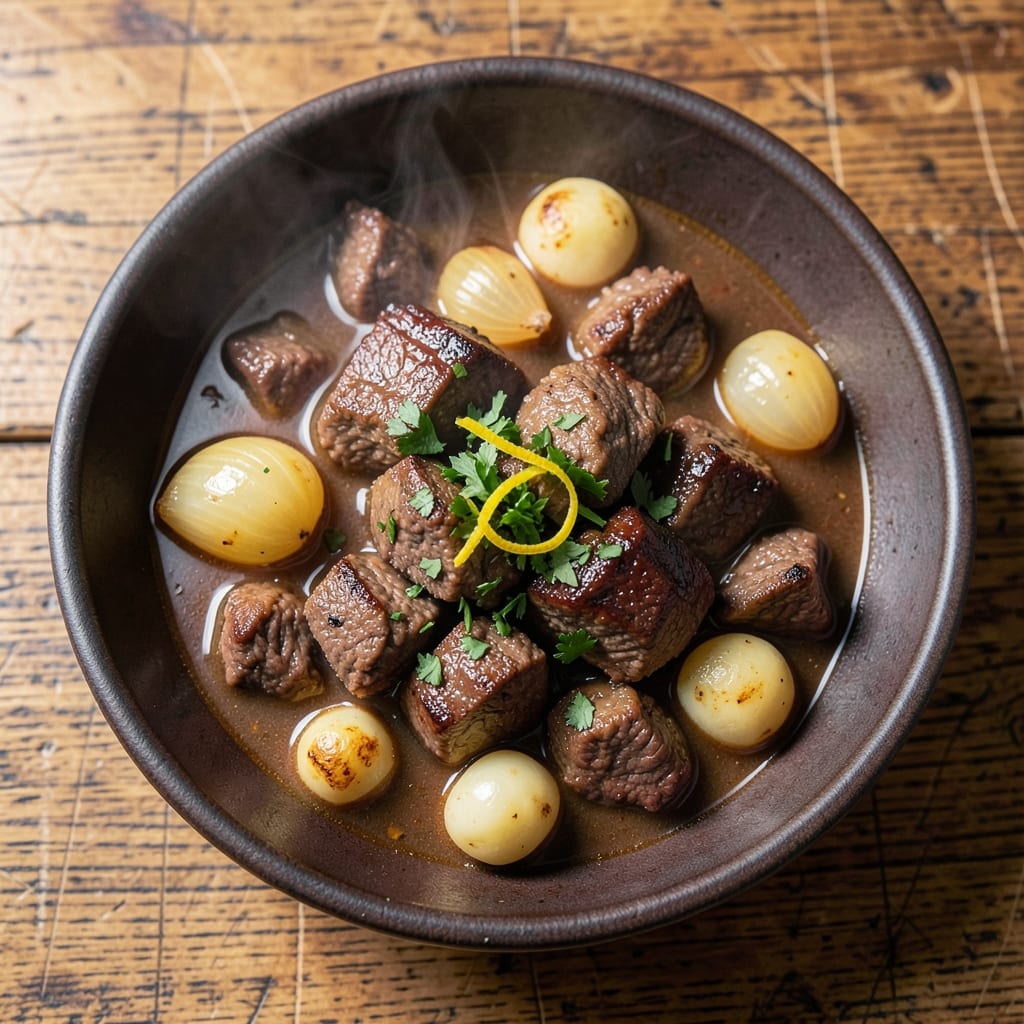
This beef stew delivers that melt-in-your-mouth tenderness you’d expect from a professional kitchen. I’ve tested this method countless times, and the slow braise transforms tough cuts into something extraordinary.
The secret is patience—browning the meat properly and letting it simmer low and slow. This builds layers of flavor that make every bite rich and satisfying. It’s the kind of dish that fills your home with an irresistible aroma.
By the end, you’ll have fork-tender beef, perfectly cooked vegetables, and a gravy so thick and flavorful you’ll want to soak it up with crusty bread. It’s comfort food at its absolute finest.
Perfect for a cozy weeknight or impressive enough for company. Here’s how to nail it every time.
Ingredients for Gordon Ramsay Beef Stew
Rich, hearty ingredients transform tough cuts into fork-tender perfection with every bite.
| Ingredient | Amount | Notes |
|---|---|---|
| Beef Chuck Roast 🥩 | 2 lb | Cut into 2-inch cubes, well-marbled |
| All-Purpose Flour 🌾 | ¼ cup | For dredging beef cubes |
| Kosher Salt 🧂 | 1 ½ tsp | Diamond Crystal preferred for even seasoning |
| Freshly Ground Black Pepper 🌶️ | 1 tsp | Coarse grind for texture |
| Olive Oil 🫒 | 2 tbsp | Divided for browning and sautéing |
| Yellow Onions 🧅 | 2 whole | Medium-sized, diced uniformly |
| Carrots 🥕 | 3 whole | Peeled and cut into 1-inch chunks |
| Celery Stalks 🌿 | 2 whole | Trimmed and sliced into 1-inch pieces |
| Garlic Cloves 🧄 | 4 cloves | Minced for depth of flavor |
| Tomato Paste 🍅 | 2 tbsp | Concentrated for rich umami base |
| Dry Red Wine 🍷 | 1 cup | Bold variety like Cabernet Sauvignon |
| Beef Stock 🥣 | 4 cups | Low-sodium preferred for control |
| Fresh Thyme Sprigs 🌿 | 2 whole | Plus extra for garnish |
| Bay Leaves 🍃 | 2 whole | Dried, for aromatic depth |
| Russet Potatoes 🥔 | 1 ½ lb | Peeled and cubed into 1.5-inch pieces |
[recipe_ingredient_scaler]
The beef is non-negotiable—chuck roast with good marbling from Whole Foods or ButcherBox (if you’re splurging) gives that melt-in-your-mouth texture. Look for bright red color and visible fat streaks. I always buy a little extra and freeze what I don’t need. Avoid pre-cut stew meat; it’s often from leaner cuts that dry out during the long braise (worth the extra minute to cube it yourself).
No red wine? Beef stock plus a splash of balsamic vinegar mimics the acidity and depth. Fresh thyme can be swapped for dried at one-third the amount. If you’re missing tomato paste, ketchup in a pinch works (use half the amount). For the stock, Better Than Bouillon is a solid backup. The potatoes can be Yukon Golds if you prefer a creamier texture—they hold up well too.
This stew actually improves overnight. Refrigerate for up to 4 days, or freeze for 3 months (portion before freezing for easy reheating). The fat cap on top after chilling? Skim it off for cleaner flavor. Always bring to a simmer before serving—never microwave straight from the fridge.
Why You’ll Love This Recipe
- I’ll be real: chuck roast is cheap, feeds a crowd, and still feels like a fancy meal.
- One Pot Magic: I toss the beef chuck in flour, salt, and pepper, then sear it in olive oil—all in the same pot. No extra dishes, no fuss.
- Deep, Rich Flavor: The beef chuck roast turns melt-in-your-mouth tender and soaks up every bit of that savory, herby goodness.
- Meal Prep Hero: Honestly, it tastes even better the next day, so I double the batch for easy leftovers.
Step-by-Step Instructions for Gordon Ramsay Beef Stew
This method delivers melt-in-your-mouth tenderness with rich, layered flavors worth the wait.
Step 1: Sear the Beef to Build Flavor Foundation
Pat the 2 lb Beef Chuck Roast cubes dry with paper towels, then season evenly with the 1.5 tsp Kosher Salt and 1 tsp Freshly Ground Black Pepper. The dry surface is crucial for proper browning rather than steaming.
Toss the beef cubes in the 0.25 cup All-Purpose Flour until evenly coated, shaking off any excess. Heat 1 tbsp Olive Oil in a large Dutch oven over medium-high heat until shimmering. Working in batches to avoid crowding, sear the beef for 3-4 minutes per side until deeply browned on all sides. This creates the Maillard reaction that builds complex flavors.
Transfer the browned beef to a plate and set aside. Don’t rush this step—proper browning is what gives the stew its deep, rich color and flavor.
Step 2: Develop the Aromatic Base
In the same pot, add the remaining 1 tbsp Olive Oil if needed. Add the 2 whole Yellow Onions, 3 whole Carrots, and 2 whole Celery Stalks. Sauté for 8-10 minutes until the vegetables are softened and the onions are translucent.
Stir in the 4 cloves Garlic Cloves and 2 tbsp Tomato Paste, cooking for 2-3 minutes until the tomato paste darkens slightly and the garlic becomes fragrant. This step intensifies the umami depth that defines a proper beef stew.
Add the 1 cup Dry Red Wine and scrape up all the browned bits from the bottom of the pot with a wooden spoon. Let it simmer for 3-4 minutes until reduced by half.
Step 3: Braise to Tender Perfection
Return the beef and any accumulated juices to the pot. Pour in the 4 cups Beef Stock, then add the 2 whole Fresh Thyme Sprigs and 2 whole Bay Leaves. Bring to a simmer, then reduce heat to low.
Cover and let it cook for 2 hours, stirring occasionally, until the beef is fork-tender. This slow cooking process breaks down the collagen in the beef, transforming it from tough to buttery.
Step 4: Add Potatoes and Finish
Stir in the 1.5 lb Russet Potatoes, ensuring they’re submerged in the liquid. Cover and cook for an additional 45-60 minutes until the potatoes are tender when pierced with a knife.
Remove the thyme sprigs and bay leaves. Taste and adjust seasoning if needed. The stew should have a rich, velvety sauce that coats the back of a spoon. If it’s too thin, simmer uncovered for a few minutes to thicken.
Let the stew rest for 10-15 minutes before serving to allow the flavors to meld completely. The beef should fall apart at the touch of a fork, and the vegetables will have absorbed all the wonderful flavors of the braising liquid.
Pro Tips For Making Gordon Ramsay Beef Stew
- Dry the Beef Well: Pat the chuck roast completely dry with paper towels before searing—any moisture will steam instead of brown, and you’ll lose that deep crust that defines this stew.
- Don’t Crowd the Pan: Sear the beef in batches if needed. I learned this the hard way—overcrowding drops the pan temp, and you end up with pale, sad meat instead of a rich, caramelized base.
- Season the Flour: Mix a teaspoon each of salt and pepper into the flour before dredging. Sounds simple, but it ensures every bite of the thickened stew is seasoned, not just the surface.
- Use a Heavy Pot: A Dutch oven or heavy-bottomed pot distributes heat evenly and holds it steady, which is non-negotiable for the long, slow braise this recipe demands.
Wine and Beer Pairings for This gordon ramsay beef stew
Red Wine Pairings
A bold Cabernet Sauvignon from Napa Valley mirrors the wine used in cooking, with dark fruit notes that complement the beef beautifully. I love Caymus for its velvety texture and blackcurrant flavors. A Syrah from the Rhône Valley also works wonderfully. 🍷
Lighter Red Options
For something less tannic, try a Pinot Noir from Oregon’s Willamette Valley. The bright acidity cuts through the richness without overwhelming the dish. La Crema is a reliable choice I reach for often.
White Wine Surprise
Don’t overlook a full-bodied Chardonnay from Burgundy. The buttery notes echo the stew’s richness while the acidity cleanses your palate. Meursault is my go-to for this unexpected pairing.
Beer Pairings
A malty English Brown Ale like Newcastle brings caramel notes that harmonize with the braised beef. The moderate carbonation refreshes between bites of the rich stew.
Stout Alternative
For darker beer lovers, a Dry Irish Stout such as Guinness offers roasted coffee flavors that stand up to the hearty dish. The creaminess complements the stew’s texture perfectly.
Non-Alcoholic Option
Try a sparkling black cherry soda for a non-alcoholic pairing. The deep fruit flavors and bubbles provide a satisfying contrast to the savory stew. I recommend Boyertown brand. 💫
Nutrition Facts
Frequently Asked Questions
Can I use a different cut of beef?
Stick with tough, marbled cuts like short ribs or brisket for best results. These hold up to the long braise and become tender. Avoid lean cuts like sirloin, as they’ll turn dry and chewy.
Why do I need to sear the meat first?
Searing develops deep, complex flavors through the Maillard reaction. It also creates a fond (browned bits) that enriches the stew’s sauce. Skipping this step means missing out on that signature depth.
Can I make this in a slow cooker?
Yes! Brown the meat and veggies first, then transfer everything to the slow cooker. Cook on low for 8 hours or high for 5-6 hours. The texture will be slightly different but still delicious.
How do I thicken the stew if it’s too thin?
Simmer uncovered for 10-15 minutes to reduce the liquid. Alternatively, mix 1 tbsp cornstarch with 1 tbsp cold water and stir it in. Avoid adding flour directly, as it can create lumps.

Trained in classic French technique but raised on slow-cooked ribs and spicy rubs, she blends culinary skill with smoke and soul.
- Recipe for Fried Prawns Batter: Ultra-Crispy Golden Shell - October 3, 2026
- Indian Lamb Curry Recipe Pressure Cooker: Fragrant Spices in a Fraction of the Time - October 3, 2026
- Recipe for Oven Roasted: Golden Crisp Perfection Without the Fryer - October 3, 2026