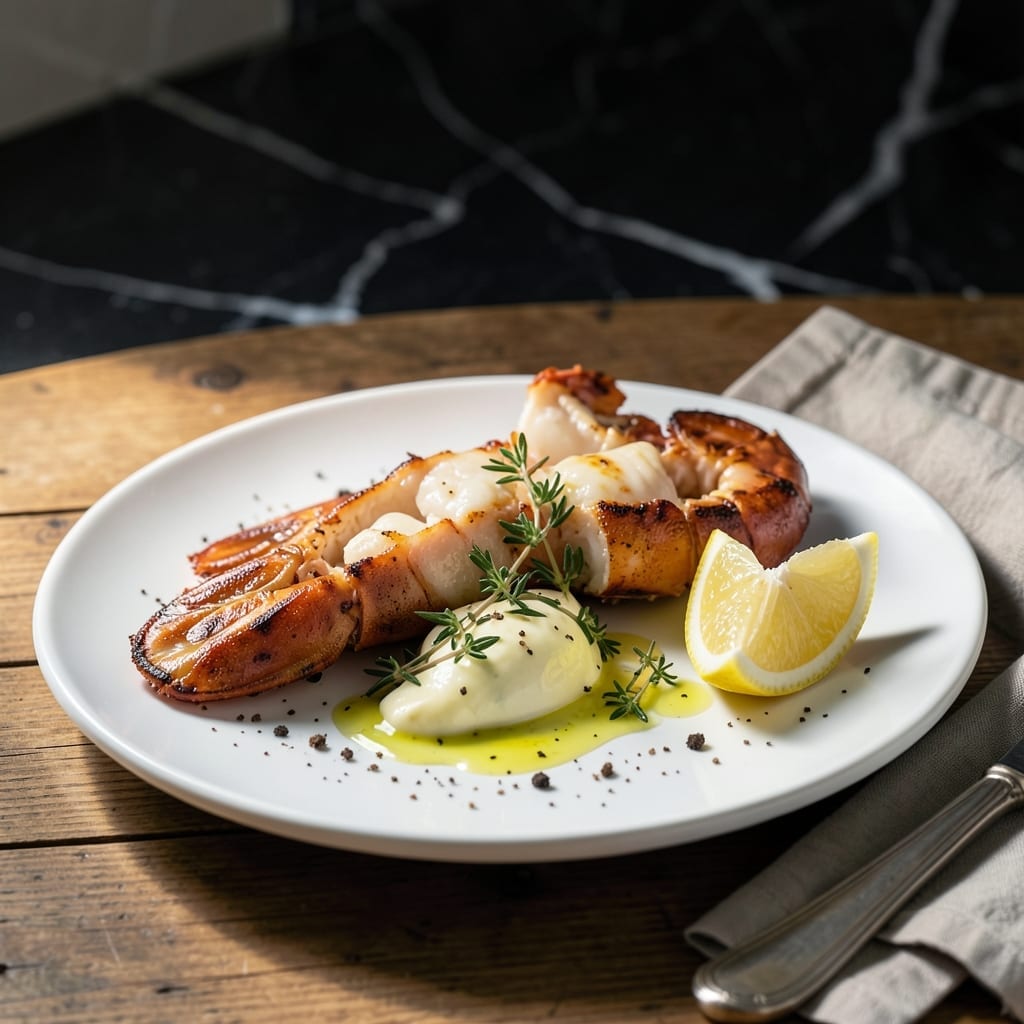
Lobster tail deserves the best treatment, and this method delivers perfect results every time. The key is precise timing and butter basting for maximum richness.
With just a few techniques, you’ll achieve tender meat and a golden char that rivals any fine dining experience. This is restaurant-quality at home.
Ingredients for Gordon Ramsay Lobster Tail
Restaurant-quality ingredients for a dish that shines at home. Nothing less will do.
| Ingredient | Amount | Notes |
|---|---|---|
| Lobster Tails 🦞 | 4 whole | Cold water tails, 6-8 oz each |
| Unsalted Butter 🧈 | ¾ cup | High-quality, European-style preferred |
| Kosher Salt 🧂 | 1 ½ tsp | Diamond Crystal brand recommended |
| Freshly Ground Black Pepper 🌶️ | 1 tsp | Coarse grind for texture |
| Fresh Lemon 🍋 | 1 whole | Zested and juiced |
| Fresh Thyme Sprigs 🌿 | 4 whole | Leaves stripped from stems |
| Fresh Rosemary Sprigs 🌿 | 2 whole | Leaves stripped from stems |
| Garlic Cloves 🧄 | 3 cloves | Smashed for infusing butter |
| Shallots 🧅 | 2 whole | Finely minced for sauce |
| White Wine 🍷 | ¼ cup | Dry variety like Chardonnay |
| Heavy Cream 🥛 | ¼ cup | Optional for finishing sauce |
| Extra-Virgin Olive Oil 🫒 | 2 tbsp | For light brushing |
| Fresh Parsley 🌿 | ¼ cup | Chopped, for garnish |
[recipe_ingredient_scaler]
The lobster tails are the star—cold water tails from Maine or Canada are the gold standard. Aim for 6-8 oz per tail for even cooking. For the butter, Plugrá or Kerrygold unsalted have that rich, European-style fat content that makes all the difference. Whole Foods or Costco usually carry quality tails, but ask your fishmonger when they were caught (fresher is always better).
No white wine? Dry vermouth works in a pinch, or chicken stock with a splash of lemon juice. Swap thyme for tarragon if you prefer a slightly sweeter herb. The shallots can be substituted with half a small onion, minced fine. If you can’t find fresh rosemary, dried at one-third the amount works, but fresh really elevates the butter sauce.
Lobster tails keep in the fridge for 1-2 days max—use them fast. The infused butter can be made ahead and stored for up to 1 week in the fridge. Leftovers? Unlikely, but if you have any, the meat holds for 2 days in an airtight container.
Why You’ll Love This Recipe
- I’ll be real: this feels luxurious but is simple enough for a Tuesday night treat.
- Ready in 20: Honestly, it takes less time than ordering takeout—just sear, baste with butter, and serve.
- Buttery Heaven: The melted butter with lemon and pepper makes every bite taste like a fancy restaurant.
- Date Night Star: I’ll be real: this feels luxurious but is simple enough for a Tuesday night treat.
Step-by-Step Instructions for Lobster Tail
Master this technique and you’ll achieve restaurant-quality results with melt-in-your-mouth texture every time.
Step 1: Prepare the Lobster Tails
Start by prepping the 4 whole Lobster Tails. Using kitchen shears, cut the top shell lengthwise from the base of the tail to the tip, stopping just before the fin. Carefully pull the shell apart and lift the meat out, keeping it attached at the base.
Place the meat on top of the shell and press down gently to flatten. This butterflying technique ensures even cooking and a beautiful presentation. Brush the exposed meat lightly with 2 tbsp Extra-Virgin Olive Oil and season with 1.5 tsp Kosher Salt and 1 tsp Freshly Ground Black Pepper.
Step 2: Infuse the Butter with Aromatics
In a small saucepan, melt the 0.75 cup Unsalted Butter over medium-low heat. Add the 3 cloves Garlic Cloves (smashed), leaves from 4 whole Fresh Thyme Sprigs and 2 whole Fresh Rosemary Sprigs, and the zest of the 1 whole Fresh Lemon.
Let this mixture simmer gently for 5-7 minutes until the butter turns fragrant and takes on a golden hue from the herbs. The garlic should soften but not brown. Remove from heat and set aside to cool slightly—this infused butter will add incredible depth of flavor to your dish.
Step 3: Grill or Broil to Perfection
Preheat your grill or broiler to high heat. Place the prepared lobster tails meat-side down on the grill (or on a broiler pan). Cook for 5-6 minutes until the meat develops a light char and turns opaque about halfway up.
Flip the tails and baste generously with the infused butter. Continue cooking for another 4-5 minutes until the lobster meat is fully opaque and reaches an internal temperature of 140°F. The shells should be bright red and the meat should feel firm to the touch.
Step 4: Create the Decadent Pan Sauce
While the lobster cooks, finely mince the 2 whole Shallots. In a small skillet, sauté the shallots in 2 tablespoons of the remaining infused butter over medium heat for 2-3 minutes until translucent.
Deglaze the pan with 0.25 cup White Wine and let it reduce by half. Stir in the 0.25 cup Heavy Cream and juice from the 1 whole Fresh Lemon. Simmer for 2-3 minutes until the sauce thickens slightly and coats the back of a spoon.
Step 5: Plate and Garnish Like a Pro
Transfer the cooked lobster tails to a serving platter. Drizzle the sauce over the meat and garnish with 0.25 cup Fresh Parsley, finely chopped. The parsley adds a pop of color and freshness that balances the richness of the dish.
Serve immediately with extra infused butter on the side for dipping. The meat should be tender and succulent with a perfect char on the surface, and every bite should deliver that luxurious buttery richness that makes this dish so special.
Pro Tips For Making Gordon Ramsay Lobster Tail
- Chill Before Cooking: Plunge the lobster tails into ice water for 10 minutes before cooking—this slows the metabolism and actually changes the outcome, keeping the meat tender and preventing it from toughening up during cooking.
- Split the Shell: Use kitchen shears to cut the top of the shell lengthwise, then gently pry it open with your thumbs. I learned this the hard way—if you skip this, the heat won’t penetrate evenly, and you’ll end up with unevenly cooked meat.
- Baste With Butter: Melt the unsalted butter with a splash of lemon juice, then baste the lobster tails every 2-3 minutes while cooking. After burning three batches, I finally figured out that this keeps the meat moist and adds layers of flavor.
- Use a Meat Thermometer: Pull the tails off the heat when they hit 135°F (57°C) internally. Sounds weird, but it works: they’ll continue cooking off the heat, and you’ll avoid the rubbery texture that comes from overcooking.
Common Mistakes When Making Perfect Results
Overcooking the Meat
Lobster tail cooks fast—pull it at 140°F internal temperature. The meat continues cooking off heat, so leaving it on the grill until 145°F or higher guarantees rubbery results. I use an instant-read thermometer for precision.
Skipping the Butterfly
Cutting the shell and lifting the meat ensures even cooking and prevents curling. Without butterflying, the tail steams in its shell, leading to uneven doneness. A sharp pair of kitchen shears makes this step effortless.
Cold Lobster on Grill
Always bring tails to room temperature for 15-20 minutes before cooking. Cold lobster shocks on high heat, causing tough, unevenly cooked meat. This simple step makes a noticeable difference in texture.
Neglecting the Butter
The infused butter isn’t just for flavor—it’s essential for moisture. Baste generously every 2 minutes while cooking. Skimping here leads to dry, bland meat that lacks that signature richness. 💛
Overcrowding the Grill
Give each tail 2-3 inches of space for proper heat circulation. Crowding lowers grill temperature and causes steaming. I cook in batches if needed to maintain that perfect char.
Rushing the Rest
Let the lobster rest 3-5 minutes after cooking. This allows juices to redistribute for maximum tenderness. Serving immediately causes all those precious buttery juices to spill onto the plate. 🔥
Nutrition Facts
Frequently Asked Questions
What’s the best way to thaw frozen tails?
Thaw overnight in the fridge for best texture. For a quicker method, seal in a bag and submerge in cold water for 1-2 hours. Never use warm water.
Can I use a different herb in the butter?
Tarragon or basil work beautifully. Use 1 tablespoon fresh per 0.75 cup butter. Dried herbs need 1/3 the amount to avoid bitterness.
How do I know when it’s perfectly cooked?
The meat turns opaque white and reaches 140°F internally. The shell will be bright red. Over 145°F risks tough meat.
What sides pair well with this dish?
Keep it simple: roasted asparagus, garlic mashed potatoes, or a crisp green salad. These complement without overpowering the star.

Trained in classic French technique but raised on slow-cooked ribs and spicy rubs, she blends culinary skill with smoke and soul.
- Recipe for Boneless Pork Chops in Cast Iron Skillet: Sear and Baste to Juicy Perfection - October 3, 2026
- Recipe for Boneless Cross Rib Roast: Slow-Roasted Beef with Herb Crust - October 3, 2026
- Hamburgers in Sauce Recipe Crock Pot: Slow-Cooked Savory Delight - October 3, 2026