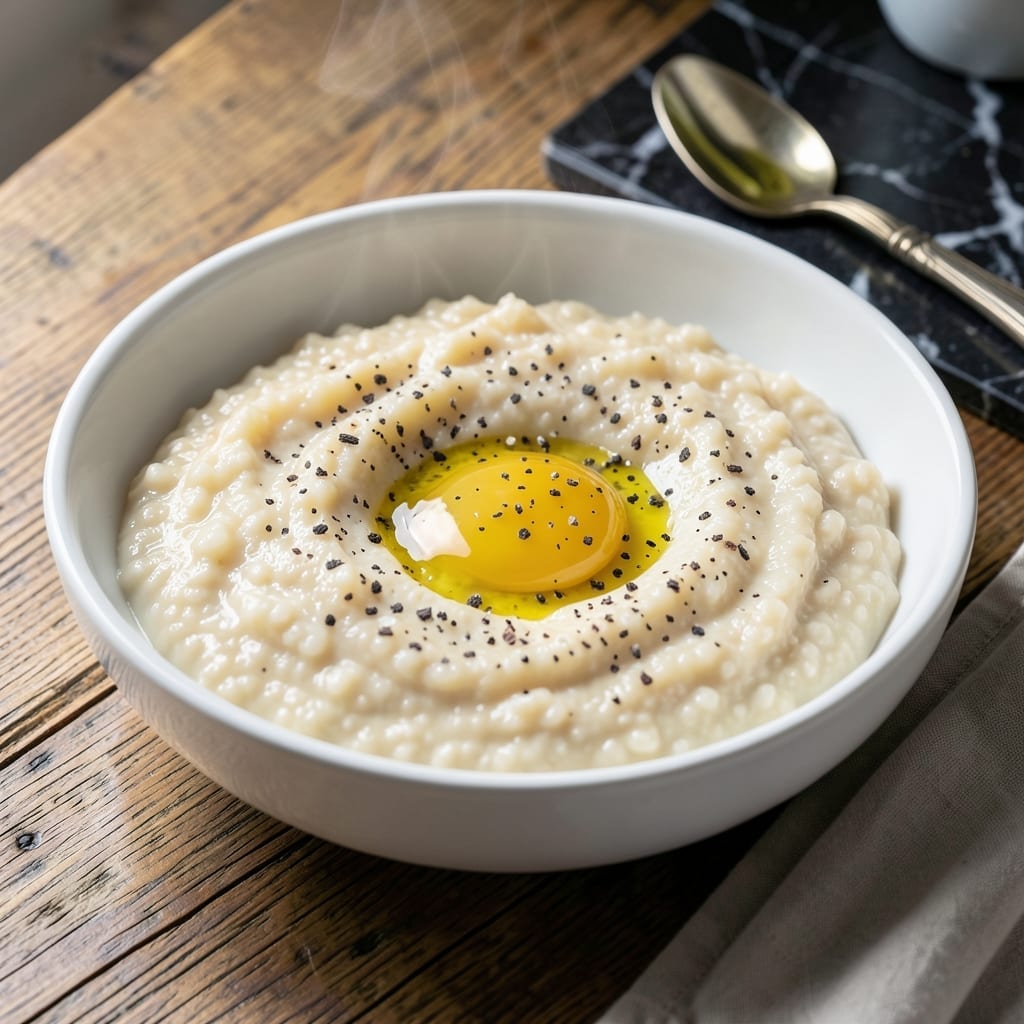
There’s something timeless about creamy stone-ground grits that captures the heart of Southern cooking. I’ve perfected this traditional method to deliver that velvety texture every time.
Slow-cooked with care, these grits transform simple ingredients into a dish rich with comfort and authenticity. The key is patience and the right ratio of liquid to grits.
Ingredients for Paula Deen Grits
Simple Southern staples combine for that signature velvety texture everyone loves at the table.
| Ingredient | Amount | Notes |
|---|---|---|
| Stone-Ground Grits 🌾 | 1 cup | Uncooked, not instant or quick |
| Whole Milk 🥛 | 3 cups | Full-fat for creaminess |
| Water 💧 | 3 cups | For initial cooking liquid |
| Unsalted Butter 🧈 | 4 tbsp | Divided for cooking and finishing |
| Kosher Salt 🧂 | 1 ½ tsp | Diamond Crystal preferred for balance |
| Black Pepper 🌶️ | ½ tsp | Freshly ground for depth |
| Garlic Powder 🧄 | ½ tsp | Optional, for subtle savory note |
| Sharp Cheddar Cheese 🧀 | ½ cup | Freshly shredded from block |
| Heavy Cream 🥛 | ¼ cup | Optional for extra richness |
| Chicken Broth 🍲 | 1 cup | Low-sodium preferred for control |
[recipe_ingredient_scaler]
The grits are non-negotiable—stone-ground from a trusted mill like Anson Mills or Logan Turnpike. These take longer to cook but deliver that authentic, creamy texture. Most Southern grocery stores carry them in the grain aisle or near the cornmeal. Avoid instant or quick grits; they lack the depth and body. The milk should be whole, as reduced-fat versions won’t yield the same luscious consistency you’re aiming for.
No whole milk? Half-and-half works at a 1:1 ratio. Out of sharp cheddar? Pepper Jack or Monterey Jack add a nice twist (skip the garlic powder if using Pepper Jack). For a vegetarian version, swap chicken broth for vegetable broth. The butter can be reduced by half without major impact, but don’t skip it entirely—it’s key for that rich mouthfeel Paula Deen’s known for.
Leftover grits thicken as they cool. Stir in a splash of warm milk or water to revive. Stores in the fridge for 4-5 days or freezes for 2 months. Reheat gently on the stove with extra liquid to restore that creamy texture. Best served fresh, but they’ll keep well for quick breakfasts.
Why You’ll Love This Recipe
- One Pot Wonder: I just dump stone-ground grits, milk, and water in a pot—hardly any cleanup.
- Creamy Heaven: The whole milk and butter make them so rich, I could eat them plain.
- Breakfast or Dinner: Honestly, I serve these with eggs at dawn or shrimp at dusk.
- Budget Stretcher: A big batch feeds my family for days, and the ingredients cost pennies.
Step-by-Step Instructions for Creamy Stone-Ground Grits
Master the technique for silky-smooth grits that embody true Southern comfort and tradition.
Step 1: Combine Liquids and Bring to a Simmer
In a heavy-bottomed pot, combine the 3 cups water, 3 cups whole milk, and 1 cup chicken broth. The combination of water and milk creates the ideal balance of creaminess while preventing curdling. I prefer using low-sodium broth to control the seasoning precisely.
Place the pot over medium-high heat and bring to a gentle simmer. You’ll see small bubbles forming around the edges of the pot, but the mixture shouldn’t be at a rolling boil. This controlled heat prevents scalding the milk, which can create a burnt flavor and ruin the texture.
Step 2: Whisk in Stone-Ground Grits Gradually
Once simmering, reduce heat to medium-low and slowly whisk in the 1 cup stone-ground grits. Pour them in a thin stream while whisking constantly to prevent clumping. Stone-ground grits require more attention than instant varieties—they have a coarser texture that needs proper dispersion.
Continue whisking for 1-2 minutes until the mixture begins to thicken slightly. You’ll notice the liquid absorbing into the grits, and the mixture will start to look like a thin porridge. This initial cooking stage is crucial for preventing lumps and ensuring even cooking throughout.
Step 3: Cook Low and Slow for Creamy Perfection
After the initial thickening, reduce heat to low and cover the pot. Let the grits cook for 45-60 minutes, stirring every 10-15 minutes to prevent sticking. Stone-ground grits take significantly longer to cook than quick or instant grits, but the wait is worth it for that authentic texture.
As you stir, you’ll feel the grits transforming from a thin mixture to a thick, creamy porridge. The key is patience—rushing with higher heat will result in gritty, undercooked grits. The mixture should be thick enough to coat the back of a spoon but still have a slight flow when stirred.
Step 4: Finish with Butter, Cheese, and Seasonings
Once the grits reach your desired consistency, stir in 3 tbsp unsalted butter, the 1.5 tsp kosher salt, 0.5 tsp black pepper, and 0.5 tsp garlic powder. The butter adds richness, while the seasonings build layers of flavor. I prefer Diamond Crystal kosher salt for its balanced flavor and easy dissolution.
Remove the pot from heat and stir in the 0.5 cup sharp cheddar cheese until completely melted. For extra decadence, add the 0.25 cup heavy cream at this stage as well. The cheese should create a smooth, velvety texture throughout. Taste and adjust seasoning if needed—the flavors should be well-balanced, with the cheddar providing a subtle sharpness.
Step 5: Rest and Serve for Optimal Creaminess
Let the grits rest off heat for 5-10 minutes before serving. This allows the flavors to meld together and the texture to reach its peak creaminess. The grits will thicken slightly as they cool, which is perfect for serving.
Spoon into bowls and top with the remaining 1 tbsp unsalted butter for a final touch of richness. For the ultimate Southern experience, serve with shrimp, fried eggs, or as a base for a hearty breakfast. The grits should be smooth as silk, with a subtle cheesy flavor and a comforting warmth that defines true Southern cooking.
Pro Tips For Making Paula Deen Grits
- Stir Constantly: Stone-ground grits love to clump and stick, so keep a wooden spoon moving in that pot for the full 20-25 minutes—my first batch turned into cement before I learned this.
- Use Whole Milk: I was skeptical until I tried it, but whole milk gives these grits a richness that skim just can’t match, and the fat helps smooth out the texture.
- Salt in Stages: Add half the kosher salt at the start and the rest at the end, since the grits absorb it differently as they cook—this keeps the flavor balanced without being flat or overpowering.
- Finish with Cold Butter: Sounds weird, but it works: stir in that unsalted butter straight from the fridge at the very end—it melts slowly and gives the grits a silkier finish.
Serving Suggestions for paula deen grits
Classic Southern Plating
I love serving grits in a deep stoneware bowl—it keeps them hot and showcases that beautiful creamy texture. Top with a pat of melting butter in the center and a sprinkle of extra sharp cheddar. The contrast of the white grits against the bowl’s earthy tones is pure Southern charm. 💛
Protein Pairings
For a true Lowcountry breakfast, serve with sautéed shrimp in garlic butter. I use 16-20 count shrimp that I source fresh from coastal markets. The shrimp soak up the cheesy grits beautifully.
Comfort Food Classic
Nothing beats grits with crispy fried eggs on top. The runny yolk creates a luxurious sauce that blends with the cheese. I fry my eggs in bacon fat from local butcher shops for that extra layer of smoky flavor.
Garnish Ideas
Fresh chopped chives or green onions add a pop of color and mild onion bite. A dash of hot sauce on the side lets everyone customize their heat level. I keep a bottle of Crystal hot sauce on my table at all times.
Brunch Buffet
For gatherings, keep grits warm in a slow cooker on the lowest setting. Add a splash of milk every 30 minutes to maintain creaminess. This works perfectly for those long coastal weekend brunches we love. ✨
Breakfast for Dinner
Grits shine at dinner too—serve as a base for smothered pork chops or grilled chicken. The grits soak up the pan juices wonderfully. I learned this trick at a BBQ competition years back.
Nutrition Facts
Frequently Asked Questions
Can I use quick grits instead of stone-ground?
Quick grits cook faster but won’t deliver the same creamy texture. For authentic results, stick with stone-ground. If you must, reduce cooking time to 15-20 minutes and add extra liquid to compensate.
Why do my grits turn out lumpy?
Lumps form when grits aren’t whisked constantly during the first 1-2 minutes. Pour slowly while stirring to break up clumps. A heavy whisk and steady hand prevent this common issue.
How can I make them creamier without heavy cream?
Use whole milk and more butter—try 6 tbsp total. For extra richness, stir in 2 oz cream cheese at the end. The fat content is key to that velvety finish.
Can I prepare grits ahead of time?
Yes! Cook as directed, then store in the fridge for 4-5 days. Reheat gently with extra milk or water, stirring frequently. Avoid the microwave—it can make them rubbery.

Trained in classic French technique but raised on slow-cooked ribs and spicy rubs, she blends culinary skill with smoke and soul.
- Recipe for Boneless Pork Chops in Cast Iron Skillet: Sear and Baste to Juicy Perfection - October 3, 2026
- Recipe for Boneless Cross Rib Roast: Slow-Roasted Beef with Herb Crust - October 3, 2026
- Hamburgers in Sauce Recipe Crock Pot: Slow-Cooked Savory Delight - October 3, 2026