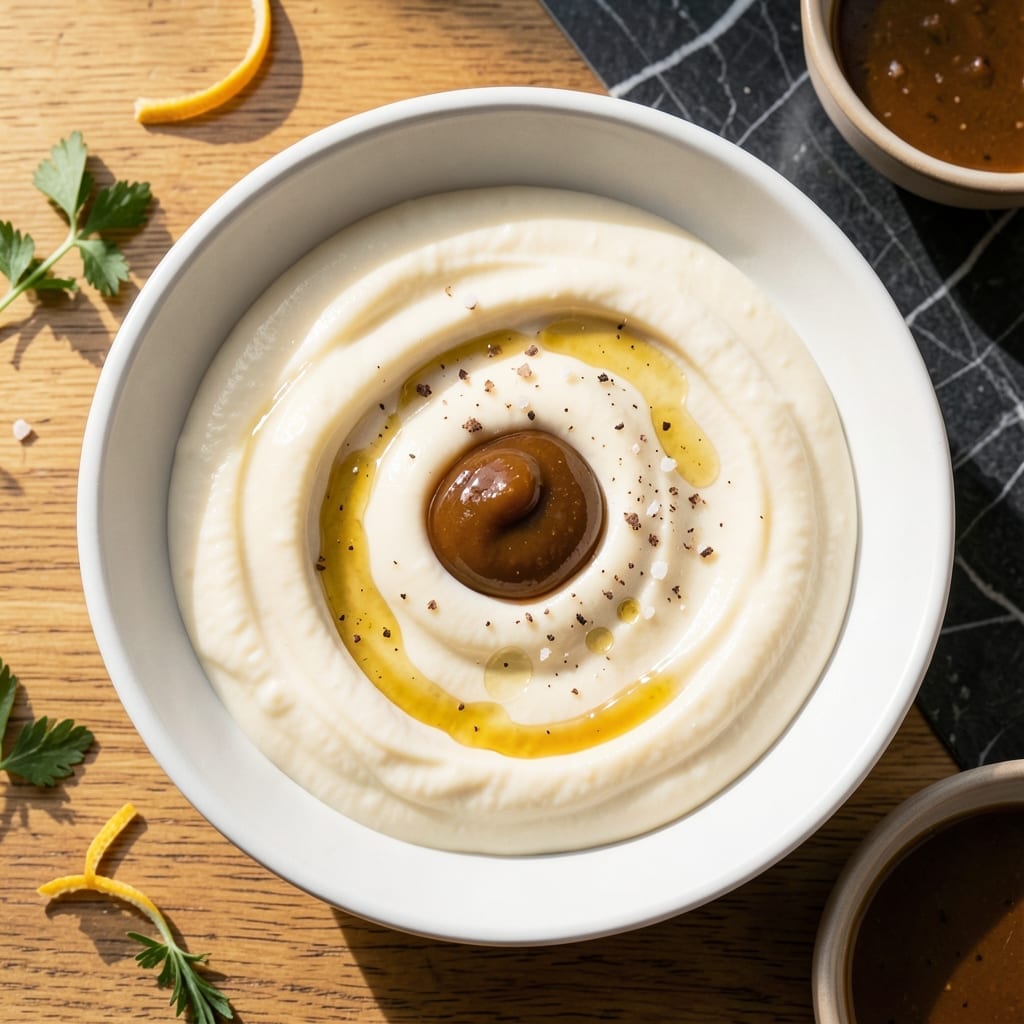
Mastering homemade mayonnaise transforms your cooking with a silky emulsion that store-bought can’t match. My French training taught me that patience and precision create the perfect texture.
This method uses just egg yolks, oil, and acid to build a stable base. The key is slow incorporation—too fast and the mixture breaks. A touch of Dijon adds the sharpness that makes this version special.
You’ll achieve a resturant-quality condiment with a velvety finish. The process takes 5 minutes but demands your full attention. Every spoonful delivers creamy richness with a subtle tang.
Use it immediately or store for up to a week. The difference in sandwiches, dips, and sauces is undeniable.
Ingredients for Gordon Ramsay Mayonnaise
Six ingredients. Five minutes. Restaurant-quality emulsion every single time.
| Ingredient | Amount | Notes |
|---|---|---|
| Large Egg Yolks 🥚 | 2 whole | Room temperature essential |
| Dijon Mustard 🟡 | 1 tbsp | For sharpness and stability |
| White Wine Vinegar 🍷 | 1 tbsp | Or substitute lemon juice |
| Neutral Oil 🫒 | 1 ½ cups | Grapeseed or light olive oil |
| Kosher Salt 🧂 | ¼ tsp | Diamond Crystal preferred |
| Freshly Ground White Pepper ⚪ | 0.125 tsp | For subtle heat |
[recipe_ingredient_scaler]
The egg yolks are non-negotiable—room temperature is key for that silky texture. I grab mine from Whole Foods (pasture-raised if possible) but any grocery store eggs work if they’re fresh. The Dijon mustard isn’t just for flavor; it’s your emulsifier. Maille or Grey Poupon are my go-tos. For oil, neutral is the word—grapeseed or light olive oil (not extra-virgin, that overpowers).
No white wine vinegar? Apple cider or rice vinegar at the same amount works. Short on oil? Cut the quantity by half—you’ll get a thicker mayo. Want more tang? Add an extra teaspoon of lemon juice. The salt should be kosher (Diamond Crystal is my pick) for even distribution. Skip the black pepper—white keeps the color pristine.
Mayo breaks down fast. Store in a glass jar with a tight lid—it’ll keep in the fridge for 1 week. If it separates, just whisk in a teaspoon of warm water. Pro tip: make a double batch. It freezes for 1 month (though texture changes slightly).
Why You’ll Love This Recipe
- Whisk & Done: I can make this in 5 minutes flat—just yolks, mustard, vinegar, and a slow oil drizzle.
- Tangy Depth: The white wine vinegar and Dijon give it that sharp, creamy punch store-bought can’t touch.
- Sandwich Savior: Slather it on burgers, dip fries, or dress a salad—this mayo works everywhere.
- Fridge Staple: A jar lasts me all week, and it’s way cheaper than buying fancy mayo.
Step-by-Step Instructions for Gordon Ramsay Mayonnaise
Here’s the method. Straightforward, tested, works every time.
Step 1: Whisk Egg Yolks and Acid Together
Start with a medium bowl and add the 2 whole Large Egg Yolks. Make sure they’re at room temperature—this is non-negotiable for proper emulsification. Whisk them lightly just to break them up, then add the 1 tbsp White Wine Vinegar and 1 tbsp Dijon Mustard.
Whisk vigorously for 30-45 seconds until the mixture becomes pale and slightly thickened. The mustard acts as an emulsifier while the vinegar adds acidity that balances the richness. You’ll notice the mixture starts to look creamy even before adding any oil.
Step 2: Begin Emulsifying with Oil (Slowly!)
With your whisk in one hand and the 1.5 cups Neutral Oil in the other, start adding the oil in a very thin, steady stream. I’m talking drop by drop at first—this is crucial. Whisk constantly as you add the first ¼ cup of oil.
You’ll see the mixture thicken dramatically as the oil incorporates. If it looks like it’s separating, stop adding oil and whisk vigorously until it comes back together. This slow start builds a stable emulsion foundation that can handle the remaining oil.
Step 3: Add Remaining Oil in a Steady Stream
Once your base is thick and creamy, you can increase the oil flow to a thin but steady stream. Continue whisking constantly as you add the remaining oil. The mixture should become thick enough to hold its shape briefly when the whisk is lifted.
If your arm gets tired (and it will), switch hands or take 5-second breaks between additions. The key is maintaining constant motion. By the time you’ve added all 1.5 cups, you should have a thick, glossy mayonnaise that clings to the whisk.
Step 4: Season and Adjust to Taste
Add the 0.25 tsp Kosher Salt and 0.125 tsp Freshly Ground White Pepper to the mayonnaise. Fold them in gently with a spatula—no more whisking needed at this point. Taste and adjust seasoning if needed, though I find these amounts hit the perfect balance.
The mayonnaise should be thick but still pourable, with a perfect balance of tang from the vinegar, sharpness from the mustard, and richness from the oil. If it’s too thick, you can thin it with a teaspoon of warm water, but with proper technique, this shouldn’t be necessary.
Step 5: Rest and Store Properly
Let the mayonnaise rest at room temperature for 10-15 minutes before using. This allows the flavors to meld together. You’ll notice the texture becomes even smoother during this time.
Transfer to an airtight container and store in the refrigerator for up to 1 week. The cold will thicken it further, so let it sit at room temperature for 10 minutes before using to achieve that perfect spreadable consistency. Always use a clean spoon to prevent contamination.
Pro Tips For Making Gordon Ramsay Mayonnaise
- Slow Oil Drizzle: Add the neutral oil in the thinnest possible stream at first—I learned this the hard way after breaking three mayos in a row. Once it starts to emulsify, you can speed up slightly.
- Room Temp Yolks: Pull your egg yolks out 30 minutes before starting. Cold yolks resist emulsifying, and you’ll end up with a sad, separated mess.
- Skip the Overmixing: Once the mayo thickens, stop whisking. Overworking it after emulsification can actually break the sauce, especially if you’re heavy-handed like me.
- Vinegar Last: Hold off on the white wine vinegar until the very end. Adding it too early can slow down the emulsification, and you’ll be whisking forever to get it right.
Essential Equipment for Perfect Results
Whisk Selection
A balloon whisk is my go-to for this recipe. Its wide surface area incorporates air efficiently while maintaining control. I prefer stainless steel for durability and easy cleaning. The handle should feel comfortable—you’ll be whisking for 3-5 minutes straight. 💪
Bowl Choice
Use a medium stainless steel bowl with high sides to prevent oil splatter. A 3-quart capacity works perfectly for this quantity. The smooth surface helps the whisk glide, and the weight keeps the bowl stable during vigorous whisking.
Oil Dispenser
A squeeze bottle or measuring cup with spout gives you the control needed for that critical slow oil drizzle. I use an OXO Good Grips bottle for precision. Without one, pouring from a regular bottle risks adding oil too quickly.
Temperature Tools
An instant-read thermometer ensures your egg yolks are at room temperature. I check mine if they’ve been in the fridge. A kitchen scale helps measure oil accurately—1.5 cups is about 340g of neutral oil.
Storage Containers
Transfer your finished mayo to a glass jar with an airtight lid. I love Ball mason jars for their sealing ability. The glass won’t absorb odors and lets you see the beautiful pale color of your emulsion. ✨
Cleanup Essentials
Keep hot soapy water ready for immediate cleanup. Emulsified oil can be stubborn to remove once dried. I also keep a silicon spatula handy to scrape every last bit of mayo from the bowl.
Nutrition Facts
Frequently Asked Questions
Can I use a blender instead of whisking by hand?
Yes! A blender or food processor works great. Start with the yolks, mustard, and vinegar, then drizzle oil through the feed tube. It takes 2-3 minutes total. Just don’t overfill the container.
Why did my mayonnaise break?
This usually happens if oil is added too quickly or the yolks weren’t room temperature. Fix it by whisking 1 tsp warm water into the broken mixture to re-emulsify.
Can I substitute whole eggs for yolks?
Yes, but use 1 whole egg instead of 2 yolks. The extra white can make the mayo slightly thinner. For best results, stick to yolks for that rich, creamy texture.
How do I make it thicker?
Add more oil in a slow stream while whisking. If it’s too thick, thin with 1 tsp warm water at a time. The perfect consistency holds its shape briefly.

Trained in classic French technique but raised on slow-cooked ribs and spicy rubs, she blends culinary skill with smoke and soul.
- Recipe for Boneless Pork Chops in Cast Iron Skillet: Sear and Baste to Juicy Perfection - October 3, 2026
- Recipe for Boneless Cross Rib Roast: Slow-Roasted Beef with Herb Crust - October 3, 2026
- Hamburgers in Sauce Recipe Crock Pot: Slow-Cooked Savory Delight - October 3, 2026