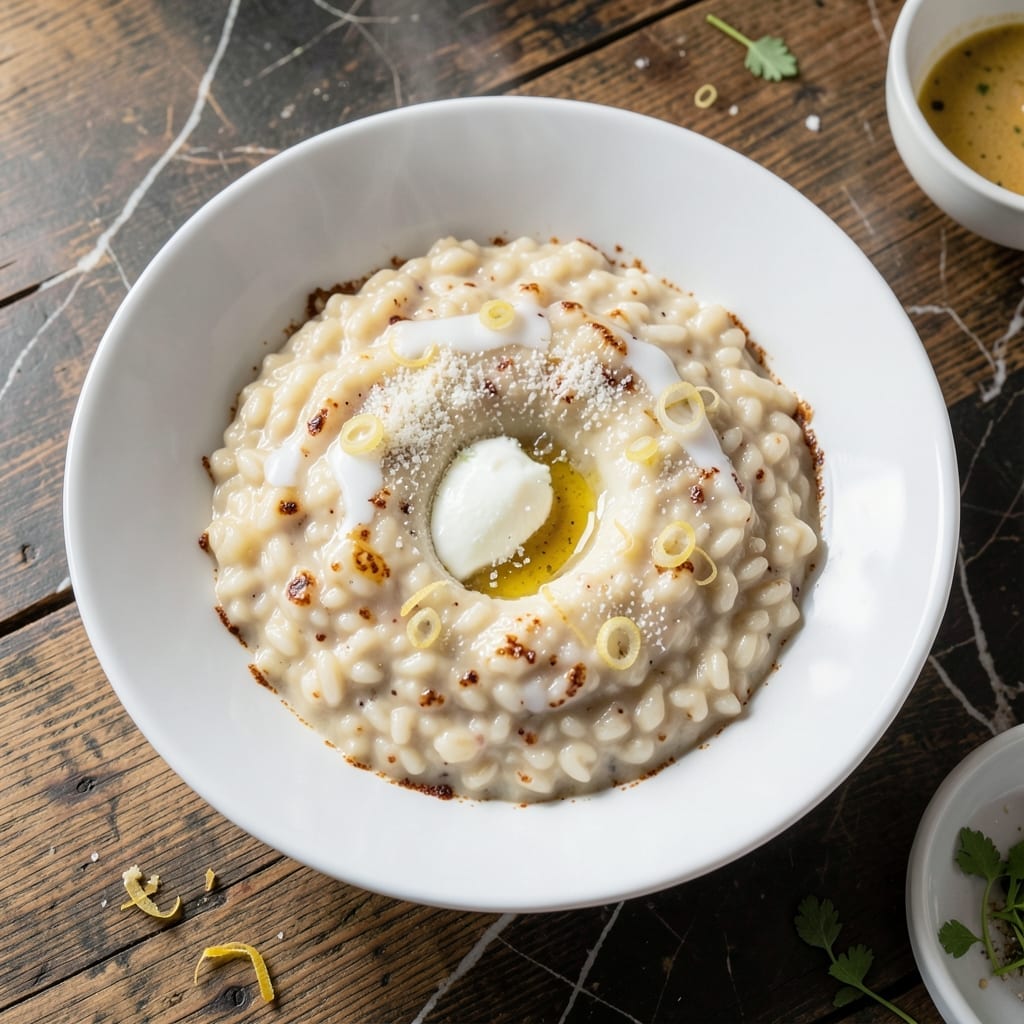
Mastering risotto requires patience and precision, but the payoff is a silky, creamy dish that rivals any restaurant version. I’ve adapted this method to ensure every grain of Arborio rice absorbs just the right amount of stock.
This creation demands constant stirring and gradual stock addition, techniques that transform simple ingredients into something extraordinary. The Parmesan adds depth, while the texture remains perfectly al dente.
Ingredients for Gordon Ramsay Risotto
Quality ingredients transform Arborio rice into a restaurant-worthy dish with patience and technique.
| Ingredient | Amount | Notes |
|---|---|---|
| Arborio Rice 🌾 | 1 ½ cups | Short-grain, essential for creaminess |
| Chicken Stock 🥣 | 6 cups | Low-sodium preferred for control |
| White Wine 🍷 | ½ cup | Dry variety like Pinot Grigio |
| Shallot 🧅 | 1 whole | Finely minced for subtle flavor |
| Garlic Cloves 🧄 | 2 cloves | Minced to aromatic perfection |
| Unsalted Butter 🧈 | 2 tbsp | Divided for cooking and finishing |
| Parmesan Cheese 🧀 | ¾ cup | Freshly grated from wedge only |
| Olive Oil 🫒 | 1 tbsp | Extra-virgin for depth of flavor |
| Kosher Salt 🧂 | 1 tsp | Diamond Crystal brand preferred |
| Freshly Ground Black Pepper 🌶️ | ½ tsp | Coarse grind for texture contrast |
| Fresh Parsley 🌿 | 2 tbsp | Chopped for final garnish |
| Lemon Zest 🍋 | 1 tsp | Optional for bright finish |
[recipe_ingredient_scaler]
The Arborio rice must be authentic—look for Italian imports at specialty stores or Eataly. Stock quality matters more than you think; homemade or premium brands like More Than Gourmet provide cleaner flavor. Parmesan should be Parmigiano-Reggiano from a wedge, never pre-grated. The stock needs to be warm when added, which requires keeping it simmering on a back burner throughout the process.
Vegetable stock can replace chicken stock without issue. No wine? Substitute with additional warm stock plus a splash of lemon juice. Shallots can be swapped for white onions at half the quantity. For a richer finish, add a tablespoon of mascarpone with the butter at the end. The rice should never be rinsed—its starch is crucial for that signature creaminess.
Finished risotto waits for no one—serve immediately. Leftovers thicken considerably; loosen with a splash of warm stock when reheating. Keeps 2-3 days refrigerated, though texture changes. Never freeze risotto—it loses its signature silkiness upon thawing.
Why You’ll Love This Recipe
- One Pot Wonder: I love that this only dirties a single pan—just stir the Arborio rice with the stock and wine until it’s creamy perfection.
- Restaurant-Quality Taste: The shallots and garlic sweated in butter give it that deep, savory base I’d pay good money for at a bistro.
- Crowd Pleaser: Honestly, it’s my go-to for date nights or family dinners—everyone raves about the rich, velvety texture.
- Budget Stretch: A small bag of Arborio and pantry staples feed four generously, and leftovers taste even better the next day.
Step-by-Step Instructions for Gordon Ramsay Risotto
Master the technique that defines this dish—constant stirring, precise timing, and perfect texture.
Step 1: Sauté Aromatics in Olive Oil and Butter
Heat 1 tbsp Olive Oil and 1 tbsp Unsalted Butter in a large, heavy-bottomed pan over medium heat until the butter melts. Add the finely minced Shallot and cook for 2-3 minutes, stirring frequently, until it becomes translucent but doesn’t take on color.
Add the 2 cloves minced Garlic and cook for an additional 30 seconds, just until fragrant. The goal here is to develop the base flavors without browning—this keeps the dish light and allows the other ingredients to shine.
Step 2: Toast the Arborio Rice
Stir in the 1.5 cups Arborio Rice and cook for 1-2 minutes, coating the grains thoroughly in the fat. You’ll notice the edges of the rice become slightly translucent—this is the starch beginning to release, which is essential for creaminess.
Toast the rice just until it emits a light, nutty aroma. Don’t let it brown. This step ensures each grain absorbs the flavors evenly and prevents a gummy texture later.
Step 3: Deglaze with White Wine
Pour in the 0.5 cup White Wine and stir constantly until the liquid is fully absorbed. The wine should sizzle as it hits the pan, releasing its acidity and brightness into the rice. This takes about 2-3 minutes.
Wait until the pan is nearly dry before proceeding. The alcohol cooks off, leaving behind a subtle depth that balances the richness of the other ingredients.
Step 4: Gradually Add Chicken Stock
Add the 6 cups Chicken Stock, 1 ladle at a time (about ½ cup per addition), stirring constantly. Maintain a gentle simmer—adjust the heat if needed to keep it steady but not aggressive. Each addition should be absorbed almost completely before adding the next.
This process takes 18-22 minutes total. The rice is done when it’s al dente—tender with a slight bite in the center. Taste frequently toward the end to catch the perfect moment. The mixture should be creamy but not soupy.
Step 5: Finish with Butter, Parmesan, and Seasonings
Remove the pan from heat. Stir in the remaining 1 tbsp Unsalted Butter, the 0.75 cup Parmesan Cheese, 1 tsp Kosher Salt, and 0.5 tsp Freshly Ground Black Pepper. The residual heat will melt everything into a glossy, cohesive sauce.
Taste and adjust seasoning if needed. For a bright finish, stir in the 1 tsp Lemon Zest (if using). Let the risotto rest for 1 minute, then garnish with 2 tbsp Fresh Parsley before serving immediately. The texture should be fluid yet hold its shape on a spoon.
Pro Tips For Making Gordon Ramsay Risotto
- Toast the Rice: Cook the Arborio rice in the pan for 1-2 minutes until the edges look translucent—this builds a nutty base flavor that carries through the whole dish.
- Warm the Stock: Keep your chicken stock hot in a pot on the stove; adding cold liquid to the risotto slows down cooking and makes the rice gummy.
- Skip the Rinse: Don’t wash the Arborio rice first—the starch on the grains is what gives risotto its creamy texture.
- Wine First: Let the white wine reduce completely before adding stock, or you’ll end up with a sharp, unbalanced flavor in the final dish.
Regional Styles of This Dish
Northern Italian Classic
In Lombardy, this dish is called risotto alla Milanese, featuring saffron for a golden hue. The technique mirrors Gordon Ramsay’s method, with Arborio rice and slow stock addition. Locals insist on using carnaroli rice for even creamier results. 🗺️
Venetian Seafood Style
Coastal Venice adds fresh seafood like shrimp or scallops during the final cooking stage. The stock is often made from fish bones, infusing the dish with briny depth. I’ve seen chefs finish it with a splash of Venetian white wine.
Piedmontese Truffle Luxury
In Piedmont, chefs elevate this creation with white truffle shavings at the end. The earthy aroma pairs perfectly with the creamy rice. Use 1-2 grams of truffle per serving for maximum impact without overpowering the dish. ✨
Roman Spring Variation
Rome’s version incorporates seasonal ingredients like fresh peas and asparagus. The vegetables are sautéed with the shallots, adding sweetness and texture. A touch of Pecorino Romano replaces Parmesan for a sharper finish.
Sicilian Citrus Twist
Southern Italy brightens the dish with lemon zest and orange segments. The citrus cuts through the richness, creating a lighter version perfect for warm weather. I love this approach for summer gatherings.
Nutrition Facts
Frequently Asked Questions
Why must you stir risotto constantly?
Constant stirring releases starch from the Arborio grains, creating that signature creamy texture. It also prevents sticking and ensures even cooking. Stopping can lead to a gummy or uneven dish.
Can I use a different rice variety?
Stick with Arborio, Carnaroli, or Vialone Nano for authentic results. These short-grain varieties have the right starch content. Long-grain rice like basmati won’t absorb liquid the same way.
How do I know when it’s done?
The rice should be al dente—tender with a slight bite in the center. The mixture should spread slightly when spooned but not be soupy. Taste test frequently during the final 5 minutes.

Trained in classic French technique but raised on slow-cooked ribs and spicy rubs, she blends culinary skill with smoke and soul.
- Recipe for Boneless Pork Chops in Cast Iron Skillet: Sear and Baste to Juicy Perfection - October 3, 2026
- Recipe for Boneless Cross Rib Roast: Slow-Roasted Beef with Herb Crust - October 3, 2026
- Hamburgers in Sauce Recipe Crock Pot: Slow-Cooked Savory Delight - October 3, 2026