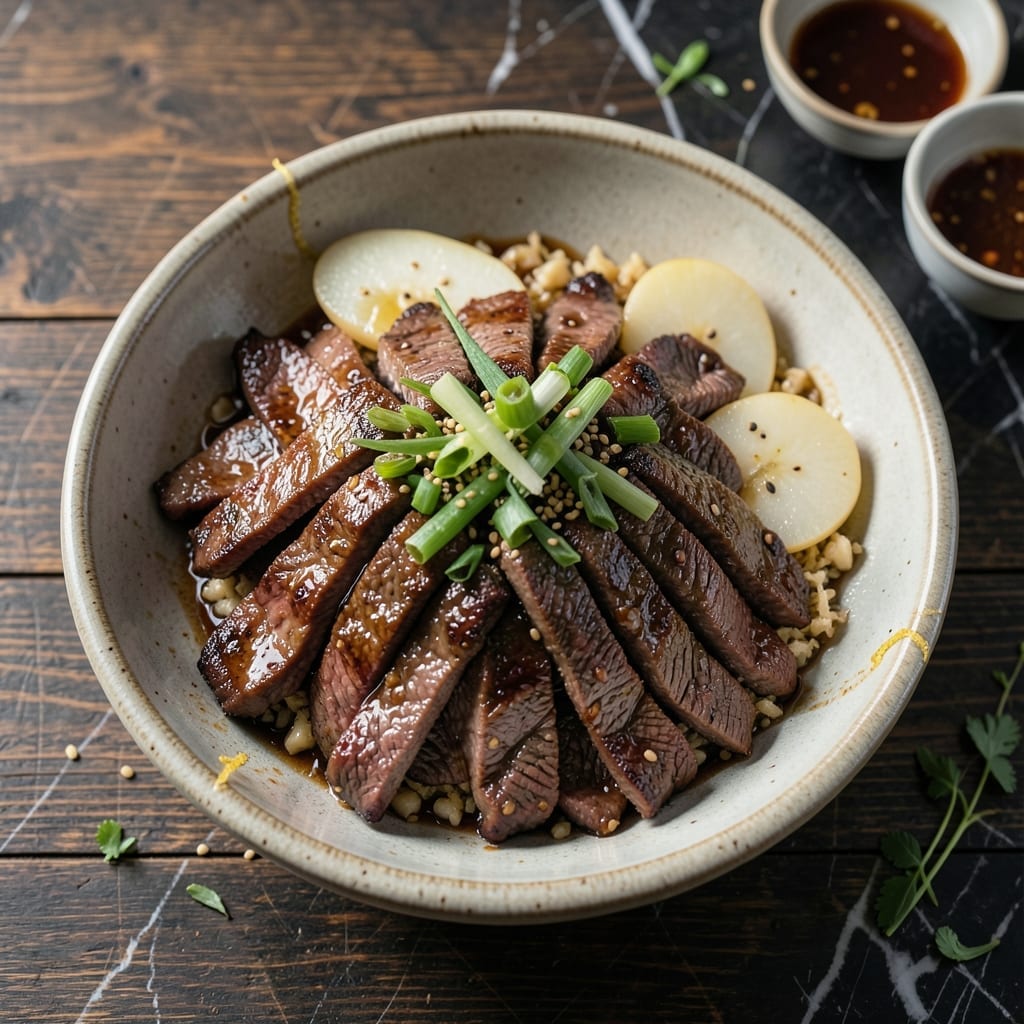
This marinade transforms ordinary meats into restaurant-quality Korean barbecue. The balance of sweet, smoky, and umami flavors creates an irresistible caramelized crust on every bite.
I’ve refined this technique through years of pitmaster experience, ensuring tender results whether you’re using beef, pork, or chicken. The key is patience—let the marinade work its magic.
Ingredients for Korean Barbecue
A few bold ingredients transform meat into that signature smoky-sweet Korean BBQ.
| Ingredient | Amount | Notes |
|---|---|---|
| Beef Ribeye 🥩 | 2 lb | Thinly sliced for marinade absorption |
| Soy Sauce 🫒 | ½ cup | Low-sodium preferred for balance |
| Brown Sugar 🍚 | ⅓ cup | Light or dark, packed firmly |
| Garlic Cloves 🧄 | 6 cloves | Minced finely for even distribution |
| Fresh Ginger 🌿 | 1 tbsp | Grated for maximum flavor infusion |
| Sesame Oil 🫒 | 2 tbsp | Toasted variety for rich aroma |
| Rice Vinegar 🍶 | 2 tbsp | Balances sweetness with acidity |
| Gochujang 🌶️ | 2 tbsp | Korean chili paste for heat |
| Asian Pear 🍐 | ½ whole | Grated, adds natural sweetness |
| Green Onions 🧅 | 4 whole | Thinly sliced for garnish |
| Sesame Seeds 🌾 | 1 tbsp | Toasted for garnish |
| Black Pepper 🌶️ | 1 tsp | Freshly ground for best flavor |
[recipe_ingredient_scaler]
The beef is everything here. Ribeye with good marbling gives you that melt-in-your-mouth texture after grilling. I get mine from Whole Foods or a local butcher—look for well-marbled cuts and slice thinly against the grain. For the soy sauce, Kikkoman low-sodium is my go-to (no weird additives). The gochujang is non-negotiable—find it in the Asian aisle at Walmart or any Korean market.
No Asian pear? Bosc pear or apple at 1:1 works in a pinch. Out of gochujang? Sriracha plus 1 tsp sugar gets you close but won’t be the same. Brown sugar can be swapped for white, but the molasses notes in brown add depth. The sesame oil must be toasted—Kadoya brand is widely available and reliable. Don’t skip the ginger; it’s doing heavy lifting for that authentic flavor.
Marinate the beef for at least 4 hours (overnight is ideal). Cooked meat keeps 3-4 days in the fridge, but it’s best hot off the grill. The marinade itself holds for 1 week in a sealed jar—perfect for prepping ahead.
Why You’ll Love This Recipe
- Marinate & Relax: I toss the ribeye with soy, brown sugar, and garlic in the morning, and by dinner, the flavors have done all the work for me.
- Sweet-Savory Magic: The caramelized brown sugar and soy create this sticky, salty-sweet crust on the beef that’s honestly hard to stop eating.
- Weeknight Hero: Between us, this feeds my family on busy nights but also impresses when I have guests over—no extra effort.
- Leftovers? No Problem: The meat tastes even better the next day in tacos or over rice. I’ll be real: I sometimes make extra just for this.
Step-by-Step Instructions for Korean Barbecue
This method guarantees tender, flavorful meat with that signature caramelized crust.
Step 1: Prepare the Beef and Marinade Base
Thinly slice the 2 lb Beef Ribeye against the grain into ¼-inch thick strips. This increases surface area for maximum marination. The slices should be uniform so they cook evenly on the grill.
In a large bowl, combine the 0.5 cup Soy Sauce, 0.33 cup Brown Sugar, 2 tbsp Sesame Oil, 2 tbsp Rice Vinegar, and 2 tbsp Gochujang. Whisk vigorously until the brown sugar fully dissolves and the mixture becomes smooth and slightly glossy.
Step 2: Add Aromatics and Fruit for Depth
To the bowl, add the 6 cloves Garlic Cloves (minced), 1 tbsp Fresh Ginger (grated), 0.5 whole Asian Pear (grated), and 1 tsp Black Pepper. The Asian pear acts as a natural tenderizer while adding subtle sweetness that balances the spicy gochujang.
Stir everything together until fully incorporated. The marinade should have a thick, paste-like consistency with visible flecks of garlic and ginger. Let it sit for 5 minutes to allow the flavors to meld before adding the meat.
Step 3: Marinate the Beef for Maximum Flavor
Add the sliced beef ribeye to the marinade, ensuring each piece is fully coated. I like to use my hands for this—it’s the best way to make sure every slice gets even coverage. Press the meat down into the marinade so it’s fully submerged.
Cover the bowl with plastic wrap and refrigerate for at least 4 hours, or ideally overnight. The longer it marinates, the deeper the flavor penetration. You’ll know it’s ready when the meat has absorbed most of the liquid and taken on a rich, reddish-brown hue.
Step 4: Grill to Perfection
Preheat your grill to medium-high heat (about 400°F). Remove the beef ribeye from the marinade, shaking off any excess, and arrange the slices on the grill in a single layer. Cook for 3-4 minutes per side until the edges are charred and the center reaches your desired doneness.
Avoid overcrowding the grill—this steams the meat instead of searing it. You want those beautiful grill marks and a slight caramelization from the sugars in the marinade. The beef ribeye should sizzle aggressively when it hits the grill.
Step 5: Rest and Garnish
Transfer the grilled beef ribeye to a serving platter and let it rest for 5 minutes. This allows the juices to redistribute, ensuring every bite is moist and flavorful. Tent loosely with foil if needed to keep warm.
Thinly slice the 4 whole Green Onions and sprinkle them over the meat along with the 1 tbsp Sesame Seeds. The green onions add a fresh, crisp contrast to the rich, smoky-sweet beef. Serve immediately with steamed rice and your favorite banchan.
Pro Tips For Making Korean Barbecue
- Slice Against Grain: Freeze the ribeye for 20 minutes first to make thin slicing easier, then cut against the grain for the most tender Korean BBQ experience.
- Bloom Your Aromatics: Cook the minced garlic and ginger in a little oil for 30 seconds before adding other marinade ingredients—this wakes up their flavors.
- Don’t Over-Marinate: Ribeye only needs 2-4 hours in the soy-brown sugar mix; longer soaks can turn the meat mushy, especially with the sugar breaking down the proteins.
- Use a Cast Iron: A screaming hot cast iron skillet gives the best sear and caramelization for that signature Korean BBQ crust, better than a regular pan.
Serving Suggestions for Leftovers
Traditional Presentation
Serve this dish on a cast iron griddle at the table for an authentic experience. The sizzling meat creates an unforgettable aroma. I love watching guests cook their own portions to their preferred doneness. 🔥
Rice Pairings
Steamed short-grain white rice is essential—it soaks up the marinade beautifully. I use a 1:1.25 rice-to-water ratio in my Zojirushi rice cooker for perfect texture every time. The rice should be sticky enough to pick up with chopsticks.
Banchan Sides
Kimchi is non-negotiable—its tangy spice cuts through the richness. I also serve quick-pickled cucumbers (slice thin, salt, and vinegar for 30 minutes). These add freshness and crunch to balance the meal.
wrap It Up
For a fun twist, offer butter lettuce leaves for DIY wraps. Add a spoonful of rice, a slice of grilled meat, and top with ssamjang (mix 1 tbsp gochujang with 1 tbsp doenjang). This interactive style is always a hit at my backyard gatherings.
Fresh Garnishes
Beyond the green onions and sesame seeds, offer thin-sliced garlic and jalapeños on the side. These let guests customize their heat level. I also set out extra toasted sesame oil for drizzling.
Beverage Pairings
A crisp Korean lager like Hite or OB complements the smoky-sweet flavors perfectly. For non-alcoholic options, barley tea (boricha) provides a nutty contrast. Both are easy to find at any Korean market. 💛
Nutrition Facts
Frequently Asked Questions
What can I use instead of Asian pear?
Bosc pear or apple works in a 1:1 ratio. These fruits provide similar natural sweetness and tenderizing properties.
How long should I marinate the meat?
Marinate for at least 4 hours, but overnight yields the best flavor penetration. The meat should turn a rich, reddish-brown color when ready.
Can I use a different cut of beef?
Yes, but choose well-marbled cuts like sirloin or flank steak. Slice thinly against the grain for maximum tenderness and marinade absorption.
Why is my meat tough instead of tender?
This usually happens from overcooking or slicing with the grain. Cook to medium doneness and always slice against the grain for tenderness.

Trained in classic French technique but raised on slow-cooked ribs and spicy rubs, she blends culinary skill with smoke and soul.
- Recipe for Boneless Pork Chops in Cast Iron Skillet: Sear and Baste to Juicy Perfection - October 3, 2026
- Recipe for Boneless Cross Rib Roast: Slow-Roasted Beef with Herb Crust - October 3, 2026
- Hamburgers in Sauce Recipe Crock Pot: Slow-Cooked Savory Delight - October 3, 2026