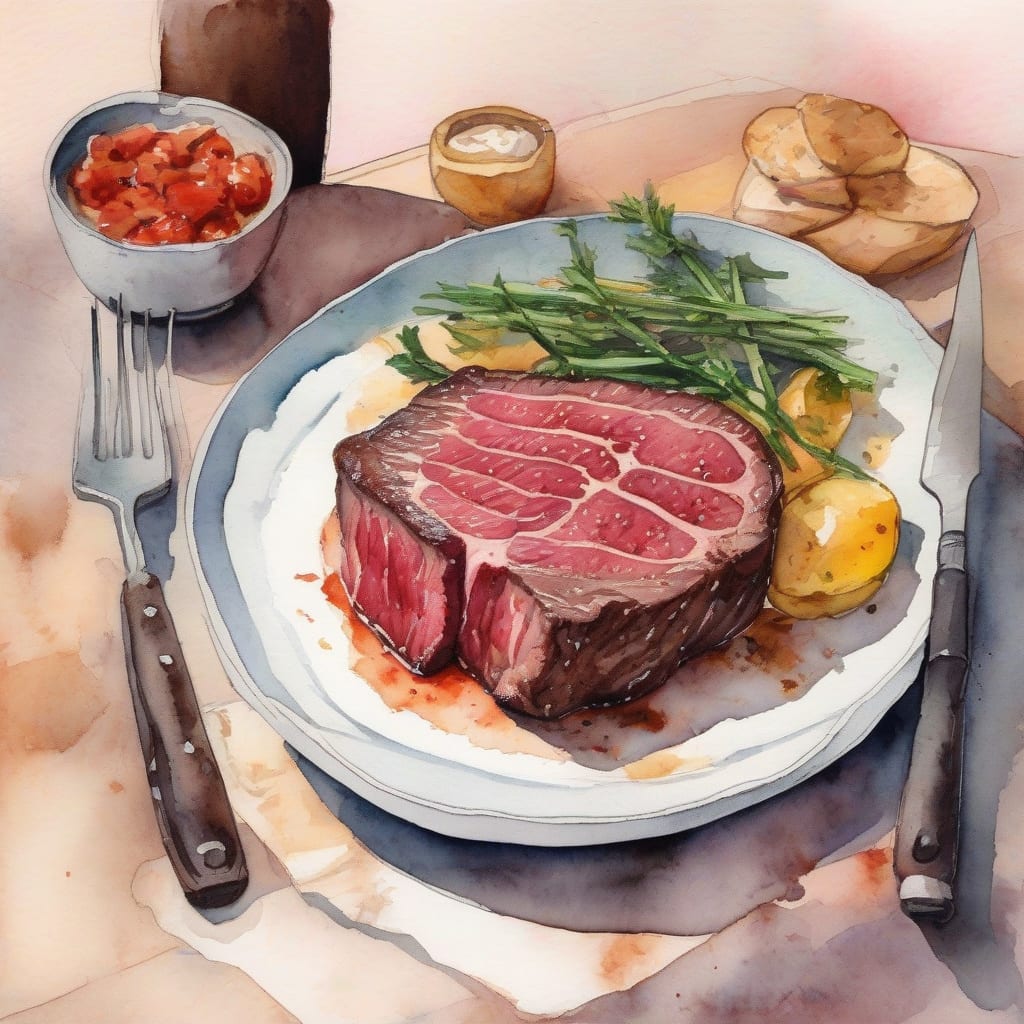
I’ve watched Gordon Ramsay cook steak countless times, and his pan-to-oven method is pure genius. 🔥 The technique delivers restaurant-quality results every single time—perfectly seared crust outside, juicy and tender inside, cooked to your exact preference.
The secret is starting with screaming-hot cast iron, then finishing in a blazing oven while basting with butter, garlic, and thyme. This two-step approach gives you control that stovetop-only cooking simply can‘t match.
What you’ll achieve is steakhouse-quality beef with a caramelized, buttery crust and that perfect edge-to-edge doneness. No guesswork, no overcooked edges—just pure, mouthwatering perfection on your plate.
Ingredients for gordon ramsay steak recipe finish in oven
Here’s everything you need to create Gordon Ramsay’s legendary pan-to-oven steak at home.
| Ingredient | Amount | Notes |
|---|---|---|
| Ribeye Steak 🥩 | 2 pieces | 1.5 inches thick, room temperature |
| Sea Salt 🧂 | 1 tbsp | Coarse flakes for crust |
| Black Pepper 🌶️ | 2 tsp | Freshly cracked, coarse grind |
| Olive Oil 🫒 | 2 tbsp | High smoke point preferred |
| Unsalted Butter 🧈 | 4 tbsp | European style for richness |
| Garlic Cloves 🧄 | 4 cloves | Smashed, skin on for basting |
| Fresh Thyme Sprigs 🌿 | 4 whole | For aromatic butter basting |
| Fresh Rosemary Sprig 🌿 | 1 whole | Optional, adds pine notes |
[recipe_ingredient_scaler]
Find quality ribeye steaks at your local butcher or the meat counter at Whole Foods. Look for well-marbled USDA Choice or Prime grade with at least 1.5 inches thickness—thinner steaks overcook too quickly with this method. Snake River Farms and Crowd Cow offer exceptional mail-order options. For butter, European brands like Kerrygold or Plugrá have higher fat content that creates a richer basting sauce.
Can't find ribeye? New York strip or filet mignon work beautifully with this technique. If you don't have fresh thyme, use dried thyme at one-third the amount, though fresh herbs create superior flavor when basting. Smashed garlic cloves with skin on release flavor without burning—don't use minced garlic. Substitute avocado oil if olive oil isn't available, as it handles high heat well.
Let steaks sit at room temperature for 30 minutes before cooking for even doneness. Store fresh herbs wrapped in damp paper towels in the crisper for up to one week. Use leftover herb butter on vegetables, bread, or seafood within 5 days.
Step-by-Step Instructions for Gordon Ramsay’s Steak Finished in Oven
Follow my proven technique and you’ll achieve steakhouse-quality results with a perfect crust every time.
🔥 Step 1: Sear the Ribeye to Build the Crust
Heat a cast-iron or heavy-bottomed oven-safe skillet over high heat until it’s smoking hot—this takes about 3-4 minutes. While the pan heats, pat your ribeye steaks completely dry with paper towels and season both sides generously with the sea salt and freshly cracked black pepper. I press the seasoning into the meat firmly so it adheres and forms that signature crust.
Add the olive oil to the smoking-hot pan and swirl to coat. Immediately lay the steaks in the pan, laying them away from you to avoid splatters. You should hear an aggressive sizzle—that’s the sound of a proper sear. Cook without moving them for 2-3 minutes until a deep golden-brown crust forms on the bottom.
Flip the steaks only once using tongs, never a fork (piercing releases precious juices). Sear the second side for another 2-3 minutes until equally caramelized. The steaks should release easily from the pan when they’re ready to flip—if they stick, give them another 30 seconds.
🍳 Step 2: Add Butter and Aromatics for Basting
Reduce the heat to medium and add all 4 tablespoons of unsalted butter to the pan along with the smashed garlic cloves, fresh thyme sprigs, and fresh rosemary sprig. The butter will foam and melt quickly, absorbing all those aromatic flavors from the herbs and garlic.
Tilt the pan slightly toward you and use a large spoon to continuously baste the steaks with the foaming butter for 1-2 minutes. This is Gordon’s signature move—it adds incredible flavor and helps cook the top surface while building even more crust. You’ll see the butter turn golden brown and smell absolutely incredible as the garlic and herbs release their oils.
🔥 Step 3: Transfer to Oven for Perfect Doneness
Immediately transfer the entire skillet to a preheated 400°F oven. For medium-rare, cook for 4-5 minutes until the internal temperature reaches 130-135°F. For medium, go 6-7 minutes until it hits 140-145°F. I always use an instant-read thermometer inserted into the thickest part of the steak—guessing leads to overcooked disappointment.
The oven provides gentle, even heat that brings the center to temperature without overcooking the exterior. This two-stage method—sear then oven—is what separates amateur steaks from professional ones. Don’t skip the thermometer check; even 5 degrees makes a massive difference in texture.
⏰ Step 4: Rest and Slice for Maximum Juiciness
Remove the skillet from the oven using a thick oven mitt (that handle is dangerously hot). Transfer the steaks to a cutting board and spoon some of that herb-infused butter over the top. Tent loosely with foil and let them rest for 5-8 minutes—this allows the juices to redistribute throughout the meat instead of pooling on your plate.
Slice against the grain into ½-inch thick pieces if serving family-style, or serve whole for individual plating. Each bite should deliver a crispy, seasoned exterior giving way to tender, juicy, perfectly pink meat. Drizzle any remaining pan butter over the sliced steak and serve immediately with your favorite sides.
Gordon Ramsay’s signature steak technique combines the best of both worlds: a beautifully seared crust from stovetop cooking and perfectly even doneness achieved in the oven. This method isn’t just restaurant magic—it’s a game-changer for home cooks who want steakhouse-quality results every single time. 🔥
The secret lies in understanding why this two-step approach works so brilliantly. When you start your steak in a screaming hot cast-iron skillet, you create that coveted caramelized exterior through the Maillard reaction. This develops complex flavors and that irresistible golden-brown crust we all crave. However, cooking a thick steak entirely on the stovetop often leads to an overcooked exterior before the center reaches your desired temperature.
That’s where the oven comes in. By transferring your seared steak to a preheated oven (typically around 400°F), you allow gentle, even heat to penetrate the meat from all sides. This ensures your steak cooks uniformly without burning the outside, giving you that perfect medium-rare center with a gorgeous crust. 😋
The timing is crucial: For a 1.5-inch thick ribeye or New York strip, you’ll typically sear for 2-3 minutes per side, then finish in the oven for 4-6 minutes depending on your preferred doneness. Ramsay always emphasizes using a meat thermometer—aim for 125°F for medium-rare, 135°F for medium.
What makes this technique particularly foolproof is its consistency. Unlike grilling, where hot spots and weather conditions can affect results, the oven provides controlled, reliable heat. Plus, while your steak finishes cooking, you can prepare your sides or that essential herb butter without hovering over the stove. It’s the professional approach that transforms good home cooking into extraordinary dining experiences. 🍖
Tips & Tricks for Perfect Gordon Ramsay Steak Finished in Oven
These chef-approved tips will help you nail this technique and avoid common pitfalls every time.
Room Temperature is Non-Negotiable: Take your steaks out of the fridge 30-40 minutes before cooking. Cold steak hitting a hot pan causes the exterior to overcook before the center warms up. I set mine on the counter while I prep everything else—this simple step ensures even cooking from edge to center and prevents that dreaded gray band around a cold middle.
Don’t Crowd the Pan: If your skillet isn’t large enough to fit both steaks with at least 2 inches between them, cook them one at a time. Crowding drops the pan temperature instantly, causing steaks to steam rather than sear. That gorgeous crust in Step 1 only forms with proper heat contact. 🔥
Butter Basting Technique: In Step 2, when you’re tilting the pan to baste, angle it about 30 degrees and spoon rapidly but carefully—you want to coat the entire surface without splashing. The foaming butter should smell nutty and aromatic, not burnt. If it starts smoking excessively, pull the pan off heat for 15-20 seconds to prevent the butter from burning.
Carryover Cooking Matters: Your steak’s internal temperature will rise 5-10 degrees during the rest in Step 4. Pull ribeye from the oven at 125-130°F for perfect medium-rare after resting. I’ve learned this the hard way—leaving it in until it hits 135°F means you’ll end up with medium, not medium-rare.
Nutrition Facts
485kcal
[recipe_ingredient_scaler]

Trained in classic French technique but raised on slow-cooked ribs and spicy rubs, she blends culinary skill with smoke and soul.
- Recipe for Boneless Pork Chops in Cast Iron Skillet: Sear and Baste to Juicy Perfection - October 3, 2026
- Recipe for Boneless Cross Rib Roast: Slow-Roasted Beef with Herb Crust - October 3, 2026
- Hamburgers in Sauce Recipe Crock Pot: Slow-Cooked Savory Delight - October 3, 2026