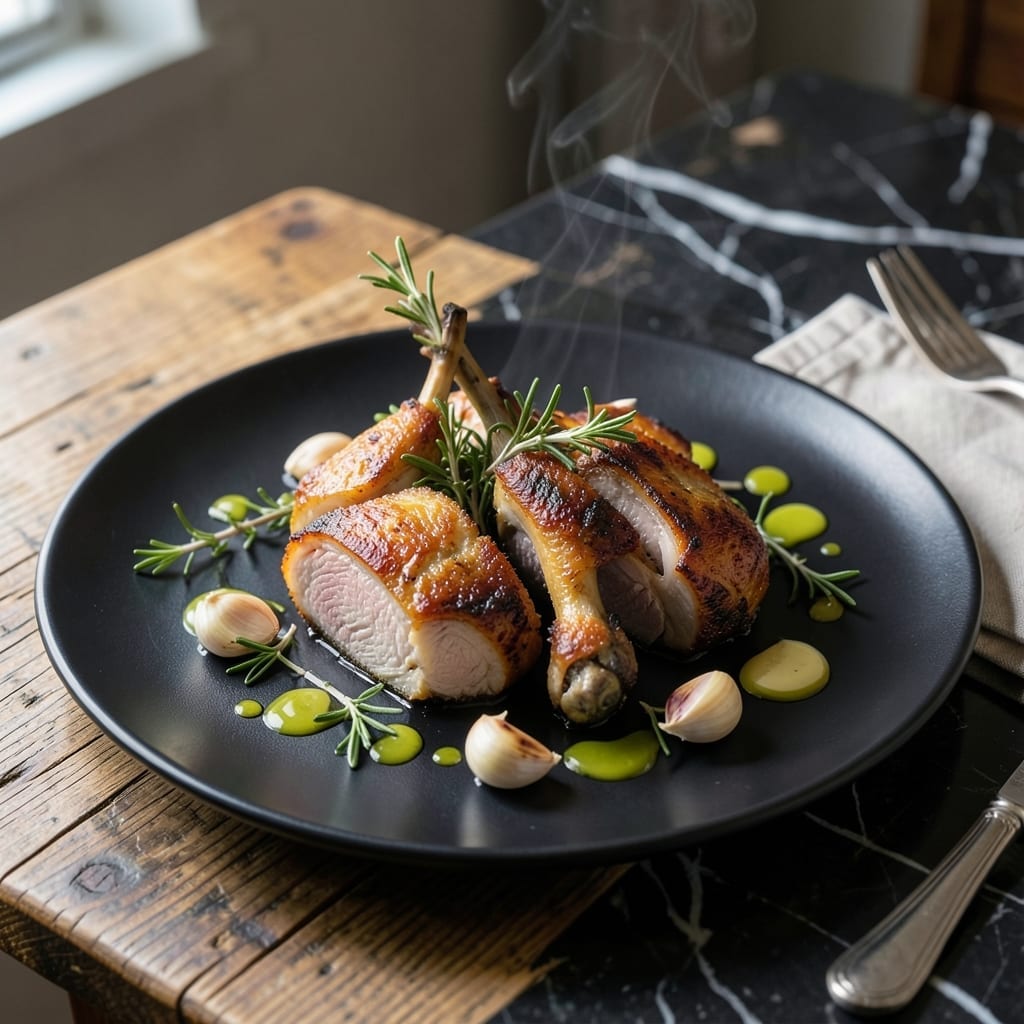
Elegance doesn’t require complexity. This rabbit dish proves that simple techniques can yield restaurant-quality results with the right ingredients and care.
I learned this from my grandmother, who never measured by spoons but by instinct. Her approach was always about coaxing out natural flavors, not masking them.
What you’ll create is tender, aromatic meat with herbs that complement rather than overpower. The method is straightforward, the result anything but ordinary.
Perfect for special occasions when you want to impress without the stress. Here’s how to make it right.
Ingredients for Gourmet Recipe Rabbit Food
Elegant yet approachable ingredients transform humble rabbit into a showstopper dish worth celebrating.
| Ingredient | Amount | Notes |
|---|---|---|
| Rabbit Legs and Saddles 🐰 | 2 ½ lb | Bone-in, skin-on for depth |
| Extra-Virgin Olive Oil 🫒 | ¼ cup | Divided for searing and finishing |
| Unsalted Butter 🧈 | 4 tbsp | For basting and sauce |
| Fresh Thyme Sprigs 🍃 | 6 whole | Plus extra for garnish |
| Fresh Rosemary Sprigs 🌿 | 4 whole | Woody stems removed |
| Garlic Cloves 🧄 | 6 cloves | Lightly crushed, peeled |
| Shallots 🧅 | 2 whole | Finely minced for sauce |
| Dry White Wine 🍷 | ¾ cup | Sauvignon Blanc or Pinot Grigio |
| Chicken Stock 🍲 | 1 ½ cups | Low-sodium preferred |
| Dijon Mustard 🟡 | 1 tbsp | Whole-grain for texture |
| Kosher Salt 🧂 | 1 ½ tsp | Diamond Crystal brand preferred |
| Freshly Ground Black Pepper 🌶️ | 1 tsp | Coarse grind for finish |
| Fresh Parsley Leaves 🌿 | ¼ cup | Chopped, for garnish |
[recipe_ingredient_scaler]
The rabbit is everything here. Source from a reputable butcher like Whole Foods or a local farm—look for fresh, pink meat with a mild scent. Bone-in pieces add depth to the sauce, so avoid pre-cut stew meat. If you’re new to cooking rabbit, ask the butcher to break it down for you (it’s easier than it looks). The herbs should be vibrant and aromatic—skip anything wilted or brown.
No white wine? Substitute with extra stock plus a splash of lemon juice. Fresh herbs not on hand? Dried at one-third the amount works in a pinch, but the flavor won’t be as bright. For a richer sauce, stir in a spoonful of crème fraîche at the end (trust me on this). The mustard can be swapped for whole-grain if you prefer more texture, or skip it entirely for a milder taste.
Rabbit is best cooked the day it’s purchased, but it’ll keep in the fridge for 1-2 days if wrapped tightly. Leftovers reheat beautifully—store in an airtight container for up to 3 days. The sauce thickens as it cools, so thin with a splash of stock when reheating.
Why You’ll Love This Recipe
- One Pan Wonder: I just sear the rabbit in olive oil and butter, toss in the herbs, and let the oven do the rest.
- Rich Herb Crust: The thyme and rosemary form this insane aromatic crust on the meat—honestly, I could just eat that part alone.
- Dinner Party Star: I serve this with roasted veggies, and suddenly it looks like I’ve been cooking all day.
- Leftovers Luxe: The flavors deepen overnight, so next-day sandwiches with the cold rabbit? Ridiculously good.
Step-by-Step Instructions for Herb-Infused Rabbit
Master these refined techniques and your rabbit will emerge tender, herbaceous, and restaurant-worthy.
Step 1: Season and Sear the Rabbit
Pat the 2.5 lb Rabbit Legs and Saddles completely dry with paper towels. This is non-negotiable—moisture prevents proper browning. Season all sides generously with 1.5 tsp Kosher Salt and 1 tsp Freshly Ground Black Pepper. The salt pulls out moisture initially but reabsorbs for perfectly seasoned meat.
Heat 2 tablespoons of the 0.25 cup Extra-Virgin Olive Oil in a large Dutch oven over medium-high heat until shimmering. Add the rabbit pieces in a single layer, being careful not to overcrowd the pan. Sear undisturbed for 4-5 minutes per side until deep golden brown and easily releases from the pan.
Step 2: Build the Aromatic Foundation
Transfer the seared rabbit to a plate. In the same pot, reduce heat to medium and add the remaining extra-virgin olive oil. Add the 2 whole Shallots, 6 cloves Garlic Cloves, 6 whole Fresh Thyme Sprigs, and 4 whole Fresh Rosemary Sprigs. Sauté for 2-3 minutes until the shallots soften and the garlic becomes fragrant and lightly golden.
This base creates a complex flavor profile that will infuse into both the meat and sauce. The herbs should sizzle gently in the oil without burning. Stir occasionally to prevent the garlic from coloring too quickly.
Step 3: Deglaze and Braise to Perfection
Pour in the 0.75 cup Dry White Wine and scrape up all browned bits from the bottom of the pot with a wooden spoon. Let it simmer for 2 minutes until reduced by half. This deglazing step captures all the concentrated caramelized flavors from the searing process.
Return the rabbit to the pot along with any accumulated juices. Add the 1.5 cups Chicken Stock, 1 tbsp Dijon Mustard, and 4 tbsp Unsalted Butter. Bring to a gentle simmer, then reduce heat to low. Cover and braise for 45-50 minutes, turning the pieces halfway through, until the meat is fork-tender and nearly falling off the bone.
Step 4: Finish and Garnish with Freshness
Uncover and simmer for an additional 5-7 minutes to reduce the sauce to a velvety consistency. The sauce should coat the back of a spoon and have a rich, glossy appearance. Taste and adjust seasoning if needed, though the initial salting should be sufficient.
Discard the woody herb stems and transfer the rabbit to serving plates. Spoon the reduced sauce over the top and garnish with the 0.25 cup Fresh Parsley Leaves, chopped. The parsley adds a bright, fresh contrast to the rich, herb-infused sauce. Serve immediately while the rabbit is at its most tender and the sauce is at its peak flavor.
Pro Tips For Making Gourmet Recipe Rabbit Food
- Sear Hot, Finish Low: Start with a screaming hot pan—about 2 tablespoons of olive oil—to get a deep golden crust on the rabbit, then drop the heat to medium-low to cook through without drying it out. I learned this the hard way after ruining two saddles by rushing the process.
- Dry the Rabbit Well: Pat the legs and saddles bone-dry with paper towels before seasoning; even a little moisture steams the meat instead of searing it. Sounds tedious, but it’s the difference between a soggy piece and one with that perfect crisp skin.
- Skip the Old Herbs: Fresh thyme and rosemary lose their punch fast—if the sprigs are wilted or brown, toss them and grab new. My grandmother swore by this, and she was right: dull herbs make a dull dish.
- Baste with Butter: Tilt the pan and spoon the foaming butter, thyme, and rosemary over the rabbit for the last 3-4 minutes of cooking. It’s messy, but it coats every bite in flavor and keeps the meat juicy.
Wine and Beer Pairings for gourmet recipe rabbit food
White Wine Pairings
A crisp Sauvignon Blanc from the Loire Valley mirrors the dry white wine in the recipe, enhancing the herbaceous notes. I love how its citrusy acidity cuts through the richness of the dish. A New Zealand version adds tropical fruit nuances that complement the thyme and rosemary beautifully. 🍷
Rich White Options
For a fuller-bodied pairing, try a Chardonnay from Burgundy with its buttery texture that matches the braised sauce. Avoid heavily oaked versions—they can overpower the delicate rabbit flavors. A well-balanced California Chardonnay also works wonderfully.
Red Wine Choices
Light reds like Pinot Noir from Oregon offer earthy notes that harmonize with the herbs. The 1.5 cups Chicken Stock and 4 tbsp Unsalted Butter create a richness that stands up to red wine. Serve slightly chilled for best results.
Beer Pairings
A Belgian Saison with its peppery spice and citrus notes complements the dish perfectly. I found that the effervescence cleanses the palate between bites. For a darker option, a Dunkelweizen offers malt sweetness that balances the savory flavors. 🍺
Rosés to Consider
Dry Provence rosé brings a subtle berry note that pairs beautifully with the 2.5 lb Rabbit Legs and Saddles. The acidity matches the dish’s brightness, while the light body doesn’t compete with the delicate meat. Serve well-chilled.
Non-Alcoholic Option
For a non-alcoholic pairing, try a sparkling water with a twist of lemon and a sprig of thyme. The citrus enhances the dish’s flavors while the herbs tie everything together. It’s my go-to when I want to skip alcohol but still elevate the meal.
Nutrition Facts
Frequently Asked Questions
What’s the best way to source rabbit meat?
Visit a trusted butcher or local farm for 2.5 lb of fresh, bone-in pieces. Look for pink meat with a mild scent. Avoid pre-cut stew meat for this dish.
Can I substitute the white wine?
Yes! Use extra chicken stock plus a splash of lemon juice. This maintains the acidity needed to balance the rich 4 tbsp Unsalted Butter and herbs.
How do I know when it’s done?
The meat should be fork-tender and nearly falling off the bone after 45-50 minutes of braising. The sauce will thicken as it cools.
What if my sauce is too thin?
Uncover and simmer for an additional 5-7 minutes. The sauce should coat the back of a spoon when ready. Avoid boiling vigorously.

Trained in classic French technique but raised on slow-cooked ribs and spicy rubs, she blends culinary skill with smoke and soul.
- Recipe for Boneless Pork Chops in Cast Iron Skillet: Sear and Baste to Juicy Perfection - October 3, 2026
- Recipe for Boneless Cross Rib Roast: Slow-Roasted Beef with Herb Crust - October 3, 2026
- Hamburgers in Sauce Recipe Crock Pot: Slow-Cooked Savory Delight - October 3, 2026