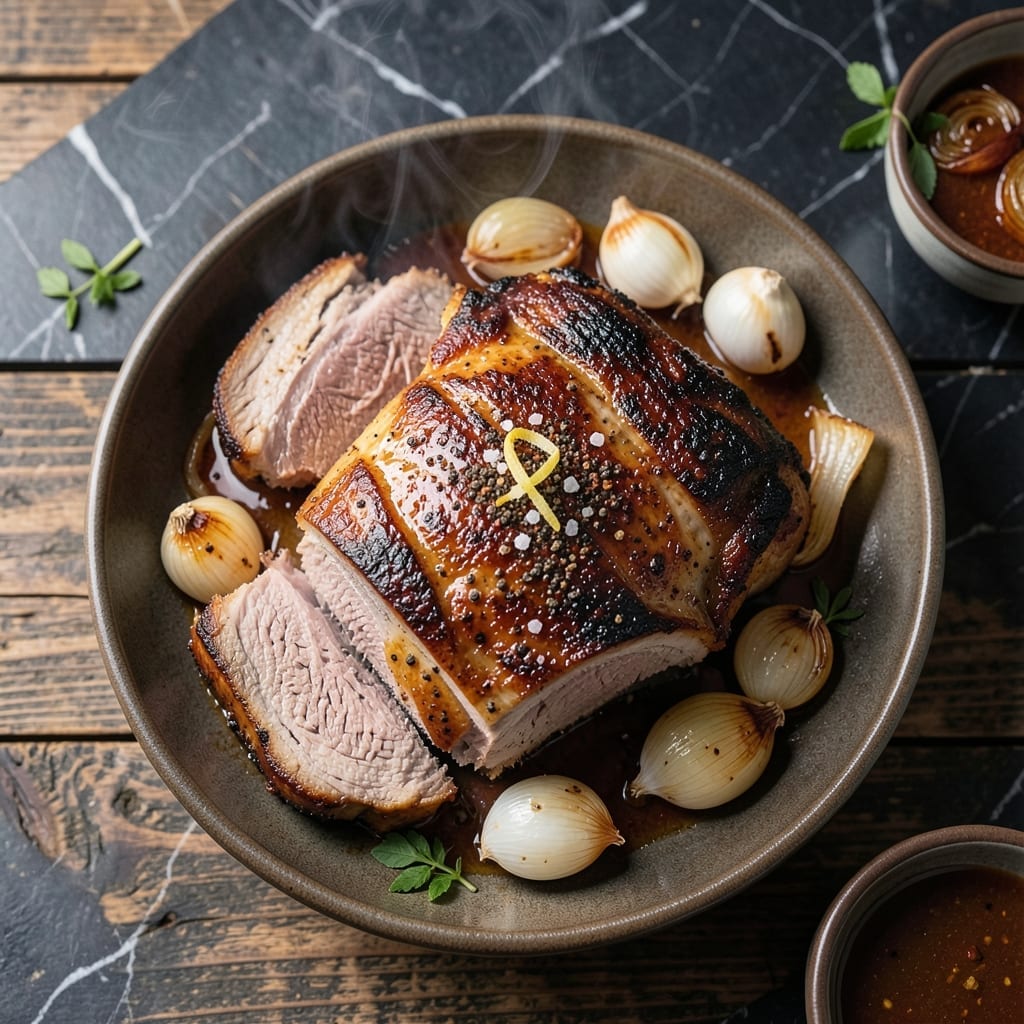
There’s something magical about watching a pork roast transform on a Green Mountain Grill, emerging with that signature smoke-kissed crust.
This method delivers tender meat every time, with a simple rub and precise temperature control that lets the wood pellets work their magic.
Ingredients for Green Mountain Grill Pork Roast
A bold dry rub plus pork shoulder creates that signature smoke-kissed crust on your pellet grill.
| Ingredient | Amount | Notes |
|---|---|---|
| Pork Shoulder Roast 🥩 | 4 lb | Bone-in for best flavor |
| Coarse Kosher Salt 🧂 | 2 tbsp | Diamond Crystal preferred |
| Freshly Ground Black Pepper 🌶️ | 2 tsp | Coarse grind for texture |
| Garlic Powder 🧄 | 2 tsp | Not garlic salt |
| Onion Powder 🧅 | 2 tsp | Freshly opened for potency |
| Smoked Paprika 🌶️ | 1 ½ tsp | Sweet or hot variety |
| Dried Thyme 🍃 | 1 tsp | Rubbed between fingers |
| Brown Sugar 💰 | ¼ cup | Light or dark works |
| Olive Oil 🫒 | 2 tbsp | For binding dry rub |
| Apple Cider Vinegar 🍏 | ¼ cup | For spritzing during smoke |
| Wood Pellets 🪵 | 1 lb | Hickory or applewood recommended |
[recipe_ingredient_scaler]
The pork shoulder is non-negotiable here. Bone-in gives you that fall-apart texture—boneless saves time but sacrifices flavor. Most butcher shops will cube it for you if you ask, but a whole roast with good marbling is ideal. Look for 4-5 lbs if you’re feeding a crowd. The fat cap should be at least a quarter-inch thick for self-basting during the long smoke.
No smoked paprika? Regular paprika plus a pinch of cayenne gets you close. Short on thyme? Rosemary at half the amount works well. The brown sugar can be swapped for maple syrup in the rub (use 2 tbsp). If you’re out of apple cider vinegar, white vinegar in a pinch—just don’t overdo it. Wood pellet choice matters: hickory for robust smoke, fruitwoods for milder flavor.
Store the pork in the fridge for up to 3 days before smoking, or freeze for 6 months. The dry rub keeps indefinitely in a cool pantry. Leftover smoked pork reheats beautifully in a slow oven with a splash of apple juice to keep it moist.
Why You’ll Love This Recipe
- One roast, multiple meals: tacos tonight, sandwiches tomorrow, and soup bones for the freezer.
- Set It and Forget It: I just rub the pork shoulder with salt, pepper, garlic and onion powder, then let the Green Mountain grill do all the work.
- That Smoky Crust: The dry rub forms this ridiculous bark that cracks when you slice it—so satisfying.
- Feeds My Crew: One roast, multiple meals: tacos tonight, sandwiches tomorrow, and soup bones for the freezer.
Step-by-Step Instructions for Smoke-Kissed Pork Roast
Master the pellet grill method for fall-apart tender meat with a perfect bark.
Step 1: Prepare the Dry Rub and Season the Pork
In a small bowl, combine the 2 tbsp Coarse Kosher Salt, 2 tsp Freshly Ground Black Pepper, 2 tsp Garlic Powder, 2 tsp Onion Powder, 1.5 tsp Smoked Paprika, 1 tsp Dried Thyme, and 0.25 cup Brown Sugar. I rub the dried thyme between my fingers to release its aromatic oils before mixing.
Pat the 4 lb Pork Shoulder Roast dry with paper towels to ensure the rub adheres properly. Drizzle the 2 tbsp Olive Oil evenly over the surface, then generously apply the dry rub mixture to all sides of the roast, pressing it in firmly. This creates a flavorful crust that will develop into a beautiful bark during smoking.
Step 2: Preheat the Pellet Grill and Add Wood Pellets
Load your Green Mountain Grill with the 1 lb Wood Pellets—hickory or applewood work exceptionally well with pork. Set the grill to 225°F and allow it to preheat for at least 15 minutes to stabilize the temperature.
This low-and-slow temperature is crucial for breaking down the collagen in the pork shoulder, resulting in that coveted tender texture. Ensure the grill is clean and the heat diffuser is in place for even cooking. You should see a steady stream of thin, blue smoke when it’s ready.
Step 3: Smoke the Pork Roast to Perfection
Place the seasoned pork shoulder directly on the grill grates, fat-side up. Smoke undisturbed for 2 hours to allow the bark to begin forming. After this initial period, spritz the roast with the 0.25 cup Apple Cider Vinegar every 45-60 minutes to keep the surface moist and enhance the bark development.
Continue smoking until the internal temperature reaches 165-170°F in the thickest part of the meat, which typically takes 6-8 hours total. At this point, the pork will hit the “stall,” where the temperature plateaus as moisture evaporates from the surface.
Step 4: Wrap and Finish the Cook
Once the stall occurs, wrap the pork shoulder tightly in aluminum foil or butcher paper. Return it to the grill and continue cooking until the internal temperature reaches 203-205°F. This wrapping step, known as the Texas crutch, helps power through the stall while keeping the meat moist.
This final phase usually takes another 2-3 hours. The pork is done when a probe slides in like butter with no resistance. Avoid rushing this process—patience ensures the collagen fully renders into gelatin, giving you that melt-in-your-mouth tenderness.
Step 5: Rest and Serve
Remove the pork from the grill and let it rest, still wrapped, in a warm place for at least 1 hour. This resting period allows the juices to redistribute throughout the meat, ensuring every bite is succulent.
Unwrap the roast and shred or slice it against the grain. The bark should have a deep mahogany color and a slight crispness, while the interior should be incredibly tender. Serve immediately with your favorite barbecue sauce or as the star of tacos, sandwiches, or bowls.
Pro Tips For Making Green Mountain Grill Pork Roast
- Dry the Roast: Pat the pork shoulder completely dry with paper towels before seasoning—this helps the salt and spices stick and promotes better browning on the grill.
- Season Generously: Don’t be shy with the coarse kosher salt; pork shoulder can handle it, and the flavor penetrates deeply during the long cook.
- Avoid Peeking: Resist the urge to open the grill lid constantly; every time you do, you lose heat and add 10-15 minutes to your cooking time.
- Rest Before Slicing: Let the roast rest for at least 15 minutes after grilling to keep the juices inside the meat instead of on your cutting board.
Flavor Customization for These Flavors
Spice It Up
For a bolder bark, add 1 tsp cayenne pepper or ½ tsp chipotle powder to your dry rub. I love the subtle heat these bring without overpowering the pork’s natural flavor. The smokiness from the pellets will complement these spices beautifully. 🌶️
Sweet Heat Twist
Swap the brown sugar for maple syrup (use 2 tbsp) and mix in 1 tsp ground cumin. This creates a sticky, caramelized crust with warm, earthy undertones. It’s a crowd-pleaser at my local BBQ competitions.
Herb-Forward Flavor
For a fresh take, add 1 tbsp fresh rosemary (finely chopped) to the dry rub. The piney aroma pairs wonderfully with pork. I also toss in 1 tsp dried oregano for depth. These herbs brighten the dish while keeping it smoky.
Umami Boost
Incorporate 1 tbsp Worcestershire sauce into the olive oil before rubbing it on the pork. This adds a savory depth that enhances the meat’s natural richness. It’s a trick I picked up from classic French technique training.
Citrus Zing
Add 1 tbsp lemon zest to the dry rub for a bright, citrusy note. This cuts through the richness of the pork and balances the smokiness. I often use this variation for summer gatherings by the coast. 💛
Coffee Infusion
Mix 1 tbsp finely ground coffee into the rub for a deep, earthy flavor. The coffee’s bitterness contrasts the sweetness of the pork, creating a complex profile. This is a favorite among my grilling class students.
Nutrition Facts
Frequently Asked Questions
What’s the ideal internal temp for pulled pork?
For perfect tenderness, cook until it reaches 203-205°F internally. This ensures collagen breaks down completely.
Can I use pork loin instead of shoulder?
Shoulder is best for pulling, but loin works if cooked to only 145°F. It stays sliceable rather than shreddable.
How often should I add wood pellets?
Check every 2-3 hours during long cooks. Most grills hold enough for 8-10 hours at 225°F.
Why wrap the pork during cooking?
Wrapping (the Texas crutch) speeds up cooking and locks in moisture after the 165°F stall.

Trained in classic French technique but raised on slow-cooked ribs and spicy rubs, she blends culinary skill with smoke and soul.
- Recipe for Boneless Pork Chops in Cast Iron Skillet: Sear and Baste to Juicy Perfection - October 3, 2026
- Recipe for Boneless Cross Rib Roast: Slow-Roasted Beef with Herb Crust - October 3, 2026
- Hamburgers in Sauce Recipe Crock Pot: Slow-Cooked Savory Delight - October 3, 2026