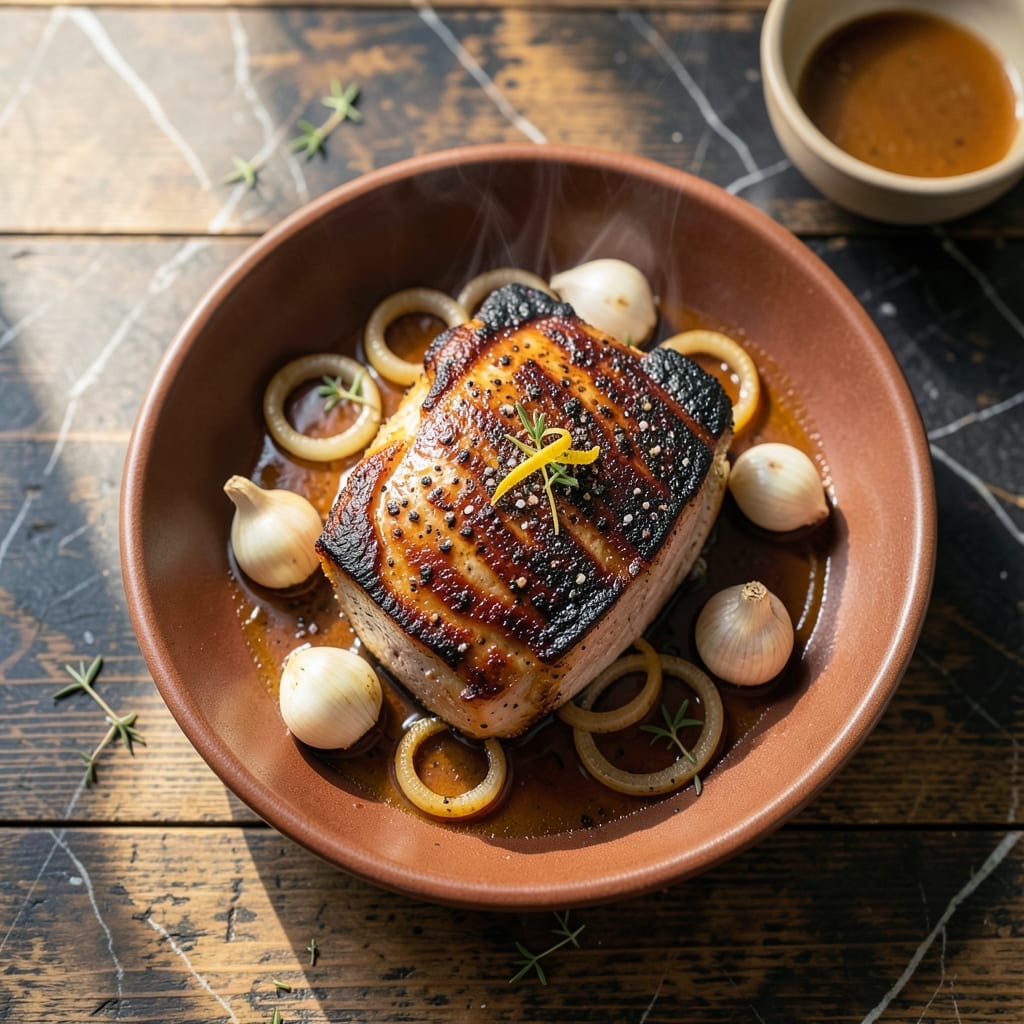
Grilling pork roast delivers juicy centers with smoky char that indoor cooking simply cannot match. This method transforms a simple cut into a showstopping main course.
With precise heat control and proper timing, your gas grill becomes a professional smoker. The result is tender, flavorful meat that rivals any pitmaster’s creation.
Ingredients for Pork Roast on Gas Grill
Transform a humble pork shoulder into a smoky, juicy masterpiece with these essentials.
| Ingredient | Amount | Notes |
|---|---|---|
| Pork Shoulder Roast 🥩 | 3 lb | Bone-in for extra flavor |
| Kosher Salt 🧂 | 1 ½ tbsp | Diamond Crystal preferred |
| Black Pepper 🌶️ | 1 tbsp | Freshly ground coarse |
| Garlic Cloves 🧄 | 6 cloves | Smashed, peeled |
| Yellow Onion 🧅 | 1 whole | Quartered with skin on |
| Smoked Paprika 🌶️ | 2 tsp | Sweet or hot variety |
| Dried Oregano 🍃 | 1 tsp | Rubbed between palms |
| Olive Oil 🫒 | 2 tbsp | Extra-virgin for richness |
| Apple Cider Vinegar 🍏 | 1 tbsp | Raw unfiltered preferred |
| Brown Sugar 🍚 | 2 tbsp | Light or dark variety |
| Hickory Wood Chips 🪵 | 1 cup | Soaked in water 30 minutes |
| Low-Sodium Chicken Broth 🥣 | ½ cup | For moisture during cooking |
[recipe_ingredient_scaler]
The pork cut is critical. Pork shoulder (Boston butt) with bone-in delivers the juiciest results due to its marbling and connective tissue. Source from Whole Foods or a trusted local butcher for consistent quality. Look for pieces with good fat cap—this renders beautifully during the slow cook. Avoid pre-cut roasts if possible; a whole shoulder allows you to control the size and shape for even cooking.
No hickory chips? Apple or cherry wood offers excellent alternatives with milder, fruitier smoke. In a pinch, Mesquite works but use sparingly—it can overpower. For the rub, substitute maple syrup for brown sugar if needed, though the molasses notes in brown sugar complement pork perfectly. If avoiding vinegar, a splash of lemon juice adds necessary acidity to balance the richness.
The roast can rest up to 2 hours before carving (it’ll stay warm). Store leftovers in an airtight container for 4-5 days in the fridge or freeze for 3 months. Reheat gently in a covered dish with a splash of broth to maintain moisture.
Why You’ll Love This Recipe
- Set It and Forget: I just season, pop it on the grill, and let the heat do the work—no babysitting required.
- Garlic-Kissed Perfection: The garlic and onion melt into the pork, giving every bite that rich, savory depth I crave.
- Feeds the Crew: Between us, this one roast stretches to sandwiches, tacos, and leftovers for days.
- Budget Hero: Pork shoulder is cheap, and this method turns it into something ridicuously good without fancy tricks.
Step-by-Step Instructions for Pork Roast on Gas Grill
Master indirect heat and wood smoke to achieve fall-apart tenderness with charred exterior.
Step 1: Create the Dry Rub and Season the Roast
In a small bowl, combine the 1.5 tbsp Kosher Salt, 1 tbsp Black Pepper, 2 tsp Smoked Paprika, and 1 tsp Dried Oregano. I rub the dried oregano between my palms to release its essential oils before mixing. This dry rub creates a flavorful crust while enhancing the pork’s natural richness.
Pat the 3 lb Pork Shoulder Roast dry with paper towels to ensure the rub adheres properly. Coat the entire surface of the roast with the 2 tbsp Olive Oil, then apply the dry rub evenly, pressing it into the meat. The oil helps the spices stick and promotes even browning during grilling.
Step 2: Prepare the Grill for Indirect Cooking
Soak the 1 cup Hickory Wood Chips in water for 30 minutes to prevent them from burning too quickly. Drain the wood chips and place them in a smoker box or create a foil pouch with holes poked in the top. Preheat the gas grill to medium-high heat with all burners on.
Once preheated, turn off the burner on one side of the grill to create a direct and indirect heat zone. Place the wood chips over the active burner. The temperature should stabilize at 325-350°F on the indirect side where the pork will cook. This setup allows the roast to cook slowly while absorbing smoky flavor.
Step 3: Sear and Slow-Cook the Pork Roast
Sear the seasoned pork shoulder roast over the direct heat for 2-3 minutes per side until a deep brown crust forms. This initial sear develops complex flavors through the Maillard reaction. Move the roast to the indirect heat side of the grill.
Place the 1 whole Yellow Onion (quartered with skin on) and 6 cloves Garlic Cloves (smashed, peeled) around the roast in a disposable aluminum pan. Pour the 0.5 cup Low-Sodium Chicken Broth into the pan to maintain moisture during cooking. Close the grill lid and cook for 2 to 2.5 hours.
Step 4: Glaze and Finish for Maximum Flavor
In a small bowl, mix the 2 tbsp Brown Sugar with the 1 tbsp Apple Cider Vinegar to create a glaze. During the last 30 minutes of cooking, brush this mixture over the roast. The sugar caramelizes while the vinegar adds a subtle tang that balances the richness of the pork.
Monitor the internal temperature using a meat thermometer. The roast is ready when it reaches 195-203°F internally and the meat pulls apart easily with a fork. The bone-in pork shoulder will take longer to cook than boneless cuts, but the extra flavor is worth the wait.
Step 5: Rest and Serve for Juicy Results
Transfer the roast to a cutting board and tent loosely with foil. Let it rest for 15-20 minutes before slicing or pulling. This rest period allows the juices to redistribute throughout the meat, ensuring each serving remains moist and flavorful.
Discard the onion and garlic or use them to enhance a pan sauce if desired. Serve the pork roast with its accumulated juices spooned over the top. The combination of smoky char from the grill and tender, juicy meat delivers on the promise of restaurant-quality results at home.
Pro Tips For Making Pork Roast On Gas Grill
- Preheat Fully: I learned this the hard way—give your gas grill a solid 10-15 minutes to reach 375°F before adding the pork. A cold grill sticks and steams instead of searing.
- Score the Fat: Cut 1/4-inch slits in the pork shoulder’s fat cap before seasoning. This lets the salt, pepper, and garlic penetrate deeper and renders the fat more evenly.
- Skip the High Heat: Resist the urge to blast it on high. Medium indirect heat (around 325°F) cooks the shoulder through without drying it out—my first few attempts were tough until I slowed down.
- Rest Before Slicing: Tent the roast with foil and let it sit for 15 minutes after grilling. Sounds tedious, but it redistributes the juices so they don’t all end up on the cutting board.
Flavor Customization for pork roast on gas grill
Spicy Kick Variation
Add 1 tbsp cayenne pepper or 2 tsp red pepper flakes to your rub for serious heat. I love this with hot smoked paprika instead of sweet. The capsaicin builds gradually, perfect for those who enjoy a fiery finish. 🔥
Sweet and Tangy Twist
Replace brown sugar with 3 tbsp honey and add 1 tbsp Dijon mustard to your glaze. The honey caramelizes beautifully while the mustard adds depth. Brush this on during the last 30 minutes of cooking.
Herb-Enhanced Depth
Mix 1 tbsp fresh rosemary and 1 tbsp fresh thyme (finely chopped) into your dry rub. I forage wild rosemary along coastal rides for an earthy aroma. These herbs pair wonderfully with pork’s richness.
Asian-Inspired Fusion
Swap the dry rub for 2 tbsp soy sauce, 1 tbsp grated ginger, and 1 tbsp sesame oil. Add 1/4 cup hoisin sauce to the glaze. This creates a sweet-savory profile with umami depth.
Coffee-Rubbed Boldness
Add 2 tbsp finely ground coffee to your dry rub for a deep, earthy flavor. The coffee enhances the smokiness from the hickory chips. I use dark roast for maximum impact. 💛
Citrus-Zest Brightness
Incorporate zest of 1 orange and zest of 1 lemon into your rub. The citrus oils brighten the pork’s richness. Add 1 tbsp orange juice to your glaze for extra zing.
Nutrition Facts
Frequently Asked Questions
What’s the ideal internal temperature for pulled pork?
Aim for 195-203°F internally. At this range, the collagen breaks down, making the meat tender enough to pull apart easily with a fork.
How do I maintain moisture during cooking?
Place the roast in a disposable aluminum pan with 0.5 cup chicken broth and aromatics like onion and garlic. This creates steam, keeping the meat juicy.
Can I use a boneless cut instead?
Yes, but bone-in pork shoulder adds more flavor and stays juicier. If using boneless, reduce cooking time by about 30 minutes and monitor the temperature closely.
Why is resting the meat important?
Letting the roast rest for 15-20 minutes allows juices to redistribute throughout the meat. Skipping this step can result in dry, tough pork.

Trained in classic French technique but raised on slow-cooked ribs and spicy rubs, she blends culinary skill with smoke and soul.
- Recipe for Boneless Pork Chops in Cast Iron Skillet: Sear and Baste to Juicy Perfection - October 3, 2026
- Recipe for Boneless Cross Rib Roast: Slow-Roasted Beef with Herb Crust - October 3, 2026
- Hamburgers in Sauce Recipe Crock Pot: Slow-Cooked Savory Delight - October 3, 2026