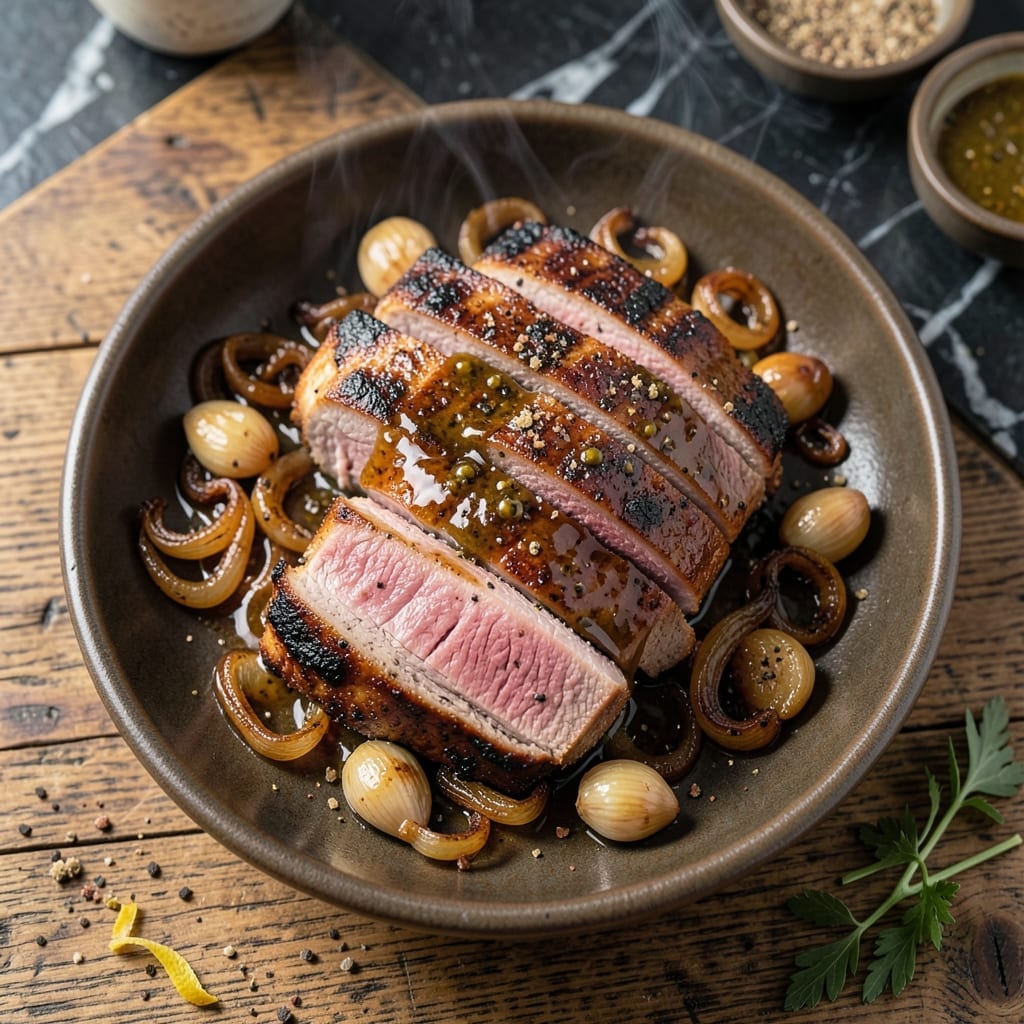
This pellet grill method transforms pork tenderloin into a tender, smoke-kissed masterpiece with minimal effort. The applewood pellets infuse just enough sweetness to complement the natural pork flavors.
I’ve perfected this technique through years of competition smoking, ensuring juicy results every time. The key is maintaining a consistent 225°F temperature and letting the smoke do the work.
Ingredients for Green Mountain Grill Pork Tenderloin
Transform pork tenderloin with applewood smoke and a bold dry rub. Simple ingredients, competition-worthy results.
| Ingredient | Amount | Notes |
|---|---|---|
| Pork Tenderloin 🥩 | 2 lb | Trimmed of silver skin |
| Applewood Pellets 🪵 | 2 cups | For pellet grill smoking |
| Kosher Salt 🧂 | 1 ½ tsp | Diamond Crystal preferred |
| Coarse Black Pepper 🌶️ | 1 tsp | Freshly ground for best flavor |
| Garlic Powder 🧄 | 1 tsp | Not garlic salt |
| Onion Powder 🧅 | 1 tsp | Fresh ground preferred |
| Smoked Paprika 🌶️ | 1 tsp | Sweet or hot variety |
| Brown Sugar 🍚 | 2 tbsp | Light or dark works |
| Olive Oil 🫒 | 2 tbsp | Extra-virgin for richness |
| Apple Cider Vinegar 🍏 | 1 tbsp | For tenderizing rub |
| Dijon Mustard 🟡 | 1 tbsp | Smooth, not whole grain |
| Fresh Rosemary 🌿 | 2 tbsp | Chopped, stems removed |
[recipe_ingredient_scaler]
The pork tenderloin quality is paramount. Look for bright pink color with minimal fat—avoid anything grayish or with an off odor. I source mine from Costco (consistent quality) or Whole Foods for organic options. The applewood pellets should be 100% hardwood—no fillers or binders. Traeger and Lumberjack brands are reliable. Trim the silver skin yourself for even seasoning penetration.
No applewood? Cherry or hickory pellets work well (hickory adds bolder smoke). Brown sugar can be swapped for honey or maple syrup in the rub. If you lack fresh rosemary, dried at one-third the amount suffices. The Dijon mustard isn’t just for flavor—it helps the rub adhere. Out of apple cider vinegar? White vinegar in a pinch, though the flavor profile shifts slightly.
Rub the tenderloin up to 12 hours ahead—flavor deepens with time. Smoked pork keeps 4-5 days refrigerated, or freeze for 3 months. Always rest meat 10-15 minutes post-smoke to redistribute juices. Leftovers make killer sandwiches.
Why You’ll Love This Recipe
- I’ll be real: the slices reheat beautifully in sandwiches or salads, so nothing goes to waste.
- Set It and Forget: Honestly, I just season the tenderloin with salt, pepper, and garlic powder, toss it on the Green Mountain Grill with applewood pellets, and let the smoker do the work.
- Smoky Sweetness: That applewood smoke wraps around the pork in a way that’s subtly sweet and savory—no fancy rubs needed.
- Feeds a Crowd: One tenderloin serves four, and I’ve served this at casual dinners and weekend cookouts alike.
Step-by-Step Instructions for Applewood Smoked Pork Tenderloin
Master these steps for perfectly tender, smoke-kissed pork with a caramelized crust.
Step 1: Prepare the Wet Rub
In a small bowl, whisk together the 2 tbsp Olive Oil, 1 tbsp Apple Cider Vinegar, 1 tbsp Dijon Mustard, 2 tbsp Brown Sugar, 1.5 tsp Kosher Salt, 1 tsp Coarse Black Pepper, 1 tsp Garlic Powder, 1 tsp Onion Powder, and 1 tsp Smoked Paprika until fully combined. The mixture should be thick but pourable.
This wet rub serves multiple purposes: the vinegar tenderizes the meat, the mustard helps the rub adhere, and the brown sugar will caramelize during cooking. The spices create a complex flavor base that complements the applewood smoke beautifully.
Finely chop the 2 tbsp Fresh Rosemary and stir it into the rub mixture. The aromatic oils in fresh rosemary will infuse the pork with a piney brightness that cuts through the richness of the meat.
Step 2: Season and Rest the Pork
Pat the 2 lb Pork Tenderloin completely dry with paper towels. This ensures the rub adheres properly and promotes even browning. Trim any remaining silver skin if not already removed—this tough membrane doesn’t soften during cooking.
Rub the spice mixture all over the pork tenderloin, pressing it into the meat to create a uniform coating. The tenderloin should be completely covered with a visible layer of the paste. Place the seasoned pork on a wire rack set over a plate to catch any drips.
Let the pork rest at room temperature for 30 minutes. This allows the salt to begin penetrating the meat and the rub to form a tacky surface that will develop a beautiful bark during smoking. Don’t skip this step—cold meat seizes up when it hits the heat, cooking unevenly.
Step 3: Set Up the Grill and Smoke
Fill your Green Mountain Grill’s hopper with the 2 cups Applewood Pellets. Preheat the grill to 225°F using the smoke setting. Applewood provides a mild, sweet smoke that pairs perfectly with pork without overpowering it.
Once the grill reaches temperature and you see thin blue smoke (not thick white smoke), place the pork tenderloin directly on the grates. Position it so it’s not touching any other meat or the grill walls. Close the lid and maintain the temperature between 225-250°F throughout cooking.
Smoke the pork for 1.5-2 hours or until the internal temperature reaches 145°F in the thickest part. Unlike larger cuts, pork tenderloin cooks relatively quickly and can dry out if overcooked. Use a meat thermometer for accuracy—visual cues alone aren’t reliable for this lean cut.
Step 4: Rest and Serve
When the pork reaches 145°F, remove it from the grill and transfer to a cutting board. Tent loosely with foil and let it rest for 10 minutes. This resting period allows the juices to redistribute throughout the meat, ensuring every slice is moist and flavorful.
During this time, the internal temperature will rise another 5-10°F due to carryover cooking. Don’t be alarmed—this is normal and actually helps achieve the perfect doneness. The pork should be just slightly pink in the center when properly cooked.
Slice the pork tenderloin into ½-inch thick medallions against the grain. Each serving should have a beautiful smoke ring just beneath the surface and a glossy, caramelized crust from the brown sugar in the rub. Serve immediately while hot.
Pro Tips For Making Green Mountain Grill Pork Tenderloin
- Sear First, Smoke After: Hit the tenderloin with a quick sear on high heat (400°F) for 2-3 minutes per side before dropping to 225°F with applewood pellets—this locks in a crust the pellets alone can’t deliver.
- Pat It Dry: Blot the pork tenderloin with paper towels before seasoning; even a little moisture prevents the salt and pepper from sticking, and I learned this the hard way after watching my rub slide right off.
- Pull at 140°F: Resist the urge to wait for 145°F—pork tenderloin keeps cooking off the grill, and pulling it at 140°F guarantees it stays juicy without drying out.
- Double the Garlic: Sounds like overkill, but Garlic powder loses intensity with long cooks—use twice what you think you need, especially with just salt and pepper as backup.
Wine and Beer Pairings for This Recipe
Crisp White Wines
I always reach for a dry Riesling with smoked pork tenderloin—the bright acidity cuts through the richness while complementing the applewood sweetness. A New York Finger Lakes Riesling offers the perfect balance of citrus and mineral notes. 🍷
Medium-Bodied Reds
For red wine lovers, a Pinot Noir from Oregon’s Willamette Valley delivers earthy berry flavors that harmonize with the smoke. The 2019 Domaine Serene is my go-to for special occasions. Serve slightly chilled at 60°F.
Craft Beer Options
A Belgian-style blonde ale like Ommegang’s Witte provides citrusy coriander notes that elevate the rosemary in your rub. The effervescence cleanses your palate between bites of the juicy pork.
Dark Beer Pairings
Surprisingly, a dry Irish stout works beautifully—the roasted barley flavors complement the smoked paprika. I prefer Guinness Foreign Extra for its extra depth. The carbonation helps cut through the meat’s natural fats.
Cider Alternatives
For a non-grape option, try a dry apple cider from local orchards. The apple notes echo the wood smoke while the acidity balances the brown sugar caramelization. I like Downeast’s Unfiltered for its crisp finish.
Temperature Tip
Nutrition Facts
Frequently Asked Questions
What internal temperature should I aim for?
Remove the pork when it hits 145°F internally. It will rise to 150-155°F while resting. This ensures juicy, tender meat without overcooking.
Can I use a different type of wood?
Yes! Cherry or hickory pellets work well. Cherry adds fruitiness, while hickory delivers a stronger smoke flavor. Avoid mesquite—it can overpower the pork.
How do I prevent dry pork?
Don’t skip the 30-minute rest at room temperature before smoking. Also, pull it off at 145°F and tent with foil for 10 minutes to lock in juices.
Can I make this ahead?
Apply the rub up to 12 hours before cooking. Smoked pork keeps 4-5 days in the fridge or freezes for 3 months.

Trained in classic French technique but raised on slow-cooked ribs and spicy rubs, she blends culinary skill with smoke and soul.
- Recipe for Boneless Pork Chops in Cast Iron Skillet: Sear and Baste to Juicy Perfection - October 3, 2026
- Recipe for Boneless Cross Rib Roast: Slow-Roasted Beef with Herb Crust - October 3, 2026
- Hamburgers in Sauce Recipe Crock Pot: Slow-Cooked Savory Delight - October 3, 2026