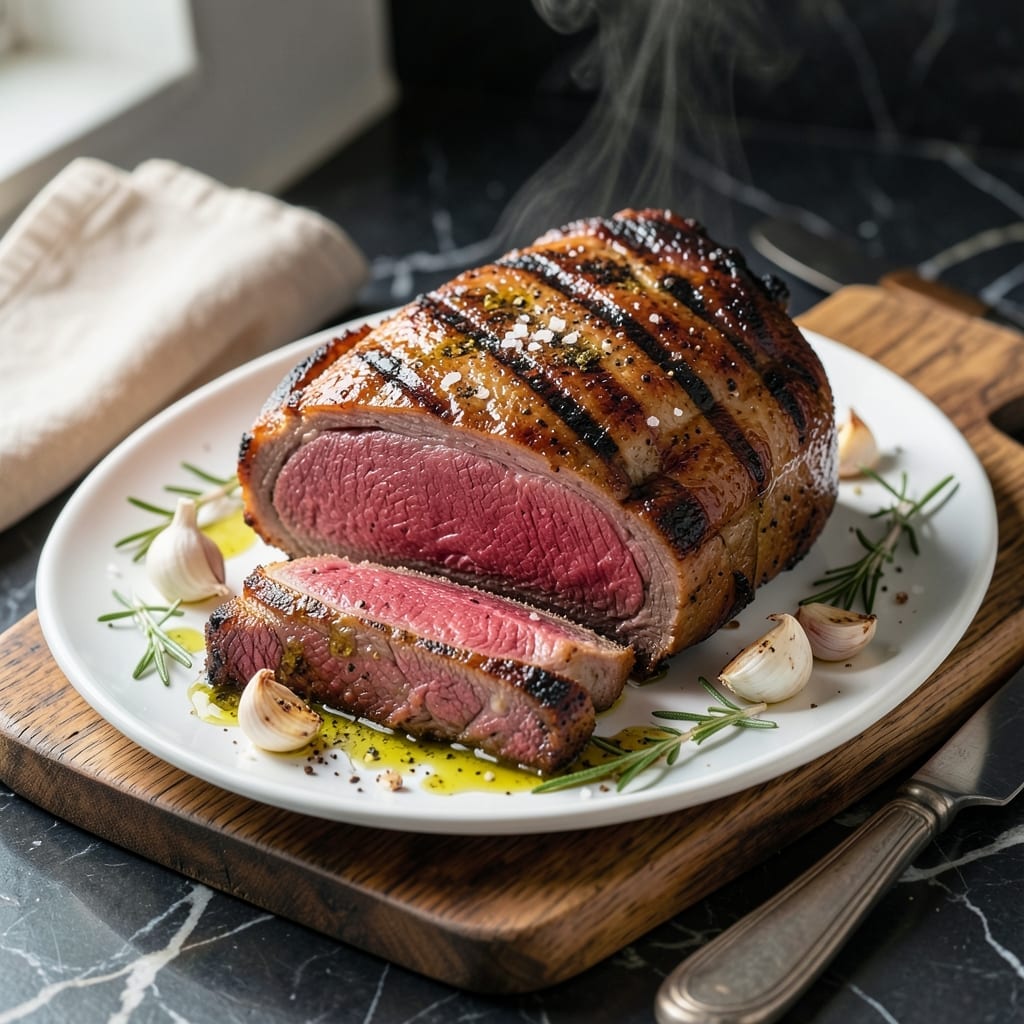
There’s nothing quite like the aroma of a ribeye roast hitting a hot grill, its fat cap sizzling and rendering into a juicy masterpiece. I’ve spent years refining this method to ensure every bite delivers that perfect balance of smoky crust and tender marbling.
The key is starting with a high-quality cut and letting it come to room temperature before grilling. A simple dry rub of salt, pepper, and garlic powder enhances the beef’s natural flavors without overpowering them. The grill does the rest.
What you’ll get is a roast with a deeply caramelized exterior and an interior so tender it nearly melts. The marbling ensures each slice stays moist and packed with rich, beefy flavor.
Resting the meat before slicing is non-negotiable—it locks in those precious juices. Serve with grilled vegetables or a bold red wine.
Ingredients for Grilled Boneless Ribeye Roast
A few quality ingredients transform into a showstopping grilled ribeye roast with smoky depth.
| Ingredient | Amount | Notes |
|---|---|---|
| Boneless Ribeye Roast 🥩 | 3 lb | Well-marbled, trimmed of excess fat |
| Kosher Salt 🧂 | 2 tbsp | Coarse grain for dry rub |
| Black Pepper 🌶️ | 1 tbsp | Freshly ground preferred |
| Garlic Powder 🧄 | 1 tbsp | Fine powder for even coating |
| Onion Powder 🧅 | 1 tsp | Optional for depth of flavor |
| Olive Oil 🫒 | 2 tbsp | For coating roast before rub |
| Fresh Rosemary 🌿 | 2 sprigs | Optional, for added aroma |
| Fresh Thyme 🍃 | 2 sprigs | Optional, for added aroma |
| Butter 🧈 | 2 tbsp | For basting while grilling |
| Red Wine 🍷 | ½ cup | For deglazing pan juices |
| Beef Broth 🥘 | ½ cup | Low-sodium preferred |
[recipe_ingredient_scaler]
The ribeye is everything here. Costco or a trusted butcher will have well-marbled roasts—look for bright red meat with creamy white fat. Avoid pre-cut steaks; a whole roast gives you even cooking and that coveted crust. The fat cap should be at least 1/4-inch thick for proper rendering. If your butcher offers dry-aged, grab it (worth the splurge).
No fresh herbs? Dried rosemary and thyme at half the amount work fine. Swap red wine for beef broth with a splash of balsamic vinegar—it mimics the acidity. The garlic and onion powders are flexible: fresh minced garlic at 4 cloves can replace both. For a smokier crust, add 1 tsp smoked paprika to the dry rub.
Let the roast sit at room temperature 1 hour before grilling. Leftovers (if any) keep 3-4 days in the fridge—slice thin against the grain for sandwiches. The pan juices can be frozen for 2 months to use in sauces later.
Why You’ll Love This Recipe
- Minimal Effort: I just rub the roast with salt, pepper, garlic and onion powder, then grill—no marinating, no fuss.
- Smoky Depth: The grill gives the ribeye a charred crust while the spices create that rich, savory bite I crave.
- Crowd Pleaser: I’ve served this at backyard BBQs and quiet Sunday dinners, and it’s always the first thing to disappear.
- Leftovers Win: Honestly, the sliced leftovers make the best next-day sandwiches with just a quick sear in the pan.
Step-by-Step Instructions for Grilled Boneless Ribeye Roast
Follow this precise method to achieve a smoky crust while keeping the marbling perfectly juicy.
Step 1: Prepare and Season the Ribeye Roast
Begin by patting the 3 lb boneless ribeye roast completely dry with paper towels. This removes surface moisture that would prevent a good sear. Place it on a clean surface and rub with the 2 tbsp olive oil to create a base for the seasoning to adhere to.
In a small bowl, combine the 2 tbsp kosher salt, 1 tbsp black pepper, 1 tbsp garlic powder, and 1 tsp onion powder. Apply this rub evenly over all surfaces of the roast, pressing it in firmly. For added aroma, place the 2 sprigs fresh rosemary and 2 sprigs fresh thyme on top of the seasoned roast. Let it sit at room temperature for 30-45 minutes before grilling.
Step 2: Set Up the Grill for Indirect Heat
Preheat your grill to medium-high heat (about 400°F). For a charcoal grill, bank the coals to one side. For a gas grill, turn off the burners on one side. This creates a hot zone for searing and a cooler zone for finishing.
Clean the grates thoroughly with a grill brush to prevent sticking. You want the grates hot enough that a drop of water sizzles and evaporates immediately upon contact. This ensures a proper sear without the roast adhering to the grates.
Step 3: Sear and Cook the Roast to Perfection
Place the roast on the hot side of the grill. Sear for 4-5 minutes per side until a deep brown crust forms. Watch for the edges to darken and the surface to develop a rich, smoky crust.
Move the roast to the cooler side of the grill and add the 2 tbsp butter on top. Baste the roast with the melted butter every 5 minutes as it cooks. Continue grilling until the internal temperature reaches 130-135°F for medium-rare, which should take about 25-30 minutes total. Use a meat thermometer to check doneness accurately.
Step 4: Rest and Prepare the Pan Sauce
Transfer the roast to a cutting board and tent loosely with foil. Let it rest for 15-20 minutes—this allows the juices to redistribute evenly throughout the meat, ensuring each slice is moist and flavorful.
While the roast rests, place a skillet on the grill over direct heat. Add the 0.5 cup red wine and 0.5 cup beef broth, scraping up any browned bits from the grates. Simmer for 3-4 minutes until the liquid reduces by half. This creates a rich pan sauce to serve with the roast.
Slice the roast against the grain into ½-inch thick pieces and serve immediately with the pan sauce. The result should be a perfectly juicy interior with a deeply flavorful, smoky crust.
Pro Tips For Making Grilled Boneless Ribeye Roast
- Reverse Sear First: Start with indirect heat at 250°F until the internal temp hits 110°F, then finish over direct high heat for the crust. I learned this the hard way—direct heat alone leaves the center raw while the outside burns.
- Dry the Roast: Pat the ribeye completely dry with paper towels before seasoning—this guarantees a proper sear instead of steaming. Sounds obvious, but I skipped this once and the crust never formed.
- Skip the Cold Meat: Pull the roast from the fridge 1-2 hours before grilling so it cooks evenly. My first few attempts had cold centers and overdone edges because I rushed it.
- Rest Under Foil: Tent the roast with foil and let it rest for 15-20 minutes after grilling. It keeps the juices inside where they belong—cutting too soon sends them all over the cutting board.
Common Mistakes When Making This Dish
Skipping Room Temp
Never grill your ribeye roast straight from the fridge. Cold meat seizes up on the grill, preventing even cooking and a proper crust. I always let mine sit out for 30-45 minutes before hitting the grates. This ensures the center cooks at the same rate as the exterior. 🌡️
Neglecting the Grill Setup
Uneven heat ruins a good roast. Always create two zones—hot for searing, cooler for finishing. On charcoal, bank coals to one side. On gas, turn off half the burners. This gives you control over the cooking process.
Overcrowding the Grill
Give your roast space to breathe. Crowding causes steam buildup, which softens that beautiful crust you worked so hard to create. I grill just one roast at a time on my Weber Genesis for perfect results.
Skipping the Thermometer
Guessing doneness is a recipe for disaster. A meat thermometer is your best friend—aim for 130-135°F for medium-rare. I use a ThermoWorks Instant Read for accuracy. Without it, you risk overcooking that precious marbling.
Rushing the Rest
Slicing too soon sends all those delicious juices right onto your cutting board. Always rest your roast for 15-20 minutes under foil. This lets the muscles relax and juices redistribute. Patience here makes all the difference.
Ignoring the Fat Cap
That ¼-inch fat cap isn’t just for flavor—it protects the meat from drying out. Position it facing the heat source during searing. I learned this the hard way after one too many dry roasts early in my pitmaster days.
Nutrition Facts
Frequently Asked Questions
What internal temperature should I aim for?
For medium-rare, target 130-135°F. Use a meat thermometer for accuracy, as this ensures juicy, tender results without overcooking.
Can I use a gas grill instead of charcoal?
Set up two heat zones—high for searing and low for finishing. Gas grills work just as well for achieving that perfect crust.
How long should the roast rest before slicing?
Let it rest for 15-20 minutes under foil. This allows juices to redistribute, ensuring every slice stays moist and flavorful.
Can I prepare the roast the night before?
Yes, season and refrigerate it overnight. Just let it sit at room temperature for 30-45 minutes before grilling to ensure even cooking.

Trained in classic French technique but raised on slow-cooked ribs and spicy rubs, she blends culinary skill with smoke and soul.
- Recipe for Boneless Pork Chops in Cast Iron Skillet: Sear and Baste to Juicy Perfection - October 3, 2026
- Recipe for Boneless Cross Rib Roast: Slow-Roasted Beef with Herb Crust - October 3, 2026
- Hamburgers in Sauce Recipe Crock Pot: Slow-Cooked Savory Delight - October 3, 2026